

In the Arms of an Oak: 2-Part Choral Octavo
Words and music by Andy Beck
Item: 00-PO-0003567

$2.05
Minimum order quantity: 20 copies
Pickup currently not available
Description
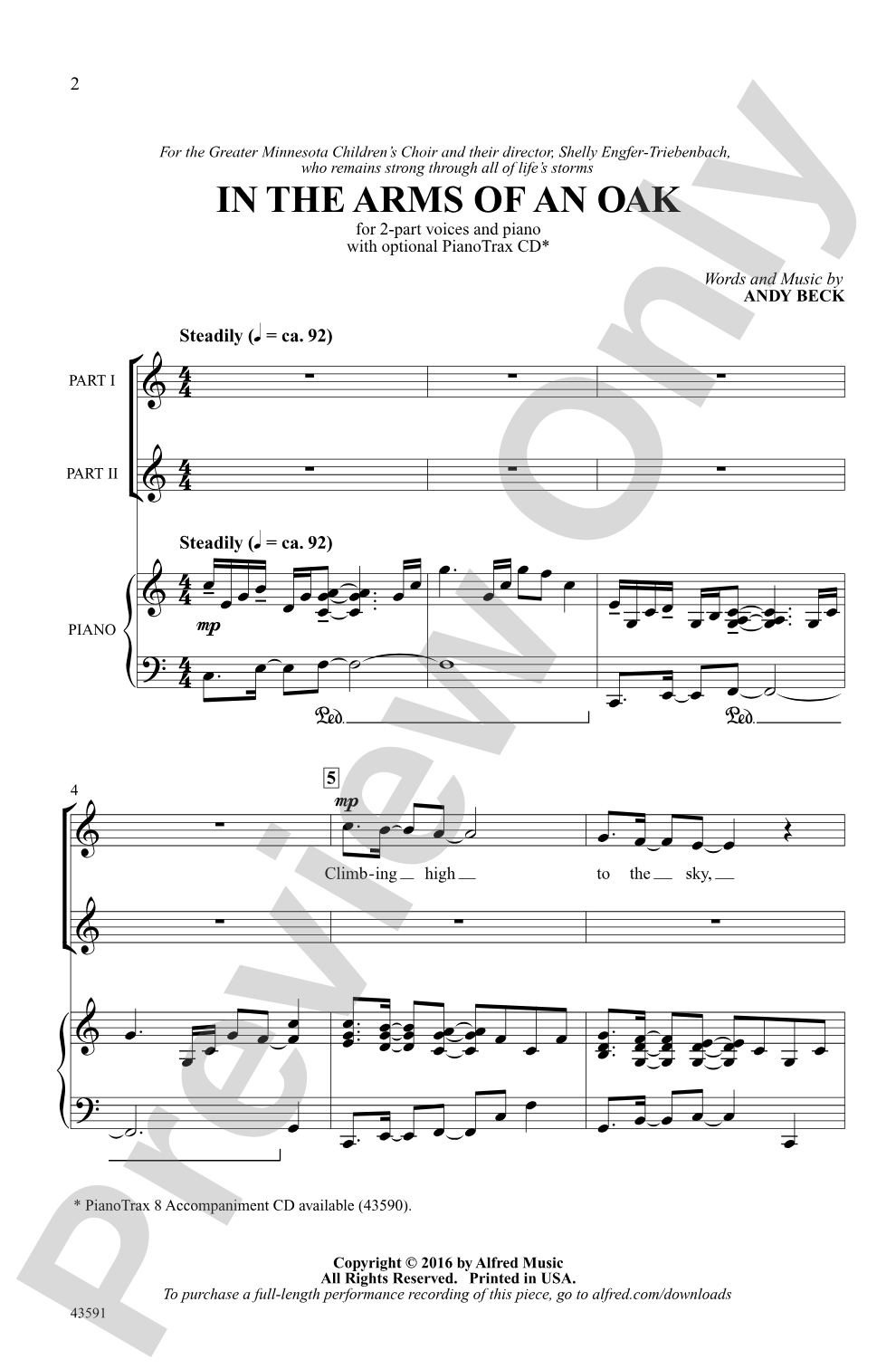
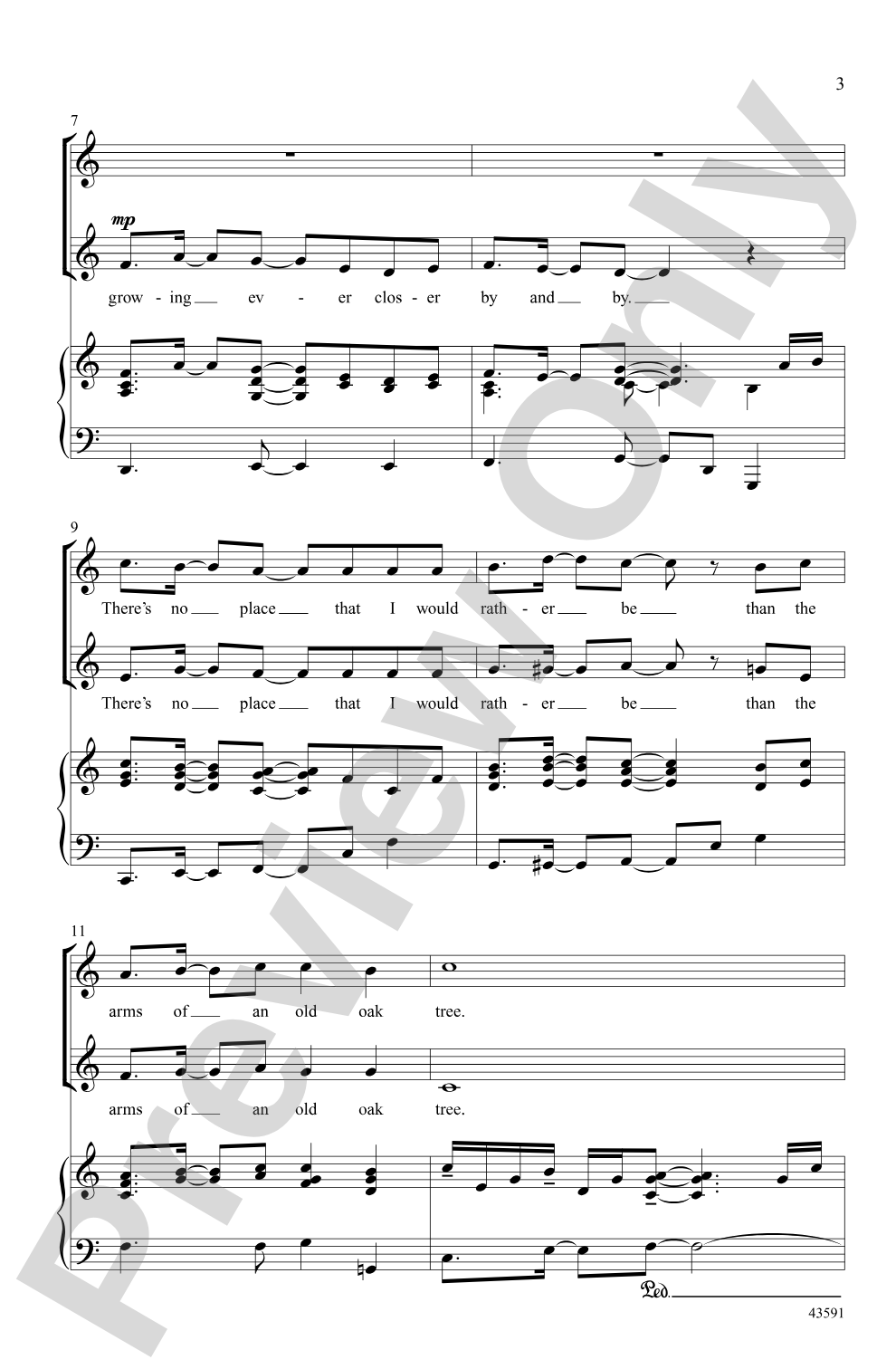
This special piece is a loving tribute to those who stand strong throughout life's seasons and storms. Superb two-part writing by Andy Beck gives each voice a chance to shine, while thoughtful dynamics and tempo markings encourage singers to achieve new heights of artistry. Highly recommended! This title is available in MakeMusic Cloud.


Don't just read it, hear it, play along with it, and watch your students grow with it. In MakeMusic Cloud, In the Arms of an Oak: 2-Part Choral Octavo comes alive with professional accompaniment, adjustable tempo, and built-in practice tools that turn solo practice into real progress.
Open in the Player
Jump straight in and assign it today.
Start Your Free Trial
Open this title and explore the full library in minutes.
Sample Audio
1
Audio File
--:--
0:00
0:00
Sample Video
Additional Details
Series:
Alfred Choral Designs
Publisher:
Alfred Music
Page Count:
12
SKU:
00-PO-0003567
More about this title
About the Composer: Andy Beck

Andy Beck serves as Director of Choral Publications at Alfred Music, a role that reflects decades of commitment to vocal literature and music education. With over 450 choral works, vocal resources, and children's musicals in print, Beck has established himself as one of the most prolific voices in contemporary choral writing. His pedagogical materials, including Sing at First Sight, Foundations in Choral Sight Singing, and Vocalize! 45 Vocal Warm-Ups That Teach Technique, are widely used in classrooms and rehearsal rooms across the country.
Beyond his work as a composer and arranger, Beck maintains an active presence as a guest conductor, clinician, and adjudicator. He holds a Bachelor's degree in Music Education from Ithaca College and a Master's degree from Northwest Missouri State University. As a tenor, Beck performs with the North Carolina Master Chorale Chamber Choir and has recorded as a studio singer for Alfred Music since 1992. His compositions consistently reflect deep understanding of choral pedagogy and the voices that sing them.
Why we love this
Beck writes with genuine sensitivity to what each voice part needs. The two-part texture here avoids the trap of oversimplification; instead, both lines carry melodic interest and rhythmic independence, which means your singers stay engaged rather than feeling like they're doubling a melody. The dynamic and tempo markings aren't arbitrary—they invite your singers to shape the music and discover artistry within an accessible range.
What to expect
Grounded and reflective, with a quality of quiet strength that builds rather than shouts. The two-part writing creates intimacy while the supportive harmonies suggest resilience and permanence, like roots running deep through seasons of change.
Who it's for
This piece works beautifully for middle school and high school choirs seeking literature that's genuinely singable without sacrificing musical substance. It's also ideal for community and adult choirs looking for meaningful secular material with emotional depth and straightforward vocal demands.
How to get the most out of it
- Balance the two parts as equals. Beck gives both lines memorable material, so resist the urge to treat one as accompaniment. Each section should know their part is essential to the whole.
- Honor the dynamic markings as emotional landmarks. These aren't just volume changes; they're invitations to tell the story of steadfastness and resilience that the text describes.
- Let tempo markings breathe. The variations in pace create space for the text to land, so don't rush through transitions between sections.
How to use it
This pairs naturally with other concert or festival selections that explore themes of growth and endurance. Consider pairing it with an uplifting piece to create a brief narrative arc within your program, or use it as a reflective centerpiece between more energetic selections.
Skills your students will build
- Singing independent melodic lines while maintaining blend in a two-part texture
- Interpreting dynamic and tempo markings as tools for musical expression
- Sustaining vocal quality across a full range within an accessible tessitura
- Shaping phrases to support thematic text and emotional content