
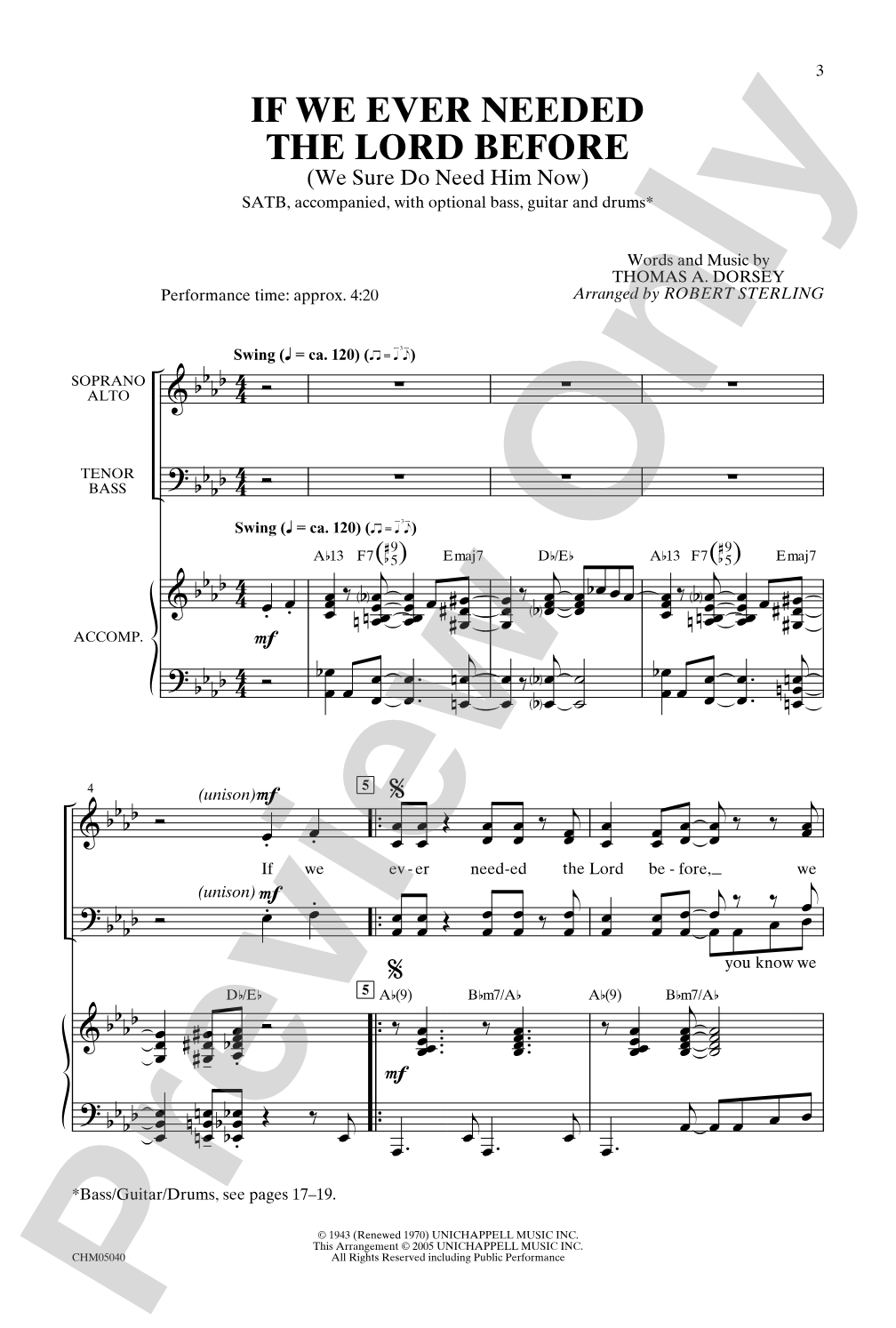
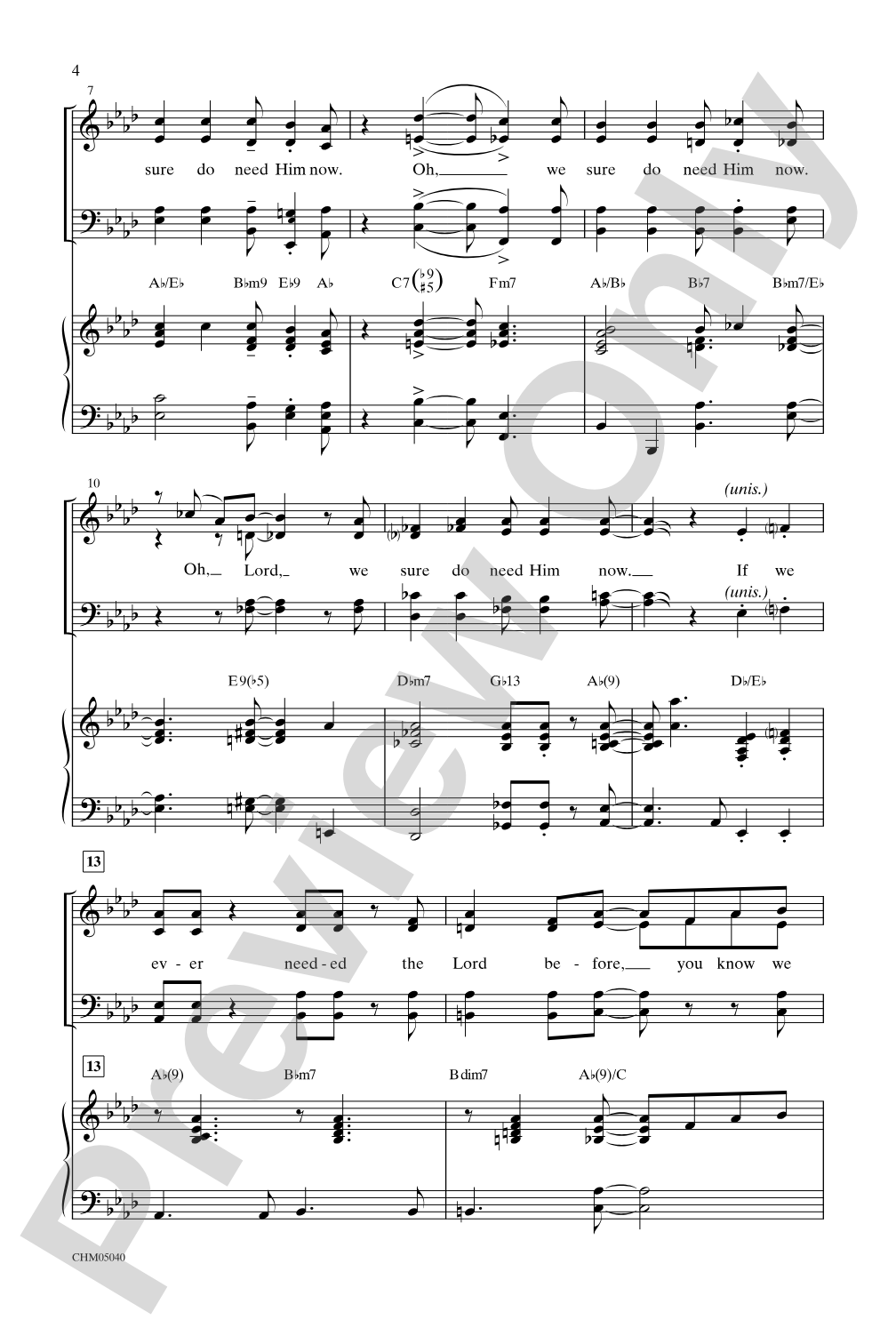
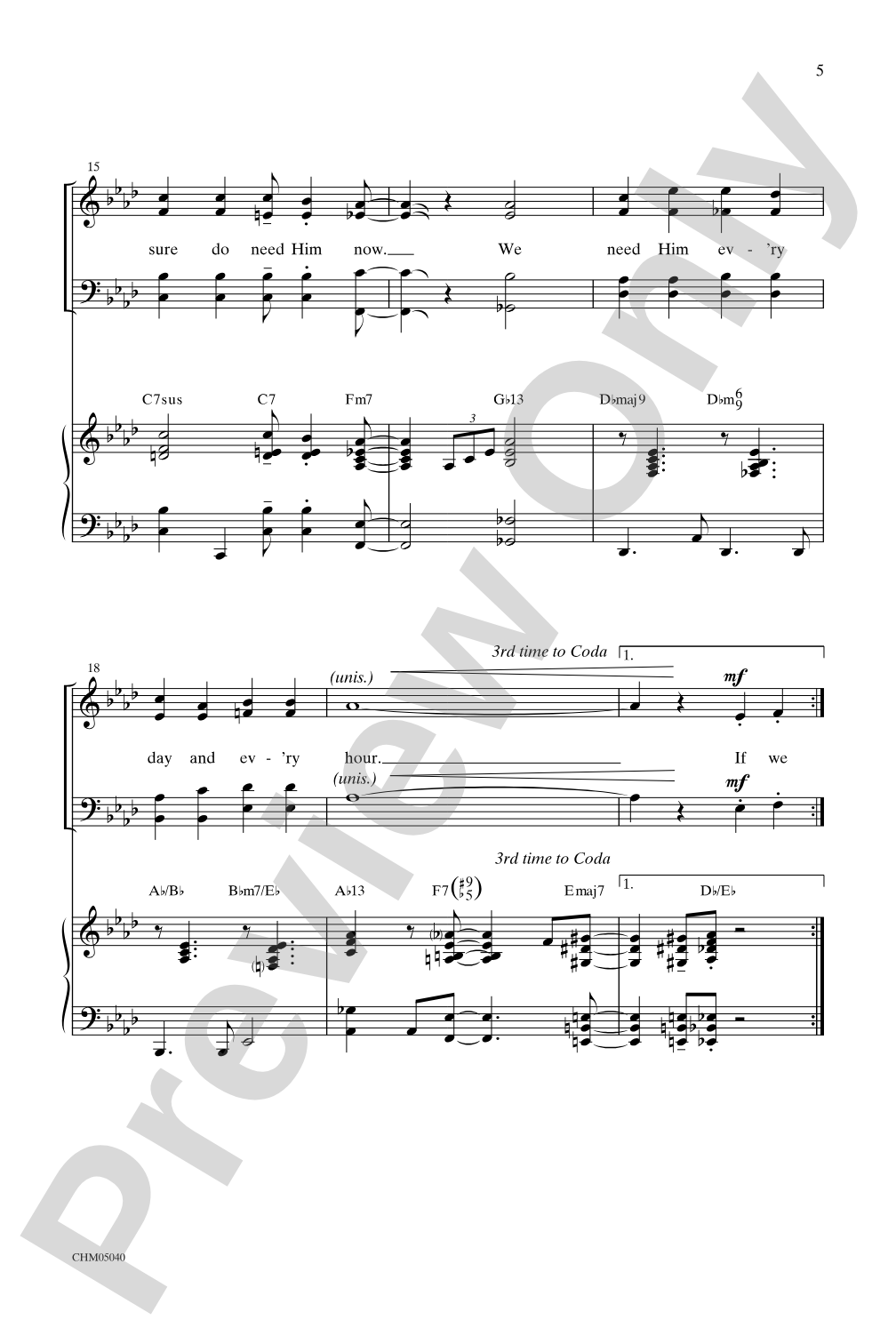
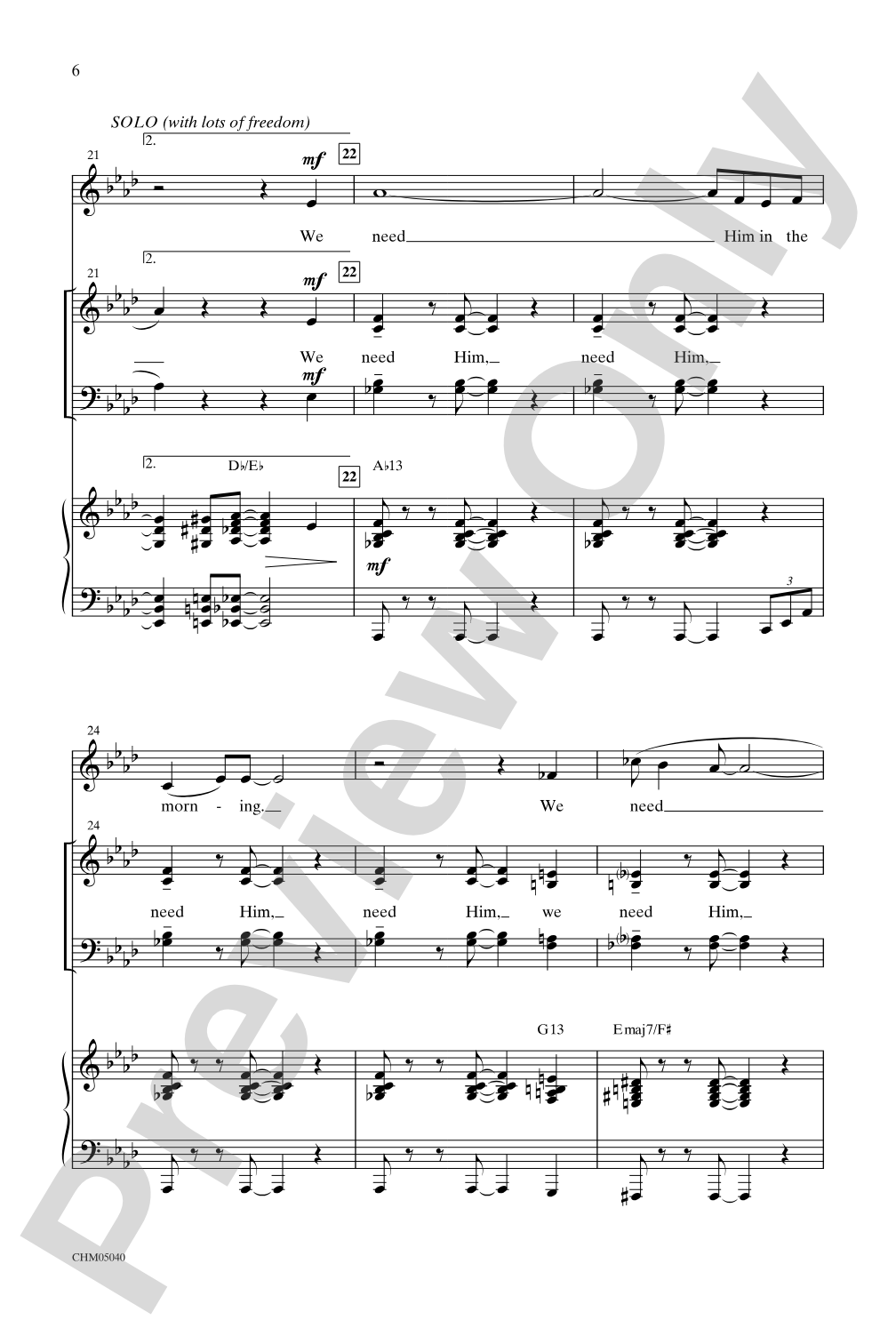

If We Ever Needed the Lord Before (We Sure Do Need Him Now): SATB Choral Octavo
Words and music by Thomas A. Dorsey / arr. Robert Sterling
Level: Moderately Difficult
Item: 00-PO-0006776
$1.95
Minimum order quantity: 20 copies
One moment…
Description
Thomas A. Dorsey is one of the most significant contributors to our country's gospel music tradition. This Dorsey classic has been recorded by many choirs, gospel quartets, and most recently, by the contemporary vocal ensemble Take 6. This Robert Sterling arrangement is full of gospel choral sound, as well as wonderful contemporary harmonies identified with groups like Take 6.


If We Ever Needed the Lord Before (We Sure Do Need Him Now): SATB Choral Octavo isn't in MakeMusic Cloud just yet...but it could be. Let us know you'd like to see it, and you'll help shape what comes next. In the meantime, start a free trial and dive into thousands of interactive titles your students can play along with today.
Request This Title
Tell us you want it.
Start Your Free Trial
Explore everything that's ready to play right now.
Sample Audio
1
Audio File
--:--
0:00
0:00
Sample Video
No sample videos found.
Additional Details
Series:
Alfred Pop Choral Series
Publisher:
Alfred Music
Page Count:
20
SKU:
00-PO-0006776
More about this title
About the Composer: Thomas A. Dorsey
Thomas A. Dorsey shaped American gospel music in ways that remain foundational today. Born in 1899, he began as a blues pianist before his spiritual awakening redirected his extraordinary musical gifts toward sacred music. He became known as the "Father of Gospel Music," composing hundreds of songs that defined the genre and influenced generations of singers, from Mahalia Jackson to contemporary ensembles like Take 6.
Dorsey's compositions bridge blues idiom and sacred text with a naturalness that made gospel music emotionally accessible and theologically powerful. His melodies, harmonic sensibilities, and rhythmic language became the vocabulary of modern gospel. For choral directors, his works remain essential repertoire because they teach singers how to inhabit spirituality through authentic musical expression rather than imitation.
Why we love this
This arrangement captures the essence of what made Dorsey's songs endure while bringing contemporary harmonic sophistication from the Take 6 tradition. Sterling's voicings demand genuine blend and musicality from your singers rather than relying on volume or technical flash, making it a teaching piece that elevates ensemble maturity. Programming this signals to your community that gospel music belongs in every serious choral season.
What to expect
The music radiates quiet conviction that builds into urgent expression, matching the text's cry for spiritual help. Contemporary jazz-inflected harmonies sit alongside traditional gospel sonorities, creating a sound that feels both rooted in tradition and vitally alive. The piece carries genuine emotional weight without sentimentality.
Who it's for
Choirs at the intermediate-advanced level (Grade 4) who are ready for gospel harmonic vocabulary and the rhythmic language that defines the genre. This works equally well for choirs building a gospel music program and those seeking a single transformative piece to elevate their understanding of American sacred music.
How to get the most out of it
- Balance the gospel swing rhythms against lyrical phrases; the groove should support the message, not overshadow it.
- Work the harmony clusters slowly before tempo. The contemporary voicings reward precision but sound muddy when rushed.
- Emphasize the conversational call-and-response passages with clear sectional identity. Each voice part has something distinct to say.
- Let the recorded accompaniment anchor your rehearsals, but encourage singers to understand the harmonic movement underneath so they can sing with conviction, not dependence.
How to use it
This works powerfully in spring concerts celebrating American choral traditions or as the anchor of a gospel-focused program. It also serves as a bridge piece for choirs exploring sacred music across genres. The 20-page length and recorded accompaniment make it accessible for community performances and smaller concert presentations.
Skills your students will build
- Reading and executing swing rhythms and jazz-influenced syncopation
- Blend and intonation in contemporary gospel harmonies
- Call-and-response coordination across voice sections
- Interpretation of spiritually expressive text with musical authenticity
- Understanding harmonic function in gospel idiom (particularly extended and altered chords)