
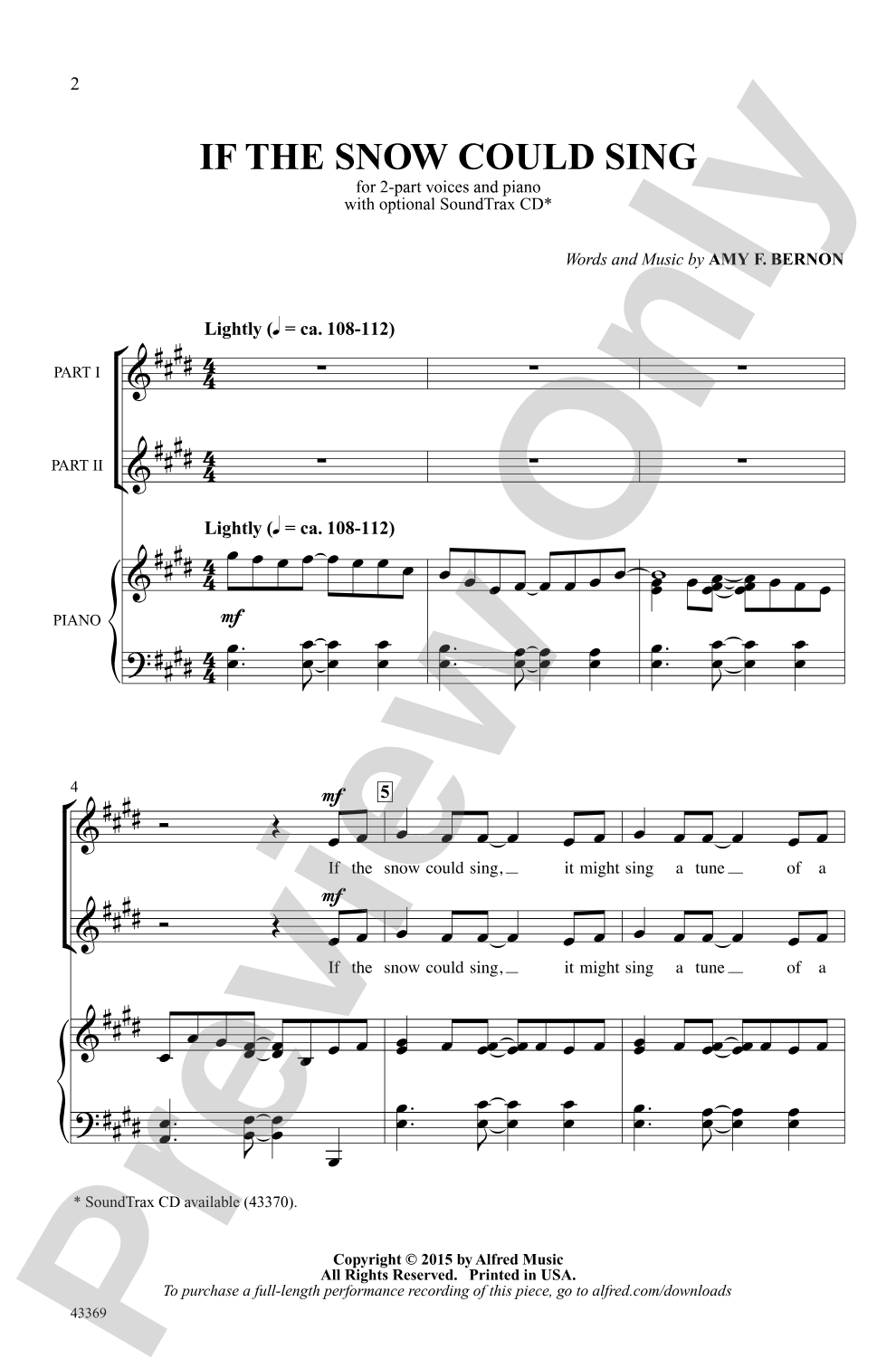

If the Snow Could Sing: 2-Part Choral Octavo
Words and music by Amy F. Bernon
Item: 00-PO-0003316
$2.05
Minimum order quantity: 20 copies
Pickup currently not available
Description
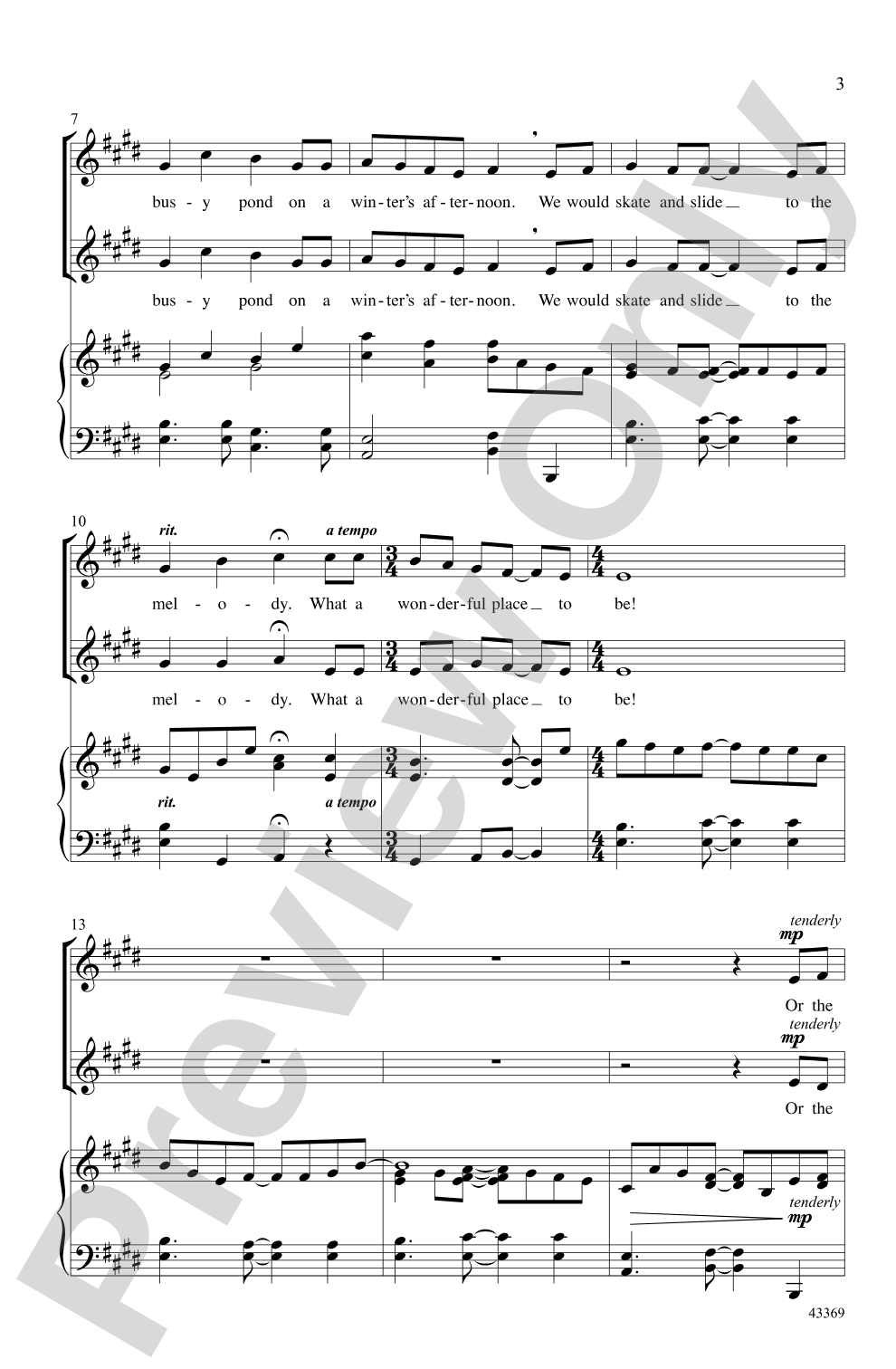
Amy Bernon's imaginative style is fully evident in this charming winter piece for younger groups. Singers will explore varied musical styles as the text considers different songs the snow might sing . . . if the snow could sing. A simple tune; a lovely lullaby; a hearty tale; and finally, an invitation to sing along.


If the Snow Could Sing: 2-Part Choral Octavo isn't in MakeMusic Cloud just yet...but it could be. Let us know you'd like to see it, and you'll help shape what comes next. In the meantime, start a free trial and dive into thousands of interactive titles your students can play along with today.
Request This Title
Tell us you want it.
Start Your Free Trial
Explore everything that's ready to play right now.
Sample Audio
1
Audio File
--:--
0:00
0:00
Sample Video
Additional Details
Series:
Alfred Choral Designs
Publisher:
Alfred Music
Page Count:
8
SKU:
00-PO-0003316
More about this title
About the Composer: Amy F. Bernon

Amy F. Bernon's musical identity was shaped by the long winters of her Syracuse childhood, where she discovered songwriting at the piano and built creative friendships through music. She earned degrees from the Hartt School and Yale University School of Music, studying composition with an impressive roster including Martin Bresnick, Robert Carl, Jacob Druckman, and Libby Larsen.
Bernon has worked as a music educator and choir accompanist at independent schools in Connecticut and Massachusetts, founded the Alamanda Women's Choir, and directed the Litchfield County Children's Choir. She remains active as a clinician and has received commissions from choirs across the United States and internationally. She lives in western Connecticut.
Why we love this
Bernon writes winter repertoire that feels genuinely inventive rather than retreading familiar holiday ground. The concept of imagining different songs the snow might sing gives younger choristers a narrative framework that makes musical variety feel purposeful and playful rather than scattered.
What to expect
Whimsical and wintry, this piece moves between quiet contemplation and gentle warmth. The imaginative text paired with Bernon's varied musical language creates moments of real tenderness alongside moments of playful discovery, making the winter season feel like something worth singing about.
Who it's for
This octavo suits developing choirs and younger singers who are ready for more sophisticated musical storytelling. Two-part voicing keeps the part-writing accessible while the multiple musical styles within a single piece challenge singers to shift approaches and develop interpretive flexibility.
How to get the most out of it
- Color each section distinctly. The shift from simple tune to lullaby to hearty tale requires your singers to adjust tone quality and energy, so mark these transitions in rehearsal and practice moving between them cleanly.
- Lean into the text painting. When the snow considers different songs, let the melodies and dynamics reflect each character. A hearty tale calls for more robust tone; a lullaby asks for restraint and breath control.
- Keep the invitation to sing along in the final section grounded and genuine. This moment works best when the singers feel personally invested in inviting the audience in, not performing an invitation at them.
- Use the recorded accompaniment to anchor rhythmic precision during your early rehearsals, then gradually reduce reliance on it so your singers develop independent ensemble awareness.
How to use it
Program this as an opener or early piece in a winter concert to set a thoughtful, creative tone before moving into more traditional holiday fare. Its moderate difficulty makes it ideal for mixed-experience groups or as a confidence-builder earlier in the season before tackling heavier repertoire.
Skills your students will build
- Identifying and performing contrasting musical styles within a single piece
- Dynamic control and expressive phrasing in lullaby textures
- Responding to text through musical interpretation
- Balanced blend and intonation in two-part harmony