
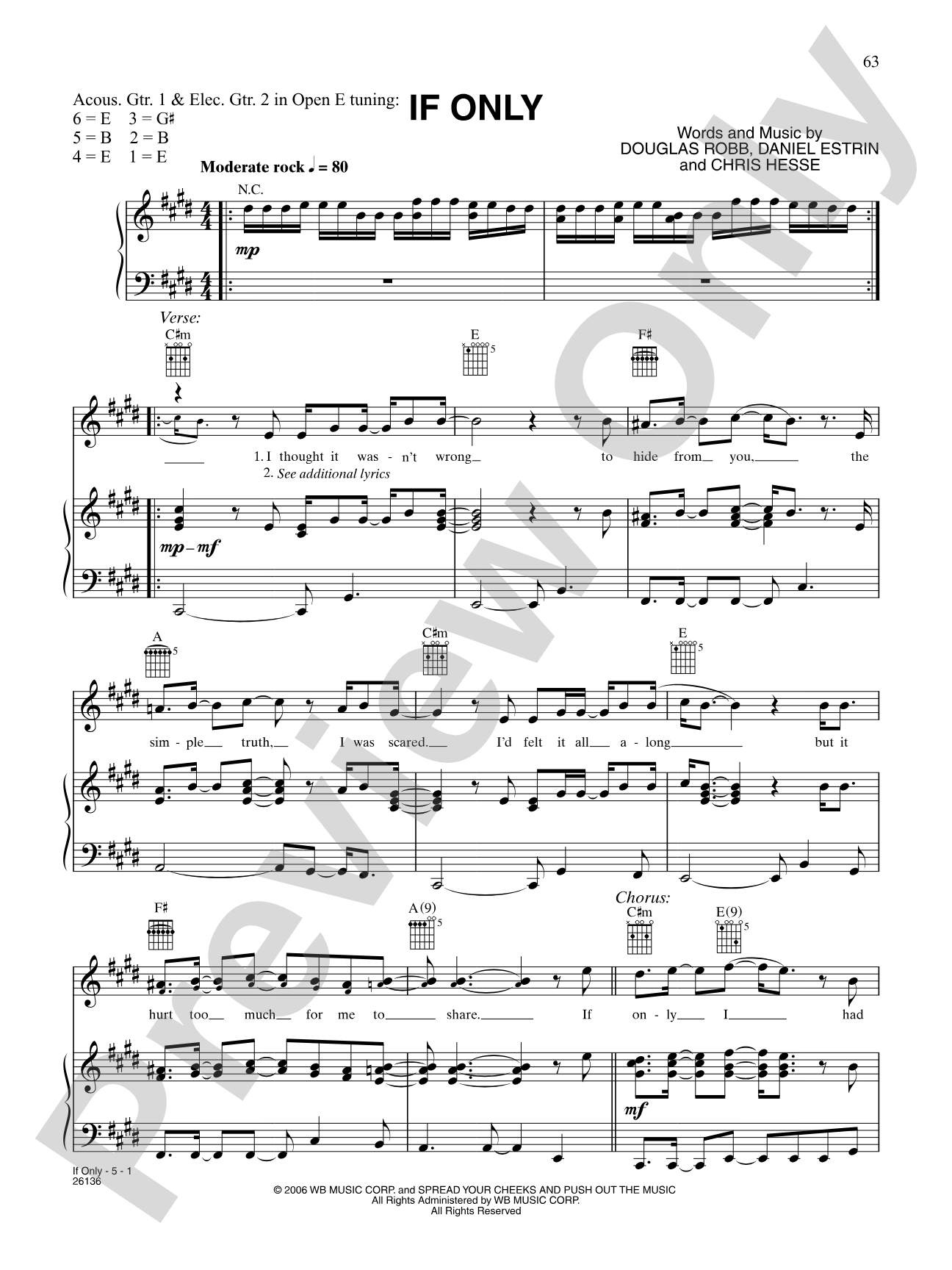

If Only: Piano/Vocal/Chords
Hoobastank
Item: 00-PSP-000111
$4.99
One moment…
Related Items
Born To Lead: Authentic Guitar TAB |
$4.99
|
View | |
Don't Tell Me: Authentic Guitar TAB |
$4.99
|
View | |
Good Enough: Authentic Guitar TAB |
$4.99
|
View | |
If I Were You: Authentic Guitar TAB |
$5.99
|
View | |
If Only: Authentic Guitar TAB |
$4.99
|
View | |
Inside Of You: Authentic Guitar TAB |
$4.99
|
View | |
Look Where We Are: Authentic Guitar TAB |
$4.99
|
View | |
More Than A Memory: Authentic Guitar TAB |
$5.99
|
View | |
Moving Forward: Authentic Guitar TAB |
$4.99
|
View | |
Say The Same: Authentic Guitar TAB |
$4.99
|
View | |
The First Of Me: Authentic Guitar TAB |
$4.99
|
View | |
Without A Fight: Authentic Guitar TAB |
$4.99
|
View | |
Born To Lead: Piano/Vocal/Chords |
$4.99
|
View | |
Don't Tell Me: Piano/Vocal/Chords |
$5.99
|
View | |
Good Enough: Piano/Vocal/Chords |
$4.99
|
View | |
If I Were You: Piano/Vocal/Chords |
$5.99
|
View | |
Inside Of You: Piano/Vocal/Chords |
$4.99
|
View | |
Look Where We Are: Piano/Vocal/Chords |
$5.99
|
View | |
More Than A Memory: Piano/Vocal/Chords |
$5.99
|
View | |
Moving Forward: Piano/Vocal/Chords |
$4.99
|
View | |
Say The Same: Piano/Vocal/Chords |
$5.99
|
View | |
The First Of Me: Piano/Vocal/Chords |
$5.99
|
View | |
Without A Fight: Piano/Vocal/Chords |
$5.99
|
View | |
Inside Of You: Piano/Vocal/Chords |
$4.99
|
View |
Description
Alfred is pleased to release the album-matching folio for Hoobastank's hit record, Every Man for Himself.
The latest release from pop-rock giants Hoobastank, Every Man for Himself has already reached the No. 12 spot on Billboard's Top 200 chart (Billboard.com, 2006). This book provides the lyrics along with piano and chord arrangements for all the songs on the record.
Titles: The Rules * Born to Lead * Moving Forward * Inside of You * The First of Me * Good Enough * If I Were You * Without a Fight * Don't Tell Me * Look Where We Are * Say the Same * If Only * More Than a Memory.


The latest release from pop-rock giants Hoobastank, Every Man for Himself has already reached the No. 12 spot on Billboard's Top 200 chart (Billboard.com, 2006). This book provides the lyrics along with piano and chord arrangements for all the songs on the record.
Titles: The Rules * Born to Lead * Moving Forward * Inside of You * The First of Me * Good Enough * If I Were You * Without a Fight * Don't Tell Me * Look Where We Are * Say the Same * If Only * More Than a Memory.
If Only: Piano/Vocal/Chords isn't in MakeMusic Cloud just yet...but it could be. Let us know you'd like to see it, and you'll help shape what comes next. In the meantime, start a free trial and dive into thousands of interactive titles your students can play along with today.
Request This Title
Tell us you want it.
Start Your Free Trial
Explore everything that's ready to play right now.
Sample Audio
No sample audio found.
Sample Video
No sample videos found.
Additional Details
Publisher:
Alfred Music
Page Count:
76
SKU:
00-PSP-000111
More about this title
About the Artist: Hoobastank
Hoobastank formed in 1994 as a pop-rock band based in Los Angeles, building a devoted fanbase through energetic live performances and radio-friendly hooks. The group achieved mainstream success in the early 2000s with their self-titled debut album and continued to produce chart-climbing records, including Every Man for Himself (2006), which demonstrated their ability to craft anthemic songs that blend heavy instrumentation with accessible melodies.
Why we love this
This folio captures the full energy of a contemporary rock album while remaining accessible for pianists and vocalists who want to explore modern pop-rock songwriting. The chord charts make it straightforward for singers and accompanists to work together, whether in a studio setting, for lessons, or in performance. Thirteen songs provide variety in mood and difficulty, giving students room to choose material that matches their abilities and interests.
What to expect
The collection captures the confident, driving energy of mid-2000s pop-rock: anthemic melodies layered over chord progressions that feel both current and emotionally direct. Each song balances accessibility with genuine melodic substance, creating arrangements that singers can make their own while pianists find immediately playable.
Who it's for
This folio suits pianists and singers preparing contemporary rock repertoire for lessons, recitals, or casual performance. It's ideal for music students exploring modern songwriting styles or vocalists looking for accessible material with straightforward harmonic support.
How to get the most out of it
- Balance the vocal line against rhythmic keyboard patterns. The piano arrangement should support rather than compete with the melody, keeping the attention on what the singer is communicating.
- Pay attention to the harmonic rhythm indicated by the chord symbols. Pop-rock songs often shift between sparse and dense accompaniment patterns; respect those changes to maintain dynamic shape across a song.
- Work from the vocal melody first if you're learning to play and sing simultaneously. Once that's secure, layer in the piano part so the two elements stay coordinated.
- Adapt the instrumentation to your context. These arrangements work as written for solo piano-vocal performance, but can also function as a foundation for adding other instruments or backing tracks depending on your performance setting.
How to use it
This works well in a contemporary music showcase or student recital where you're programming material beyond classical standards. You might feature one or two songs alongside other singer-songwriter or pop-rock pieces to demonstrate how students engage with modern commercial music while developing performance skills. The variety within the album also allows different students to choose songs suited to their vocal range and technical level.
Skills your students will build
- Reading piano/vocal score notation with chord symbols
- Interpreting chord charts to support vocal melody
- Coordinating vocal and piano parts in real time
- Recognizing and playing contemporary harmonic progressions
- Balancing accompaniment texture with melodic emphasis