
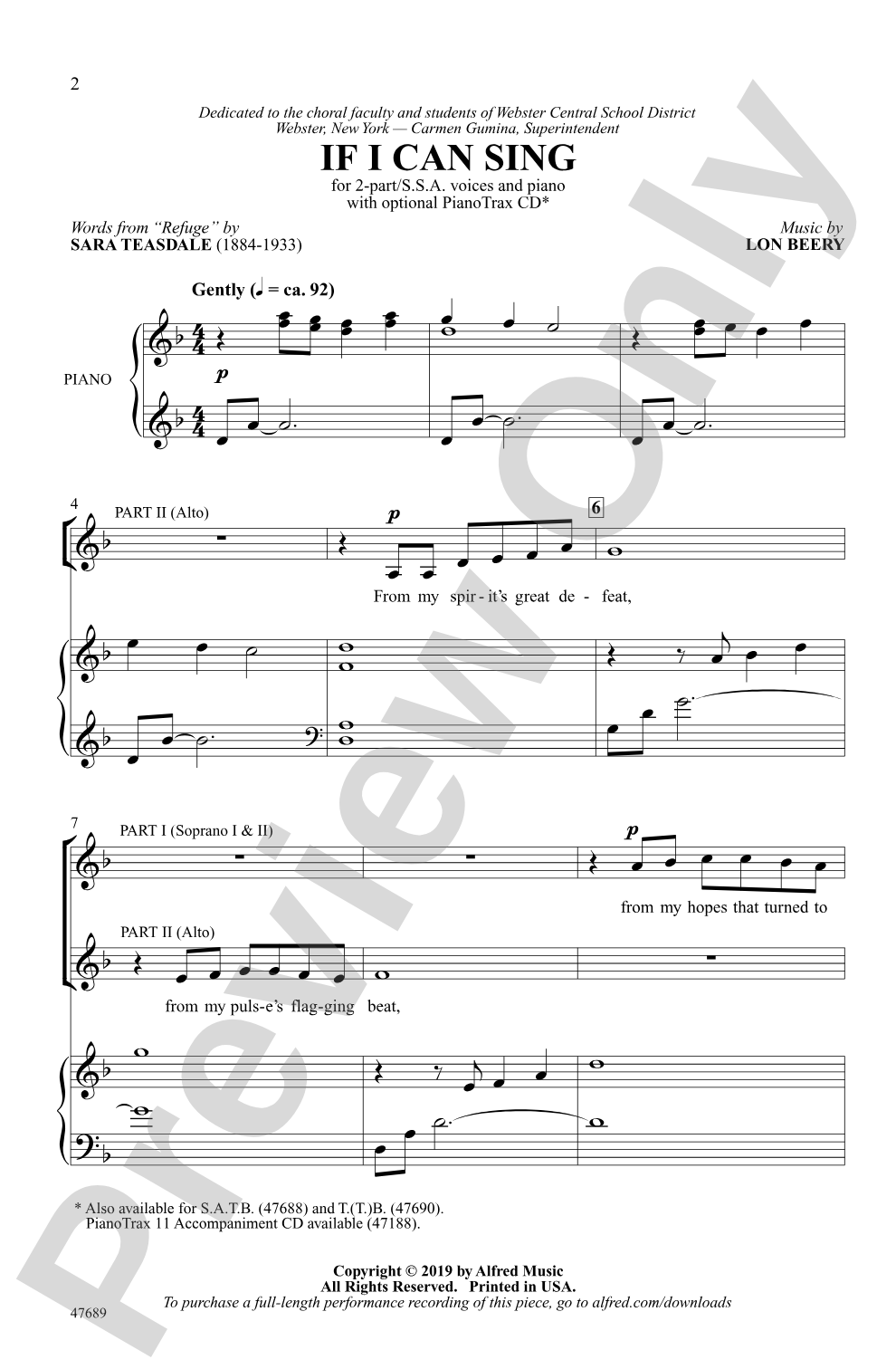
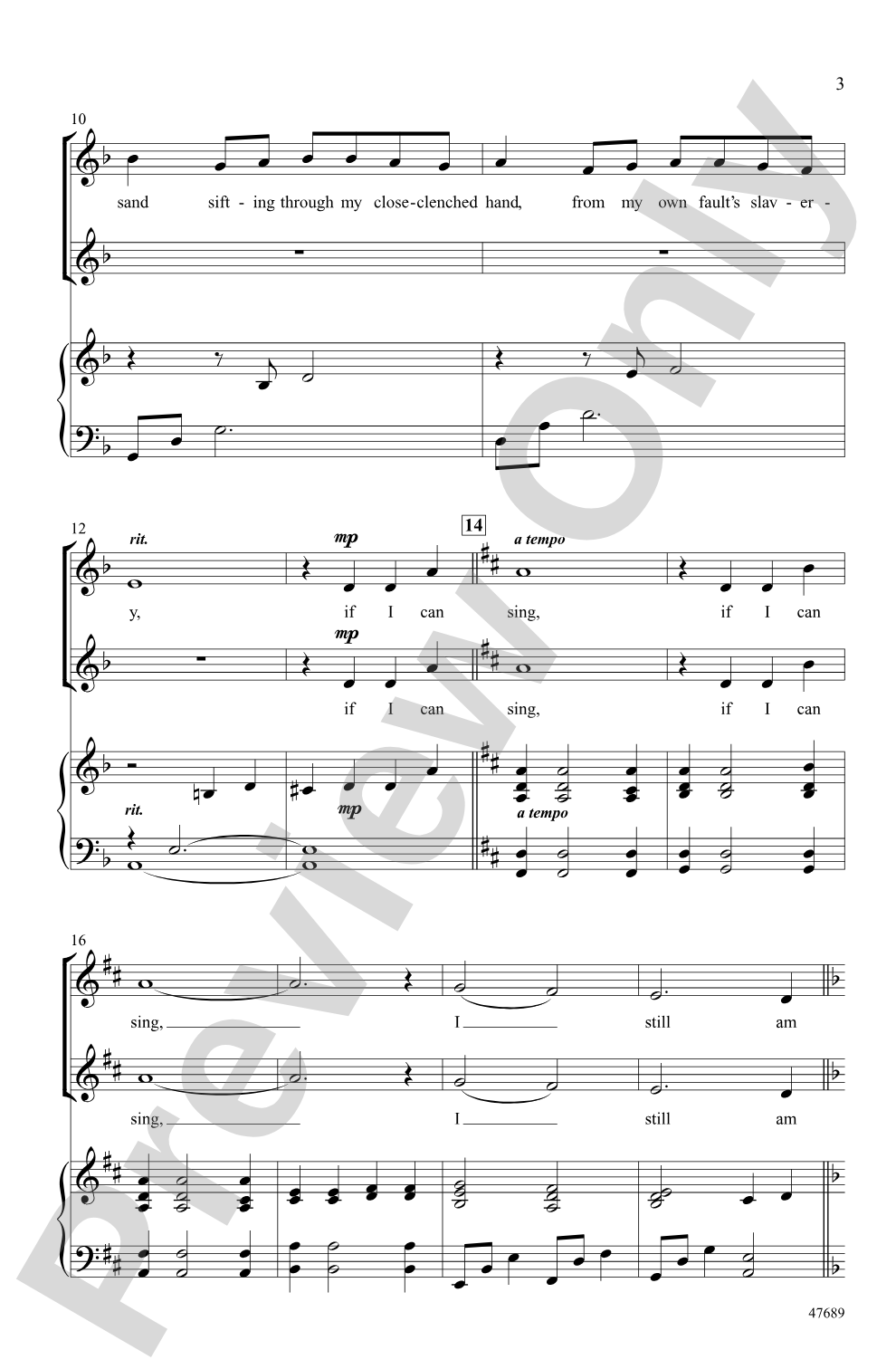

If I Can Sing: 2-Part / SSA Choral Octavo
Words by Sara Teasdale, music by Lon Beery
Item: 00-PO-0005996
$2.05
Minimum order quantity: 20 copies
Pickup currently not available
Description
“If I can sing, I still am free.” Sara Teasdale's 1917 poem “Refuge” is certain to resonate with anyone who possesses an appreciation for singing. This lush setting plays out across a shifting palette of harmonic colors and choral textures, and is offered in wonderfully adaptable alternate voicings that address the needs of choirs at any level.


If I Can Sing: 2-Part / SSA Choral Octavo isn't in MakeMusic Cloud just yet...but it could be. Let us know you'd like to see it, and you'll help shape what comes next. In the meantime, start a free trial and dive into thousands of interactive titles your students can play along with today.
Request This Title
Tell us you want it.
Start Your Free Trial
Explore everything that's ready to play right now.
Sample Audio
1
Audio File
--:--
0:00
0:00
Sample Video
Additional Details
Series:
Alfred Choral Designs
Publisher:
Alfred Music
Page Count:
8
SKU:
00-PO-0005996
More about this title
About the Composer: Lon Beery

Lon Beery brings deep experience in middle school choral direction to his compositional work. As chorus director at Spry Middle School in Webster, New York, he leads six separate choirs serving approximately 500 students, giving him firsthand knowledge of what works in the rehearsal room across multiple skill levels.
Beery has composed and arranged over 50 published pieces for choral ensembles, released through Alfred Music, BriLee, and other publishers. His work has earned multiple ASCAP Standard Awards, and his TTBB composition I Believe was performed by the U.S. Army Chorus at President Ronald Reagan's internment service. He serves as Middle School Chair for New York ACDA and regularly contributes to the field through articles in the Choral Journal and Music Educators Journal, as well as presentations at state, regional, and national conferences.
Why we love this
Beery's harmonic sophistication and ear for choral color shine through here without demanding extreme technical demands. The adaptable voicing options (2-Part, SSA, and SSAA) mean you can perform this with confidence across multiple choir configurations, making it genuinely flexible rather than nominally so. Pairing Teasdale's stirring text with accessible yet substantive writing creates a piece that feels meaningful to singers at any experience level.
What to expect
The piece unfolds with warmth and introspection, its harmonic palette shifting subtly as the emotional arc deepens. Lush without becoming overwrought, the writing feels genuinely lyrical, rewarding singers with moments of freedom and expressive space even as the texture remains carefully controlled.
Who it's for
This octavo works for SSA choirs, treble choirs with flexible voicing needs, and mixed choirs looking for an accessible yet artistically substantial secular piece. The 2-Part and SSA options make it suitable for middle school through high school ensembles, and the literary text appeals to singers who value meaningful repertoire.
How to get the most out of it
- Balance the shifting harmonic colors by identifying where the harmonic center changes and adjusting blend accordingly; this prevents the piece from sounding muddy despite its rich textures.
- Mark where independent voice leading occurs versus moments of homophonic block harmony, then rehearse those passages separately so singers understand when they're carrying a line versus supporting the overall sound.
- Let the recorded accompaniment anchor your initial rehearsals, then gradually reduce reliance on it so the choir develops confident internal tuning across the harmonic changes.
- Attend to text clarity throughout the shifting textures; Teasdale's poem deserves to be heard, so shape dynamics and phrasing around the language rather than purely musical gestures.
How to use it
Program this as a compelling solo for an SSA or treble choir on a concert devoted to poetry and song, or use it in a contest or festival setting where the literary sophistication and harmonic depth will impress adjudicators. It also works beautifully as a contrast piece in a mixed-repertoire concert, offering introspection and artistry between more energetic selections.
Skills your students will build
- Reading and executing shifting harmonic colors and choral textures
- Balancing independent voice lines within lush harmonic writing
- Connecting poetic text to musical phrase shape and dynamic contour
- Adapting secure intonation across non-traditional harmonic progressions