

If I Can Sing: SATB Choral Octavo
Words by Sara Teasdale, music by Lon Beery
Item: 00-PO-0005995
$2.05
Minimum order quantity: 20 copies
Pickup currently not available
Description
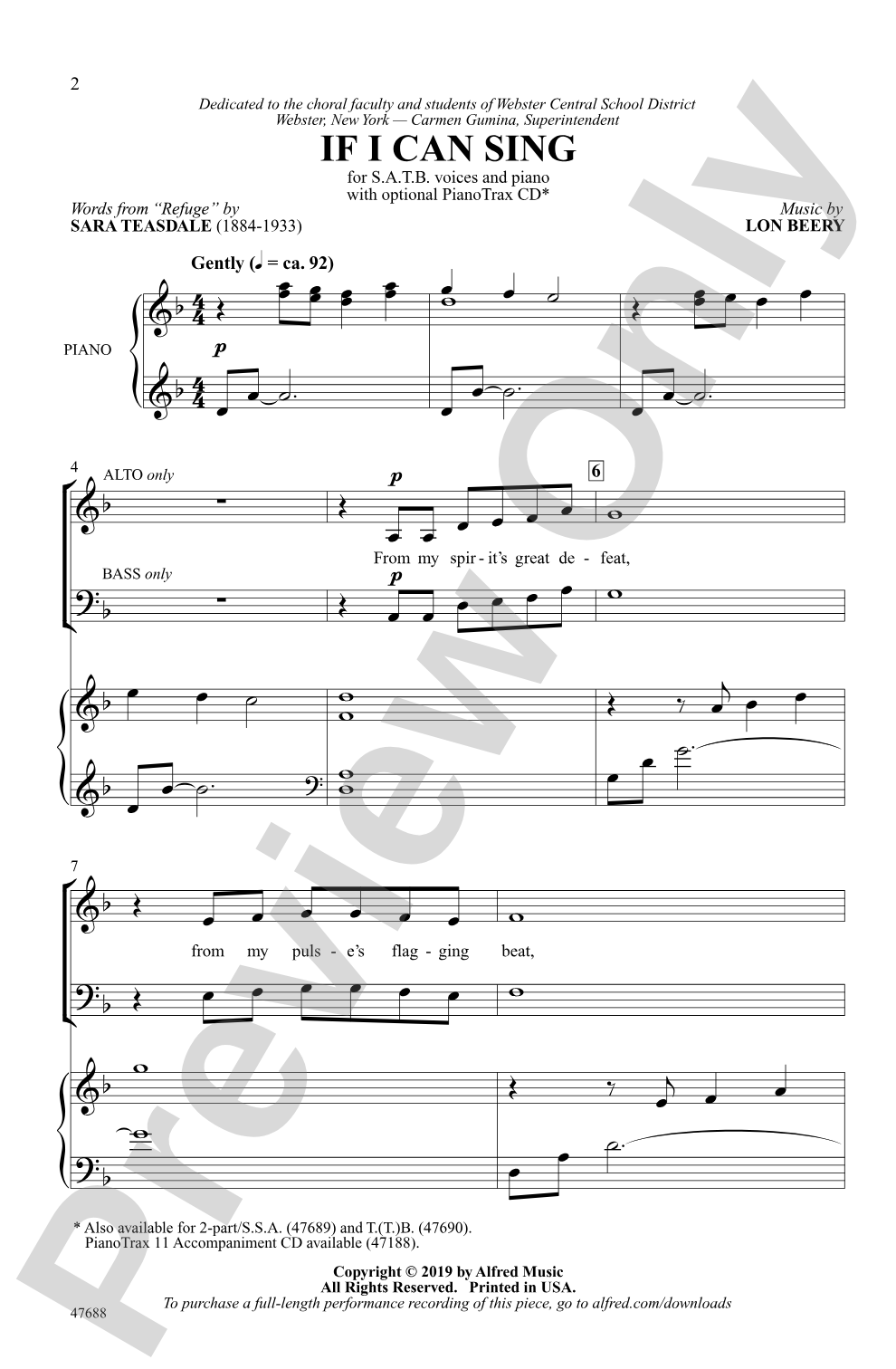
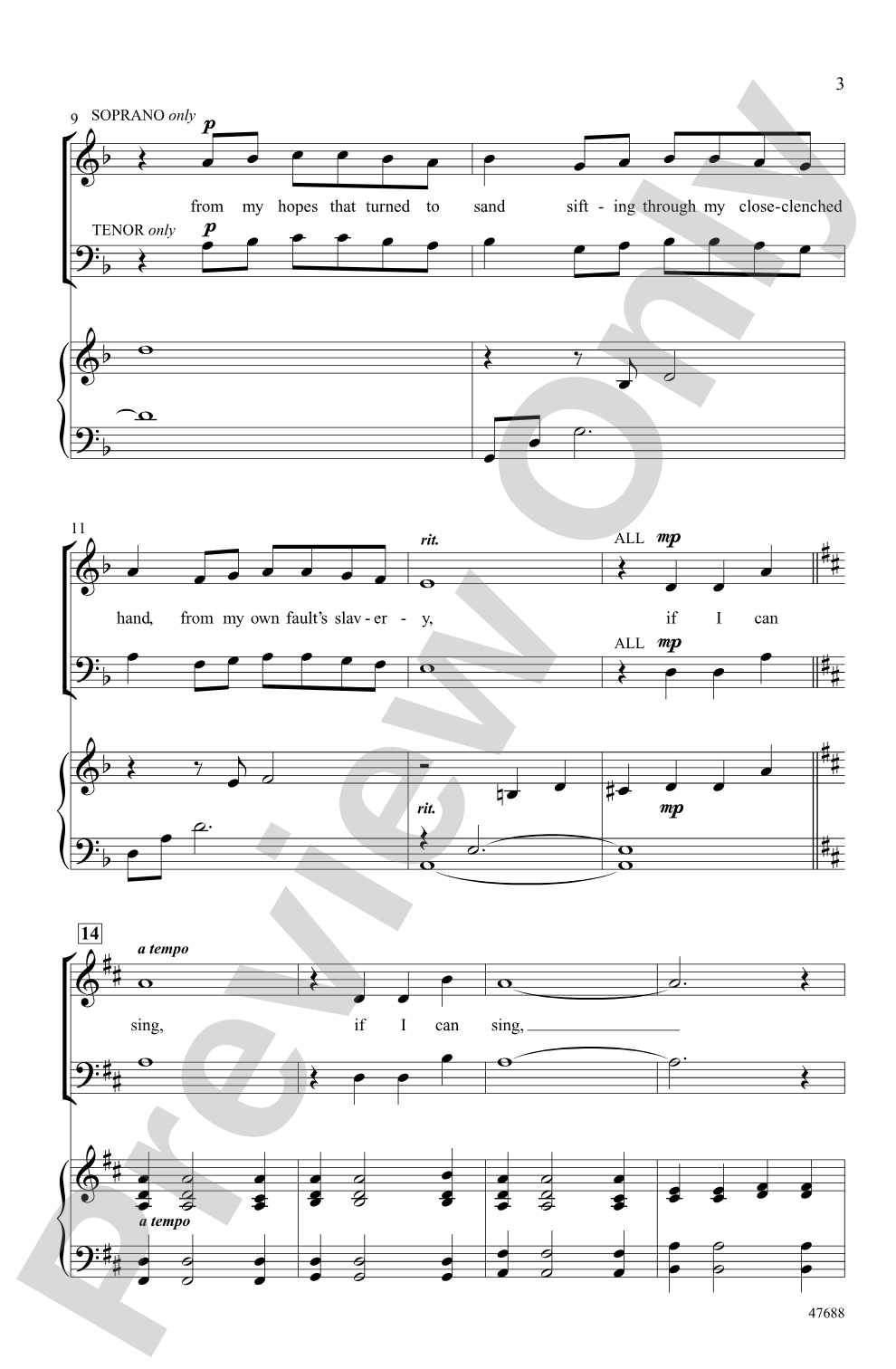
“If I can sing, I still am free.” Sara Teasdale's 1917 poem “Refuge” is certain to resonate with anyone who possesses an appreciation for singing. This lush setting plays out across a shifting palette of harmonic colors and choral textures, and is offered in wonderfully adaptable alternate voicings that address the needs of choirs at any level.


If I Can Sing: SATB Choral Octavo isn't in MakeMusic Cloud just yet...but it could be. Let us know you'd like to see it, and you'll help shape what comes next. In the meantime, start a free trial and dive into thousands of interactive titles your students can play along with today.
Request This Title
Tell us you want it.
Start Your Free Trial
Explore everything that's ready to play right now.
Sample Audio
1
Audio File
--:--
0:00
0:00
Sample Video
Additional Details
Series:
Alfred Choral Designs
Publisher:
Alfred Music
Page Count:
12
SKU:
00-PO-0005995
More about this title
About the Composer: Lon Beery

Lon Beery directs six choruses at Spry Middle School in Webster, New York, where he works with approximately 500 students across multiple choir levels. His compositional output spans more than 50 published choral works, distributed through Alfred Music, BriLee, and other major publishers, and includes the TTBB piece I Believe, which was performed by the U.S. Army Chorus at President Ronald Reagan's internment service.
Beery's contributions to choral music education extend beyond composition. He has written for the Choral Journal and Music Educators Journal, presented at state, regional, and national conferences through ACDA and MENC, and received multiple ASCAP Standard Awards for his compositions. He currently serves as Middle School Chair for New York ACDA.
Why we love this
Beery understands the middle and secondary school choir because he lives in it every day, directing hundreds of singers across multiple ability levels. This piece proves it: the alternate voicings mean you can program a sophisticated poem and lush harmonies whether your choir reads fluently or is still building independence. The text itself carries real weight, giving your singers something meaningful to sing about rather than another generic love song.
What to expect
The music unfolds like a series of watercolor washes, with harmonic colors shifting and blending across each phrase. Beery's setting honors Teasdale's quiet but resolute text, never overshadowing her words but rather wrapping them in warm, expansive harmony. Singers often emerge from this piece surprised by how much emotion they felt moving through its gentle architectural turns.
Who it's for
This octavo suits intermediate to advanced secondary choirs, as well as developing middle school choirs with strong sight-reading skills or sufficient rehearsal time. The alternate voicings make it accessible to varied choir sizes and ability levels, from smaller ensembles to full sections. Directors seeking repertoire that combines literary depth with musicianship development will find it especially valuable.
How to get the most out of it
- Balance the harmonic colors by listening across sections rather than within them; the shifting palette Beery creates requires the soprano, alto, tenor, and bass lines to blend as one color changes to the next.
- Take time with the text during rehearsal. Sara Teasdale's "Refuge" explores freedom through song, and your singers will invest more deeply if they understand why these words mattered to her in 1917 and why they matter now.
- Use the recorded accompaniment (available separately) in early rehearsals to establish the harmonic foundation, then gradually shift to a cappella or piano to deepen ensemble listening.
- Attend to diction as a tool for mood; the lush writing invites legato singing, but clarity of text will keep the message from disappearing into the harmony.
How to use it
Program this as a concert centerpiece or opening selection where you want to set a reflective, artistic tone. It pairs well alongside other poetry-based choral works or as part of a thematic concert exploring freedom, resilience, or the power of the arts. The adaptable voicings also make it suitable for festival competition, where judges appreciate both musical maturity and accessibility.
Skills your students will build
- Reading and sustaining shifting harmonic color changes across SATB texture
- Interpreting literary text and translating emotional meaning into vocal expression
- Balancing part independence with ensemble blend in lush, non-triadic harmony
- Adapting to multiple voicing options and flexible arrangement choices
- Developing legato line-singing across sustained passages