
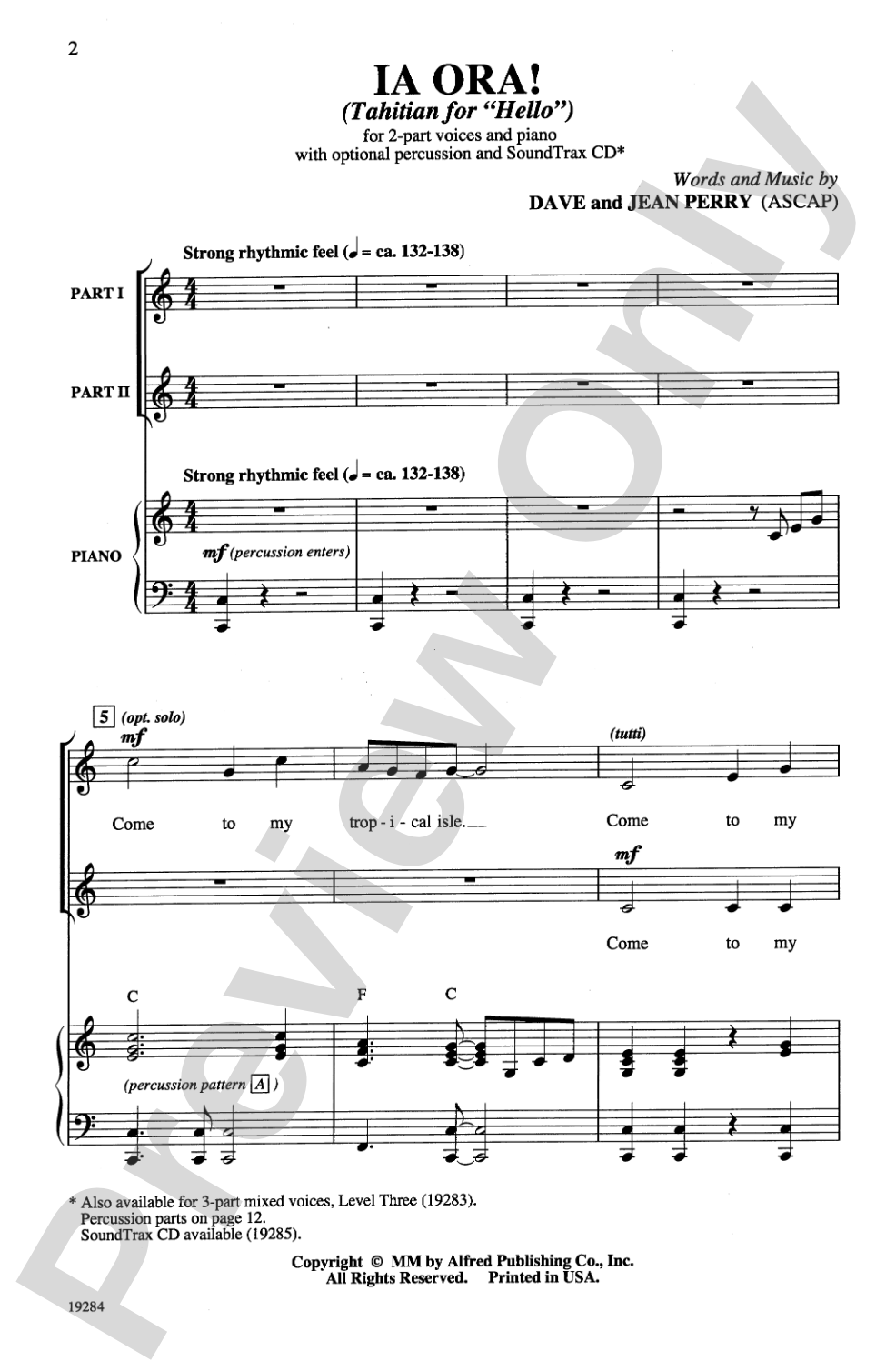
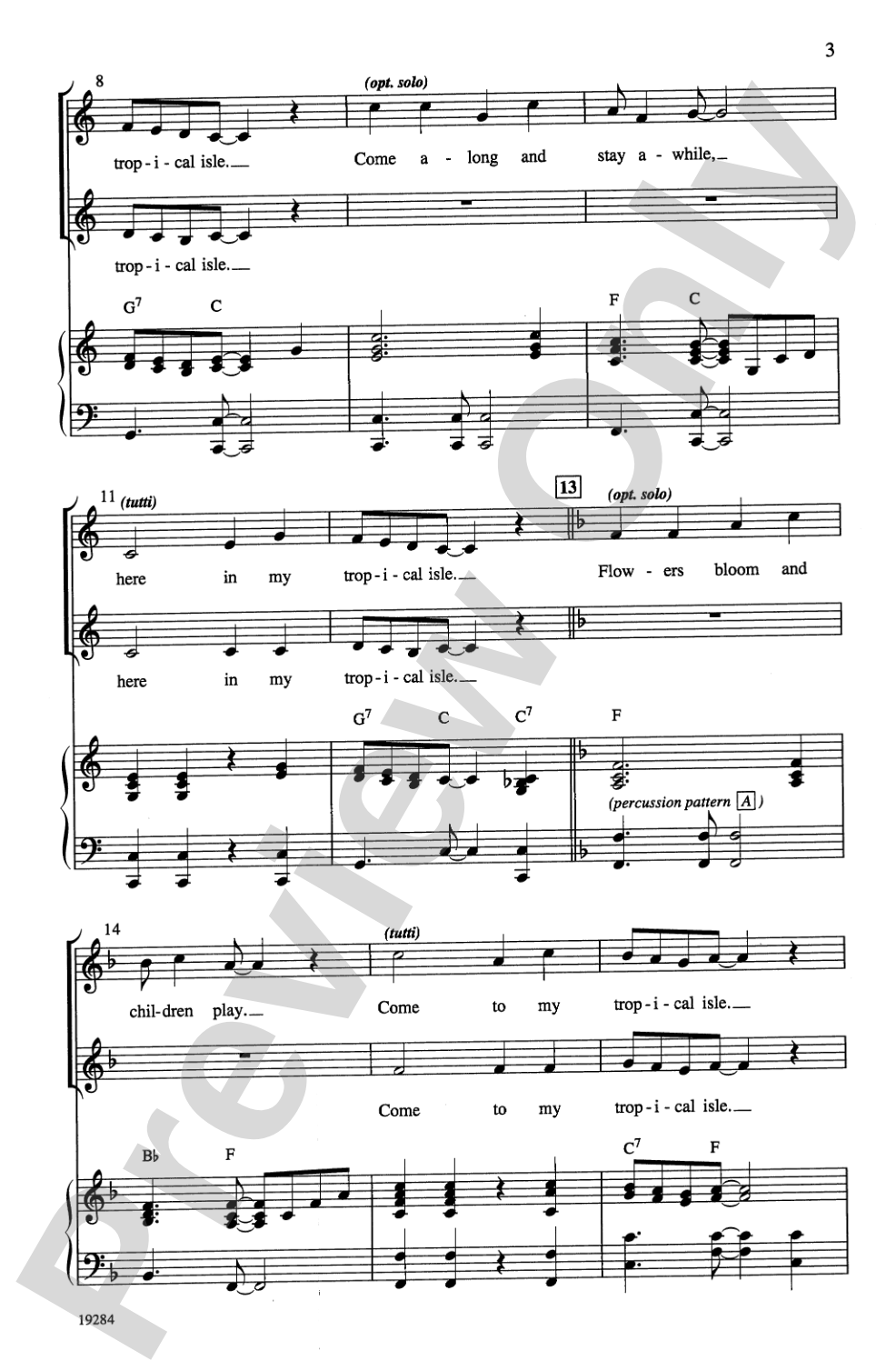
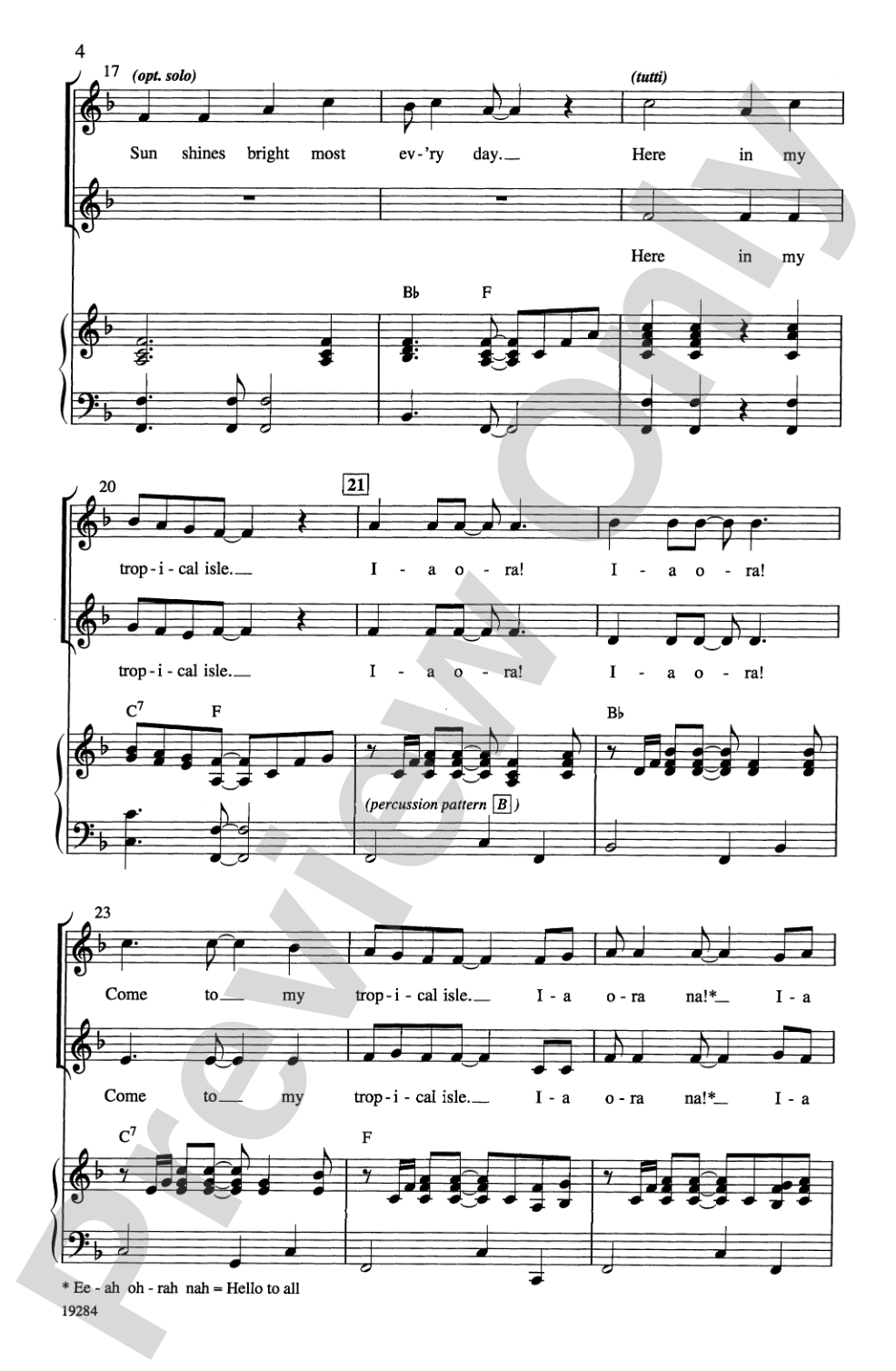

Ia Ora! (Tahitian for "Hello"): 2-Part Choral Octavo
Music by Dave and Jean Perry
Item: 00-PO-0006509
$2.25
Minimum order quantity: 20 copies
Pickup currently not available
Description
A trip to Polynesia inspired Dave and Jean Perry to compose this authentic-sounding choral work based on the traditional rhythms and harmonies of the South Pacific. It's a cross-cultural number written especially for young and developing choral groups. There are opportunities for soloists on several brief, optional solos. Add percussion to make it even more genuine; percussion parts are included in the publication. Or use the lively SoundTrax CD. P.S.: "Ia Ora" means "hello." Included on Sally's "In the Spotlight!" Video, #19803.


Ia Ora! (Tahitian for "Hello"): 2-Part Choral Octavo isn't in MakeMusic Cloud just yet...but it could be. Let us know you'd like to see it, and you'll help shape what comes next. In the meantime, start a free trial and dive into thousands of interactive titles your students can play along with today.
Request This Title
Tell us you want it.
Start Your Free Trial
Explore everything that's ready to play right now.
Sample Audio
1
Audio File
--:--
0:00
0:00
Sample Video
Additional Details
Series:
Alfred Archive Edition: Alfred Choral Designs
Publisher:
Alfred Music
Page Count:
12
SKU:
00-PO-0006509
Instrumentation:
Opt. Percussion
More about this title
About the Composer: Dave Perry
Dave Perry is a composer and arranger whose work spans choral, instrumental, and educational music. His pieces are known for their accessibility to developing ensembles while maintaining genuine musicality and cultural authenticity. Perry has a gift for creating arrangements that honor source material, whether traditional folk songs or world music traditions, making them engaging for young singers without oversimplifying the source.
Why we love this
This piece delivers the sensory experience of travel without requiring your singers to leave the rehearsal room. The authentic South Pacific rhythms and harmonies feel fresh in a choral curriculum while remaining genuinely singable for 2-part groups, and the optional percussion and solos give every voice in your ensemble something specific to prepare.
What to expect
Warm and inviting, with a rhythmic vitality that makes singers want to move. The piece carries the breezy, unhurried joy of island culture while its harmonies feel both fresh and rooted in genuine tradition.
Who it's for
Young and developing 2-part choirs looking for repertoire that sounds sophisticated without excessive technical demands. This works equally well for middle school choirs, high school developing ensembles, or community groups seeking accessible yet meaningful multicultural literature.
How to get the most out of it
- Establish the rhythmic groove early by having the ensemble tap or clap the underlying pulse before adding any pitched material. This locks the South Pacific feel into their bodies.
- If you're using the optional percussion parts, introduce them gradually during rehearsal so singers aren't fighting against unfamiliar accompaniment patterns.
- Highlight the brief solo opportunities in sectional rehearsals. Even short solos build confidence and give developing singers a taste of solo responsibility.
- Use the recorded accompaniment to establish style and tempo; let singers hear the intended groove before drilling notes.
How to use it
Program this in a spring concert celebrating world music, or use it as a concert opener to set an uplifting, accessible tone for the audience. It pairs well with other multicultural selections and works as a standalone cultural spotlight without requiring extensive program notes.
Skills your students will build
- Singing ostinato and rhythmic patterns in 2-part texture
- Interpreting world music style and cultural context
- Managing optional solo passages in ensemble settings
- Responding to percussion accompaniment and non-traditional harmonic colors