

I Will Sing: 2-Part Choral Octavo
Words and music by Andy Beck
Item: 00-PO-0005576

$1.90
Minimum order quantity: 20 copies
Pickup currently not available
Description
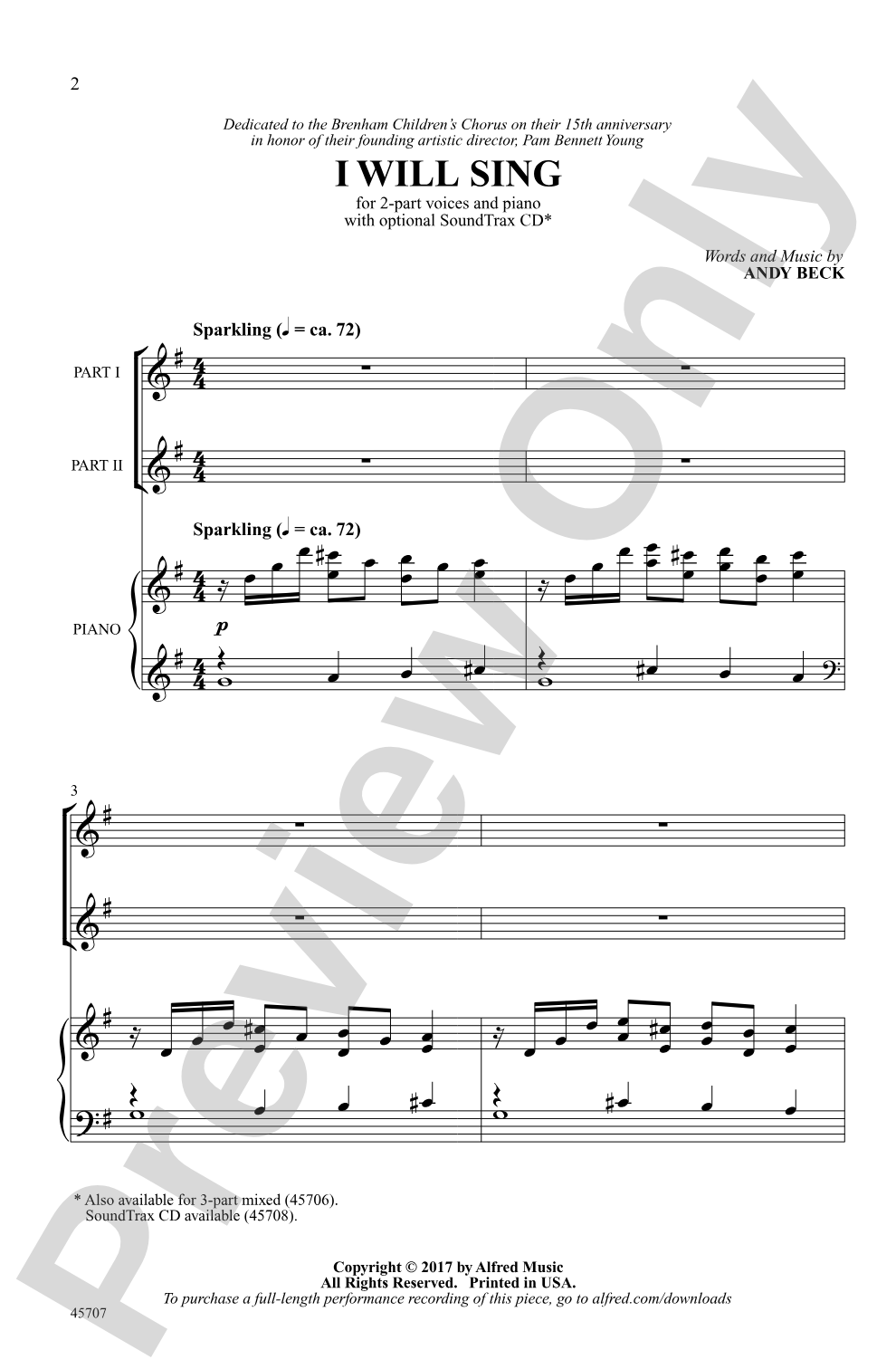
A nature-inspired text reveals beautiful music all around "and if you listen closely," even inside of yourself. Andy's craftsmanship and artistic fingerprint is evident throughout---from the sparkling piano introduction and hushed opening phrase, to the memorable refrain, ascending bridge, and most surprising finish. Not to be missed!


Don't just read it, hear it, play along with it, and watch your students grow with it. In MakeMusic Cloud, I Will Sing: 2-Part Choral Octavo comes alive with professional accompaniment, adjustable tempo, and built-in practice tools that turn solo practice into real progress.
Open in the Player
Jump straight in and assign it today.
Start Your Free Trial
Open this title and explore the full library in minutes.
Sample Audio
1
Audio File
--:--
0:00
0:00
Sample Video
No sample videos found.
Additional Details
Series:
Alfred Choral Designs
Publisher:
Alfred Music
Page Count:
12
SKU:
00-PO-0005576
More about this title
About the Composer: Andy Beck

Andy Beck directs choral publications at Alfred Music and has established himself as one of the most widely performed contemporary choral composers, with over 450 works in active performance across the globe. His compositions span sacred and secular repertoire, children's musicals, and vocal pedagogical resources including Sing at First Sight, Foundations in Choral Sight Singing, and Vocalize! 45 Vocal Warm-Ups That Teach Technique. His work appears regularly in honor choirs, all-state festivals, and regional music education programs.
Beyond the page, Beck is an accomplished tenor who performs with the North Carolina Master Chorale Chamber Choir and has maintained a tenure as an Alfred Music studio singer since 1992. He serves regularly as guest conductor, clinician, and adjudicator for music educators across the United States and internationally, bringing both compositional insight and performance expertise to his work with students. His degrees in music education from Ithaca College and Northwest Missouri State University ground his approach in pedagogical rigor and artistic ambition.
Why we love this
Beck's ear for piano writing is immediately evident in the sparkling introduction and carefully wrought harmonic backdrop, making this piece stand out from more generic contemporary choral offerings. The text invites genuine emotional connection without sentimentality, and the ascending bridge creates a natural arc that keeps singers and listeners engaged. The final surprise ending demonstrates compositional craft that rewards careful rehearsal and repays the investment tenfold in performance.
What to expect
A moment of quiet contemplation followed by gradual awakening and discovery. The music invites singers to recognize beauty in their surroundings and within themselves, moving from hushed introspection through a memorable, singable melody into an unexpected and satisfying resolution that leaves listeners wanting to hear it again.
Who it's for
Choirs at the 2-part level with solid intonation and basic musical maturity, including middle school treble ensembles, adult community choirs, and mixed choirs exploring accessible contemporary repertoire. The piece works equally well for concert performance and festival contexts where emotional authenticity matters as much as technical precision.
How to get the most out of it
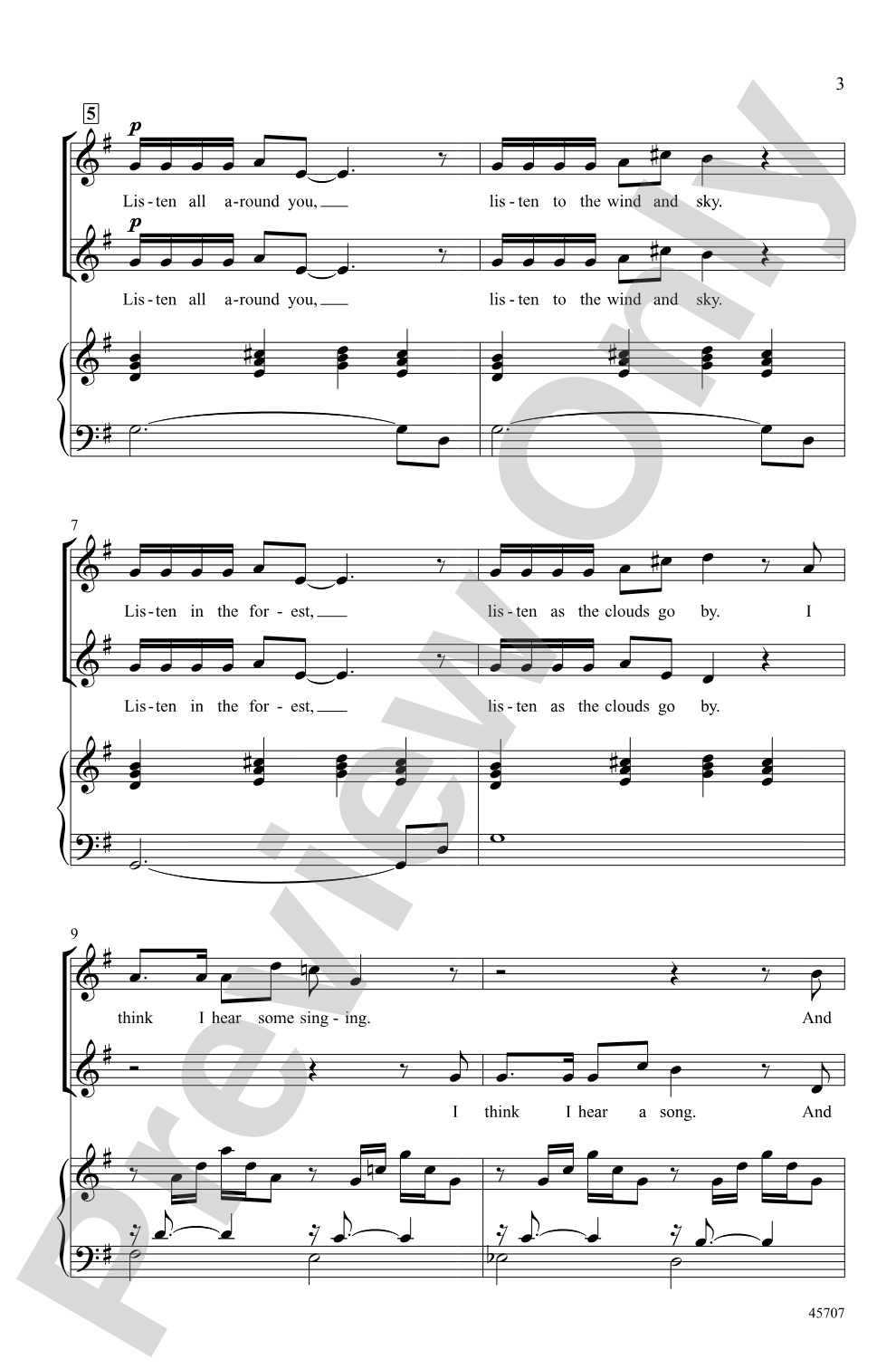
- Shape the hushed opening phrase with precise dynamic control; the contrast with the sparkling piano introduction depends on genuine restraint from your singers, not just marking it mezzo-piano on the page
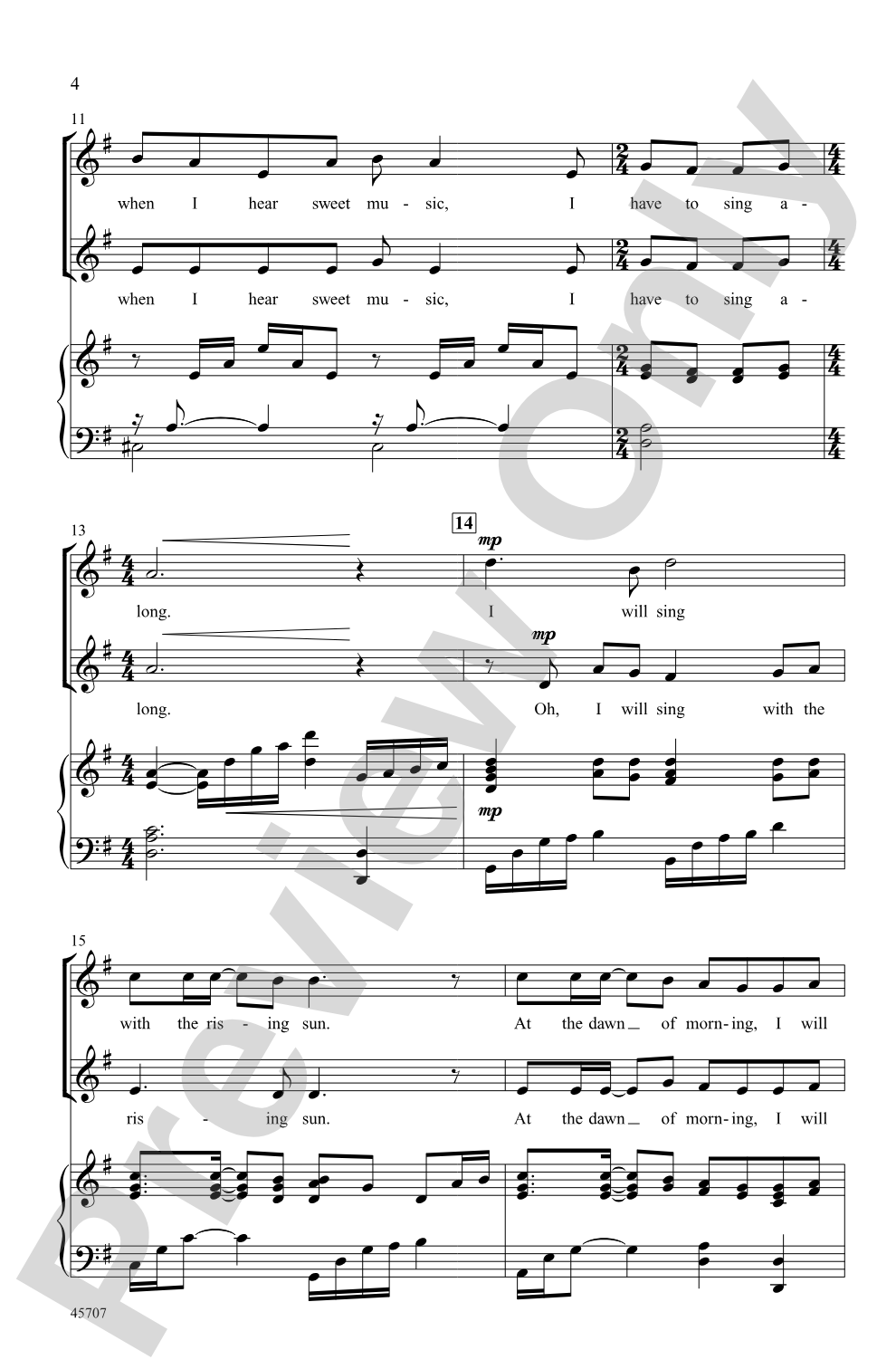
- Highlight the memorable refrain by isolating it in rehearsal and drilling it as its own unit; this gives singers ownership of the most accessible melodic material
- Build momentum through the ascending bridge by conducting with a subtle tempo lift and encouraging singers to imagine the line climbing toward something significant
- Prepare the surprising finish in isolation first, discussing its effect and intention before drilling the vocal mechanics; singers who understand the compositional gesture will execute it with better musicality
How to use it
Open a concert with this piece to set a reflective, elegant tone, or place it midprogram as a moment of stillness between more energetic selections. The nature-inspired text and accessible voicing make it suitable for spring concerts, environmental themes, or programming that explores contemporary secular choral writing at a manageable level.
Skills your students will build
- Sustaining pianissimo singing with consistent tone and intonation
- Responding to subtle dynamic shaping and musical phrasing in an unison or two-part texture
- Building momentum through ascending melodic lines
- Ensemble balance in relation to piano accompaniment
- Interpretation of contemporary harmonic language in a singable, accessible setting