
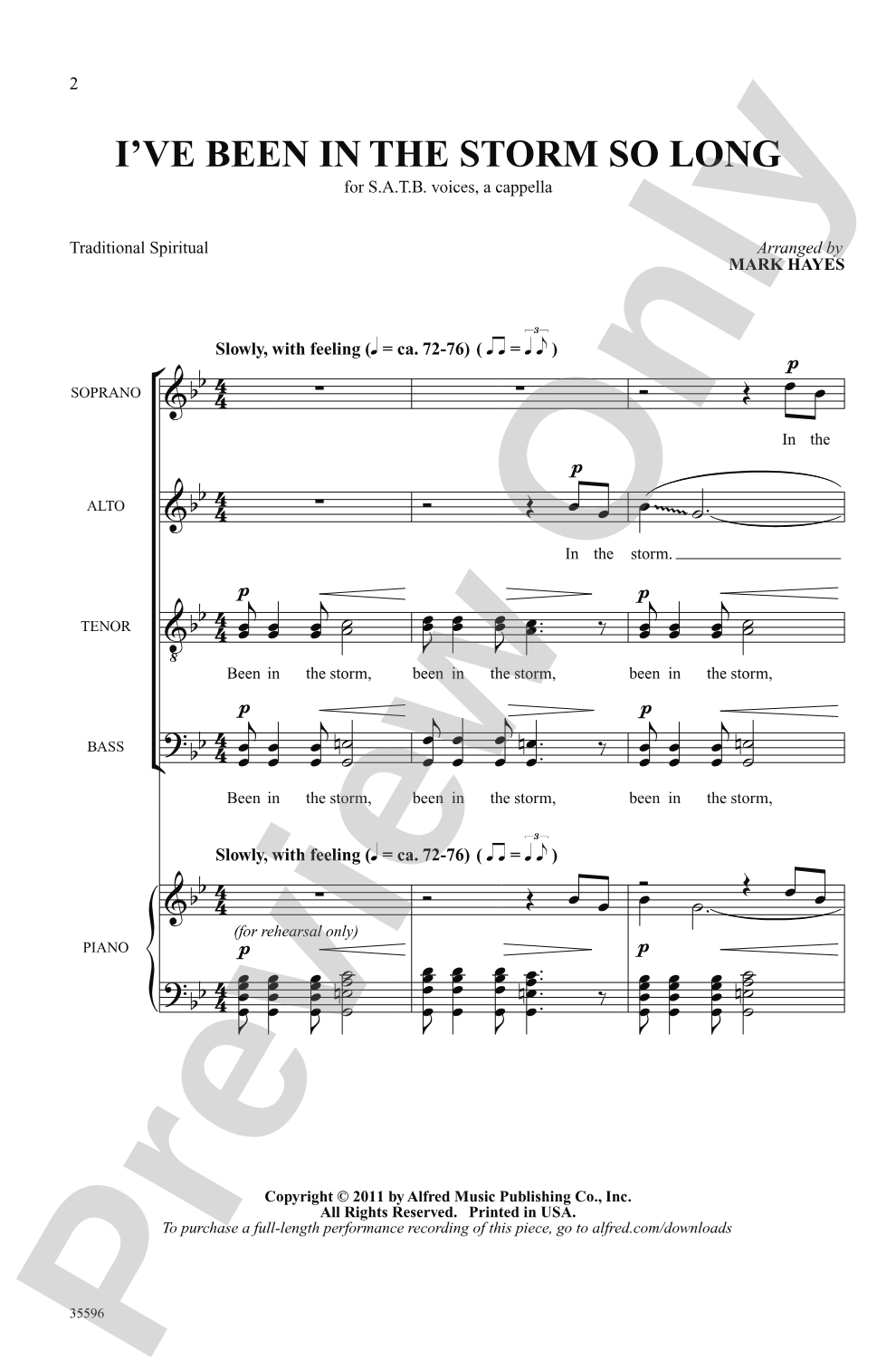
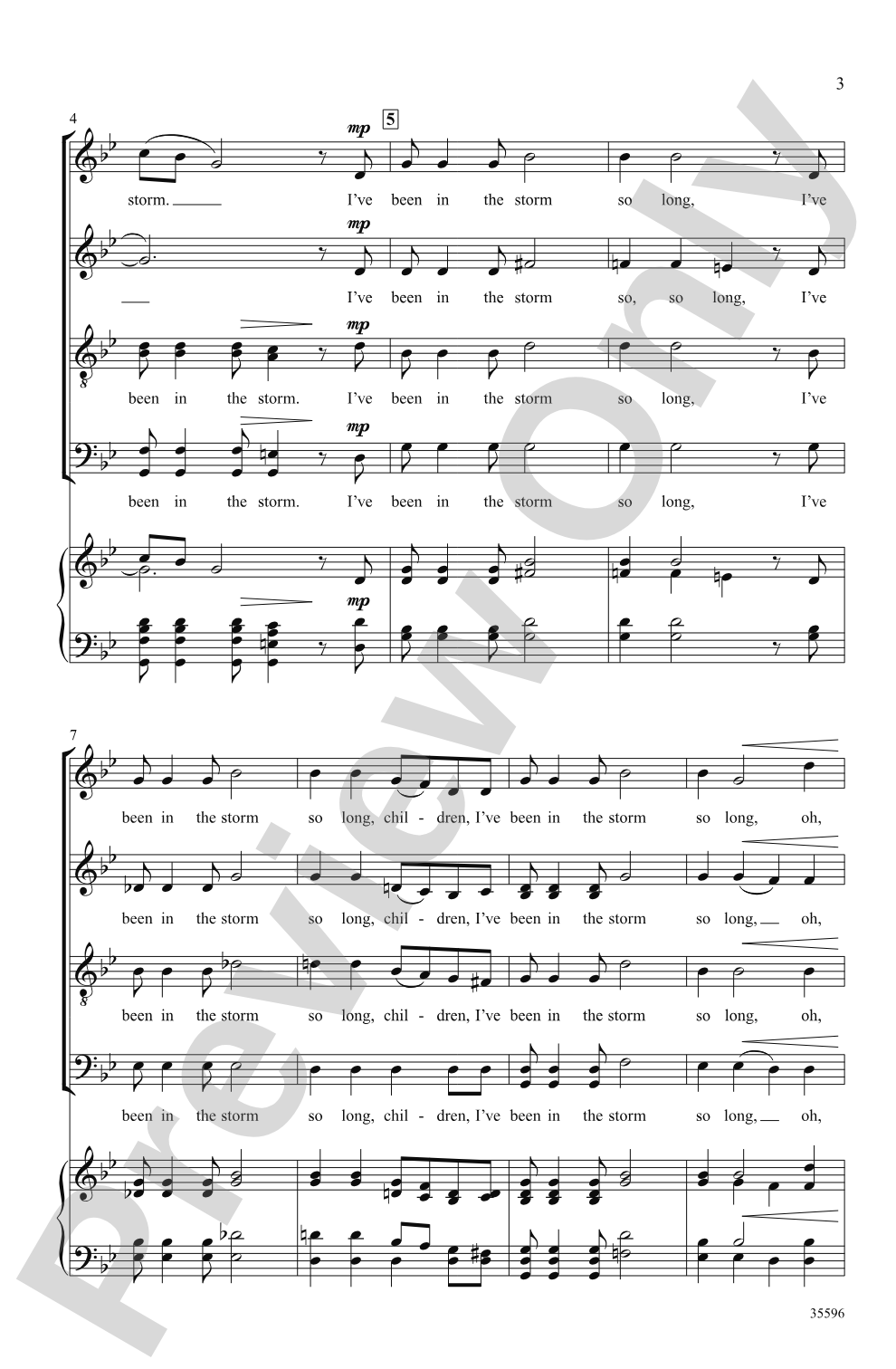
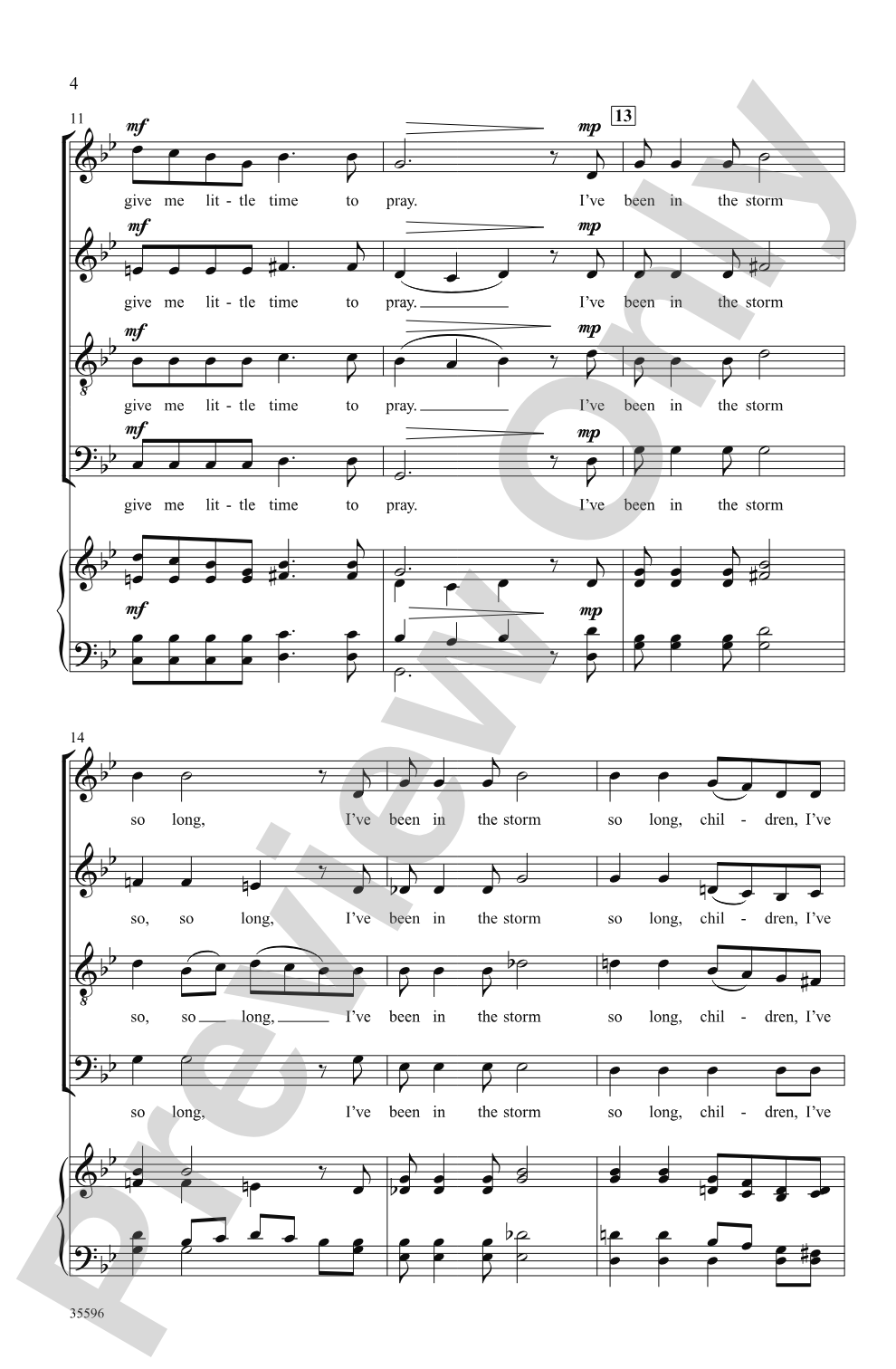

I've Been in the Storm So Long: SATB, a cappella Choral Octavo
Traditional Spiritual / arr. Mark Hayes
Item: 00-PO-0000916
$1.80
Minimum order quantity: 20 copies
Pickup currently not available
Related Items
I've Been in the Storm So Long: SATB, a cappella Choral Octavo |
$1.80
|
View |
Description
One of the great spirituals is skillfully arranged for mature a cappella groups. Each section of the choir shines with characteristic voice parts and occasional divisi. Superb writing with a deliberate slow groove and a wistful bluesy sound.


I've Been in the Storm So Long: SATB, a cappella Choral Octavo isn't in MakeMusic Cloud just yet...but it could be. Let us know you'd like to see it, and you'll help shape what comes next. In the meantime, start a free trial and dive into thousands of interactive titles your students can play along with today.
Request This Title
Tell us you want it.
Start Your Free Trial
Explore everything that's ready to play right now.
Sample Audio
1
Audio File
--:--
0:00
0:00
Sample Video
No sample videos found.
Additional Details
Series:
Alfred Choral Designs
Publisher:
Alfred Music
Page Count:
12
SKU:
00-PO-0000916
More about this title
About the Arranger: Mark Hayes

Mark Hayes is a prolific composer and arranger whose catalog exceeds 1,750 published works across multiple genres and ensembles. Trained at Baylor University with a degree summa cum laude in Piano Performance, he has built an international reputation conducting at Lincoln Center, the National Cathedral, and Carnegie Hall, and has received the Award for Exemplary Leadership in Christian Music from Baylor's Center for Christian Music Studies.
Beyond the concert hall, Hayes has shaped sacred and secular music for choirs, orchestras, and soloists. He commissioned his Requiem for world premieres in New York City and Rome, and has orchestrated musicals and theatrical works while maintaining a deep commitment to piano composition. His arrangements honor the traditions of spirituals, carols, and classical forms, making sophisticated choral writing accessible to singers at all levels.
Why we love this
Hayes brings his signature sophistication to this spiritual without sacrificing its soul. The deliberate slow groove and bluesy harmonic language honor the tradition while creating something that feels both reverent and immediately singable. Mature choirs will find themselves genuinely moved by the arrangement's emotional restraint and the space it gives each voice section to contribute something meaningful.
What to expect
The arrangement unfolds with contemplative restraint, allowing the spiritual's emotional weight to emerge gradually. Blended with bluesy harmonic movement and the intimacy of a cappella sound, it creates a meditation rather than a proclamation. There is profound wistfulness here, a quality that speaks to perseverance without sentimentality.
Who it's for
This arrangement is designed for choirs with solid vocal technique and maturity in reading complex harmonic language. Groups with experience in a cappella singing will appreciate the demands and rewards of the divisi writing, while singers who have never tackled a spiritual through Hayes' lens will gain fresh insight into the form.
How to get the most out of it
- Honor the wistful quality by resisting the urge to rush the tempo. The "slow groove" works precisely because singers can breathe into the phrasing and let the harmonies settle.
- Balance the divisi sections carefully during rehearsal so that each strand of the choir can hear its own part before blending into the full texture.
- Pay attention to the bluesy inflections in the vocal lines. These require subtle pitch bending and expressive shaping that goes beyond notation alone.
- Use the characteristic voice part writing as a rehearsal tool. Have sections identify their unique musical material early so they understand their role in the overall design.
How to use it
Place this as a centerpiece in a concert exploring American choral traditions, particularly if you are pairing spirituals with other sacred or art music arrangements. Its mature character and introspective tone make it excellent for settings where contemplation matters more than spectacle. Consider programming it in a second half that emphasizes emotional depth or historical significance.
Skills your students will build
- Sustaining pitch and blend in a cappella settings without instrumental reference
- Reading and executing divisi voice parts with independence and clarity
- Applying expressive bluesy inflections and subtle pitch shaping to spiritual idioms
- Balancing harmonic complexity while maintaining forward momentum in slow tempos
- Interpreting characteristic voice writing that defines individual sections' musical roles