

I Thought About You: SATB Choral Octavo
Words by Johnny Mercer, music by Jimmy Van Heusen / arr. Paul Langford
Item: 00-PO-0003341
$2.10
Minimum order quantity: 20 copies
One moment…
Description
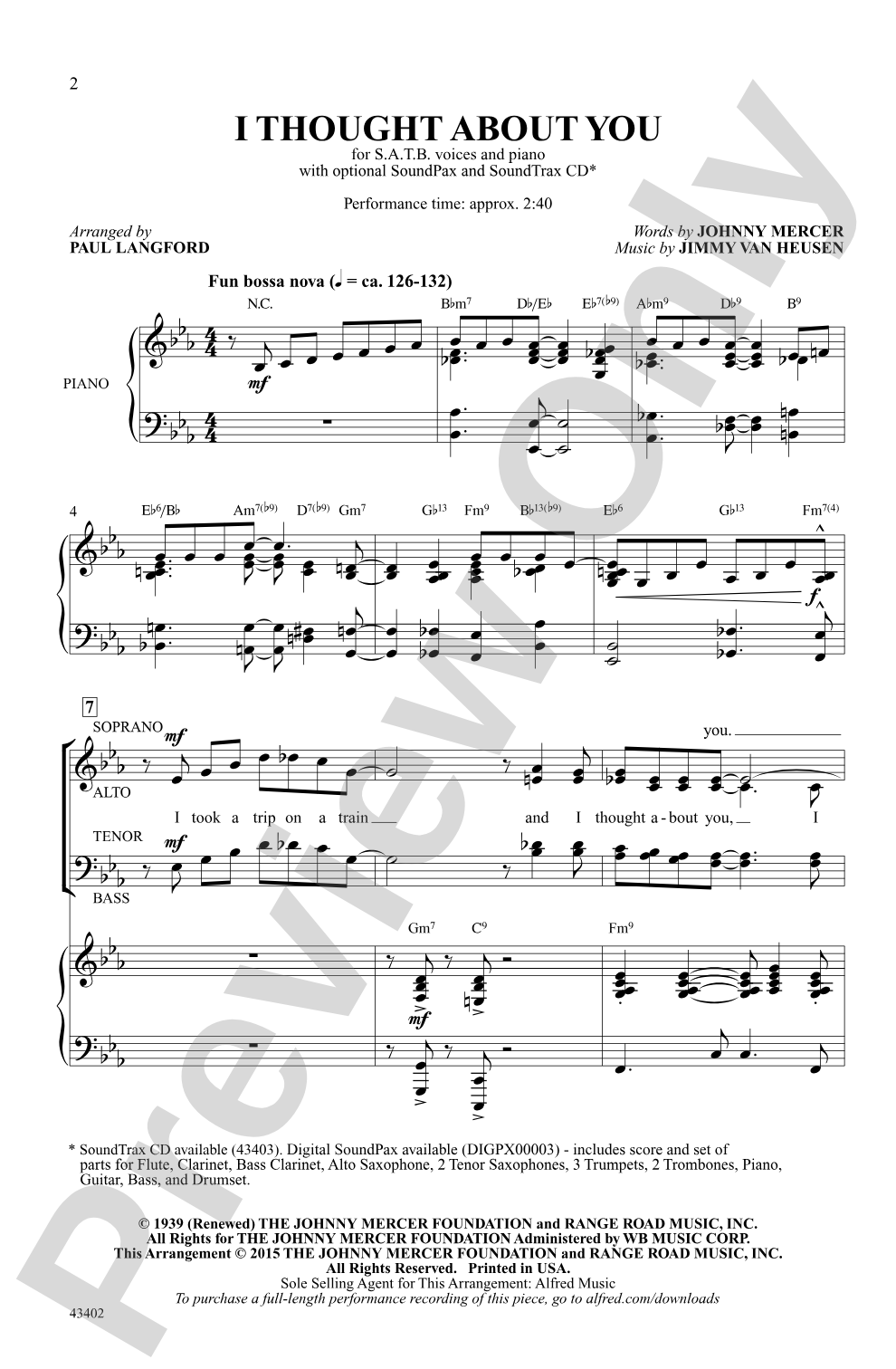
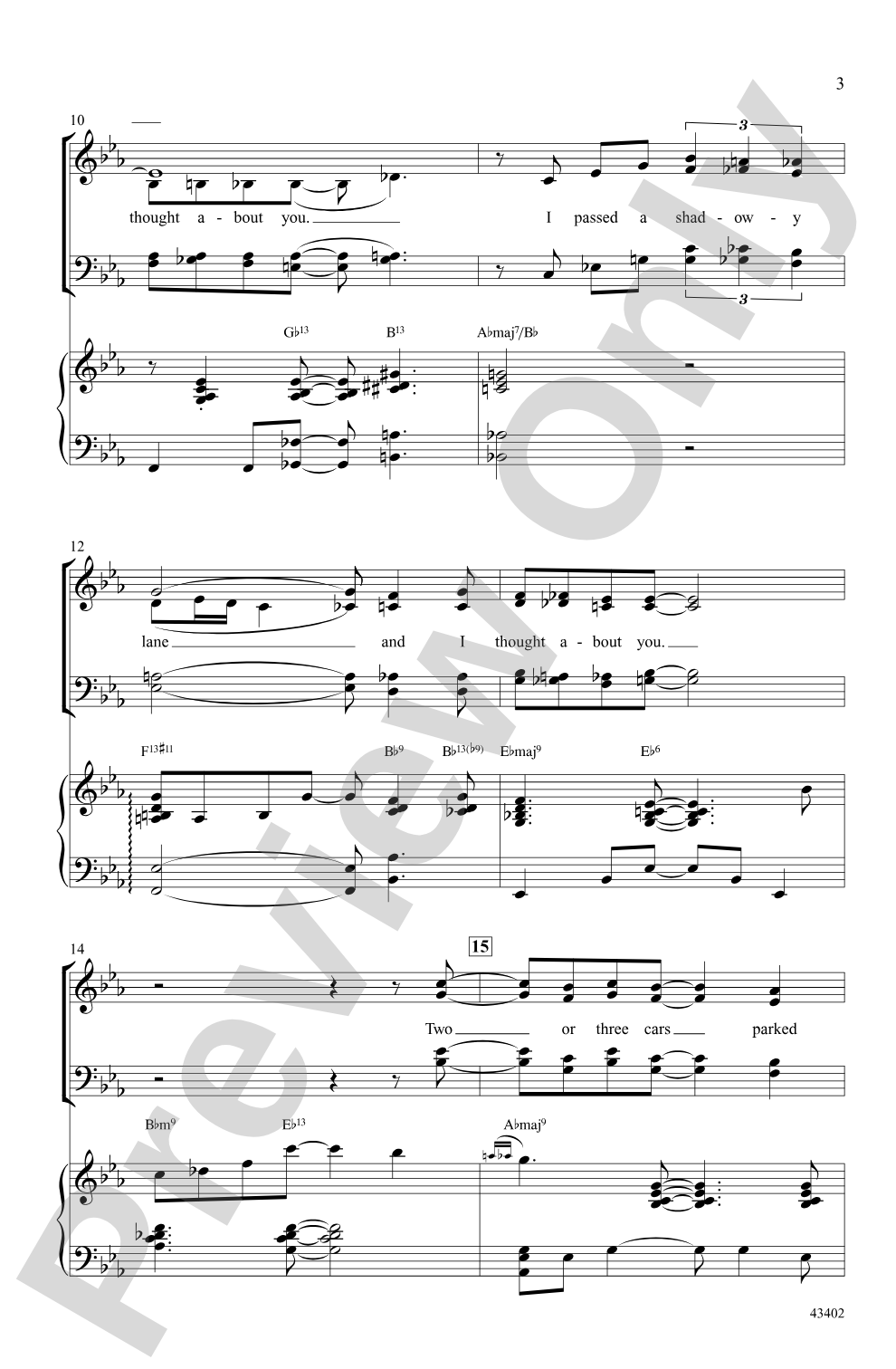
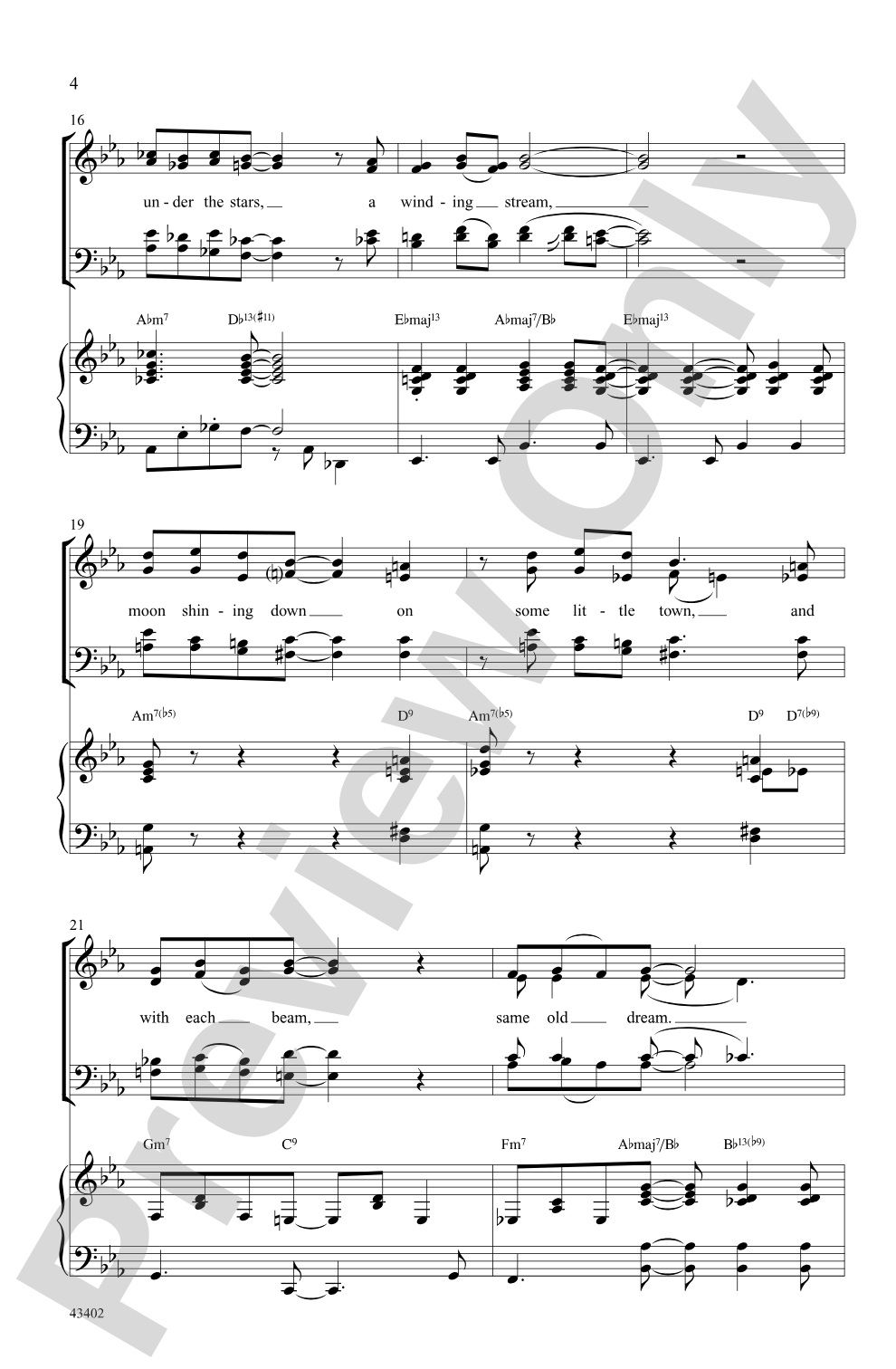
"I took a trip on a train, and I thought about you." This famous Mercer lyric was actually written while he was taking a train to his next gig. With a fun bossa nova feel throughout, this is a true Great American Songbook classic re-imagined!


I Thought About You: SATB Choral Octavo isn't in MakeMusic Cloud just yet...but it could be. Let us know you'd like to see it, and you'll help shape what comes next. In the meantime, start a free trial and dive into thousands of interactive titles your students can play along with today.
Request This Title
Tell us you want it.
Start Your Free Trial
Explore everything that's ready to play right now.
Sample Audio
1
Audio File
--:--
0:00
0:00
Sample Video
No sample videos found.
Additional Details
Series:
Alfred Pop Choral Series
Publisher:
Alfred Music
Page Count:
12
SKU:
00-PO-0003341
More about this title
About the Composer: Jimmy Van Heusen
Jimmy Van Heusen (1913–1990) was one of the most prolific and successful composers of the Golden Age of American songwriting. He wrote over a thousand songs during his career, collaborating with lyricists including Johnny Burke and Sammy Cahn to create standards that defined mid-century popular music. Van Heusen's melodic gift and harmonic sophistication made his work equally at home in jazz clubs, concert halls, and on Broadway.
His songs earned four Academy Awards and numerous Grammy nominations, cementing his place among the greatest American songwriters. Beyond commercial success, Van Heusen's compositions have become essential teaching tools in music education, offering students direct access to the craftsmanship and elegance that characterized the Great American Songbook.
Why we love this
This arrangement captures everything that makes Great American Songbook standards rewarding for choirs: accessible voicing that lets singers connect with one of the most famous opening lyrics in American music, a laid-back bossa nova groove that keeps energy alive without demanding extreme technical precision, and harmonic sophistication that rewards attention to blend and phrasing. The recorded accompaniment option makes it practical for rehearsals and performances, whether you're building toward a full concert or adding a single standout moment.
What to expect
A wistful moment of reflection set to a relaxed, sophisticated groove. The bossa nova setting creates an intimate quality despite the four-part texture, evoking the quiet ease of someone gazing out a train window and drifting into thought. There's warmth here, not melancholy; the arrangement invites singers to inhabit a moment of genuine nostalgia without drama.
Who it's for
This arrangement works for choirs at the intermediate level and above who want to explore jazz-influenced popular standards with genuine vocal writing. It suits programs seeking repertoire that appeals to audiences already familiar with the song while offering singers meaningful ensemble challenges.
How to get the most out of it
- Allow the bossa nova rhythm to breathe naturally rather than rushing the pulse; think of the groove as conversational, not rigid. The recorded accompaniment can help establish this feel during early rehearsals.
- Balance the opening melody across voices so the famous lyric lands clearly. The familiarity of the text helps audiences settle in, but only if they can hear it.
- Shape phrases with gentle dynamic contours that follow the natural speech patterns of Mercer's lyrics. Avoid marking the beat; let the words guide phrasing instead.
- In sections where voices move independently, maintain rhythmic precision without sounding metronomic. Use the full 12 pages to find moments where your arrangement can breathe between tighter passages.
How to use it
Program this alongside other Great American Songbook standards to create a cohesive concert section, or use it as a palette cleanser between more demanding classical or contemporary works. The jazz-influenced harmonies and popular appeal make it an excellent bridge repertoire for mixed-level choirs, and the recorded accompaniment option supports flexible scheduling when you need flexibility in rehearsal timing.
Skills your students will build
- Singing with jazz inflection and swing feel in a choral context
- Balancing clarity of text with harmonic blend in four-part writing
- Tracking independent rhythmic lines while maintaining ensemble cohesion
- Interpreting twentieth-century popular music with stylistic authenticity