

I'm Beginning to See the Light: SATB Choral Octavo
Words and music by Don George, Johnny Hodges, Duke Ellington, and Harry James / arr. Michele Weir
Item: 00-PO-0001417
$2.50
Minimum order quantity: 20 copies
One moment…
Related Items
I'm Beginning to See the Light: SoundTrax Digital Audio Download |
$26.99
|
View | |
I'm Beginning to See the Light: Choral SoundPax |
$10.00
|
View | |
I'm Beginning to See the Light: SATB Choral Octavo |
$2.50
|
View | |
I'm Beginning to See the Light: Choral Octavo SoundTrax CD |
$26.99
|
View | |
I'm Beginning to See the Light: Choral SoundPax |
$10.00
|
View |
Description
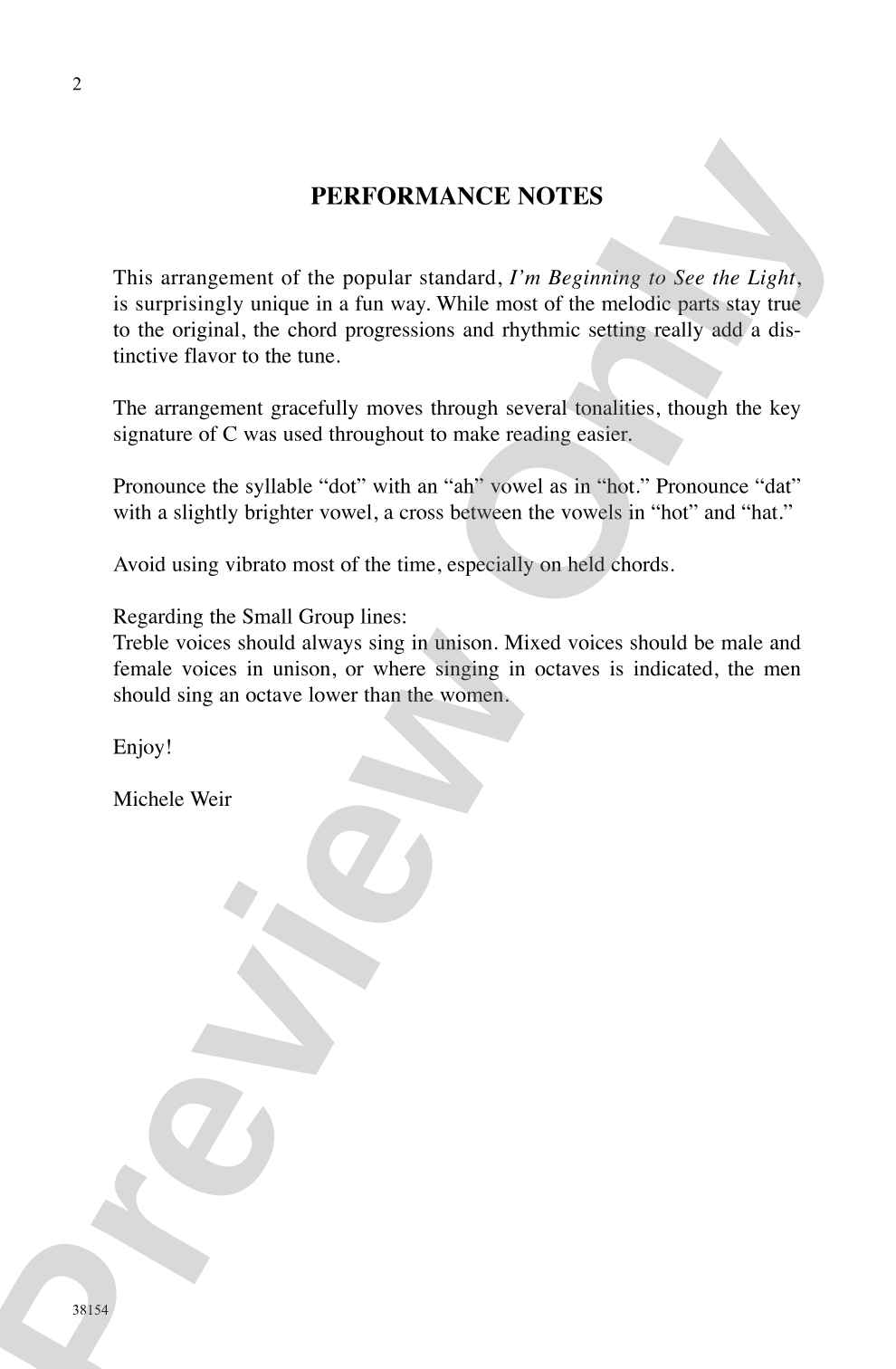
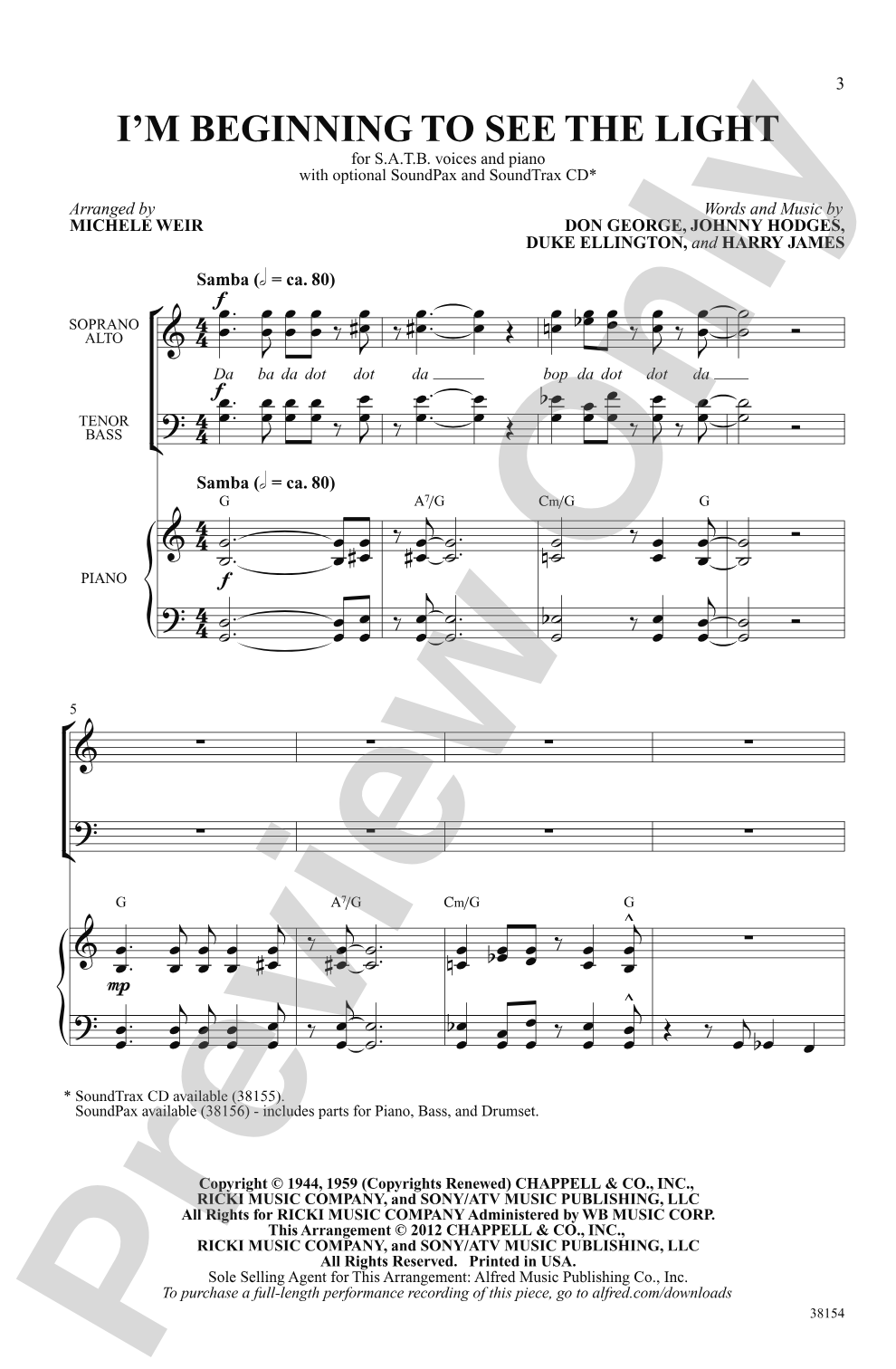
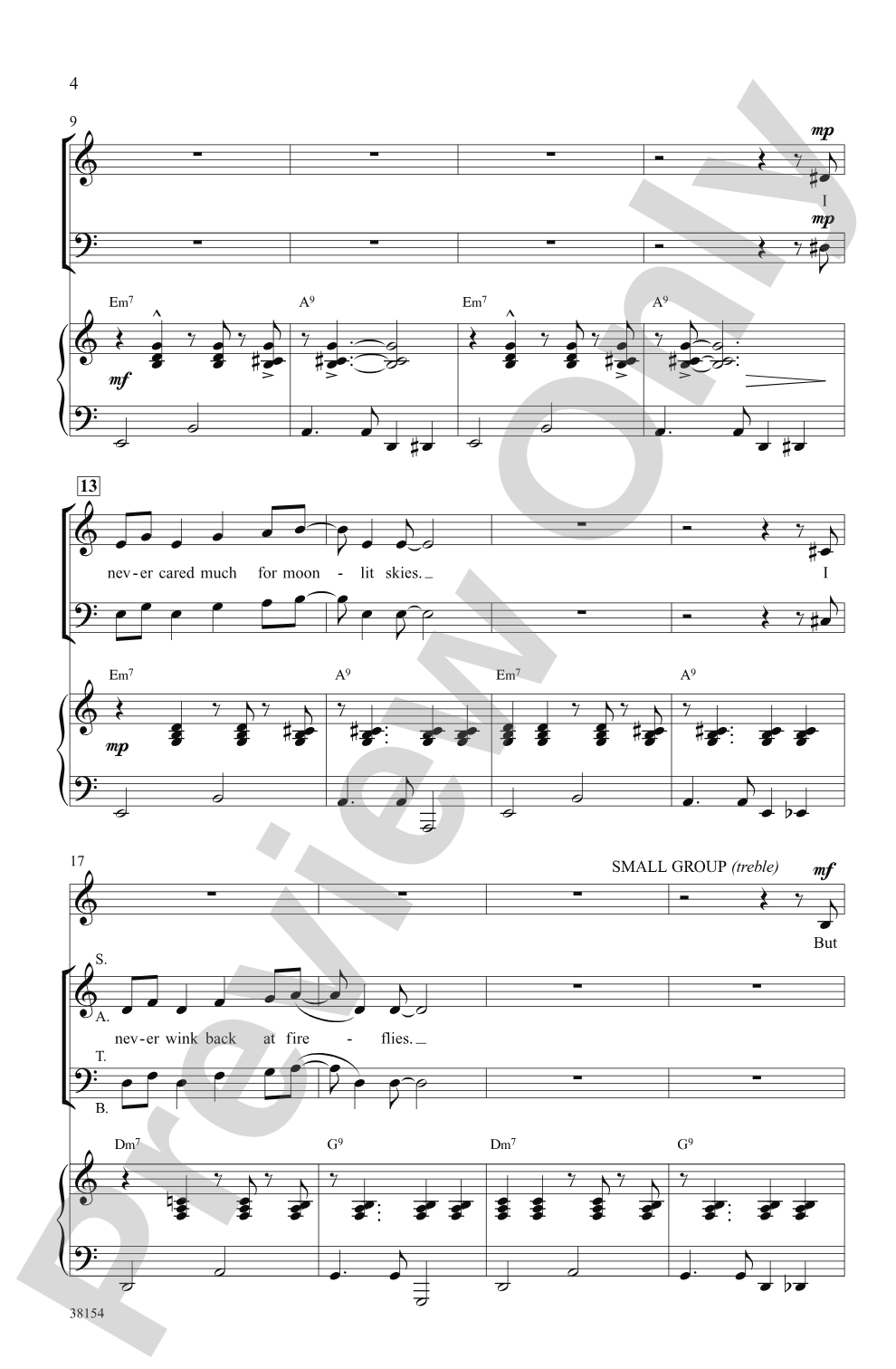
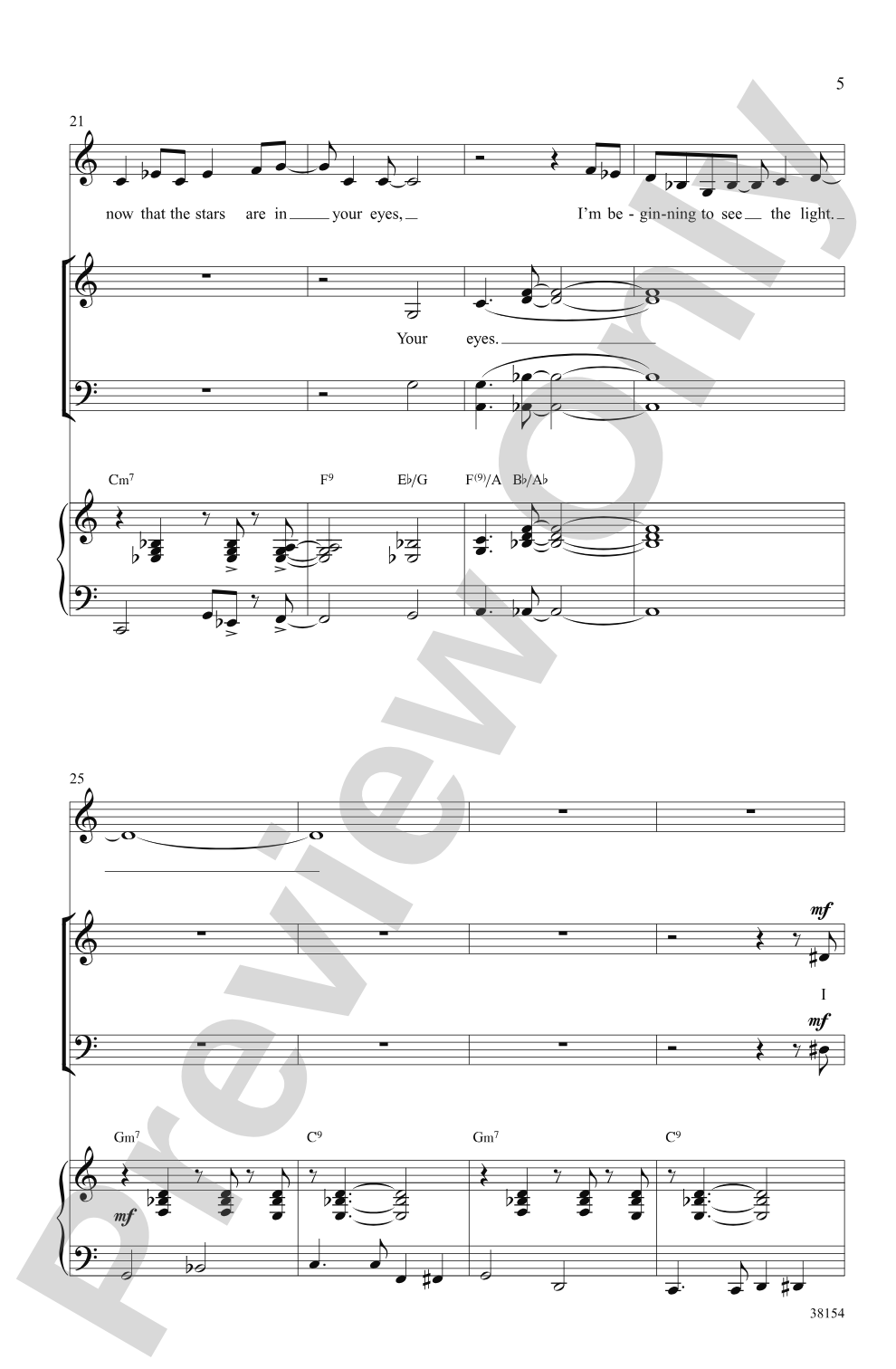
Everyone from Ella to Michael Bublé has taken a turn recording this popular jazz standard! Features cool chords and several solo/small group opportunities.


I'm Beginning to See the Light: SATB Choral Octavo isn't in MakeMusic Cloud just yet...but it could be. Let us know you'd like to see it, and you'll help shape what comes next. In the meantime, start a free trial and dive into thousands of interactive titles your students can play along with today.
Request This Title
Tell us you want it.
Start Your Free Trial
Explore everything that's ready to play right now.
Sample Audio
1
Audio File
--:--
0:00
0:00
Sample Video
No sample videos found.
Additional Details
Series:
Alfred Pop Choral Series
Publisher:
Alfred Music
Page Count:
20
SKU:
00-PO-0001417
More about this title
About the Composer: Don George
Don George co-wrote this enduring jazz standard with Johnny Hodges and Duke Ellington, establishing himself as a songwriter who understood how to craft melodies that bridge popular and jazz idioms. His work in the 1940s helped define the sound of the swing era, creating songs that have remained in the American songbook for decades.
Why we love this
Michele Weir's arrangement captures the sophisticated harmonic language of the original while making it genuinely singable for high school and adult choirs. The solo and small group moments give your singers ownership of the melody, and the cool jazz voicings keep the piece from feeling like a standard arrangement of a standard.
What to expect
Warm, conversational, and urbane. The melody floats over jazz voicings that feel both retro and timeless, evoking intimate jazz clubs and smooth sophistication. There's a lightness to it, even when the harmony grows complex.
Who it's for
High school and college choirs, community choruses, and vocal jazz ensembles looking for accessible yet sophisticated repertoire. Singers who have experience with jazz vocabulary and chord-focused singing will gravitate toward this piece, but the arrangement supports those building those skills for the first time.
How to get the most out of it
- Distribute the solo sections intentionally. Even if a particular singer takes the lead line, have the rest of the choir locked in on the harmonic background; this partnership makes both parts shine.
- Treat the jazz chords as springboards for phrasing rather than obstacles. Let the voices lean into the altered sonorities rather than singing through them defensively.
- Use the recorded accompaniment in rehearsal to establish the groove early, then gradually shift the choir's reliance toward internal parts so they own the harmonic framework.
- Shape the dynamic contour with restraint. This song succeeds through conversational elegance, not volume or intensity.
How to use it
This works beautifully on a concert pairing jazz standards with American songbook selections or as the anchor piece in a program exploring how jazz shaped twentieth-century composition. It also serves as an excellent teaching vehicle mid-rehearsal season when your singers have the musical foundation to handle jazz harmony and phrasing.
Skills your students will build
- Reading jazz chord symbols and voicings
- Ensemble blend within close harmonies
- Phrasing across asymmetrical harmonic movement
- Solo confidence and communication with accompaniment
- Intonation in extended tertian chords