

I'll Be Home for Christmas: SSA Choral Octavo
Words by Kim Gannon, music by Walter Kent / arr. Mark Hayes
Item: 00-PO-0006607
$2.10
Minimum order quantity: 20 copies
One moment…
Related Items
I'll Be Home for Christmas: SoundTrax Digital Audio Download |
$29.99
|
View | |
I'll Be Home for Christmas: SATB Choral Octavo |
$2.10
|
View | |
I'll Be Home for Christmas: SAB Choral Octavo |
$2.10
|
View | |
I'll Be Home for Christmas: TTBB Choral Octavo |
$2.25
|
View | |
I'll Be Home for Christmas: Choral SoundPax |
$50.00
|
View | |
I'll Be Home for Christmas: SATB Choral Octavo |
$2.10
|
View | |
I'll Be Home for Christmas: SAB Choral Octavo |
$2.10
|
View | |
I'll Be Home for Christmas: SSA Choral Octavo |
$2.10
|
View | |
I'll Be Home for Christmas: TTBB Choral Octavo |
$2.25
|
View | |
I'll Be Home for Christmas: Choral Octavo SoundTrax CD |
$29.99
|
View | |
I'll Be Home for Christmas: Choral SoundPax |
$50.00
|
View |
Description
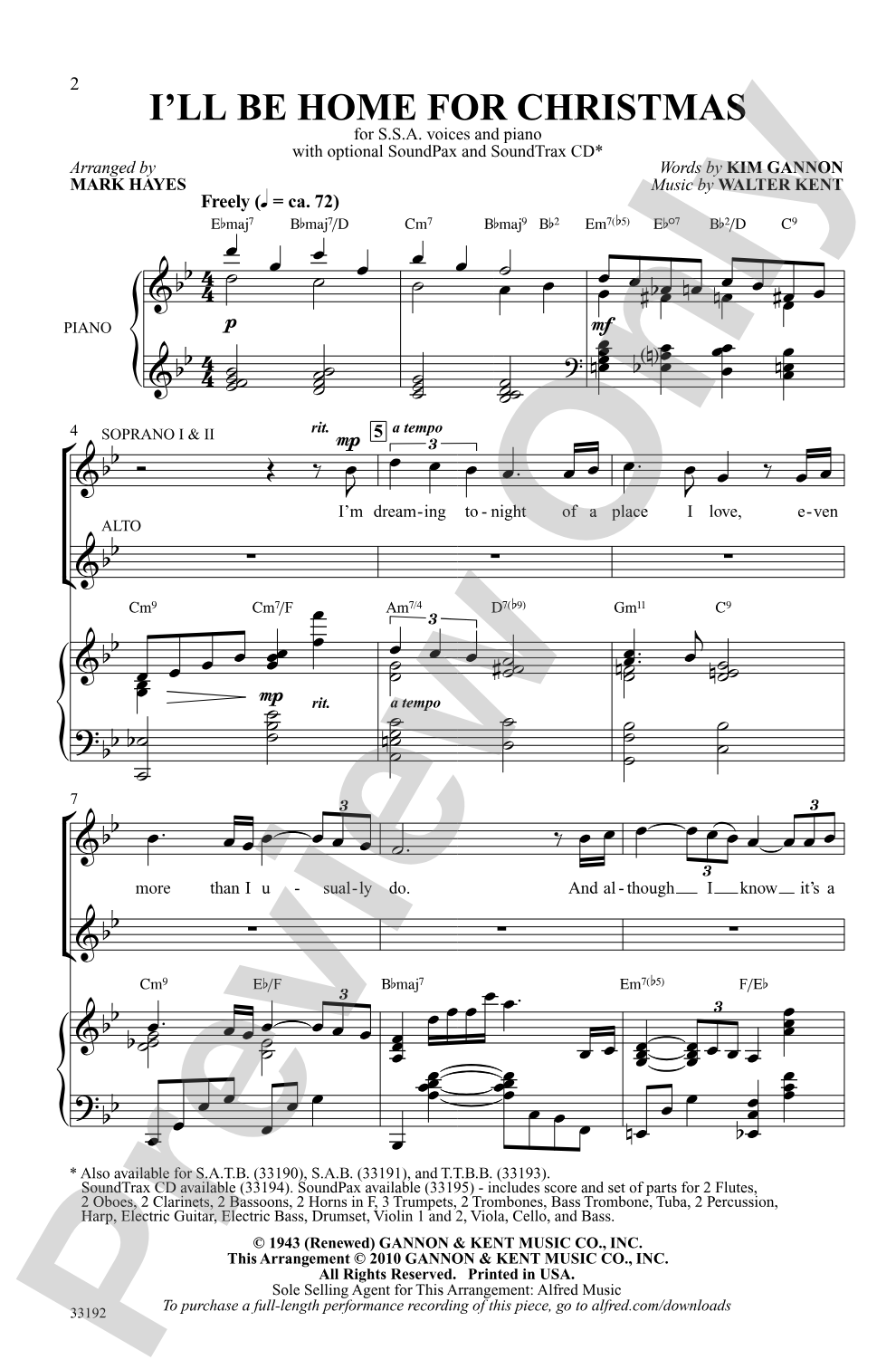
There's no lovelier or more touching Christmas song. Originally made famous by Bing Crosby, it's now been fully and richly arranged by Mark Hayes. Start a new holiday musical tradition with your choir!


I'll Be Home for Christmas: SSA Choral Octavo isn't in MakeMusic Cloud just yet...but it could be. Let us know you'd like to see it, and you'll help shape what comes next. In the meantime, start a free trial and dive into thousands of interactive titles your students can play along with today.
Request This Title
Tell us you want it.
Start Your Free Trial
Explore everything that's ready to play right now.
Sample Audio
1
Audio File
--:--
0:00
0:00
Sample Video
No sample videos found.
Additional Details
Series:
Alfred Pop Choral Series
Publisher:
Alfred Music
Page Count:
8
SKU:
00-PO-0006607
More about this title
About the Composer: Walter Kent
Walter Kent composed "I'll Be Home for Christmas" during World War II, capturing the longing and homesickness that defined a generation separated from their families. The song became a standard almost immediately, recorded famously by Bing Crosby and performed by countless artists across decades. Kent's gift for melody and emotional directness made this one of the most enduring Christmas songs in American popular music.
As a composer for both stage and screen, Kent understood how to write music that moves listeners without manipulation. His songs tend toward simplicity and clarity, qualities that make them ideal for choral arranging and music education contexts where emotional authenticity matters as much as technical display.
Why we love this
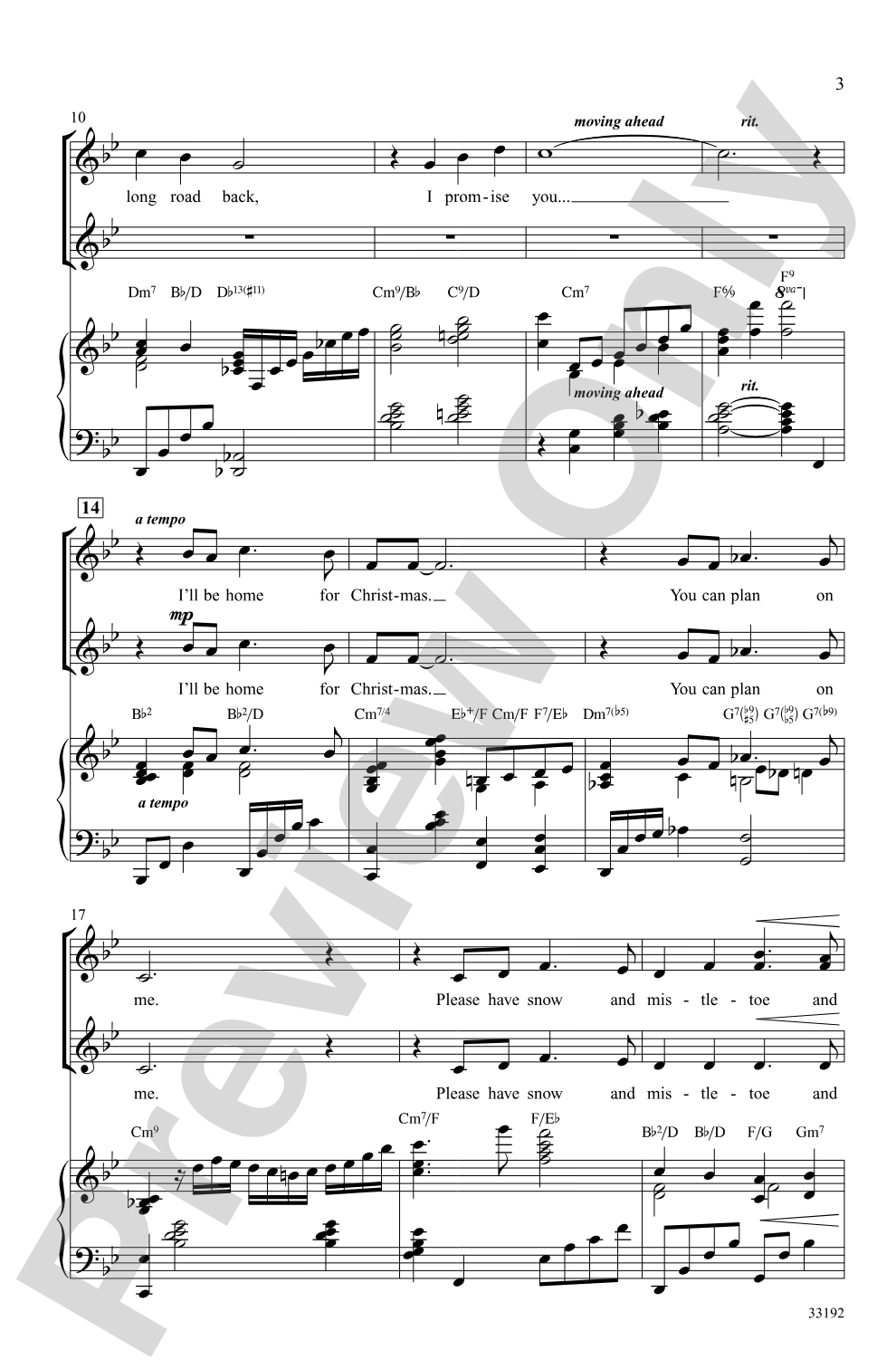
Mark Hayes' arrangement respects the song's core emotional truth while giving your SSA choir genuine harmonic substance and jazz inflections that feel contemporary rather than nostalgic. The orchestration choices in the score demonstrate thoughtful voice leading that challenges without overwhelming developing singers. This is the kind of arrangement where singers and audiences both leave feeling like they've experienced something real.
What to expect
The opening breathes with quiet longing, then gradually unfolds into Hayes' warm harmonic landscape without ever losing the original melody's intimacy. There's a jazz sensibility woven through the arrangement, subtle chromatic movement, unexpected chord colors, that prevents the song from feeling like a relic while honoring what made it beloved in the first place. Singing it feels like stepping into a moment of genuine vulnerability rather than performing nostalgia.
Who it's for
SSA choirs at the high school level or advanced middle school programs looking for seasonal repertoire with real harmonic substance. Directors wanting a Christmas piece that doesn't rely on novelty or oversimplification will find this arrangement strikes the right balance between accessibility and musical integrity.
How to get the most out of it
- Shape the opening phrases with restraint; let the simplicity of the melody do the work before Hayes' harmonic colors enter. Resist the urge to oversell the emotion early.
- Balance the jazz voicings by ensuring all three parts lock rhythmically. These chords require precision to sit properly.
- Lean into the recorded accompaniment during rehearsals to establish groove and phrasing, then gradually pull back ensemble dependence so singers own the performance.
- Treat the final measures with deliberate spaciousness. The song's power lives in what's left unsaid, not in dramatic gestures.
How to use it
This works beautifully as the emotional anchor in a mixed-repertoire holiday concert, offering contrast if you program more upbeat seasonal material alongside it. The eight-page score and available instrumental parts make it feasible as a feature piece in a longer December program, or as a closing number that leaves the audience in a reflective space. Consider pairing it with other secular Christmas songs to create a thematic set exploring different musical traditions.
Skills your students will build
- Singing jazz harmonies with accurate intonation
- Balancing three-part SSA voicing with independent melodic lines
- Interpreting subtle dynamic and expressive phrasing
- Maintaining ensemble cohesion while singing chromatic harmony
- Connecting emotional content to musical choices