

I Lift My Lamp: SAB Choral Octavo
Words by Emma Lazarus, music by Katie O'Connor-Ballantyne
Item: 00-PO-0006324
$2.20
Minimum order quantity: 20 copies
Pickup currently not available
Related Items
I Lift My Lamp: PianoTrax Digital Audio Download |
$9.99
|
View | |
I Lift My Lamp: SATB Choral Octavo |
$2.20
|
View | |
I Lift My Lamp: SSA Choral Octavo |
$2.20
|
View | |
I Lift My Lamp: SATB Choral Octavo |
$2.20
|
View | |
I Lift My Lamp: SAB Choral Octavo |
$2.20
|
View | |
I Lift My Lamp: SSA Choral Octavo |
$2.20
|
View |
Description
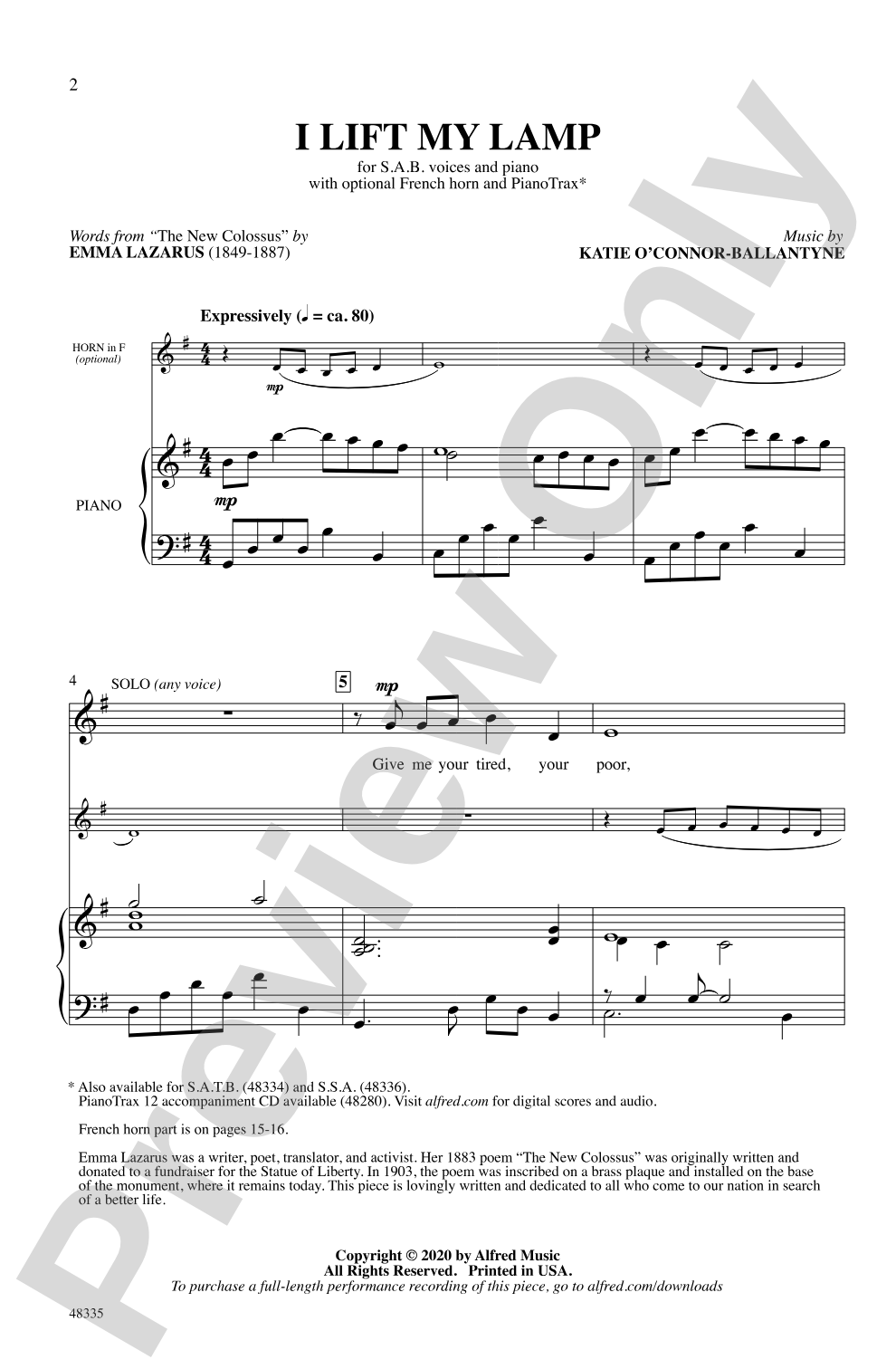
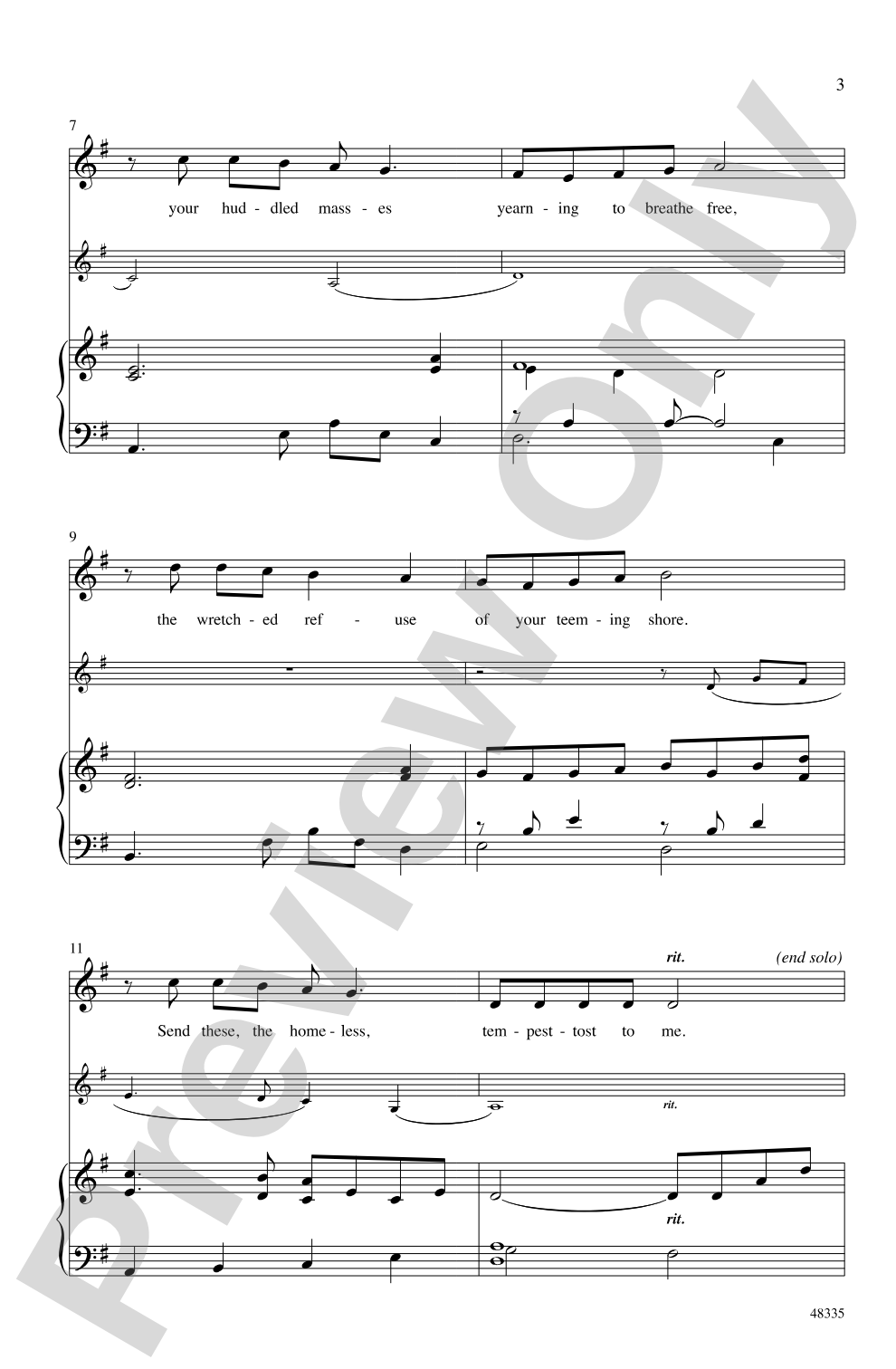
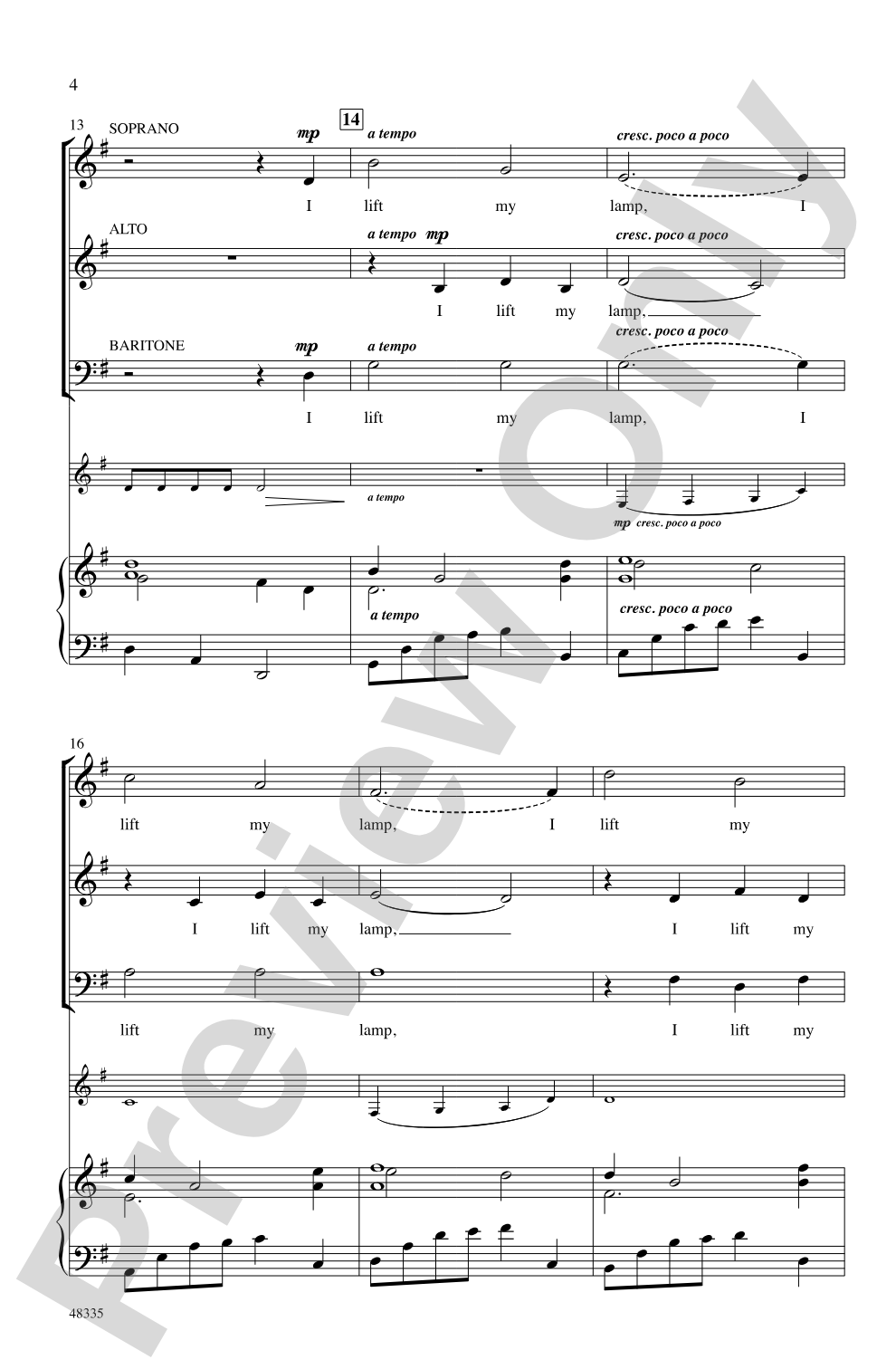
These famous words are inscribed on the pedestal of the Statue of .Liberty: "Give me your tired, your poor, your huddled masses yearning to breathe free." Emma Lazarus's timeless poem has been sensitively imagined for choir and piano, with optional French horn. A stirring opening solo blossoms into a beautifully crafted chorus with expressive tempo and dynamic shifts. Patriotic and inspiring. This title is available in MakeMusic Cloud.


I Lift My Lamp: SAB Choral Octavo isn't in MakeMusic Cloud just yet...but it could be. Let us know you'd like to see it, and you'll help shape what comes next. In the meantime, start a free trial and dive into thousands of interactive titles your students can play along with today.
Request This Title
Tell us you want it.
Start Your Free Trial
Explore everything that's ready to play right now.
Sample Audio
1
Audio File
--:--
0:00
0:00
Sample Video
Additional Details
Series:
Alfred Choral Designs
Publisher:
Alfred Music
Page Count:
16
SKU:
00-PO-0006324
More about this title
About the Composer: Katie O'Connor-Ballantyne

Katie O'Connor-Ballantyne brings decades of teaching experience across every level of music education to her work as a composer and clinician. She has taught general music and piano at the elementary level, directed high school and university choral ensembles, and mentored undergraduate theory and aural skills students. Her publications include Harmony Handbook and Finding Your Teacher Voice, both widely used in music education settings.
As an adjudicator, guest conductor, and presenter at regional and national music education conferences, O'Connor-Ballantyne continues to shape how teachers approach choral music and vocal pedagogy. She holds degrees from Ithaca College (BM in Music Education and Vocal Performance) and the University of Limerick (MA in Chant and Ritual Song), bringing both American choral traditions and world music perspectives to her compositions.
Why we love this
O'Connor-Ballantyne honors Lazarus's words without sentimentality, letting the text's power speak through clear harmonic writing and thoughtful voice leading. The opening solo creates an intimate moment before the full choir enters, giving singers a chance to listen and connect with the message before adding their voices. Programming this piece signals that your choir can handle poetry with conviction and restraint.
What to expect
The piece opens with quiet intimacy, a single voice reaching out across space. As the choir joins, the sound deepens and swells without losing its sense of purpose; this is not bombast but a gathering of voices united by conviction. The harmonic language is accessible but never simplistic, with shifts in color that underscore the emotional arc of Lazarus's meditation on freedom.
Who it's for
Directors seeking repertoire that challenges young choirs to communicate meaning through careful diction and dynamic control. This piece works for middle school choirs with some ensemble experience and high school choirs building a concert around themes of hope, justice, or American identity.
How to get the most out of it
- Prepare the solo voice first, isolated from the choir, so the soloist can establish the emotional foundation before other parts enter. This person sets the tone for the entire piece.
- Treat the tempo and dynamic shifts marked in the score as essential storytelling devices, not optional expressive choices. Each change reveals a new emotional layer.
- If using the French horn part, rehearse it separately with the pianist to ensure the optional instrumentation enhances rather than obscures the choral sound.
- Balance the choir's entry so that it supports the soloist's message rather than overwhelming the text. The chorus serves the poem, not the other way around.
How to use it
Pair this with other patriotic works that explore what citizenship and belonging mean, or program it as the centerpiece of a concert focused on literary texts set to music. The 16-page score and optional accompaniment recording make it flexible for schools building repertoire lists for spring concerts or summer festivals.
Skills your students will build
- Singing text-driven choral lines with attention to diction and phrase shape
- Responding to dynamic and tempo changes as interpretive choices tied to meaning
- Blending three-part mixed voicing while maintaining individual line integrity
- Performing optional instrumental parts (French horn) in relation to vocal texture