

I Lift My Lamp: SATB Choral Octavo
Words by Emma Lazarus, music by Katie O'Connor-Ballantyne
Item: 00-PO-0006323
$2.20
Minimum order quantity: 20 copies
Pickup currently not available
Description
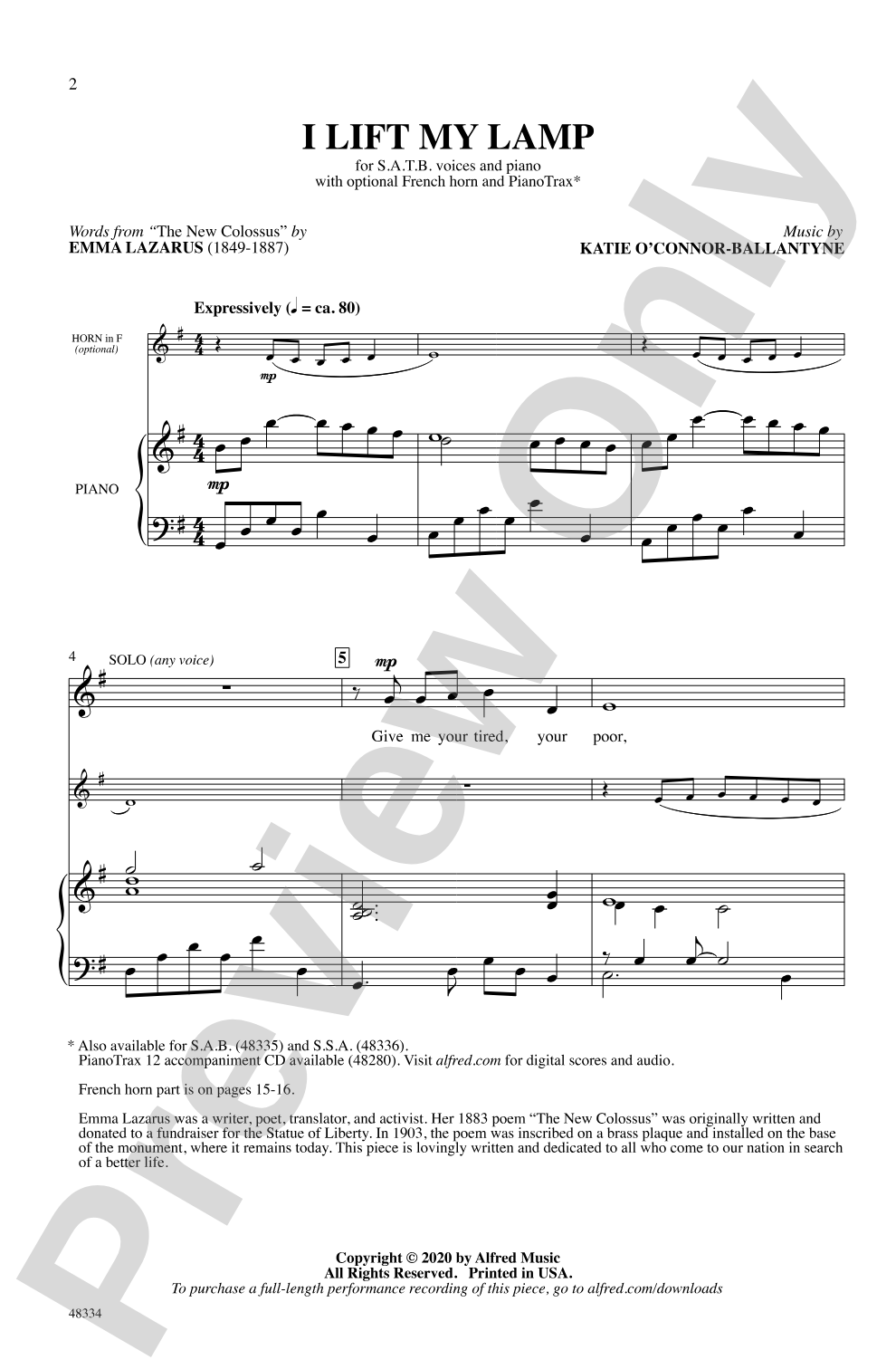
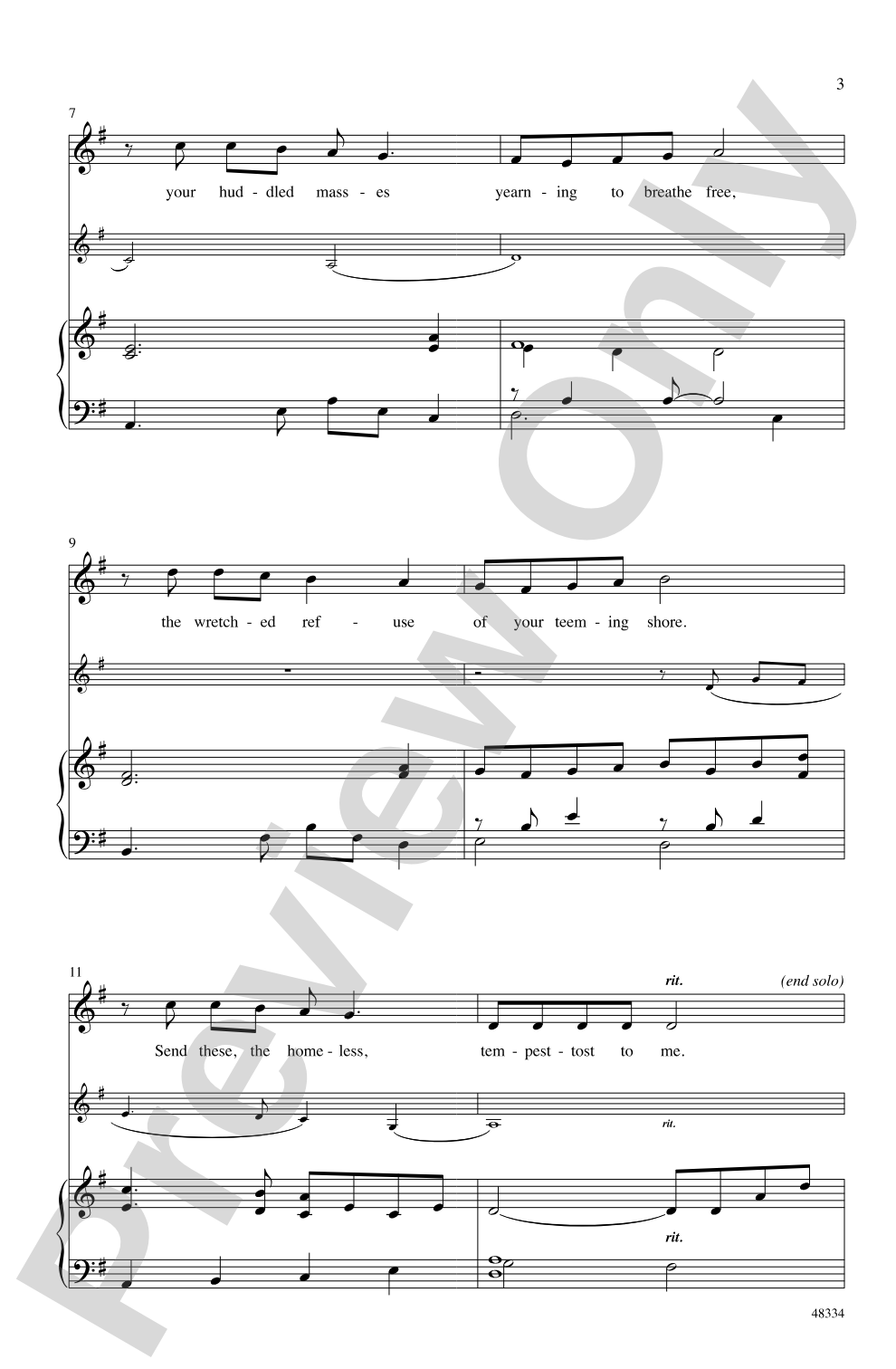
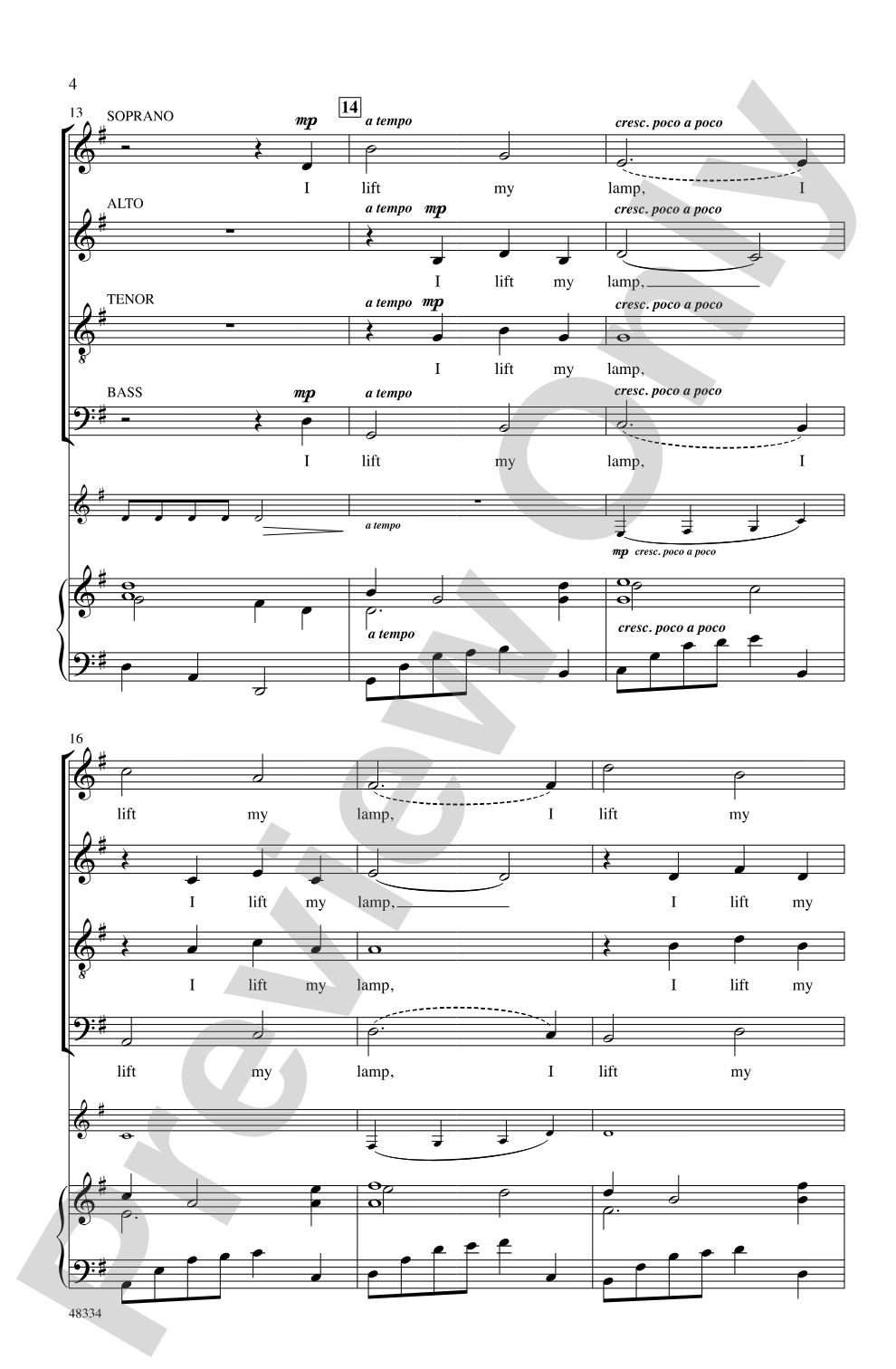
These famous words are inscribed on the pedestal of the Statue of Liberty: "Give me your tired, your poor, your huddled masses yearning to breathe free." Emma Lazarus's timeless poem has been sensitively imagined for choir and piano, with optional French horn. A stirring opening solo blossoms into a beautifully crafted chorus with expressive tempo and dynamic shifts. Patriotic and inspiring.


I Lift My Lamp: SATB Choral Octavo isn't in MakeMusic Cloud just yet...but it could be. Let us know you'd like to see it, and you'll help shape what comes next. In the meantime, start a free trial and dive into thousands of interactive titles your students can play along with today.
Request This Title
Tell us you want it.
Start Your Free Trial
Explore everything that's ready to play right now.
Sample Audio
1
Audio File
--:--
0:00
0:00
Sample Video
Additional Details
Series:
Alfred Choral Designs
Publisher:
Alfred Music
Page Count:
16
SKU:
00-PO-0006323
More about this title
About the Composer: Katie O'Connor-Ballantyne

Katie O'Connor-Ballantyne brings deep experience across the full spectrum of choral music education. She has taught general music and piano at the elementary level, directed choral ensembles in secondary schools, and led aural skills and music theory instruction for undergraduate and adult musicians. Her work as an adjunct professor at Ithaca College's School of Music and as Artistic Director of the Ithaca Children and Youth Chorus shaped her understanding of how to compose and arrange music that serves real ensembles at every level.
Beyond the score, O'Connor-Ballantyne is a sought-after guest conductor, festival clinician, and conference presenter. She has published choral works with Alfred Music and Heritage Music Press, and authored two influential texts: Harmony Handbook and Finding Your Teacher Voice. She holds a BM in Music Education and Vocal Performance from Ithaca College and an MA in Chant and Ritual Song from the Irish World Academy of Music & Dance at the University of Limerick.
Why we love this
O'Connor-Ballantyne sets Lazarus's iconic words with genuine musical weight. The opening solo draws listeners in before the full choir enters with harmonic sophistication that feels neither oversimplified nor out of reach for a working ensemble. The optional French horn part adds polish without creating barriers to performance, and the expressive tempo and dynamic shifts throughout keep the piece from settling into anything routine.
What to expect
The piece unfolds with dignity and hope. A reflective solo voice opens the door to Lazarus's words before the full choir joins in rich harmony, building toward something both stirring and deeply human. The expressive pacing and dynamic shaping create a sense of genuine emotional movement rather than patriotic fanfare.
Who it's for
High school and college choral directors seeking music that speaks to contemporary values while maintaining musical integrity. This piece works for ensembles with solid SATB balance and singers who can navigate expressive phrasing; it's accessible without being simplistic.
How to get the most out of it
- Allow the solo opening to establish the piece's intimate tone before the choir enters. This introduction sets the emotional foundation, so give that soloist room to shape the text with genuine expression.
- Shape the dynamic and tempo shifts as though they emerge from the meaning of the words, not as mere technical changes. The patriotic arc should feel earned by the text, not imposed on it.
- If you include the French horn part, balance it carefully in rehearsal. It should enhance the harmonic language without overwhelming the voices, especially during the choral sections.
How to use it
This octavo shines in concert programming centered on immigration, belonging, and American identity. It pairs naturally with other contemporary secular choruses or alongside classical choral works that explore similar themes of welcome and freedom. The text's resonance makes it a powerful choice for festivals, community concerts, and school choral competitions.
Skills your students will build
- Shaping expressive phrasing around poetic meaning
- Navigating tempo and dynamic changes that serve emotional content
- Balancing solo and ensemble sonorities
- Reading and performing harmonic language in SATB writing