
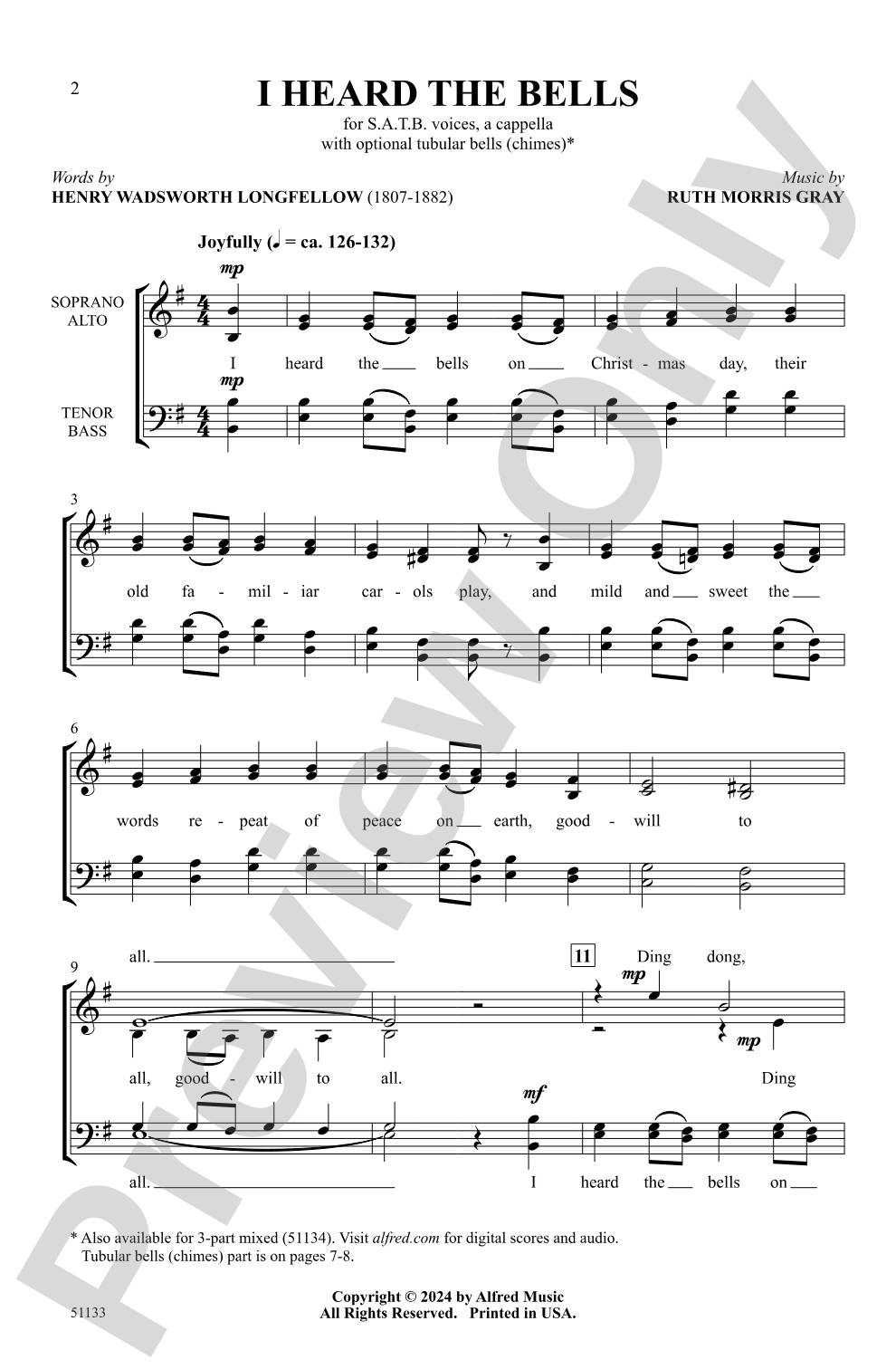

I Heard the Bells: SATB a cappella Choral Octavo
Words by Henry Wadsworth Longfellow, music by Ruth Morris Gray
Item: 00-PO-0007212
$2.20
Minimum order quantity: 20 copies
Pickup currently not available
Description
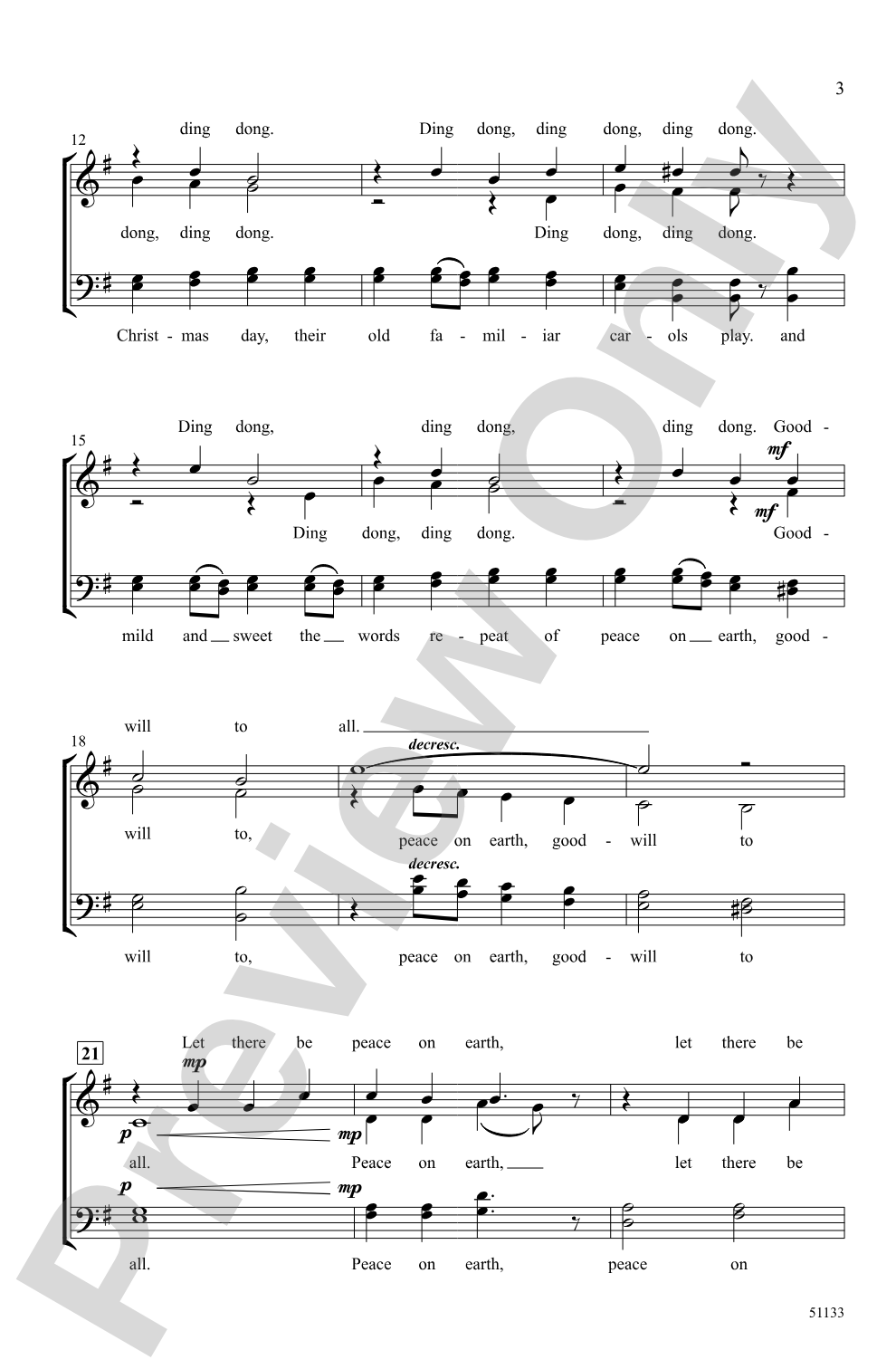
Familiar words, new melody. Ruth's cheerful a cappella setting of the yuletide text accentuates the "peace on earth" lyric, adding a harmonically rich bridge on just those words. Crisp choral "ding dong" entrances, a melodic twist in the middle, and a tuneful final descant decorate the otherwise strophic verses. Add to the festivity (and anchor the minor-key tonality) with optional tubular bells or chimes.


I Heard the Bells: SATB a cappella Choral Octavo isn't in MakeMusic Cloud just yet...but it could be. Let us know you'd like to see it, and you'll help shape what comes next. In the meantime, start a free trial and dive into thousands of interactive titles your students can play along with today.
Request This Title
Tell us you want it.
Start Your Free Trial
Explore everything that's ready to play right now.
Sample Audio
1
Audio File
--:--
0:00
0:00
Sample Video
Additional Details
Series:
Alfred Choral Designs
Publisher:
Alfred Music
Page Count:
8
SKU:
00-PO-0007212
More about this title
About the Composer: Ruth Morris Gray

Ruth Morris Gray directs choirs at Rosemead High School in California, where she has taught since 2004. Her compositional output exceeds 100 published works, grounded in formal training that includes a Bachelor of Music in Piano Performance and Composition from Biola University and a Master of Arts in Music Composition from UC Santa Barbara.
Gray's experience spans piano instruction, choral conducting, and performance across multiple settings. Her California Single Subject Music Credential reflects her commitment to music education at the secondary level. Beyond her work in the classroom and rehearsal hall, she is an active composer whose pieces are performed by school and community ensembles.
Why we love this
Gray's setting proves that familiar holiday text can sound entirely fresh with the right harmonic approach. The unexpected minor-key framework and the rich harmonic language on "peace on earth" create an emotional depth that lifts this beyond typical yuletide fare, while the crisp "ding dong" entrances and optional descant keep the energy bright and celebratory.
What to expect
Cheerful and reflective at once. The a cappella texture invites focused listening while the "ding dong" figures inject infectious rhythmic energy. When the harmony deepens around "peace on earth," the mood turns contemplative, creating a piece that feels celebratory without sacrificing sincerity.
Who it's for
SATB choirs seeking a Christmas piece that honors a traditional text while offering sophisticated harmonic writing and fresh compositional ideas. Conductors programming winter concerts want something that feels both accessible and distinctive, with enough musical detail to engage singers without requiring soloists or complex staging.
How to get the most out of it
- Balance the "ding dong" entrance sections so the choral articulation remains crisp without overwhelming the text. These moments should feel rhythmically snappy, not plopped.
- If adding tubular bells or chimes, layer them lightly beneath the final chorus to enhance rather than dominate the a cappella texture.
- Shape the harmonically rich bridge on "peace on earth" with dynamic clarity; the lush sonority demands careful voice balance and sustained tone to land its full effect.
- Explore the melodic twist in the middle section as a moment to shift intensity slightly, drawing the choir's attention to a new emotional angle before returning to the verse.
How to use it
Pair this with other holiday selections to open or close a winter concert, letting its minor-key framework provide harmonic contrast to brighter fare. The optional bells or chimes adaptation also allows flexible instrumentation depending on your school's resources, making it a practical fit whether you perform entirely a cappella or with modest accompaniment.
Skills your students will build
- Balancing voice parts in close harmonic writing
- Articulation control in rhythmic, syllabic passages
- Sustaining pure a cappella tone without instrumental reference
- Shaping phrases across harmonic tension and resolution
- Coordinate ensemble entrances with rhythmic precision