
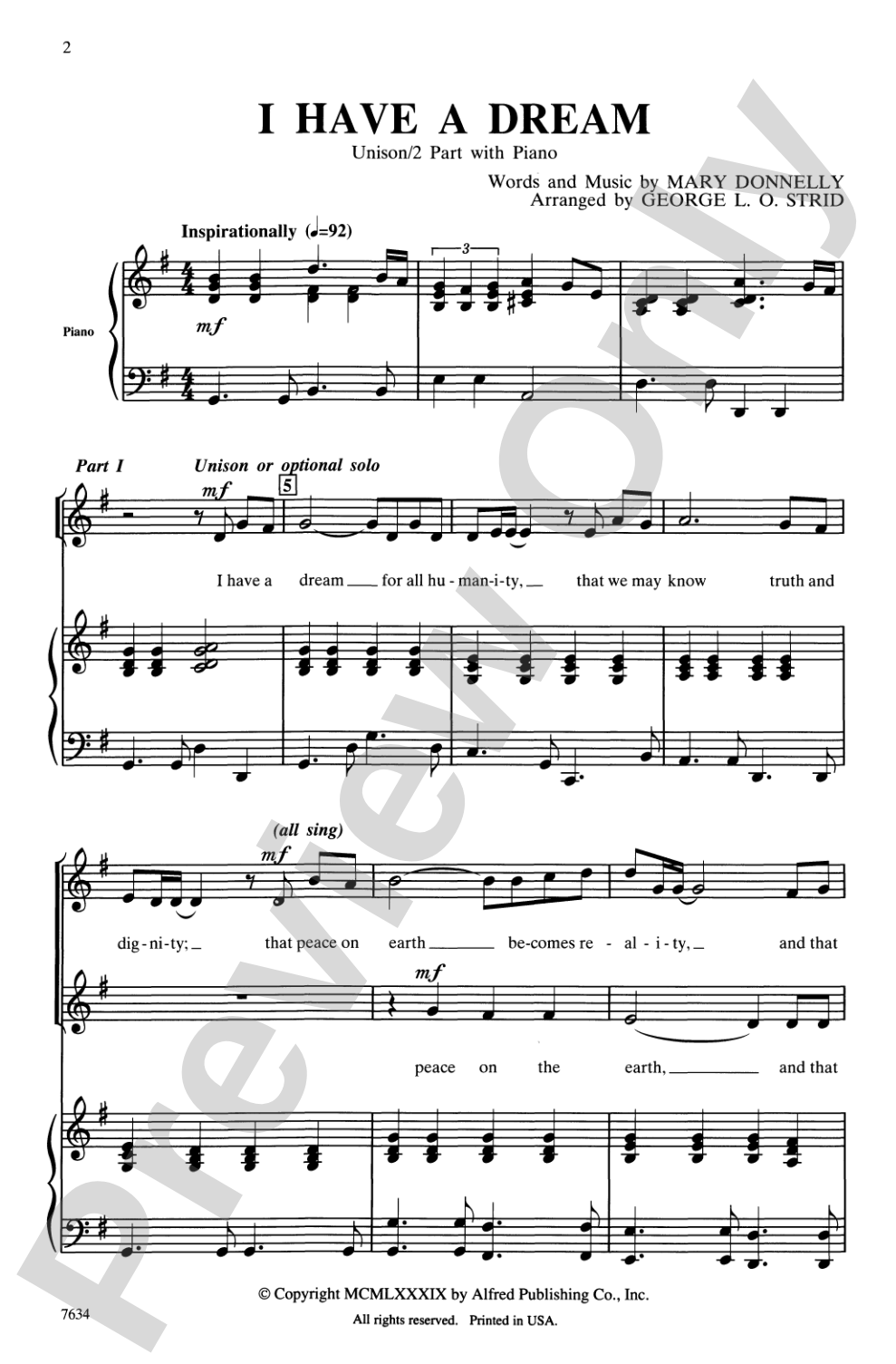
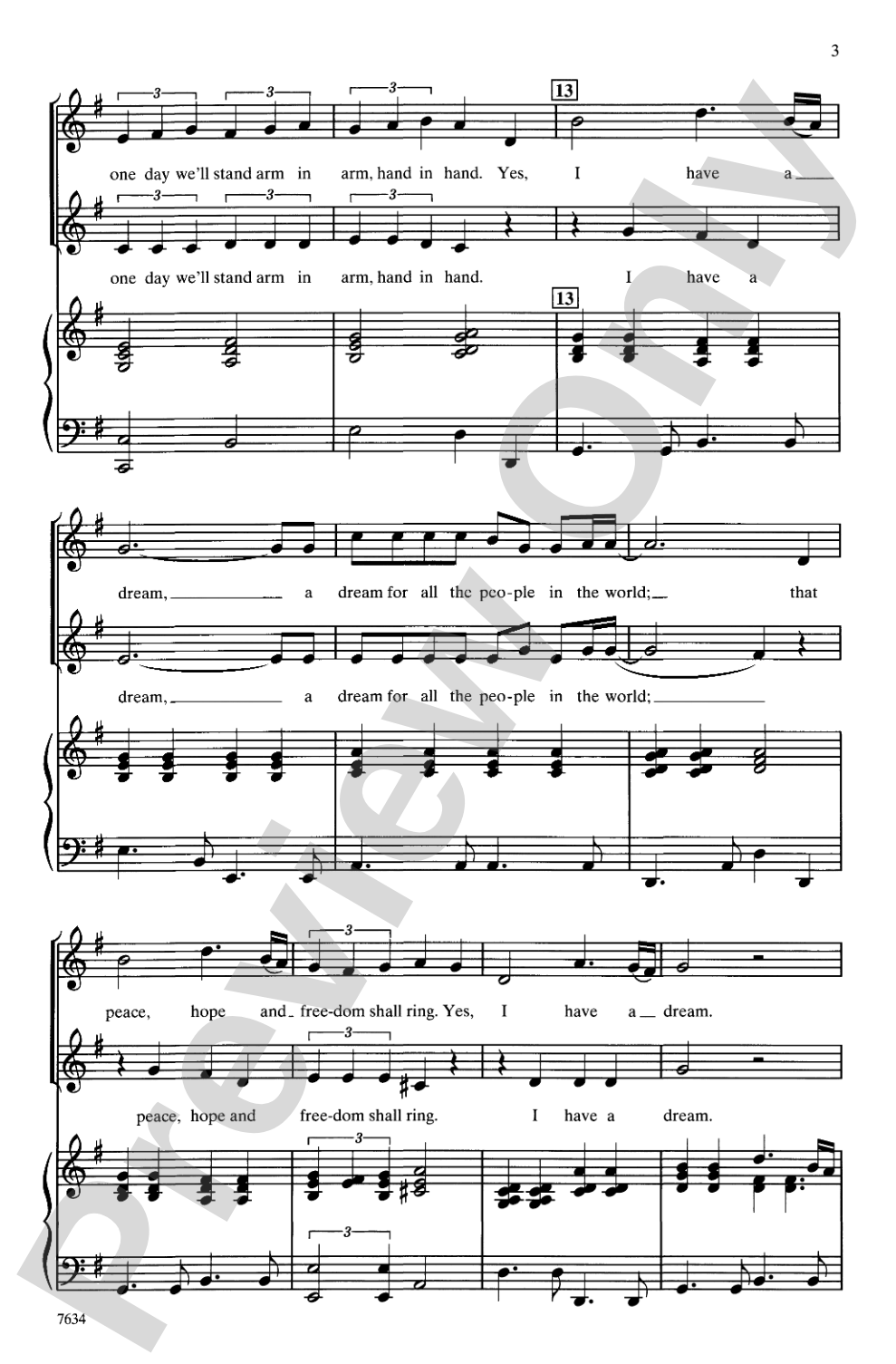

I Have a Dream: Unison/2-Part Choral Octavo
Music by Mary Donnelly / arr. George L. O. Strid
Item: 00-PO-0002938
$2.25
Minimum order quantity: 20 copies
Pickup currently not available
Related Items
I Have a Dream: SATB Choral Octavo |
$2.25
|
View | |
I Have a Dream: 3-Part Mixed, etc. Choral Octavo |
$2.25
|
View | |
I Have a Dream: SATB Choral Octavo |
$2.25
|
View | |
I Have a Dream: 3-Part Mixed, etc. Choral Octavo |
$2.25
|
View | |
I Have a Dream: Unison/2-Part Choral Octavo |
$2.25
|
View | |
I Have a Dream: Choral Octavo SoundTrax CD |
$27.99
|
View |
Description
A powerful ballad full of determination emphasizing the will to follow your dreams. Use the Alfred SoundTrax.


I Have a Dream: Unison/2-Part Choral Octavo isn't in MakeMusic Cloud just yet...but it could be. Let us know you'd like to see it, and you'll help shape what comes next. In the meantime, start a free trial and dive into thousands of interactive titles your students can play along with today.
Request This Title
Tell us you want it.
Start Your Free Trial
Explore everything that's ready to play right now.
Sample Audio
No sample audio found.
Sample Video
No sample videos found.
Additional Details
Series:
Alfred Archive Edition: Alfred Choral Designs
Publisher:
Alfred Music
Page Count:
8
SKU:
00-PO-0002938
More about this title
About the Composer: Mary Donnelly
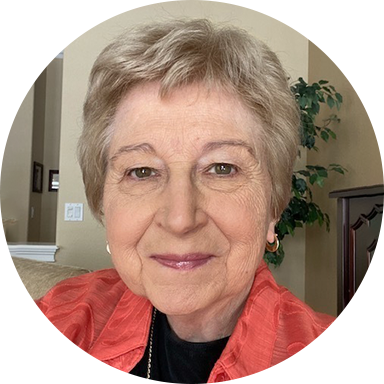
Mary Donnelly grew up in Reno, Nevada and studied English and French at the University of Nevada, Reno. While still an undergraduate, she founded two children's choruses, discovering a passion that led her back to school for music education certification. She earned her Master's Degree in Education from Lesley College in Cambridge, Massachusetts, where she focused on integrating the arts across the curriculum.
Donnelly spent three decades teaching general music and choir in elementary and middle schools throughout Washoe County, Nevada. In 1985, she began a prolific songwriting partnership with George Strid when their principal asked them to create a musical for Reading Week. That collaboration launched over two hundred songs and twenty-five musicals. A member of ACDA, NEA, and ASCAP, she brings classroom experience and accessible compositional craft to every piece she writes.
Why we love this
Donnelly and Strid have crafted a ballad that works equally well for developing choirs and experienced ones. The unison/2-part voicing keeps the focus on lyrical singing and emotional delivery rather than technical complexity, making this an ideal choice when you need repertoire that builds confidence without sacrificing musical substance. The message of perseverance resonates across grade levels and concert contexts.
What to expect
The piece radiates quiet determination. Its ballad style invites singers to find sincerity in every phrase without demanding virtuosity, creating a space where conviction and vulnerability coexist. This is music that moves listeners precisely because the performers believe in what they're singing.
Who it's for
This octavo suits elementary and middle school choirs, particularly those with singers still developing confidence in part-singing. It works equally well for high school ensembles looking for accessible concert repertoire that still carries emotional weight. Community and church choirs will find it singable and meaningful.
How to get the most out of it
- Explore the recorded accompaniment early in rehearsal to establish the harmonic foundation and overall character before drilling individual parts.
- Build dynamic contrast throughout the piece by mapping where the music gains intensity and where it pulls back; this ballad rewards thoughtful shaping.
- Balance unison passages with the 2-part sections by ensuring the divided voices maintain clarity rather than muddying the texture.
- Connect the text to the musical phrasing; let the message about dreams and determination shape your interpretation of tempi and breath placement.
How to use it
Program this in a concert celebrating inspiration, resilience, or aspirational themes. Its accessibility makes it an excellent anchor for a set of uplifting repertoire, whether paired with other modern secular works or classical pieces about hope. The recorded accompaniment allows for flexible rehearsal scheduling if live accompaniment isn't available.
Skills your students will build
- Sustaining legit through longer phrases without losing tone quality
- Transitioning between unison and 2-part voicing with textural clarity
- Interpreting text-driven phrasing in a secular ballad context
- Maintaining ensemble blend while bringing emotional sincerity to performance