
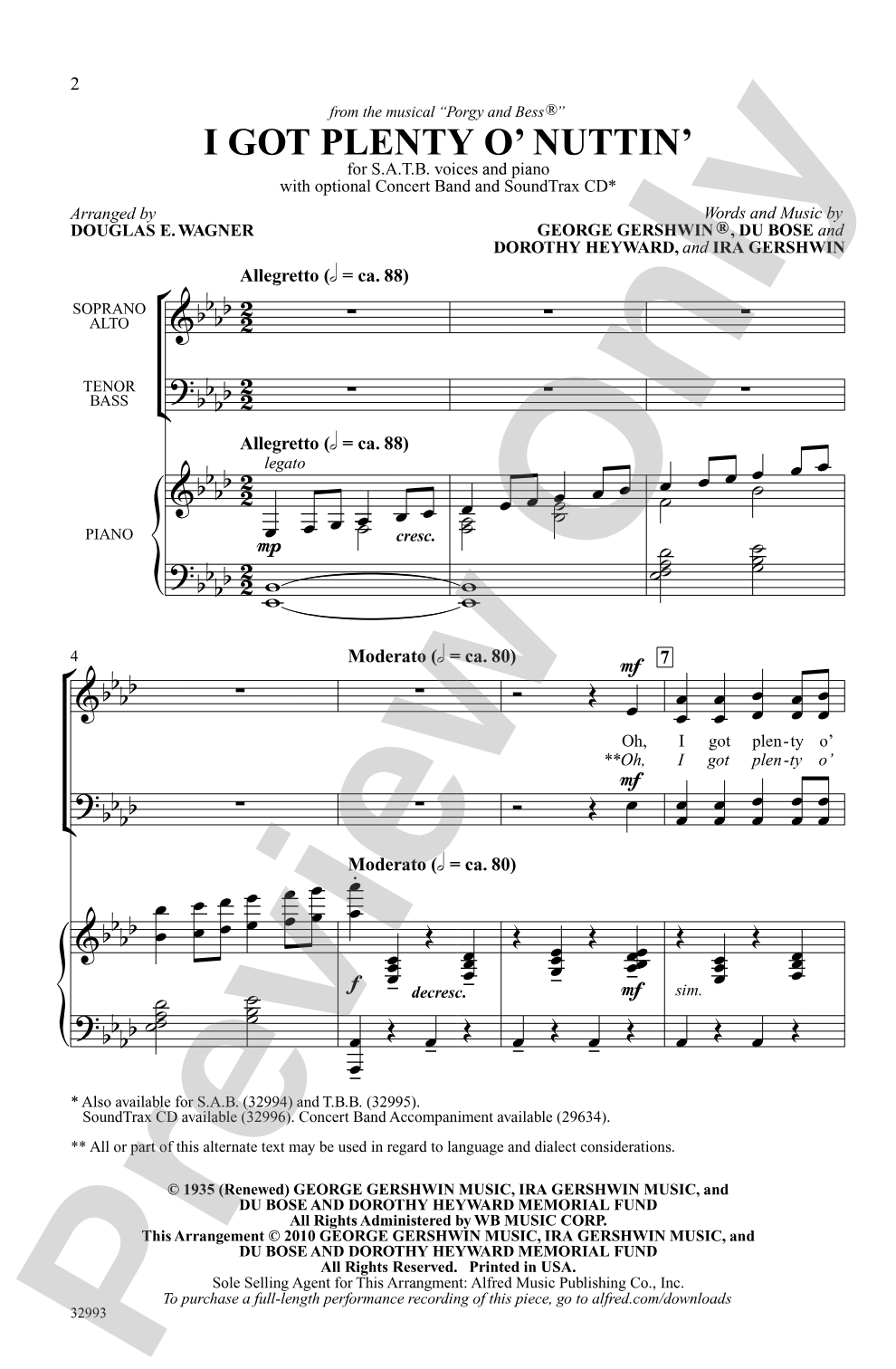
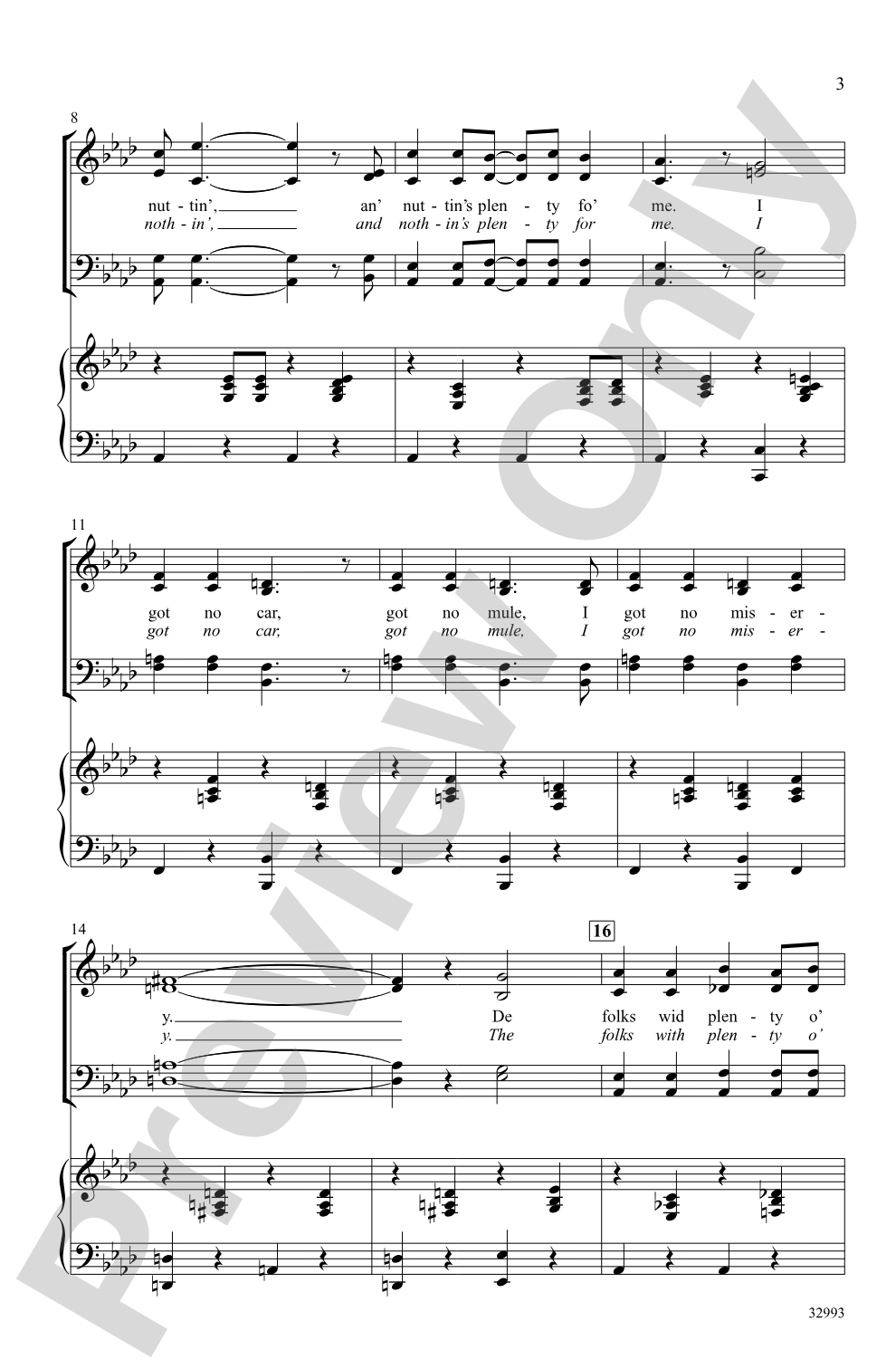
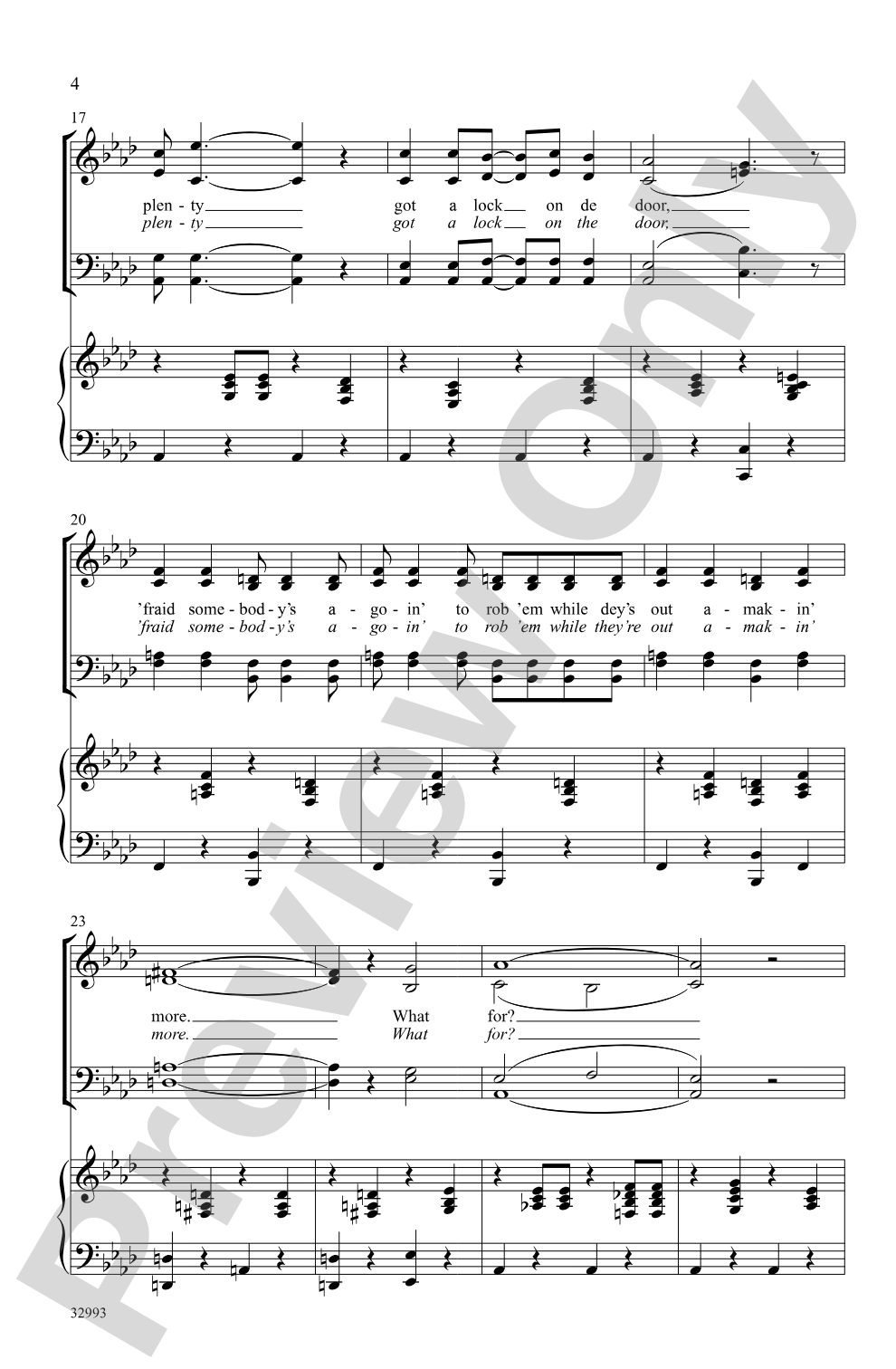

I Got Plenty o' Nuttin': SATB Choral Octavo
From the Musical Porgy and Bess
Words and music by George Gershwin, DuBose and Dorothy Heyward, and Ira Gershwin / arr. Douglas E. Wagner
Item: 00-PO-0008013
$1.85
Minimum order quantity: 20 copies
Pickup currently not available
Description
This classic American song from Porgy and Bess® is given a fine, dramatic choral treatment by arranger Doug Wagner. Optional Concert Band accompaniment available.


I Got Plenty o' Nuttin': SATB Choral Octavo isn't in MakeMusic Cloud just yet...but it could be. Let us know you'd like to see it, and you'll help shape what comes next. In the meantime, start a free trial and dive into thousands of interactive titles your students can play along with today.
Request This Title
Tell us you want it.
Start Your Free Trial
Explore everything that's ready to play right now.
Sample Audio
1
Audio File
--:--
0:00
0:00
Sample Video
No sample videos found.
Additional Details
Series:
Alfred Pop Choral Series
Publisher:
Alfred Music
Page Count:
12
SKU:
00-PO-0008013
More about this title
About the Composer: George Gershwin
George Gershwin (1898–1937) bridged the worlds of concert music and American popular song with a facility that few composers have matched. His gift for memorable melody and harmonic sophistication made him a pivotal figure in American musical culture, and his works remain central to both classical and popular repertoires. Porgy and Bess, created in collaboration with lyricist Ira Gershwin and librettist DuBose Heyward, stands as his most ambitious theatrical work and continues to generate new arrangements across all musical ensembles.
For choral directors, Gershwin's music offers accessible entry points into 20th century composition without sacrificing harmonic interest or emotional depth. His melodies sing naturally for voices, and arrangers have long found his material rich enough to support fresh interpretations in chamber and large ensemble settings.
Why we love this
Douglas Wagner's arrangement captures the swagger and warmth of this beloved standard while giving it room to breathe as a choral piece. The dramatic treatment elevates the tune beyond simple harmony, making it engaging for singers who want to sink their teeth into something with real character. Coupling a recognizable American classic with arranging that respects both the source material and the capabilities of SATB voices creates something directors genuinely want to rehearse.
What to expect
Warm, deliberate, and full of character. Wagner's treatment brings out both the bluesy vernacular roots of the song and its place within Gershwin's larger theatrical vision, creating something that feels both familiar and freshly imagined. The dramatic pacing invites singers to commit emotionally, turning a fun singalong into a genuine performance moment.
Who it's for
Choirs with solid sight-reading skills and enough musical maturity to shape a dramatic arrangement effectively. This works equally well for high school, college, and community choirs looking for a standard that offers more interpretive depth than a basic chart.
How to get the most out of it
- Balance the solo passages carefully if you use them; the lyrical quality depends on singers hearing themselves clearly over the harmonic support around them.
- Lean into the character suggested by the arrangement's dramatic shaping. This is not a gentle, smooth reading but one that finds personality in the text and music.
- If using the recorded accompaniment, rehearse with it early and often so singers develop confidence singing against the pre-recorded material rather than treating it as a safety net.
How to use it
Pair this with other American standards or jazz-inflected choral works to build a program that celebrates 20th century American songwriting. It also serves well as a lighter moment in a concert that includes more demanding repertoire, since singers and audiences alike recognize the tune but encounter it in a more sophisticated guise. Spring or end-of-year concerts particularly suit material this engaging.
Skills your students will build
- Interpreting dynamic and tempo markings that shape dramatic narrative
- Balancing texture when moving between solo lines and full voicing
- Singing with stylistic awareness drawn from jazz and vernacular music traditions
- Managing longer phrase lines with sustained tone and phrasing control