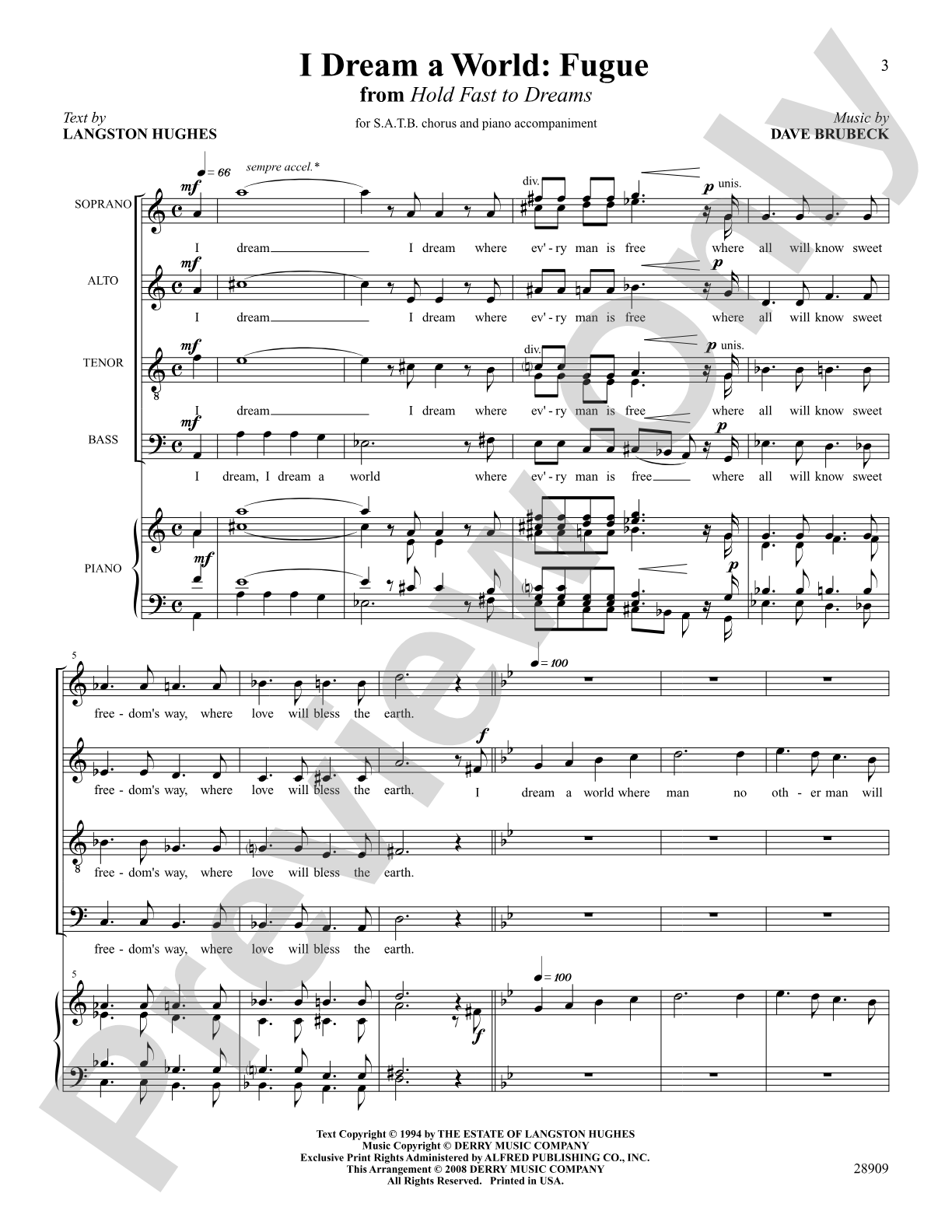
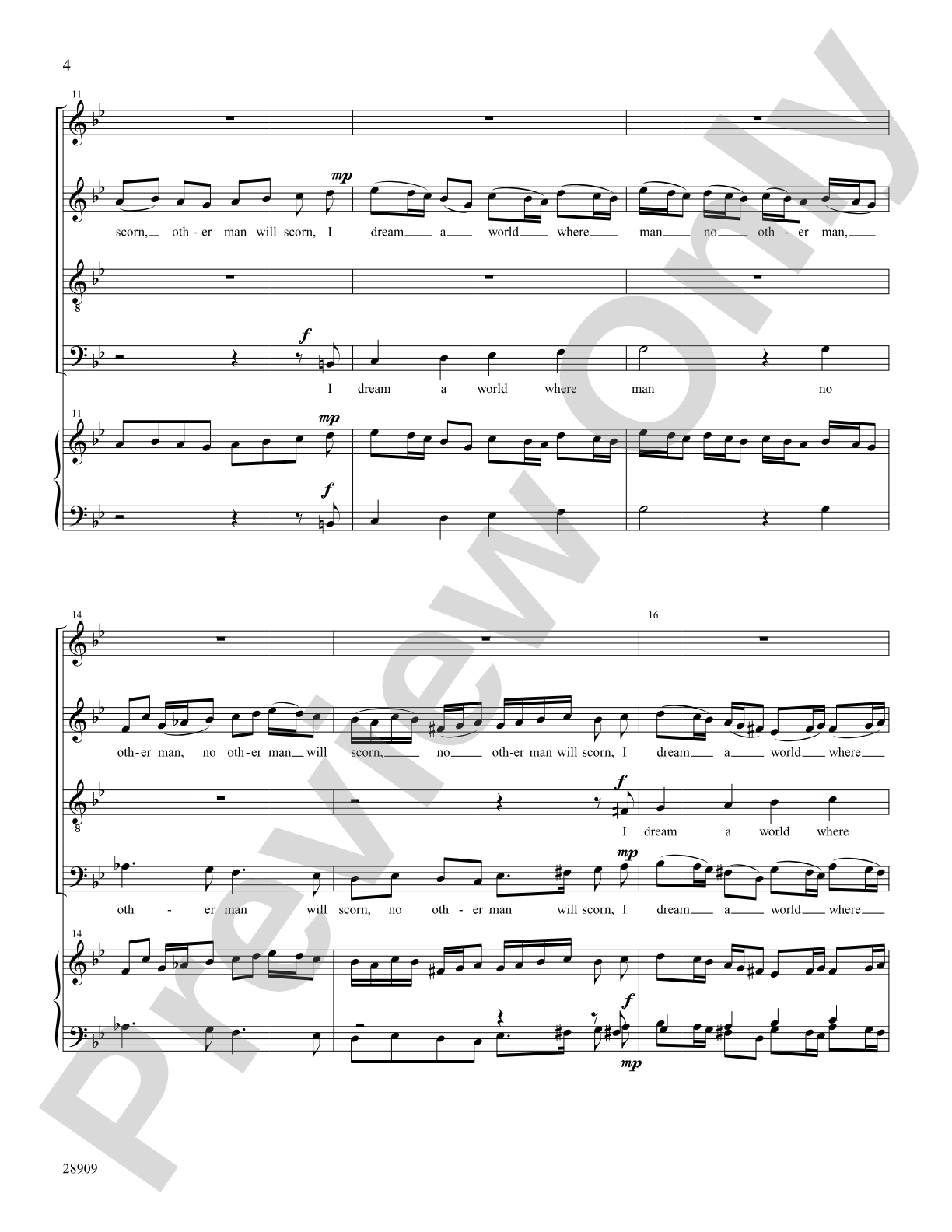
I Dream a World: Fugue Sheet Music Preview

I Dream a World: Fugue: SATB Choral Octavo

By Dave Brubeck

Item: 00-PO-0004384

Digital Download
$2.95

Minimum order quantity: 20 copies

Description

I Dream a World: Fugue: SATB Choral Octavo isn't in MakeMusic Cloud just yet...but it could be. Let us know you'd like to see it, and you'll help shape what comes next. In the meantime, start a free trial and dive into thousands of interactive titles your students can play along with today.

Sample Audio
No sample audio found.
Sample Video
Additional Details
Series: Lawson-Gould: The Dave Brubeck Series
Publisher: Alfred Music
Page Count: 16
SKU: 00-PO-0004384

More about this title

About the Composer: Dave Brubeck

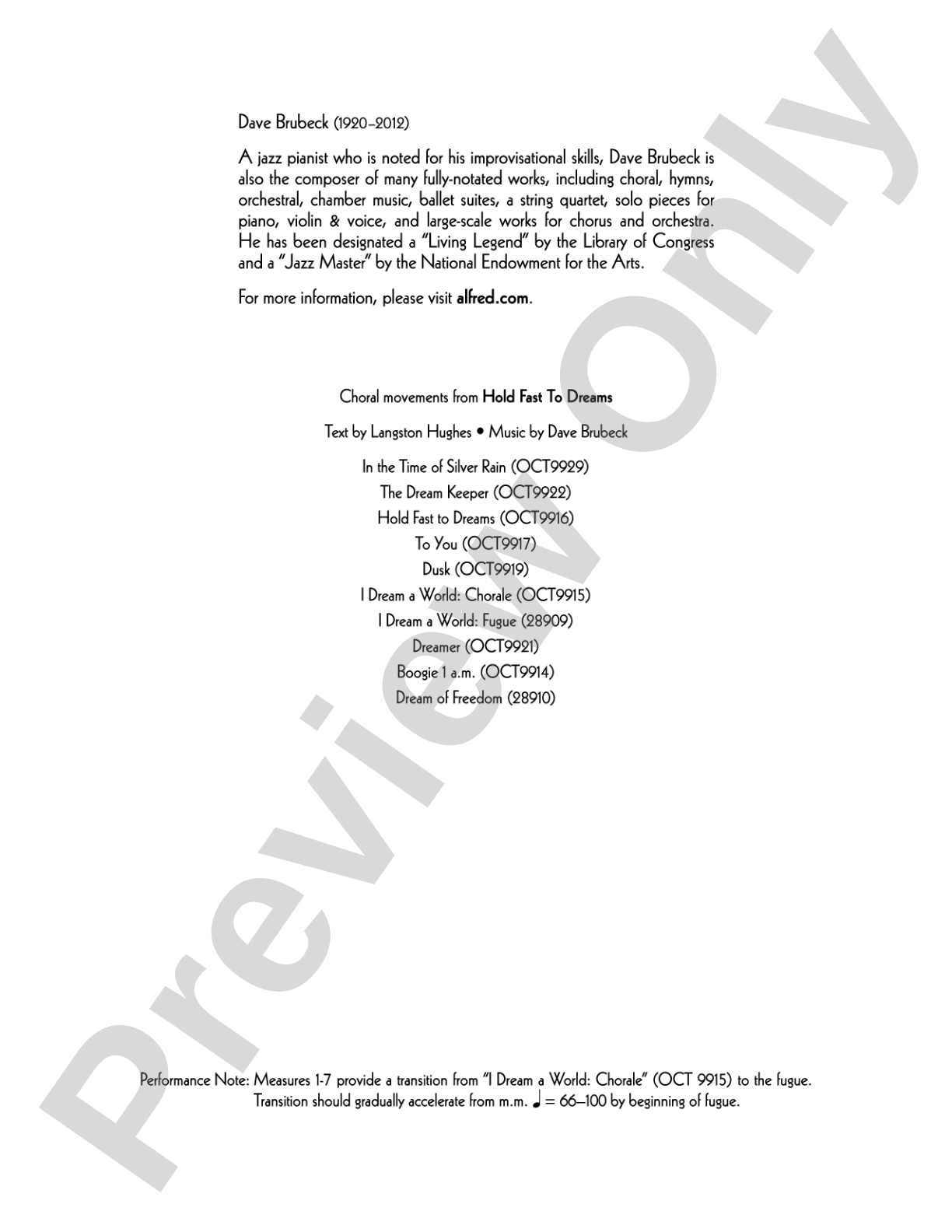
Dave Brubeck

Dave Brubeck was a pianist and composer who moved fluently between jazz improvisation and formal classical writing. His work spans choral pieces, hymns, orchestral compositions, chamber music, and large-scale works for chorus and orchestra. He studied with Darius Milhaud at Mills College after World War II, an influence that shaped his lifelong synthesis of jazz language and classical structure.

Beyond his musical output, Brubeck was a cultural force in 20th-century America. He led efforts to break racial barriers in jazz and classical music performance. His album "Time Out" became the first jazz recording to sell over a million copies, anchored by the enduring standard "Take Five." His sacred works, including the mass "To Hope!" and oratorios like "The Voice of the Holy Spirit," have been performed and recorded internationally by major ensembles including the London Symphony Orchestra and the Cathedral Choral Society. He received the Grammy Lifetime Achievement Award for jazz and was elected to the American Classical Music Hall of Fame in 2003.

Why we love this

Brubeck brings the harmonic sophistication and rhythmic vitality of his jazz vocabulary directly into the choral texture without compromising the liturgical weight of the text. The fugue form demands precision from singers while the underlying jazz sensibility keeps the piece from feeling academic or cold. Programming this work signals to your singers that sacred music and contemporary compositional thinking belong in the same concert.

What to expect

The piece inhabits a contemplative, almost meditative space where the fugal architecture unfolds with the sophistication of jazz chord changes underneath. There's an undercurrent of quiet urgency, the kind that comes from carefully interlocking voices working toward a shared destination rather than from overt emotional expression.

Who it's for

Choirs with strong sight-reading skills and experience navigating contemporary harmonic language will find this piece accessible and rewarding. Directors programming sacred repertoire that reflects 20th-century compositional thinking and want to honor Brubeck's legacy as both a jazz innovator and serious composer will find a vehicle that challenges singers musically and intellectually.

How to get the most out of it

  • Establish a steady tactus early in rehearsal and keep singers aware of where the fugal subject lives as it migrates between voices. Brubeck's harmonic language will reward careful attention to voice leading and independence.
  • Balance the thick harmonic clusters that result from Brubeck's writing by attending to dynamic shape within individual lines rather than trying to even out the overall sound.
  • Shape the subject entries with subtle emphasis without disrupting the overall flowing character of the piece; think of them as conversational points rather than dramatic announcements.

How to use it

This works beautifully in a concert pairing sacred works from different eras, positioning Brubeck alongside Bach or Byrd to show how the fugal tradition persists in modern composition. Consider programming it in a second half devoted to American sacred music or composers who bridged popular and classical idioms.

Skills your students will build

  • Reading and entering fugal subject entries across multiple voice parts
  • Navigating jazz-inflected harmonic language within a traditional choral texture
  • Maintaining independent line integrity while balancing ensemble blend
  • Sustaining character and focus through sectionally complex formal structure

You May Also Like