I Dream a World: Fugue Cover Image

I Dream a World: Fugue: SATB Choral Octavo

$2.95 USD
Sale price  $2.95 USD Regular price 
Skip to product information
I Dream a World: Fugue Cover Image

I Dream a World: Fugue: SATB Choral Octavo

By Dave Brubeck

Item: 00-28909

makemusic Cloud badge

Need it now?

Buy Digital Version
$2.95
Shipped

One moment…

Description

Don't just read it, hear it, play along with it, and watch your students grow with it. In MakeMusic Cloud, I Dream a World: Fugue: SATB Choral Octavo comes alive with professional accompaniment, adjustable tempo, and built-in practice tools that turn solo practice into real progress.

Sample Pages

Sample Audio
No sample audio found.
Sample Video
Additional Details
Series: Lawson-Gould: The Dave Brubeck Series
Publisher: Alfred Music
Page Count: 16
UPC: 038081336732
SKU: 00-28909

More about this title

About the Composer: Dave Brubeck
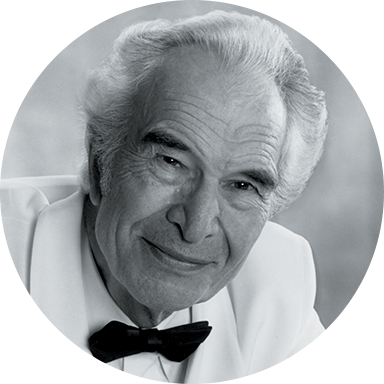
Dave Brubeck

Dave Brubeck stands as a pivotal figure in twentieth-century music, equally commanding in the jazz and classical worlds. His improvisational mastery at the piano informed a prolific output of fully notated compositions spanning choral works, hymns, orchestral scores, chamber music, and large-scale choral-orchestral pieces. Beyond "Take Five" and the landmark album "Time Out" (the first jazz recording to sell over a million copies), Brubeck used his platform to challenge racial segregation during a transformative era in American history.

Brubeck's classical works have achieved international recognition and recording. His mass "To Hope!" has been performed across Europe and the English-speaking world, while "Pange Lingua Variations" and the oratorios "The Voice of the Holy Spirit" and "Beloved Son" were recorded by the London Symphony Orchestra and London Voices. After earning his bachelor of music from College of the Pacific in 1942, he studied with composer Darius Milhaud at Mills College following his World War II service. Milhaud's encouragement to blend jazz language with classical form became central to Brubeck's compositional voice. His honors include the Presidential Medal of the Arts, a Grammy Lifetime Achievement Award for jazz, Austria's national arts medal, and election to the American Classical Music Hall of Fame in 2003.

Why we love this

Brubeck's fugal treatment of this text combines rigorous contrapuntal technique with the rhythmic vitality and harmonic sophistication that defined his classical writing. The piece demonstrates that jazz-informed composition and formal musical architecture are not opposing forces but complementary languages. Programming this offers your choir a chance to engage both intricate voice leading and modern harmonic color.

What to expect

The piece unfolds with intellectual rigor and emotional directness. Brubeck's fugal architecture builds cumulative power as voices enter and interweave, while his harmonic vocabulary brings unexpected warmth and modernist clarity to the sacred text.

Who it's for

This octavo suits choirs with solid sight-reading skills and experience navigating twentieth-century harmonic language. It works well for groups seeking sacred repertoire that avoids period-style conventions while remaining deeply musical and performable.

How to get the most out of it

  • Establish each voice's entry with clarity; the fugal structure demands that directors shape expose entrances so listeners can track the subject through all four parts.
  • Attend to the harmonic language, which reflects Brubeck's sophisticated jazz sensibility; avoid over-romanticizing phrase shapes and instead let the modern harmonies speak directly.
  • Balance rhythmic precision with legit phrasing; Brubeck's notated rhythms are intentional and support the counterpoint, not obstacles to overcome.

How to use it

This pairs naturally with other twentieth-century choral works or with jazz-influenced sacred music that challenges conventional expectations. It also stands as a powerful centerpiece for a program exploring American composers or works that bridge classical and jazz traditions.

Skills your students will build

  • Reading and executing fugal voice leading with four independent melodic lines
  • Navigating twentieth-century harmonic language and dissonance
  • Balancing entrances in imitative texture while maintaining phrase continuity
  • Understanding compositional voice as a bridge between jazz and classical idioms

You May Also Like
