
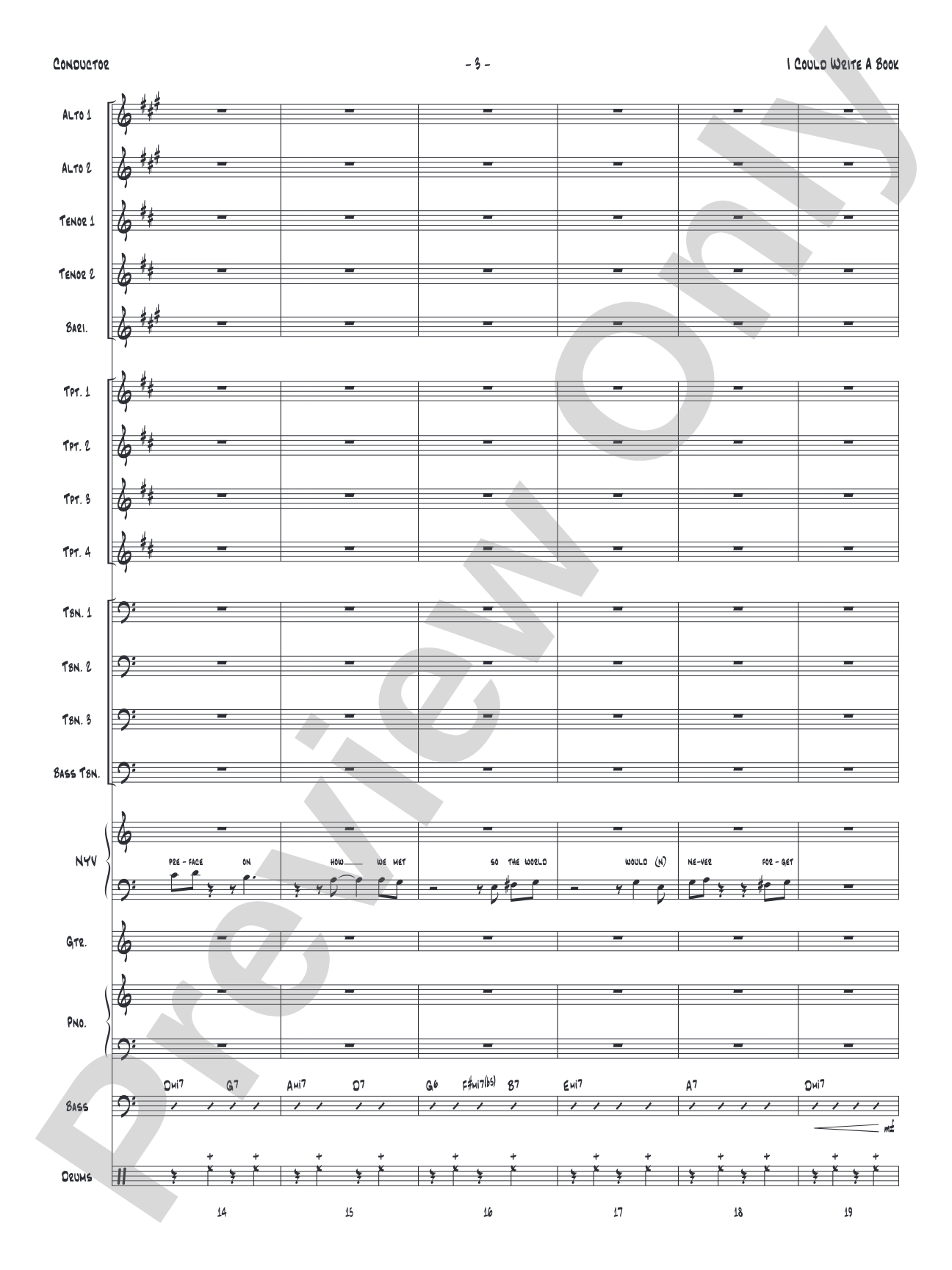
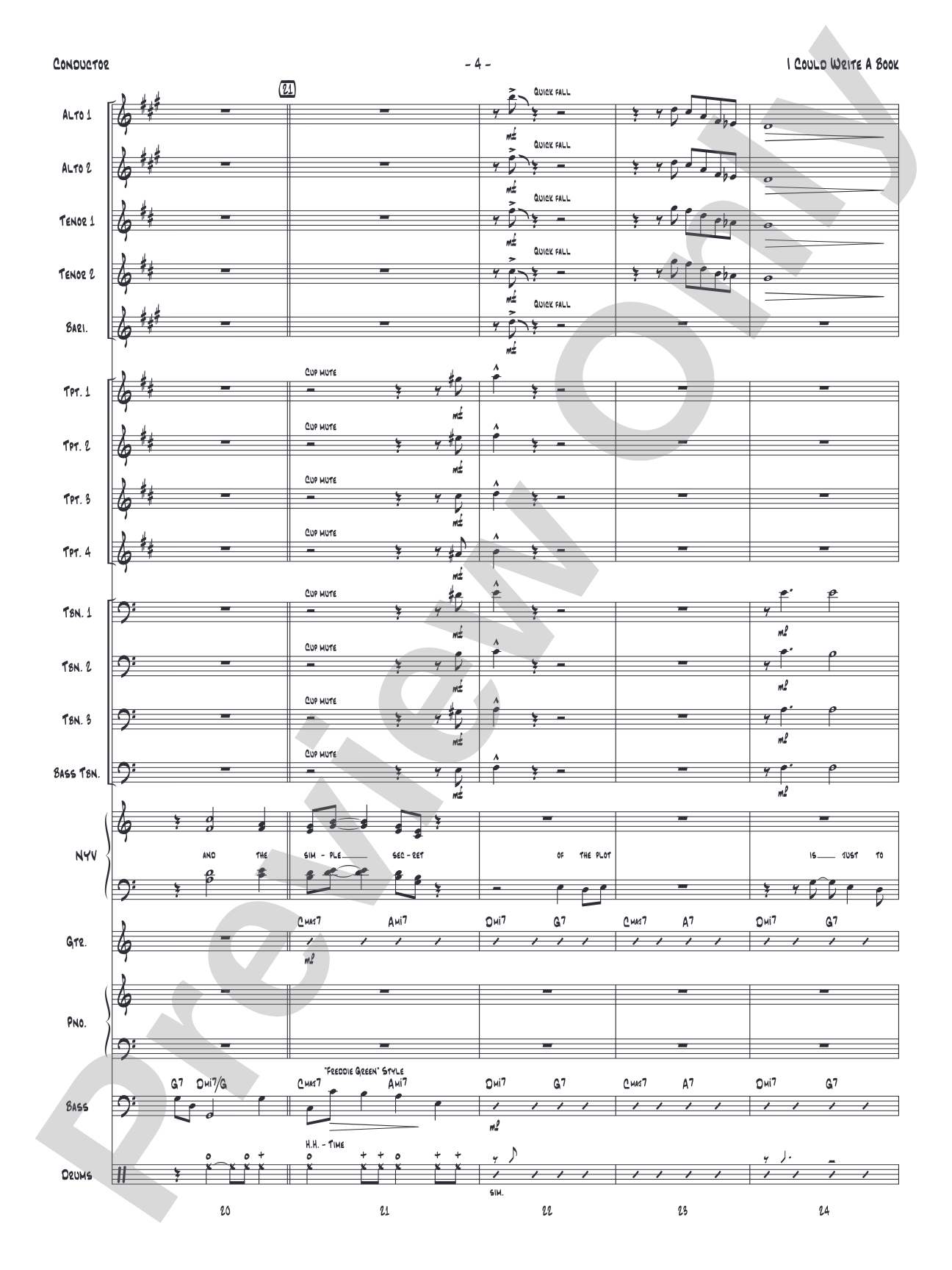
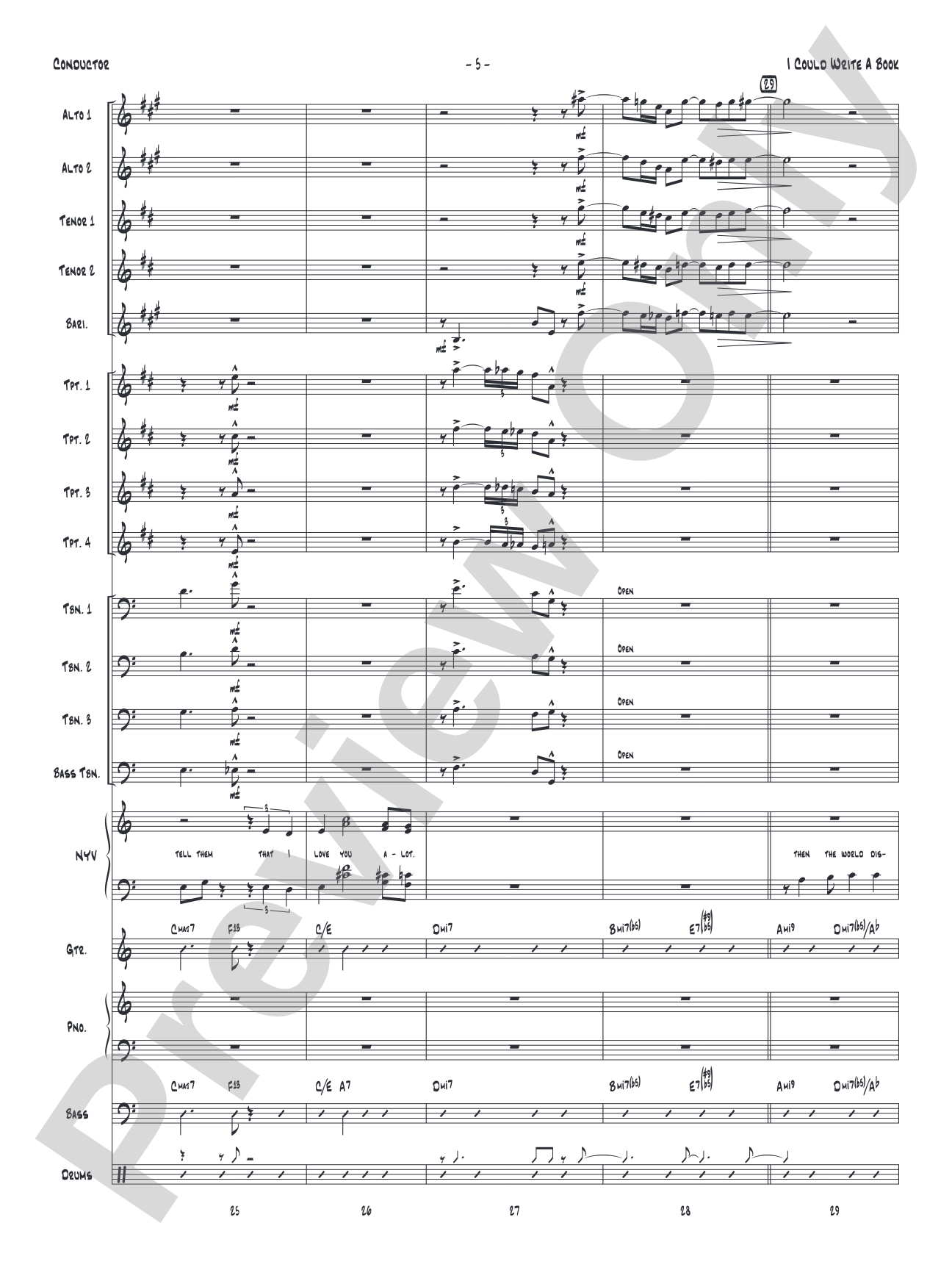
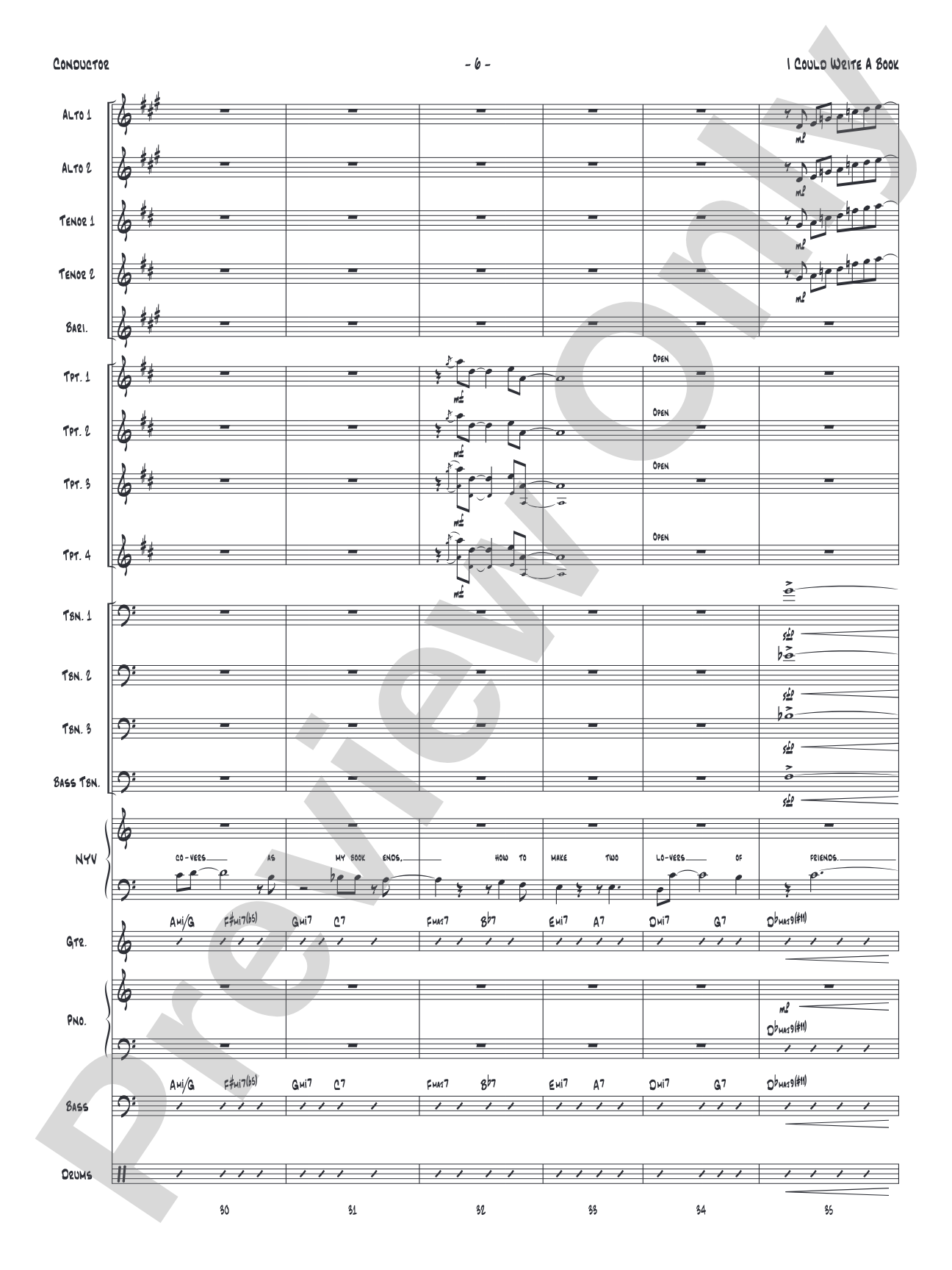
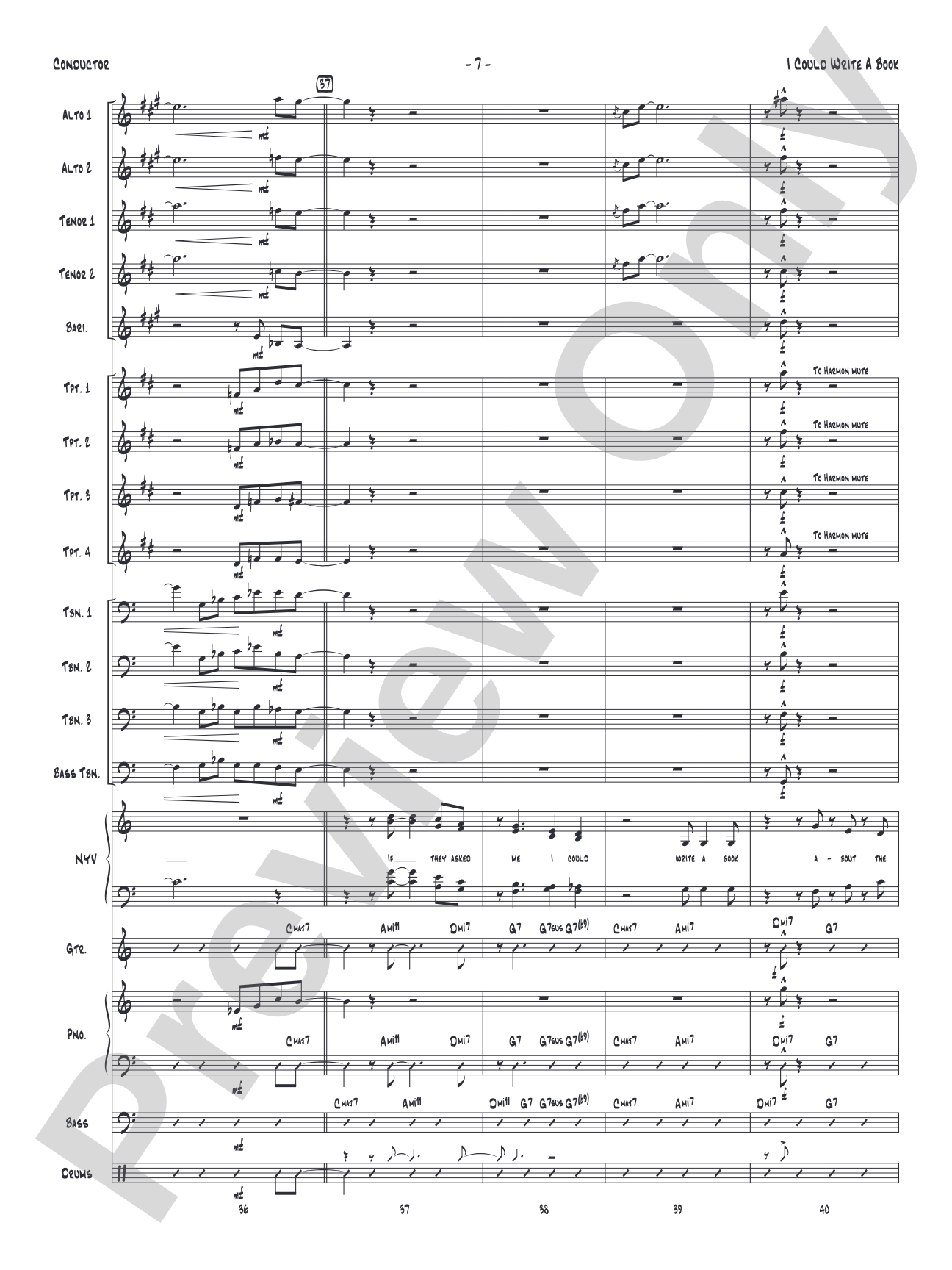
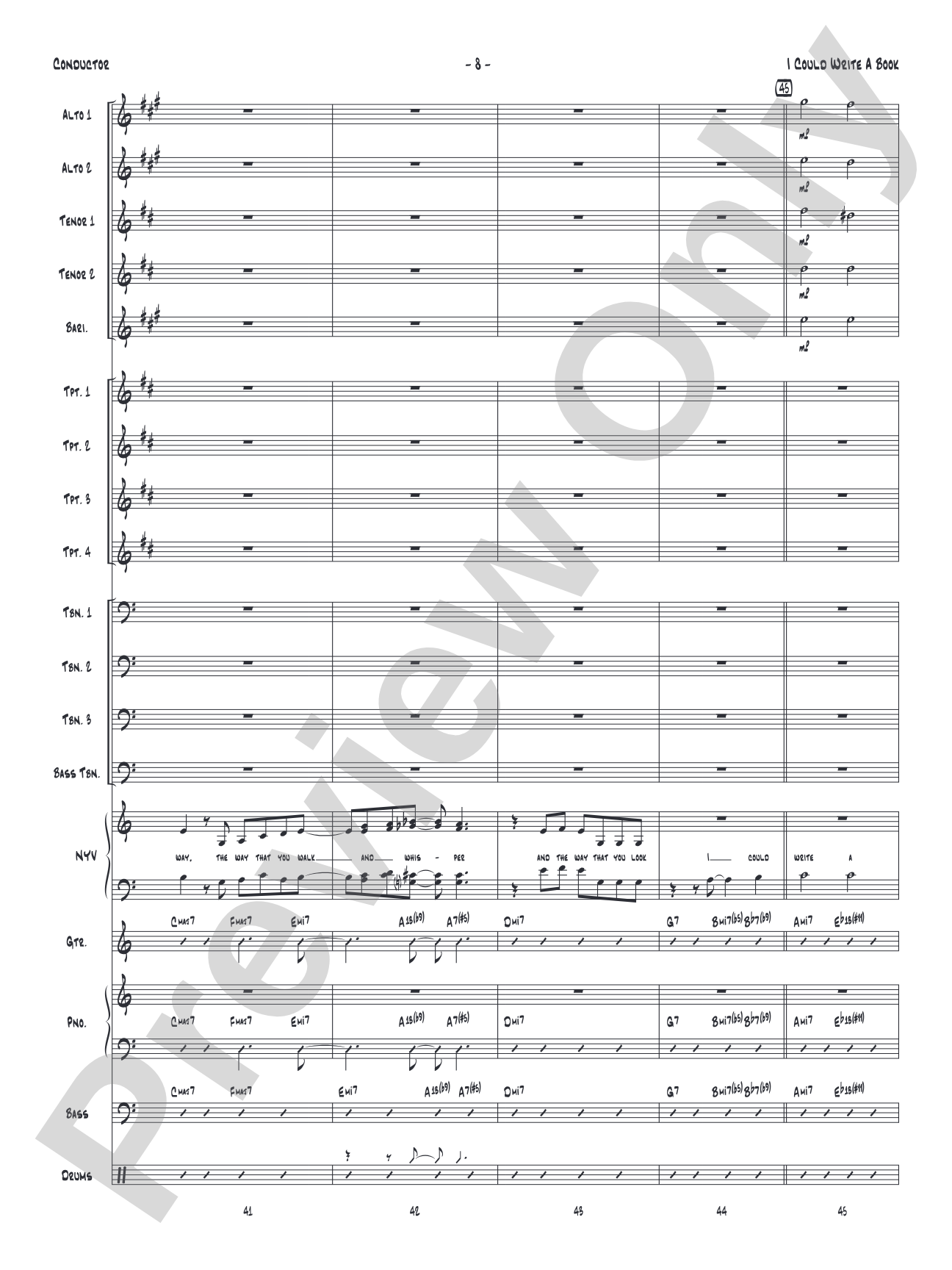
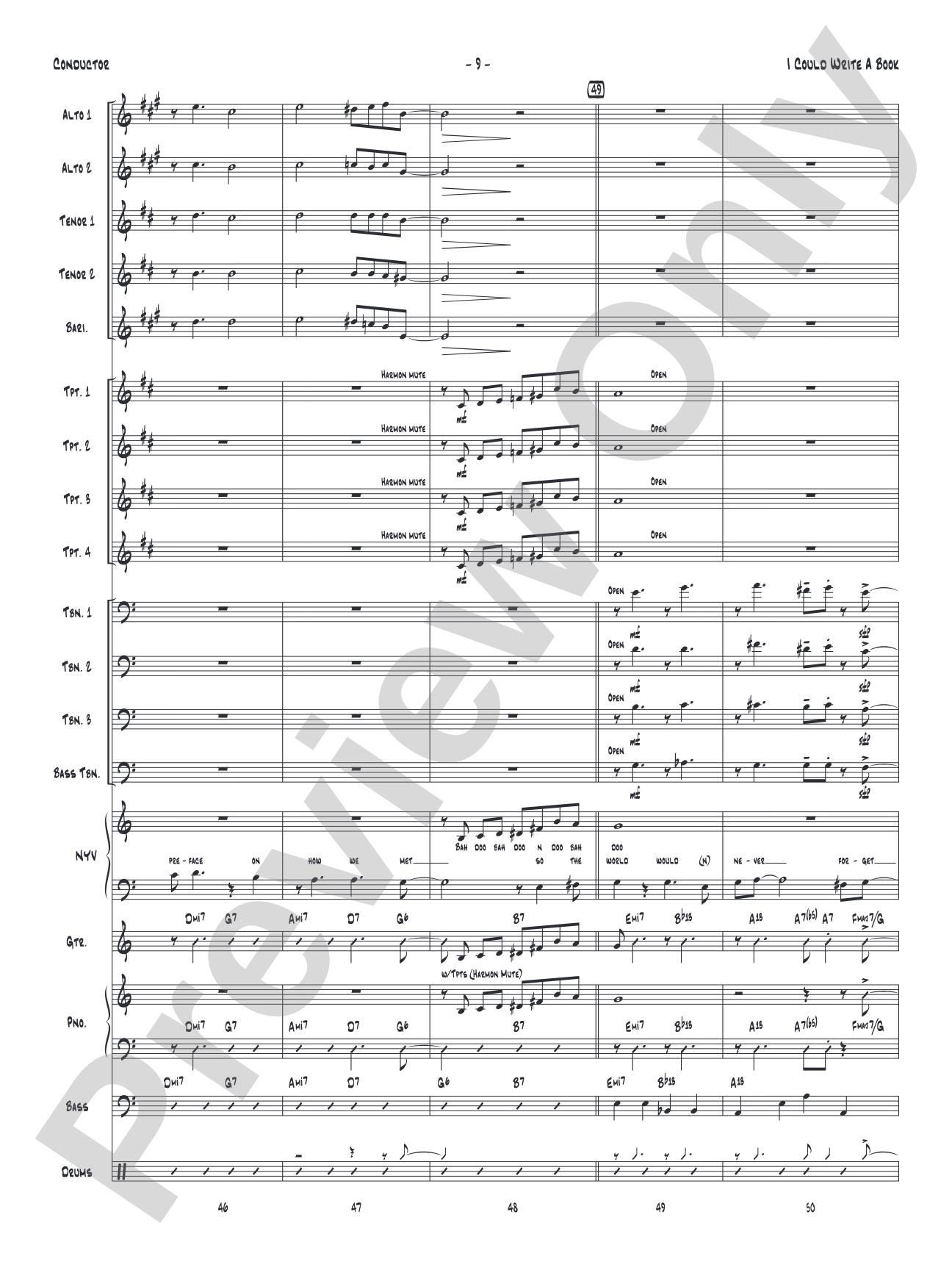
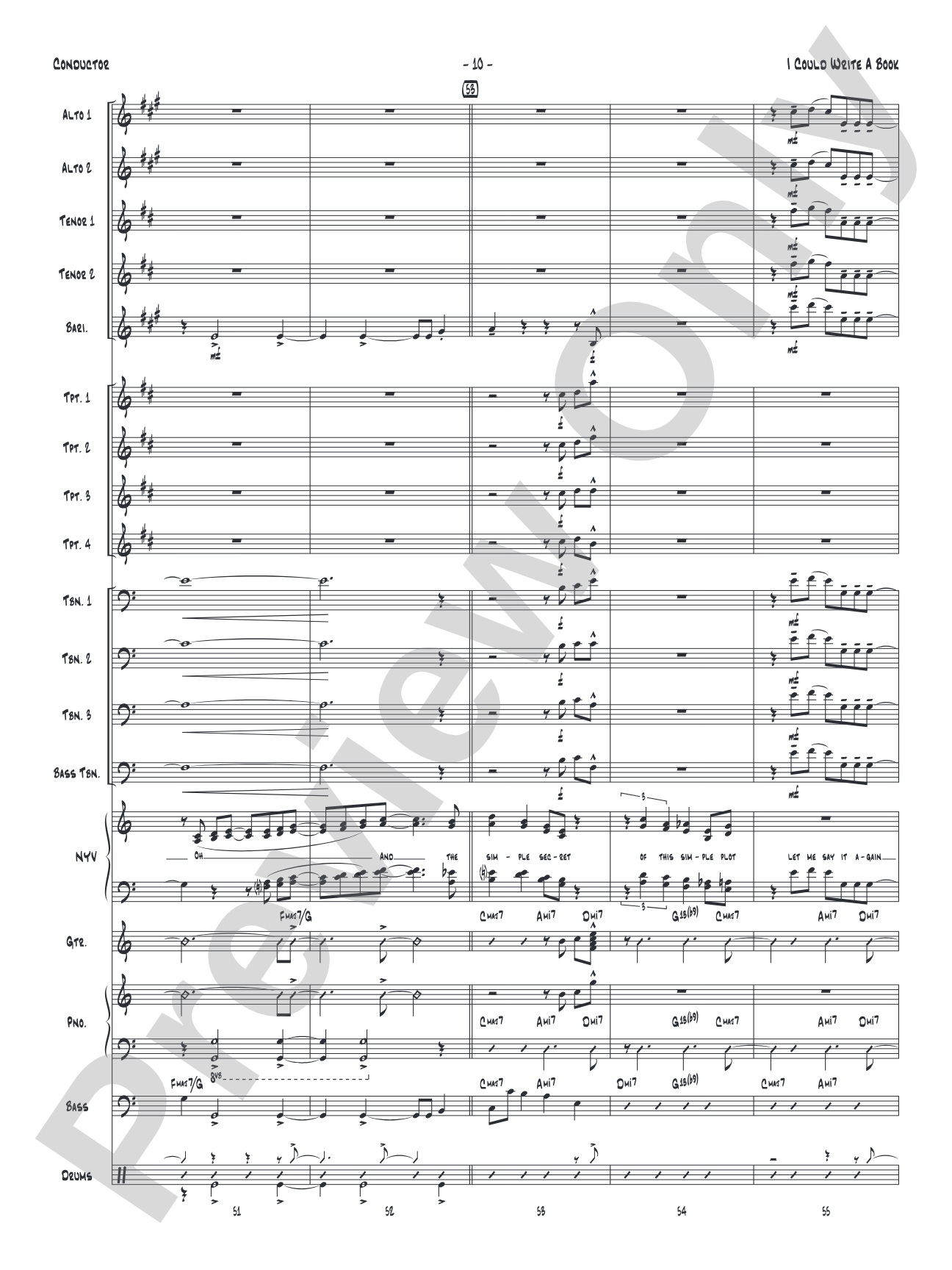
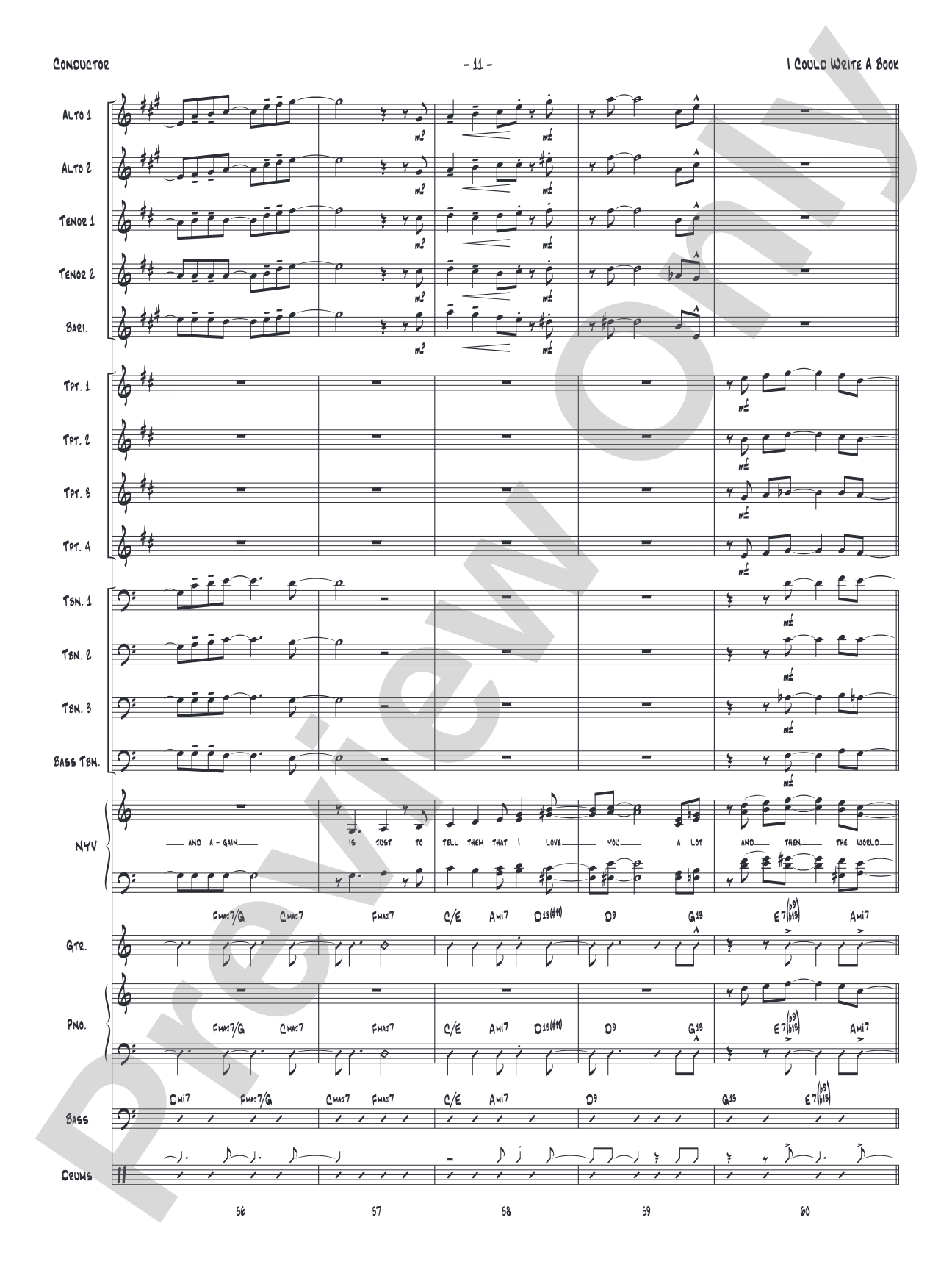
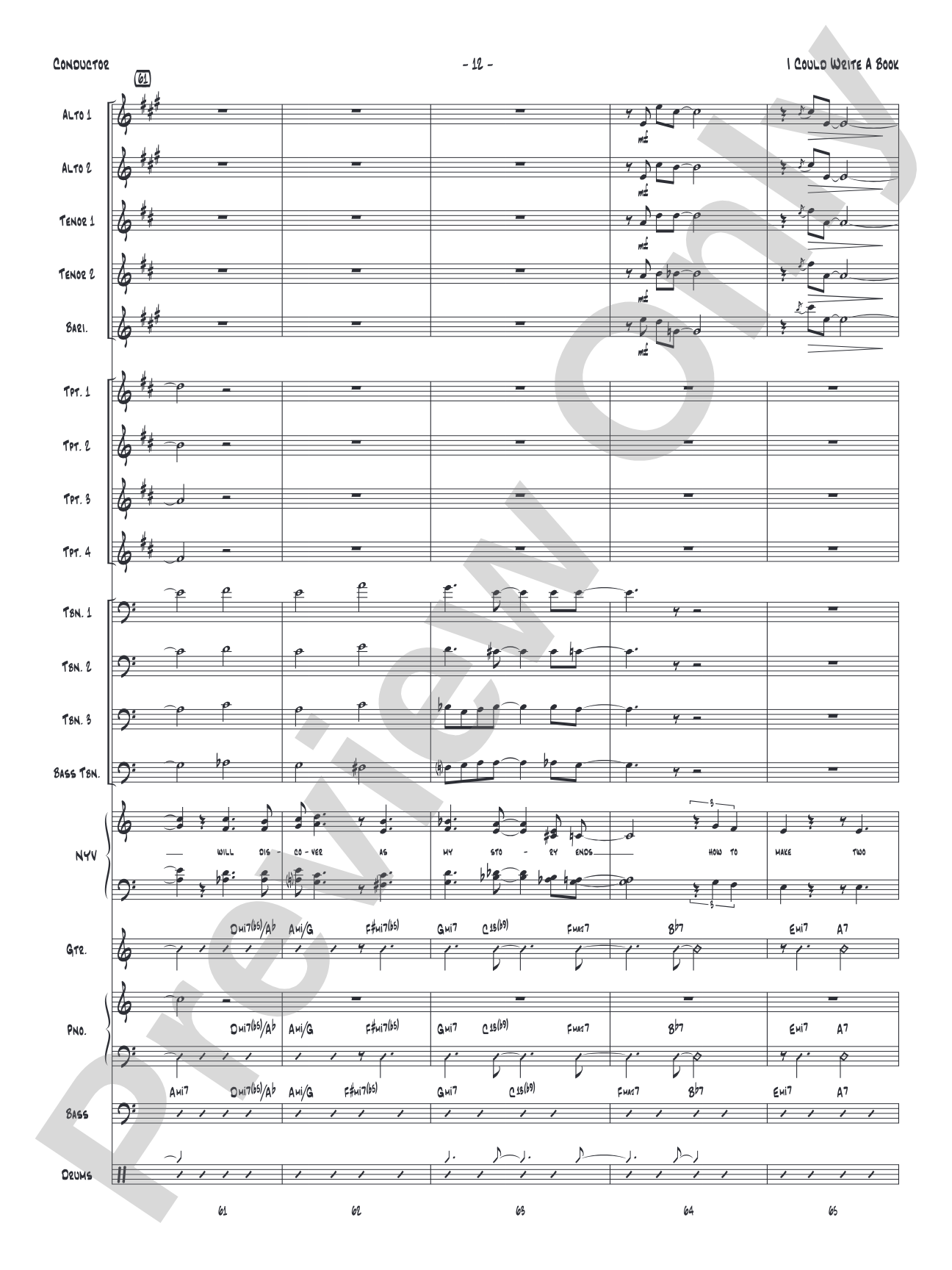
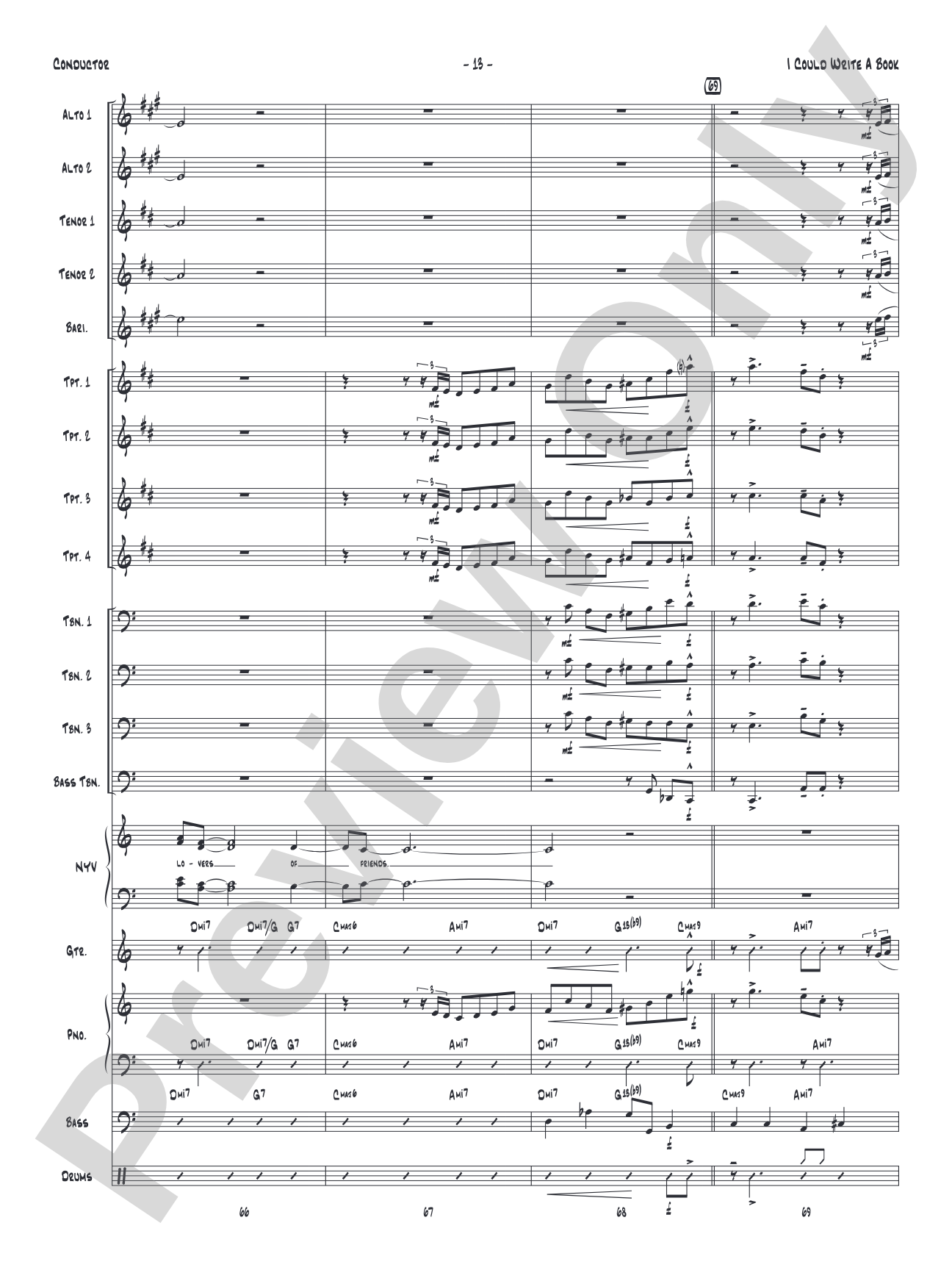
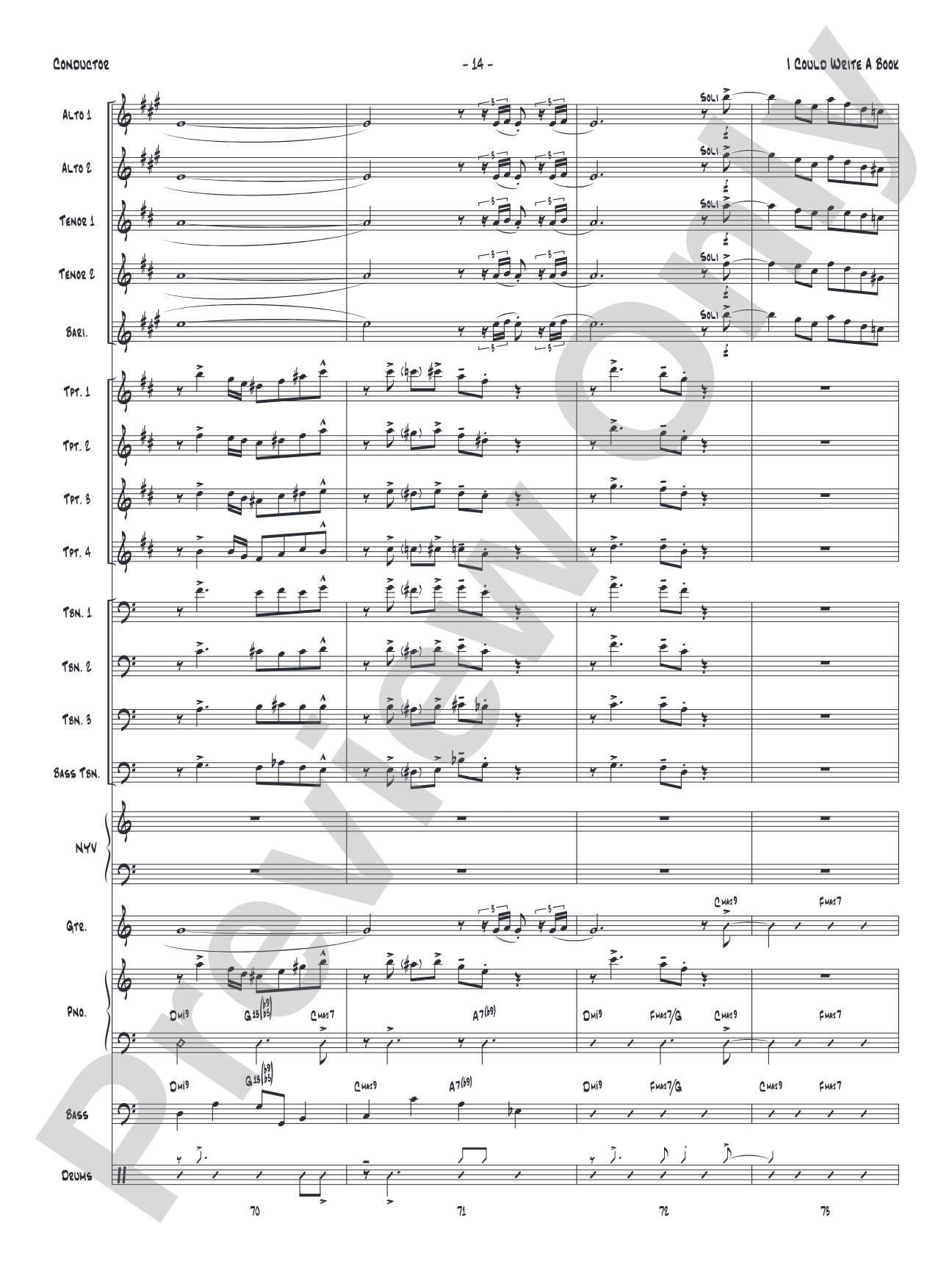
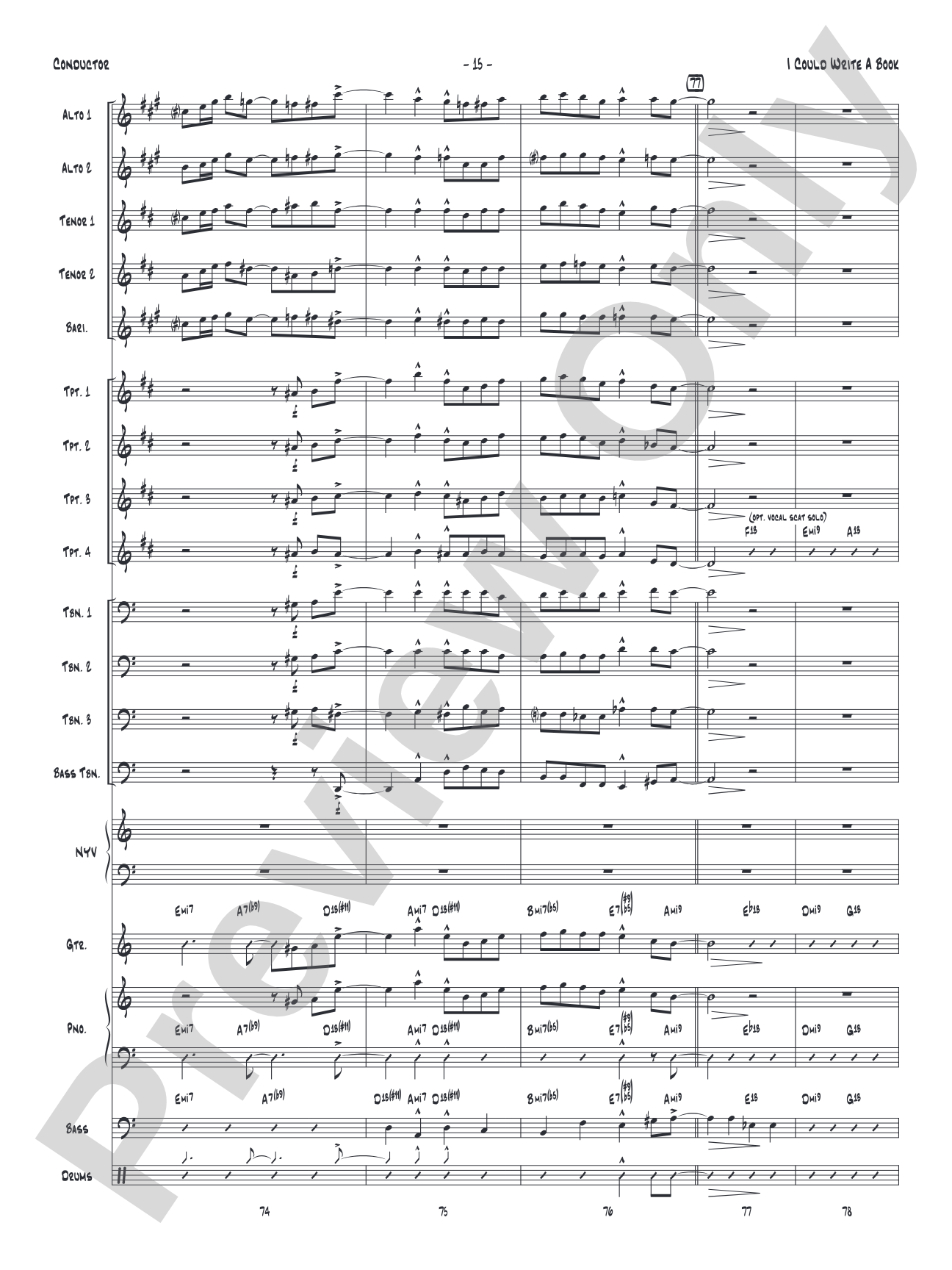
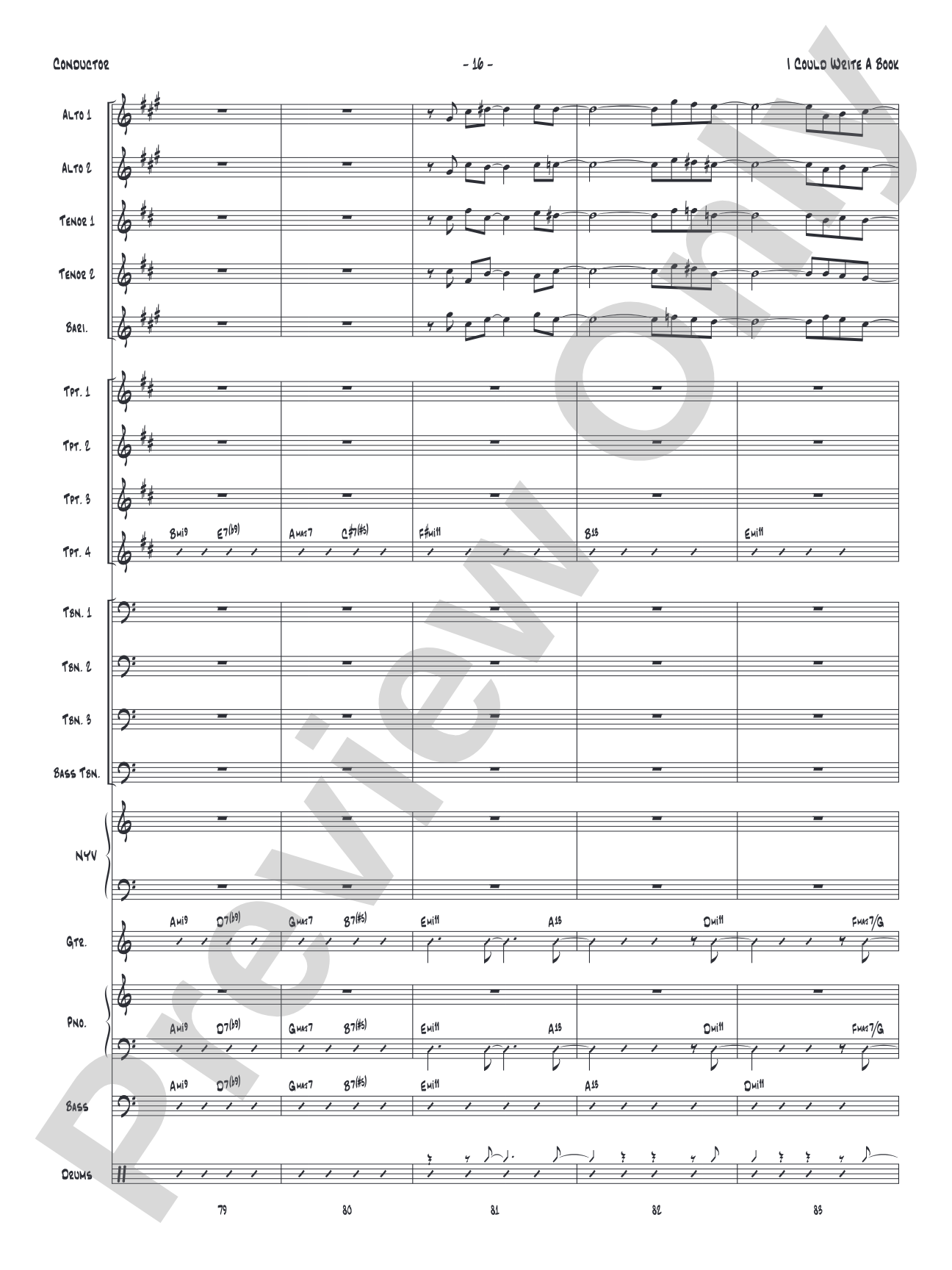
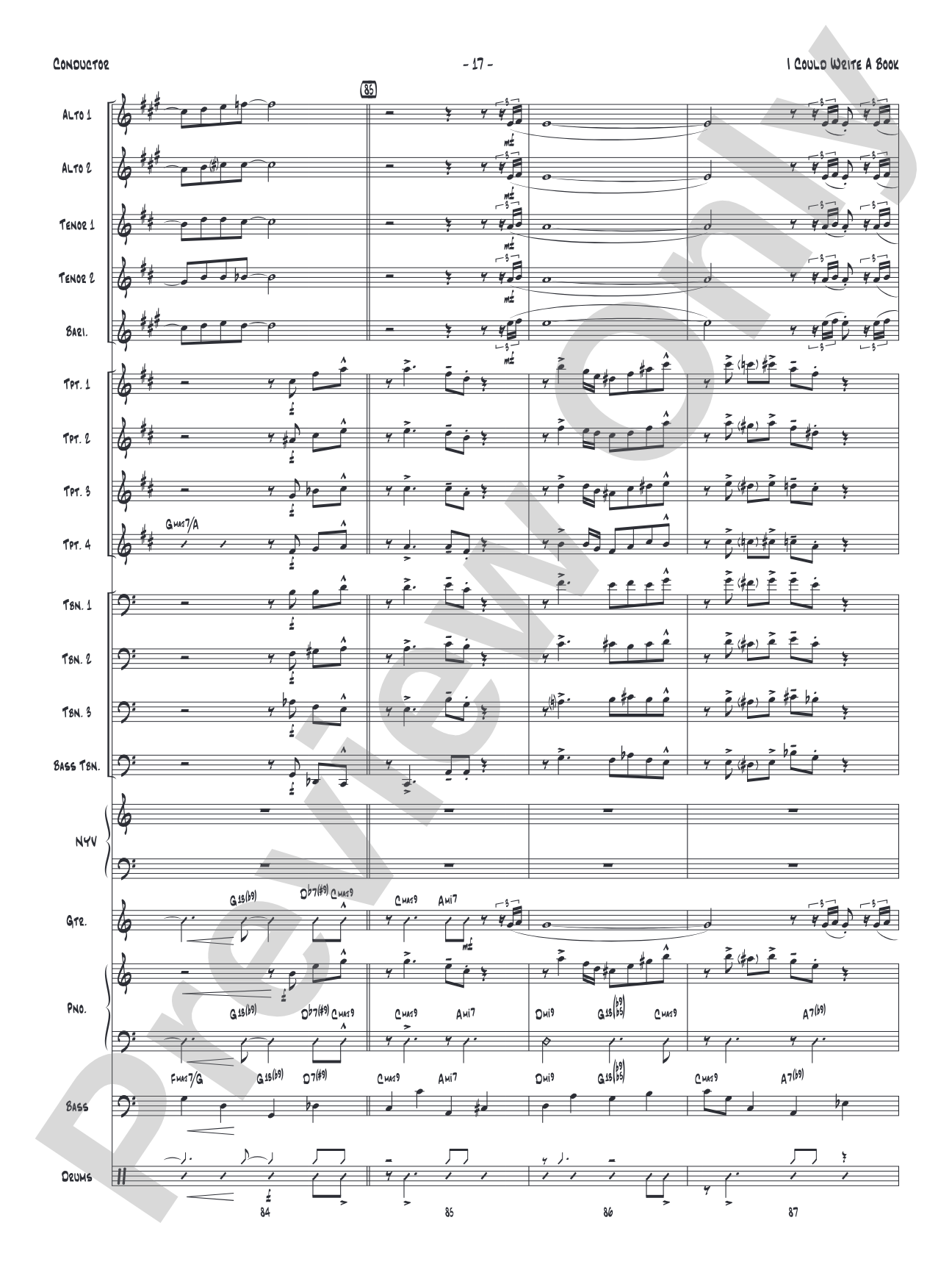
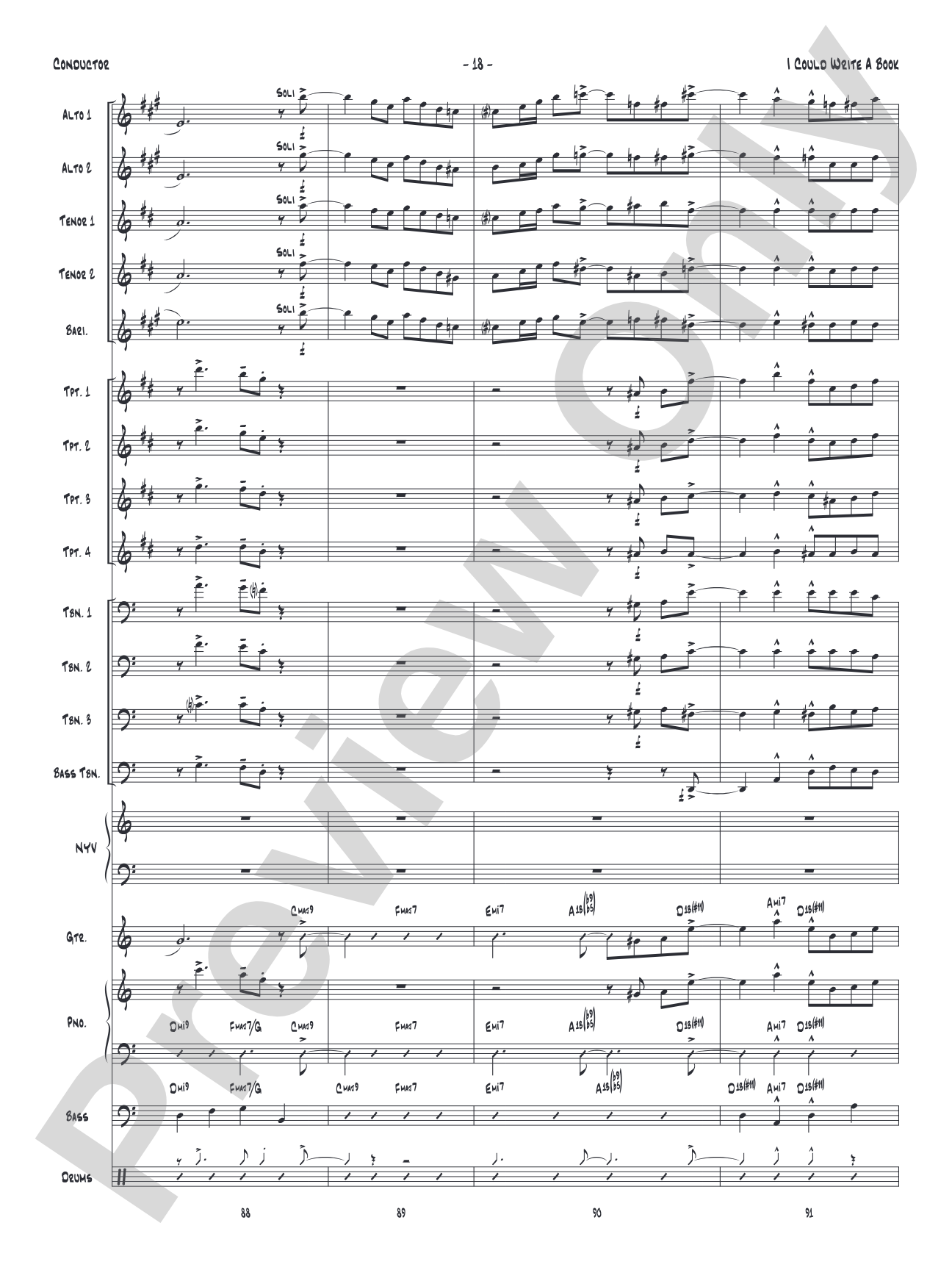
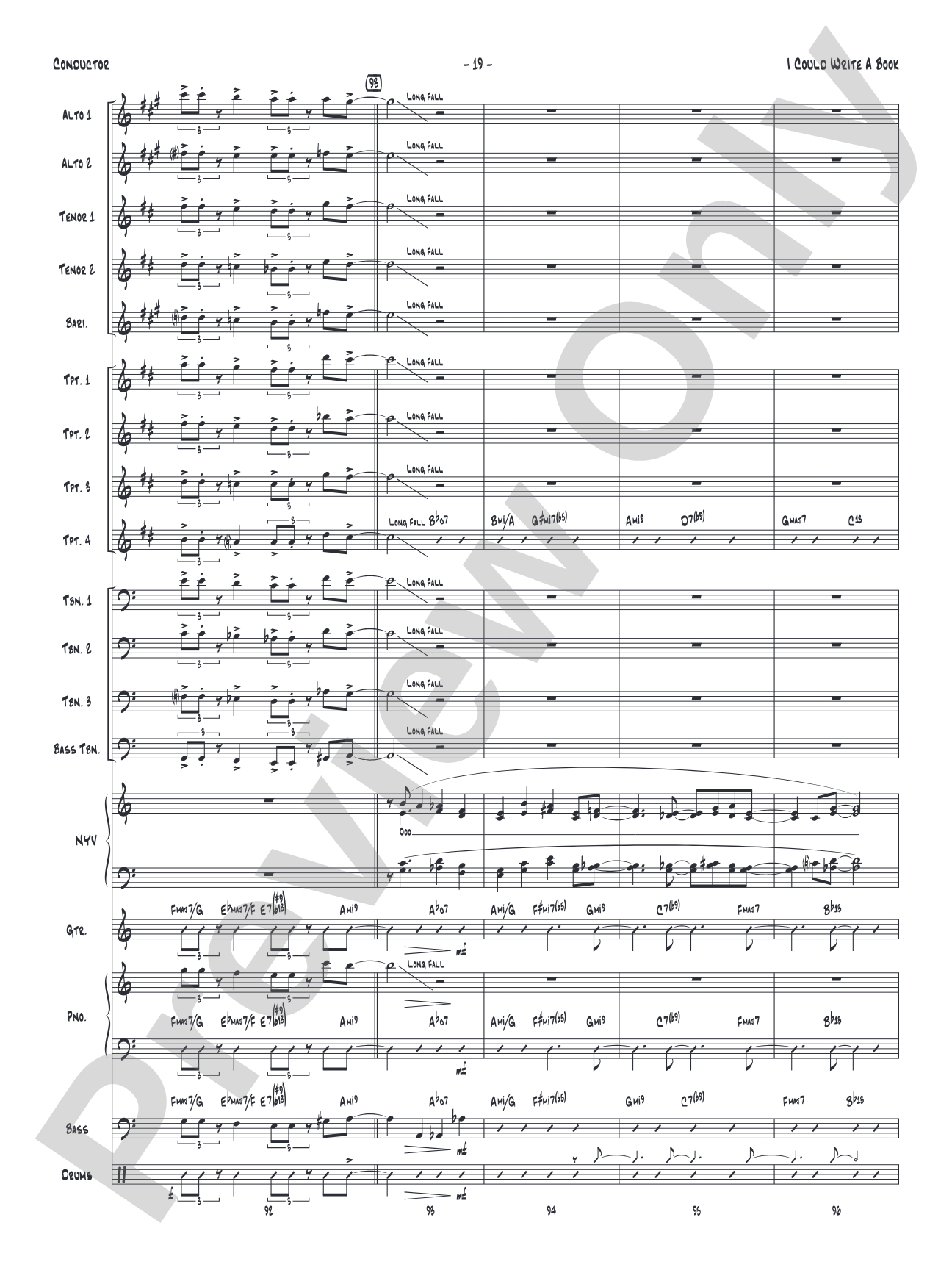
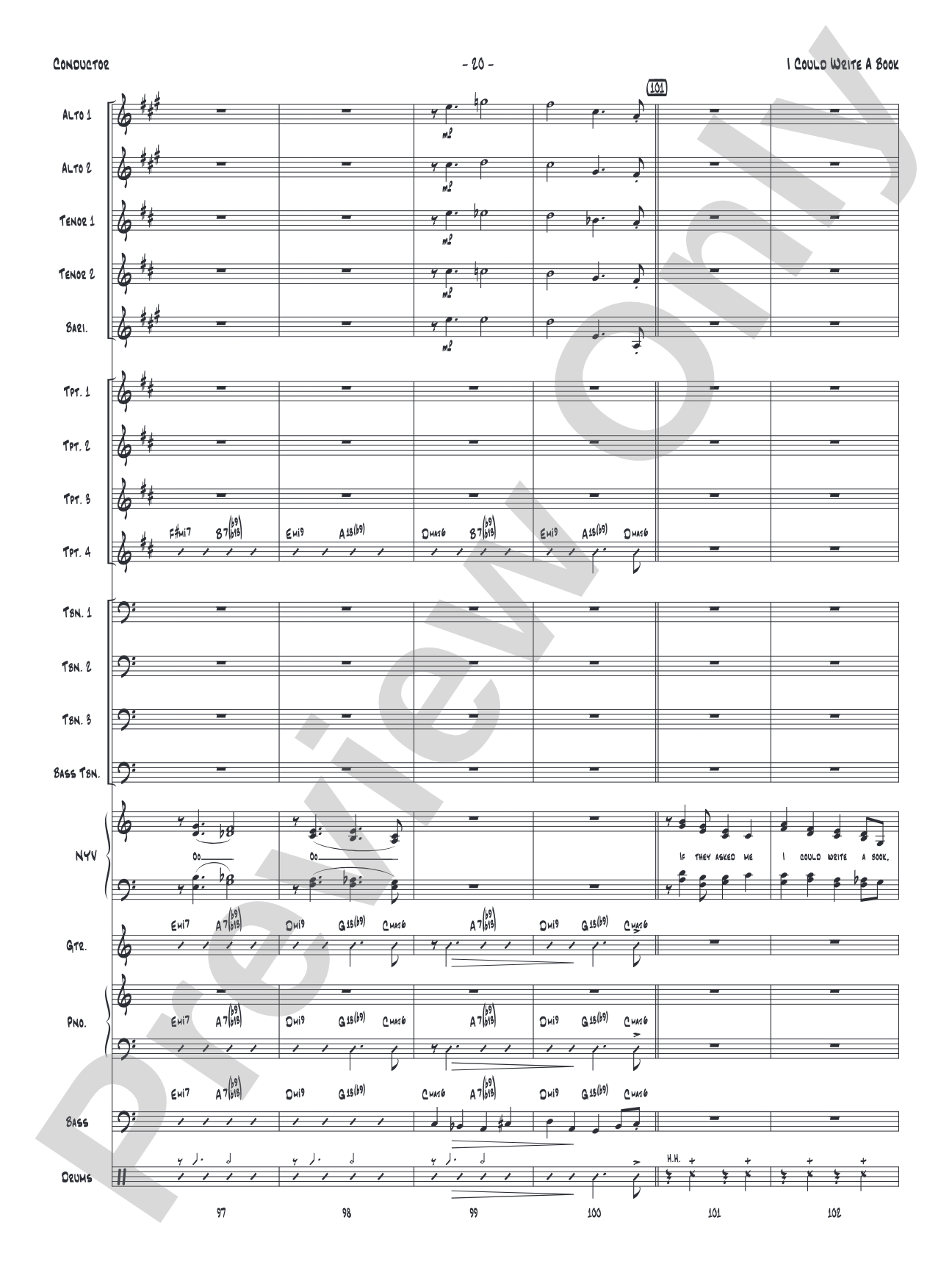
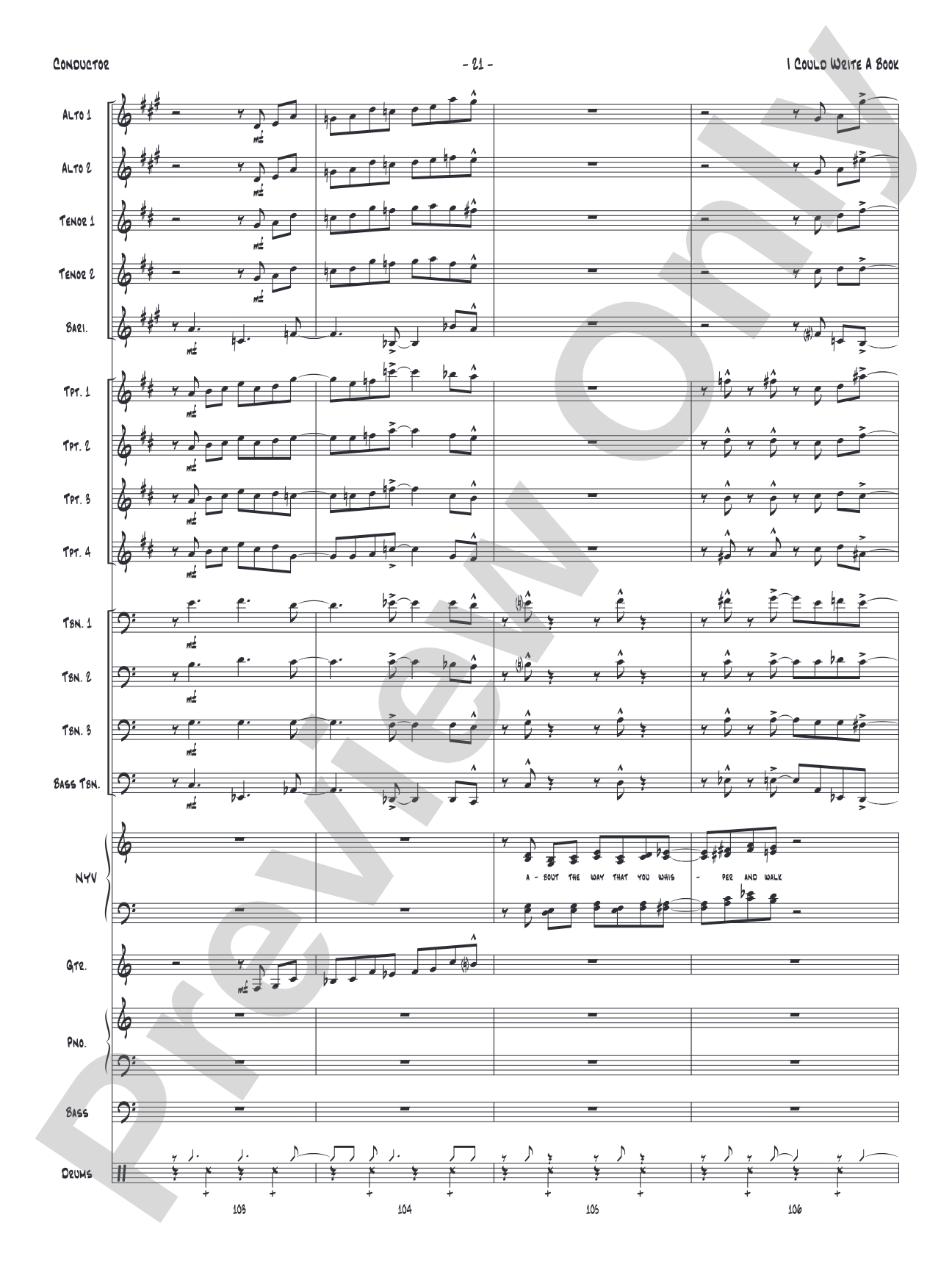
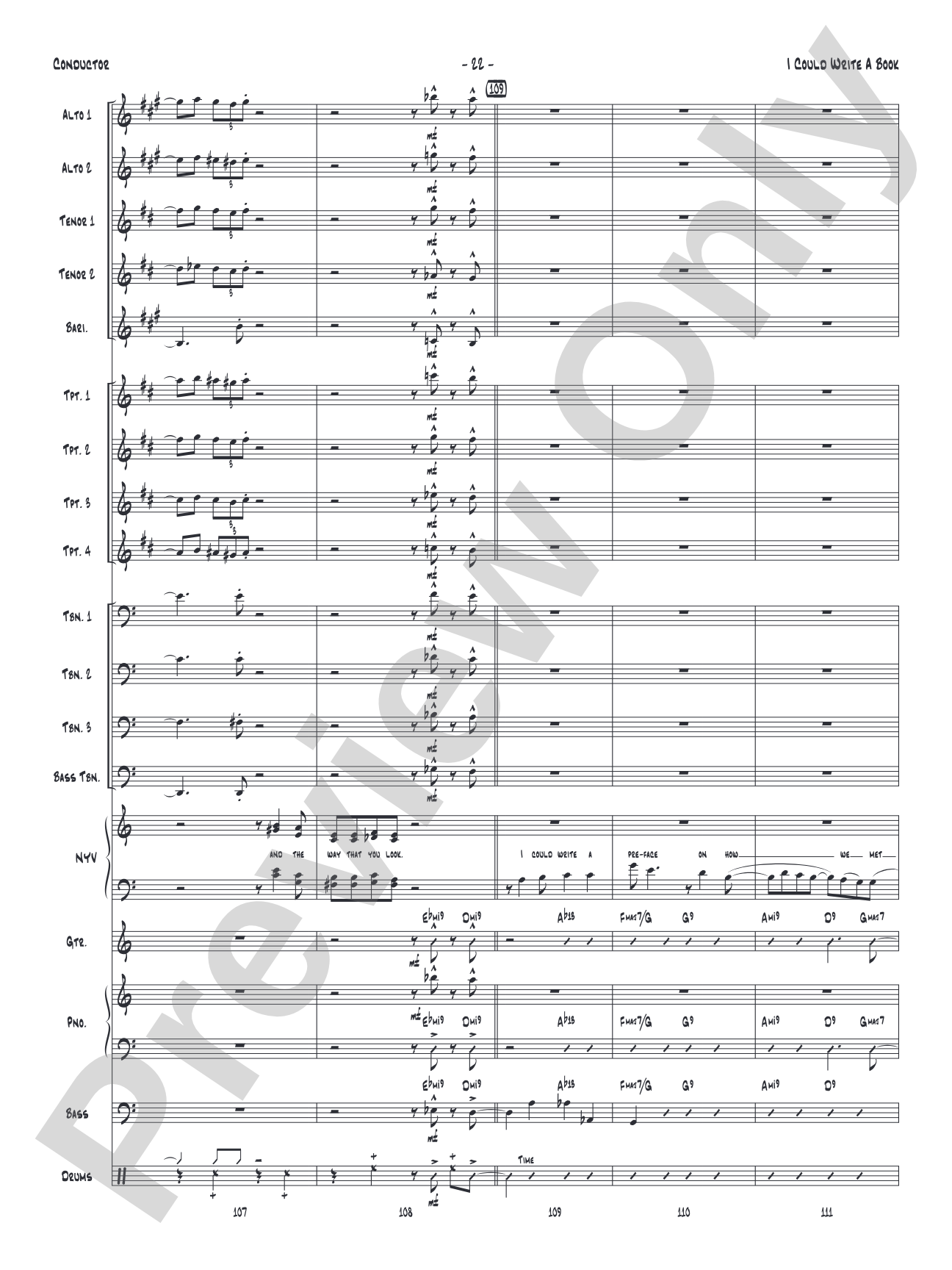
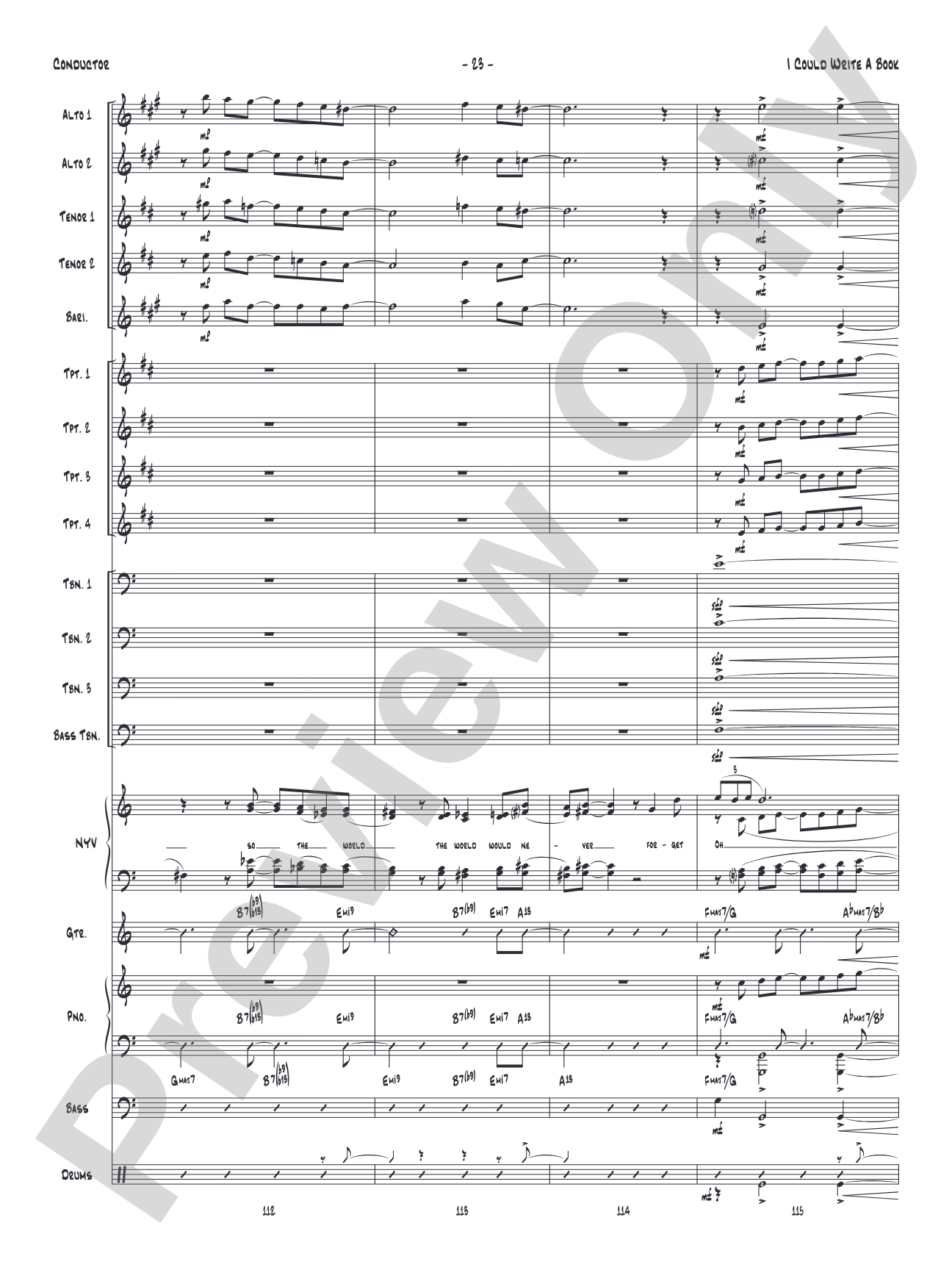
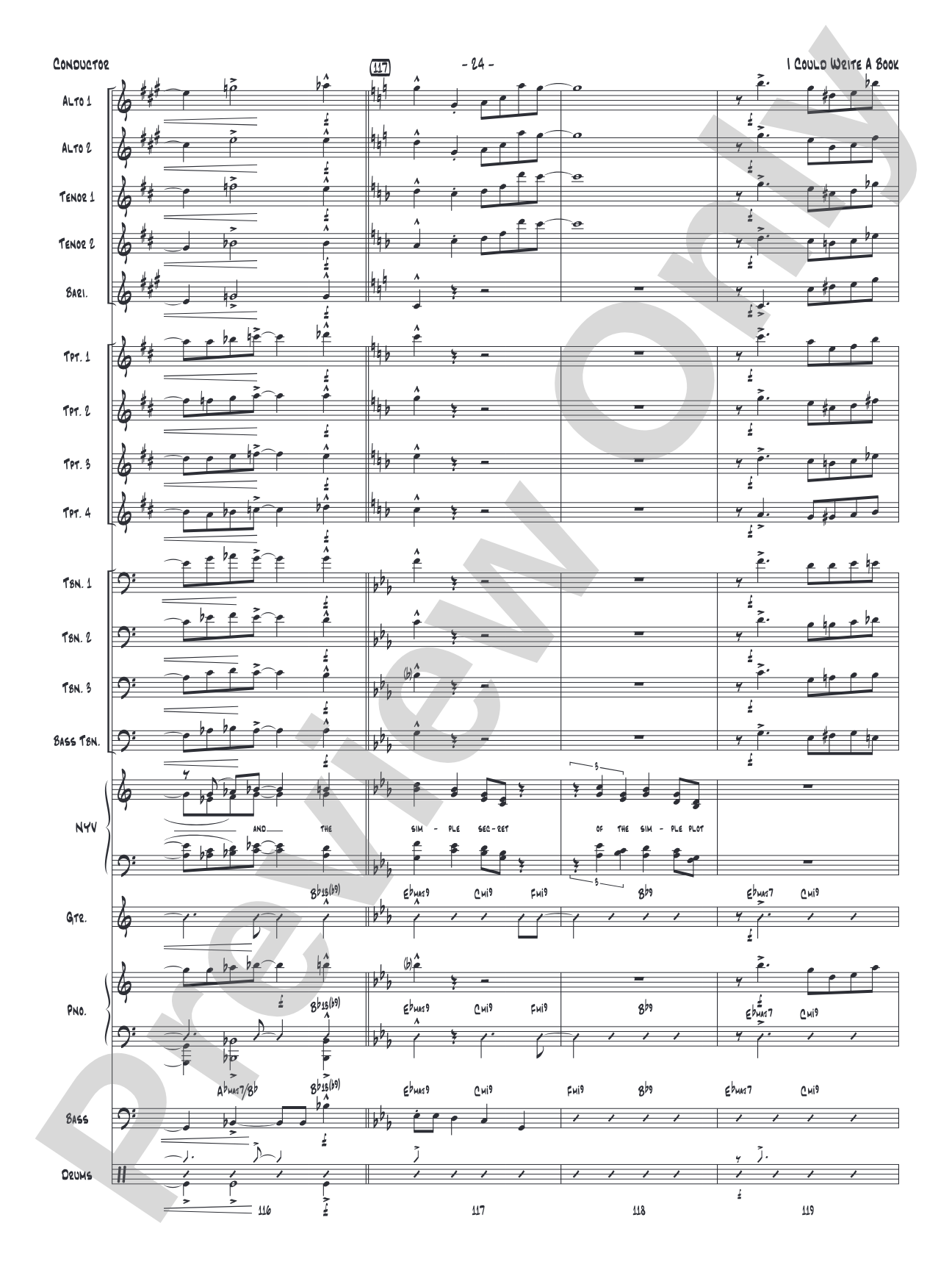
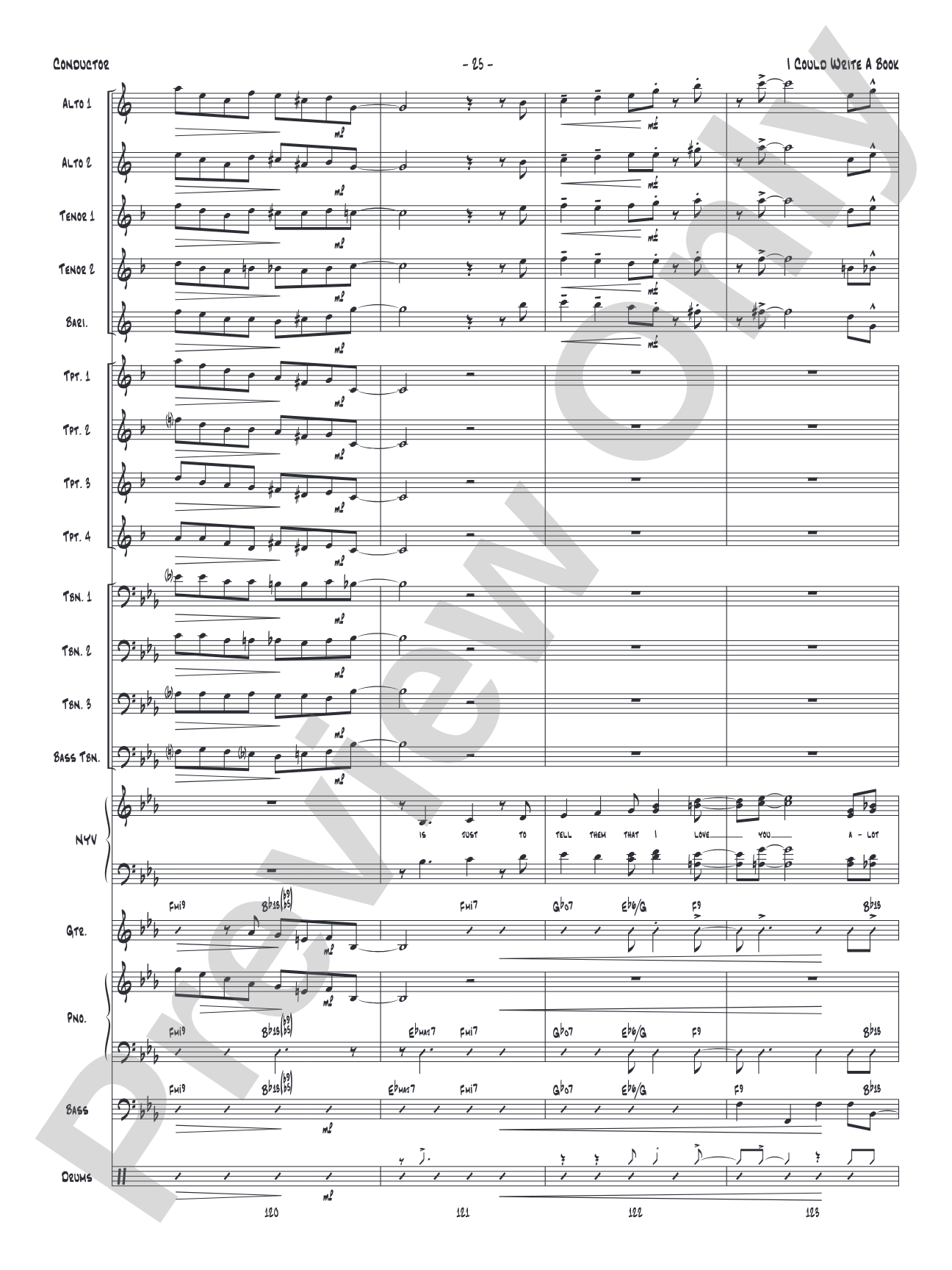
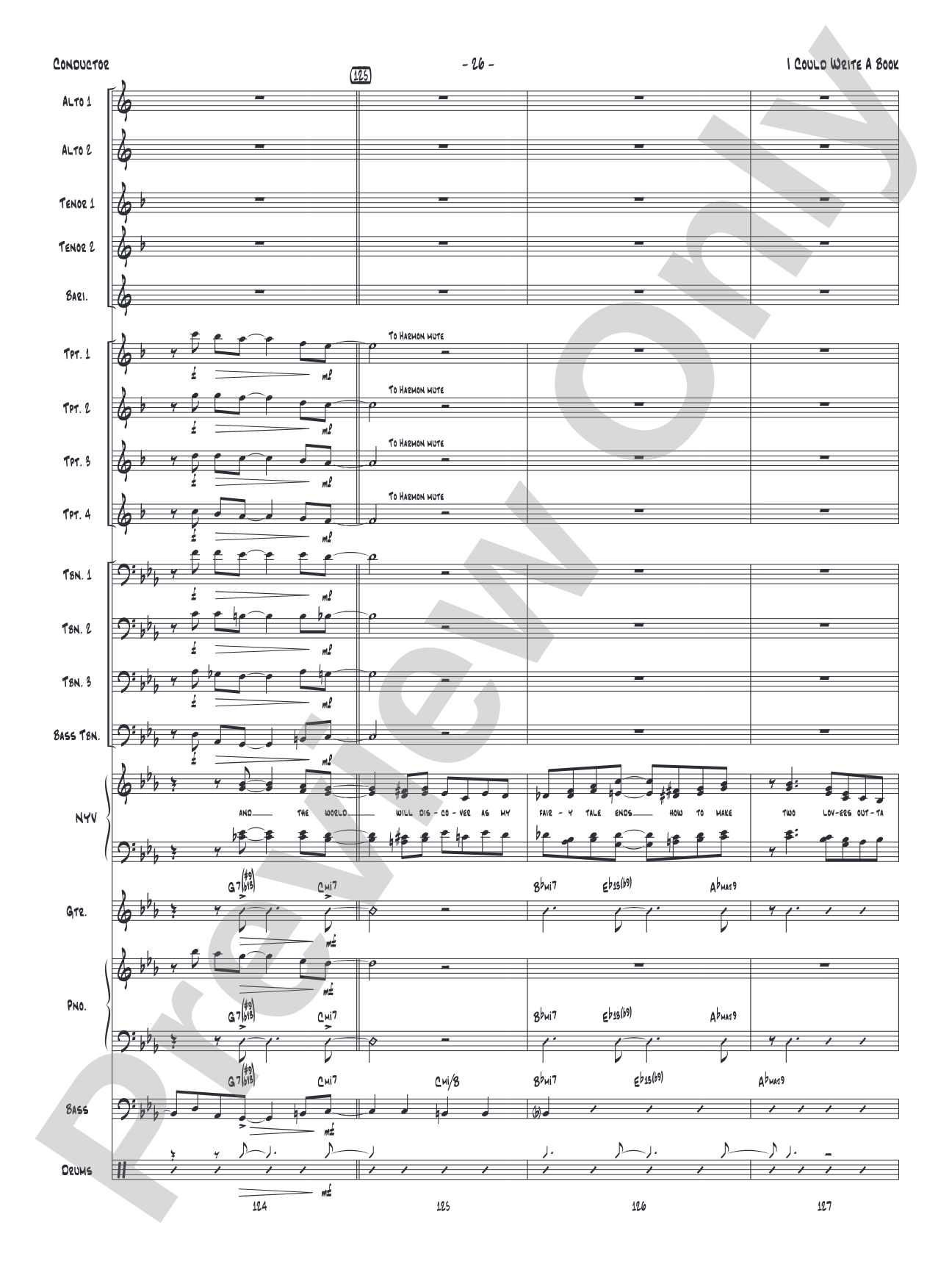
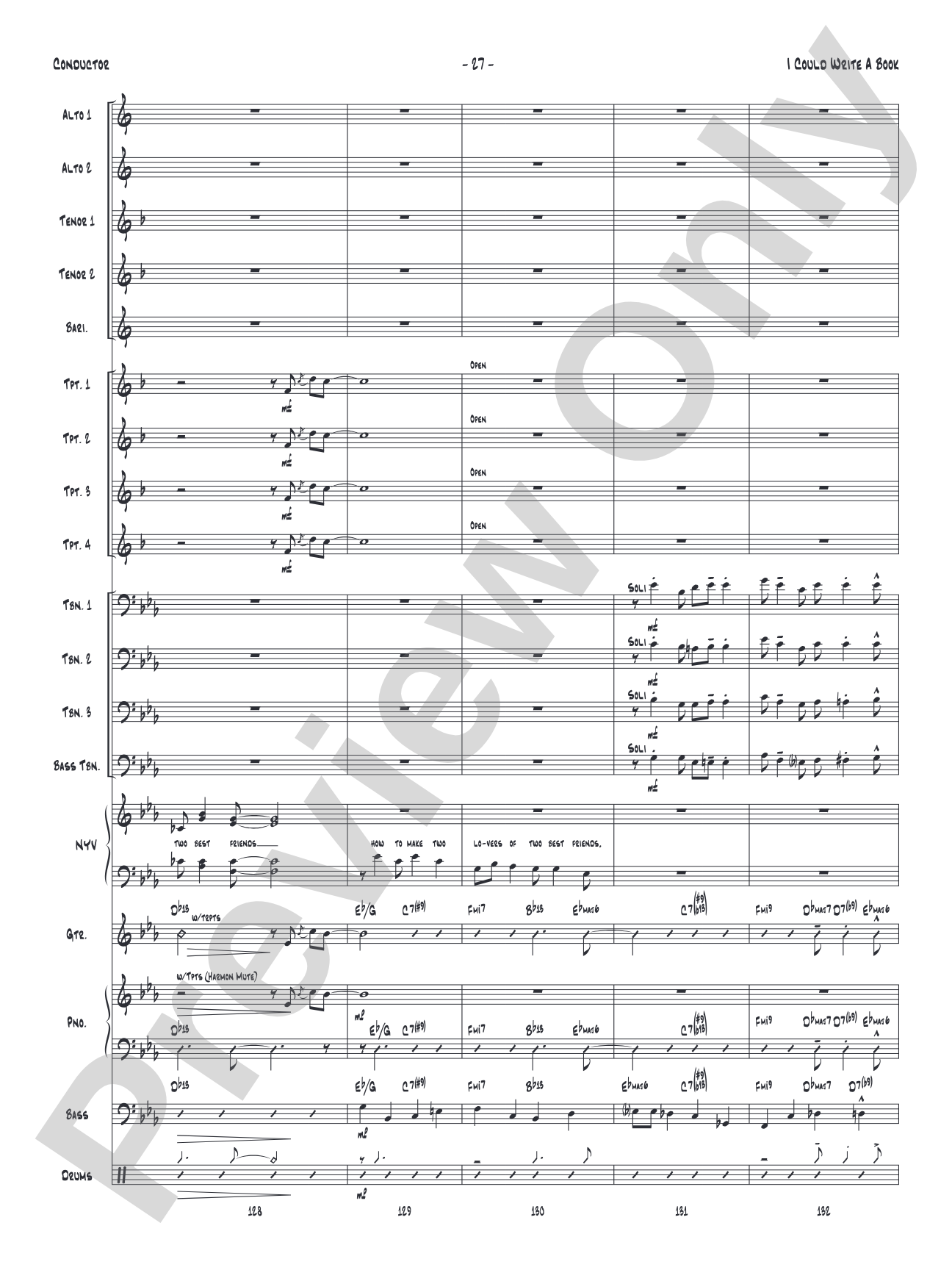
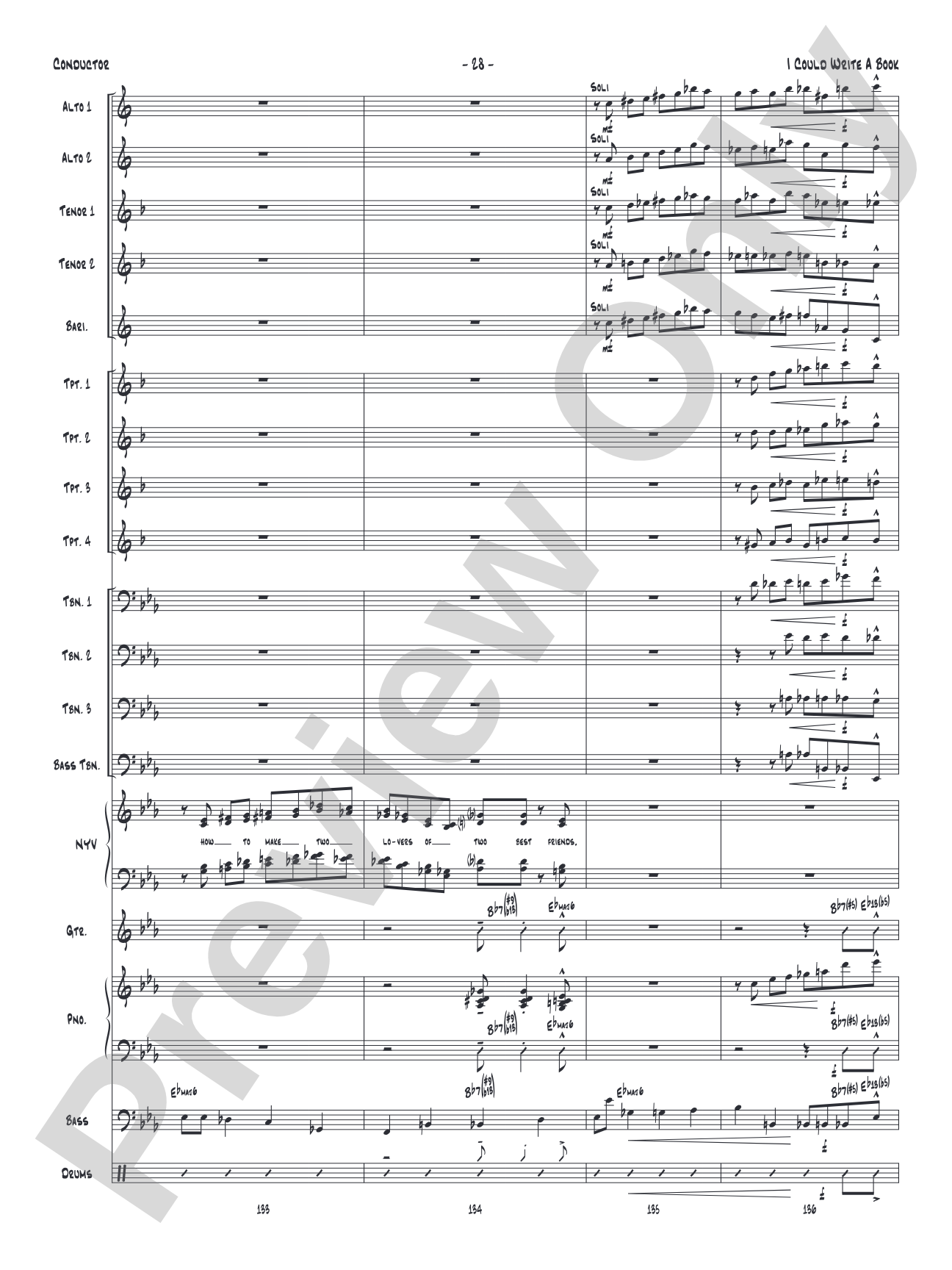
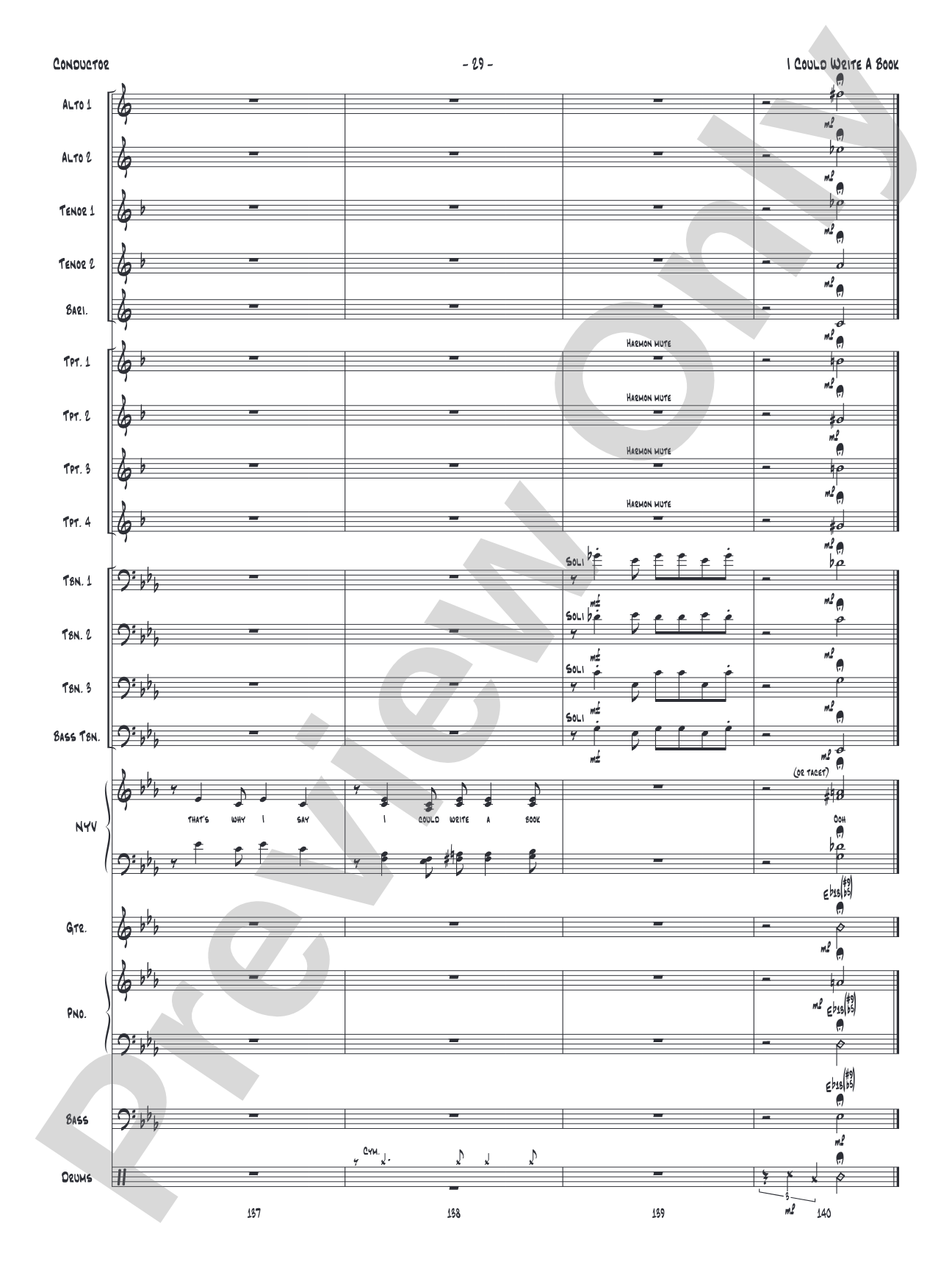

I Could Write a Book: Vocal Solo with Jazz Ensemble Conductor Score & Parts
As Recorded by the New York Voices
Words by Lorenz Hart, music by Richard Rodgers / arr. Darmon Meader
Grade: 4 (Medium Advanced / Difficult)
Item: 00-PK-0005924

$62.00
One moment…
Related Items
I Could Write a Book: SoundTrax Digital Audio Download |
$24.95
|
View | |
I Could Write a Book: SATB Choral Octavo |
$2.95
|
View | |
I Could Write a Book: Choral SoundPax |
$40.00
|
View | |
I Could Write a Book: Vocal Solo with Jazz Ensemble Conductor Score & Parts |
$62.00
|
View | |
I Could Write a Book: Vocal Solo with Jazz Ensemble Conductor Score |
$11.00
|
View | |
I Could Write a Book: SATB Choral Octavo |
$2.95
|
View | |
I Could Write a Book: Choral Octavo SoundTrax CD |
$24.95
|
View | |
I Could Write a Book: Choral SoundPax |
$40.00
|
View |
Description
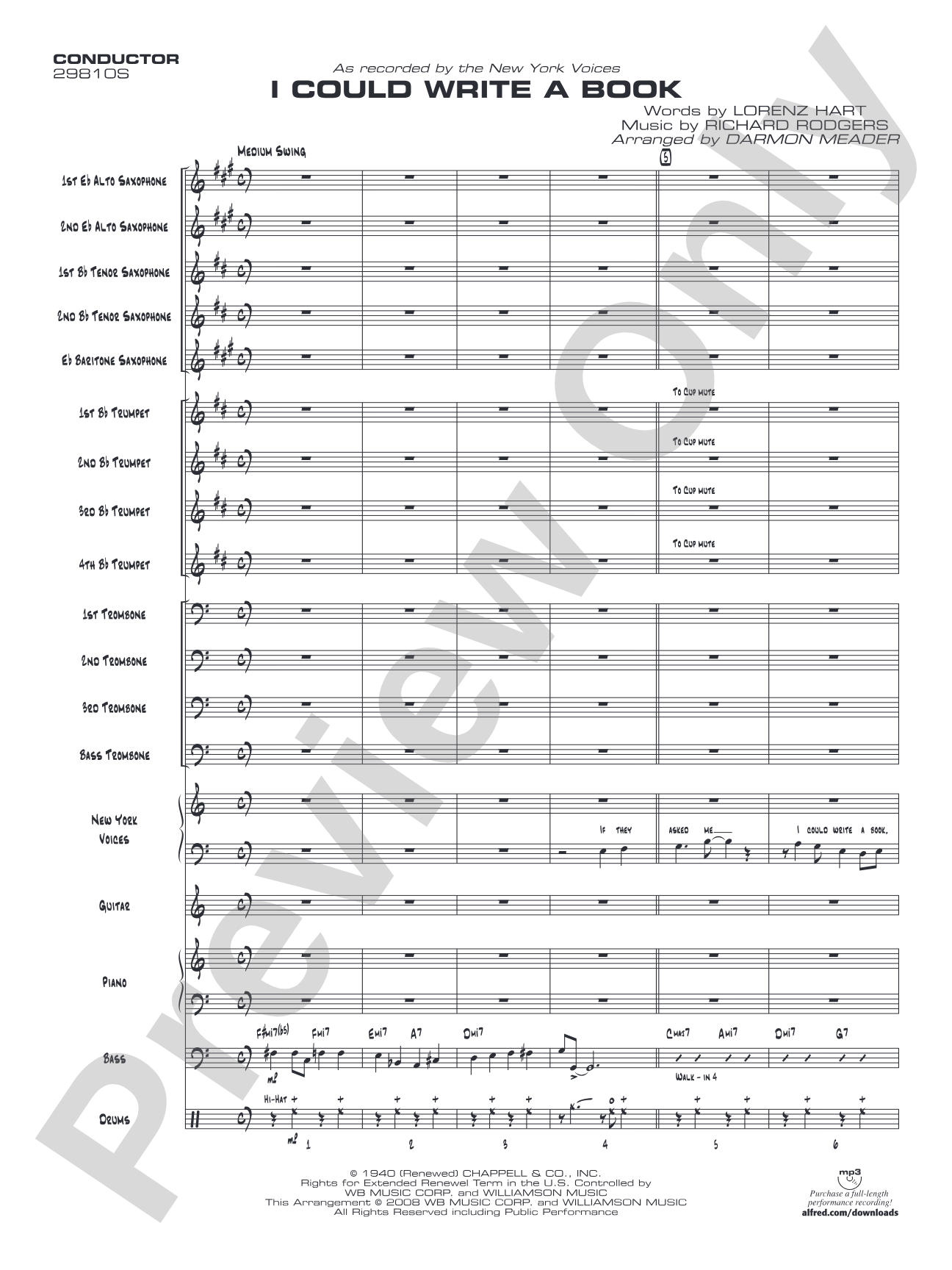
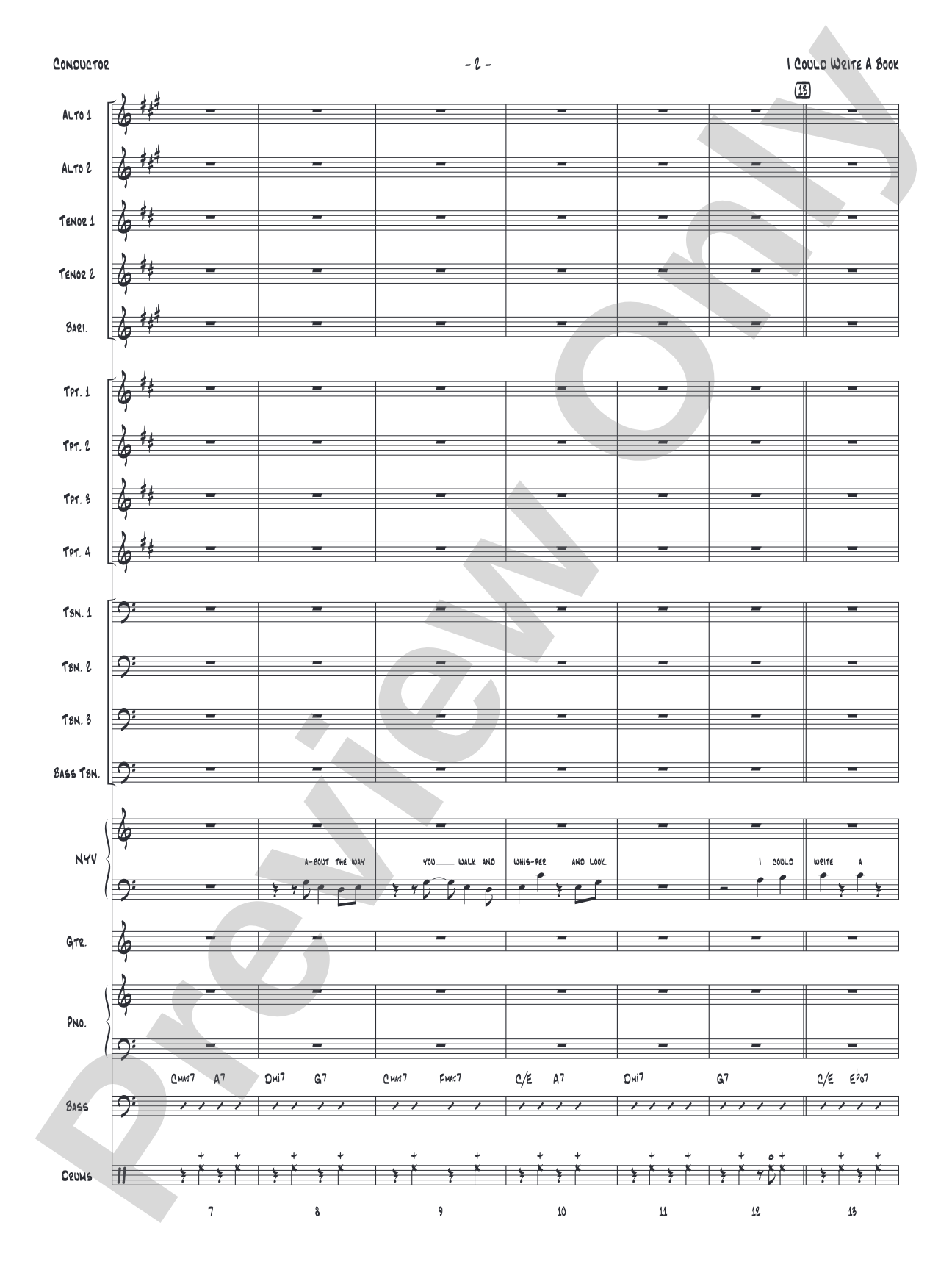
Have a jazz vocal group or quartet? Here is a stunning chart arranged by Darmon Meader, the musical director and chief arranger of the jazz vocal group, New York Voices. I Could Write a Book is scored for SATB and jazz ensemble and includes a solo female/solo male part for added flexibility. The vocal quartet arrangement and the jazz ensemble chart are both superb. Solo vocal ranges: female part---G below middle C to top space E; male---D below middle C to G above treble staff. Check out this outstanding chart! (4:43)


Don't just read it, hear it, play along with it, and watch your students grow with it. In MakeMusic Cloud, I Could Write a Book: Vocal Solo with Jazz Ensemble Conductor Score & Parts comes alive with professional accompaniment, adjustable tempo, and built-in practice tools that turn solo practice into real progress.
Open in the Player
Jump straight in and assign it today.
Start Your Free Trial
Open this title and explore the full library in minutes.
Sample Audio
1
Audio File
--:--
0:00
0:00
Sample Video
No sample videos found.
Additional Details
Series:
Jazz Vocal Series
Publisher:
Alfred Music
Page Count:
110
SKU:
00-PK-0005924
More about this title
About the Composer: Richard Rodgers
Richard Rodgers (1902-1979) created some of the American musical theater's most enduring melodies. His gift for lyrical, singable composition shaped the sound of Broadway for decades, and his work remains central to the jazz standards repertoire. Educators return to Rodgers again and again because his melodies sit naturally in the voice and reward both straight delivery and creative interpretation.
Why we love this
Meader's arrangement gives you a chart that works as a legitimate small jazz ensemble piece while keeping the vocal writing accessible and genuinely musical. The flexibility to run it as a solo feature or full quartet part means you can cast it across multiple performance scenarios without rearranging.
What to expect
Warm and intimate even at medium-advanced difficulty. The melody unfolds with genuine lyricism over a propulsive swing foundation, giving the vocalist room to breathe while the ensemble creates forward motion beneath. It's the kind of chart that feels effortless to listen to but requires real skill and musicality to execute well.
Who it's for
Jazz ensemble directors with a vocal soloist or quartet who want a sophisticated, singable feature that doesn't require operatic chops. This sits squarely at a level where students need solid musicianship and jazz vocabulary but can still make meaningful progress on the chart over a rehearsal cycle.
How to get the most out of it
- Balance the solo voice against the ensemble so the melody projects clearly; the vocal line carries the song's narrative, and the band supports rather than competes.
- Pay attention to the rhythm section's swing feel in the introduction and interludes; lock the piano, bass, and drums into a cohesive groove before adding the horns.
- Shape the lyrical phrases with natural breathing; this tune lives in its melodic contour, so avoid chopping up lines where Rodgers' phrasing asks for legit.
- Use the full 4:43 duration to build dynamics gradually through the form; resist the urge to peak early and leave yourself room to crescendo into the final statement.
How to use it
Feature this in a concert that mixes instrumental jazz numbers with vocals, or use it as a bridge between your small-ensemble and big-band sets. The standard-tune DNA makes it particularly effective as a closer or penultimate number where you want to leave the audience with melody.
Skills your students will build
- Jazz phrasing and articulation over a swing rhythm section
- Blending solo vocal line with four-part harmony backgrounds
- Reading and executing lead sheet changes and reharmonization
- Listening and responding to ensemble balance and groove while singing
- Interpreting a melody that invites personal interpretation without losing song form