

I Could Have Danced All Night: SSA Choral Octavo
From the Musical My Fair Lady
Lyrics by Alan Jay Lerner, music by Frederick Loewe / arr. Greg Gilpin
Item: 00-PO-0007978
$1.85
Minimum order quantity: 20 copies
Pickup currently not available
Related Items
I Could Have Danced All Night: SoundTrax Digital Audio Download |
$22.95
|
View | |
I Could Have Danced All Night: SATB Choral Octavo |
$1.85
|
View | |
I Could Have Danced All Night: SAB Choral Octavo |
$1.85
|
View | |
I Could Have Danced All Night: SATB Choral Octavo |
$1.85
|
View | |
I Could Have Danced All Night: SAB Choral Octavo |
$1.85
|
View | |
I Could Have Danced All Night: SSA Choral Octavo |
$1.85
|
View | |
I Could Have Danced All Night: Choral Octavo SoundTrax CD |
$22.95
|
View |
Description
Lerner, Frederick Loewe/Greg Gilpin (Broadway/Movies)
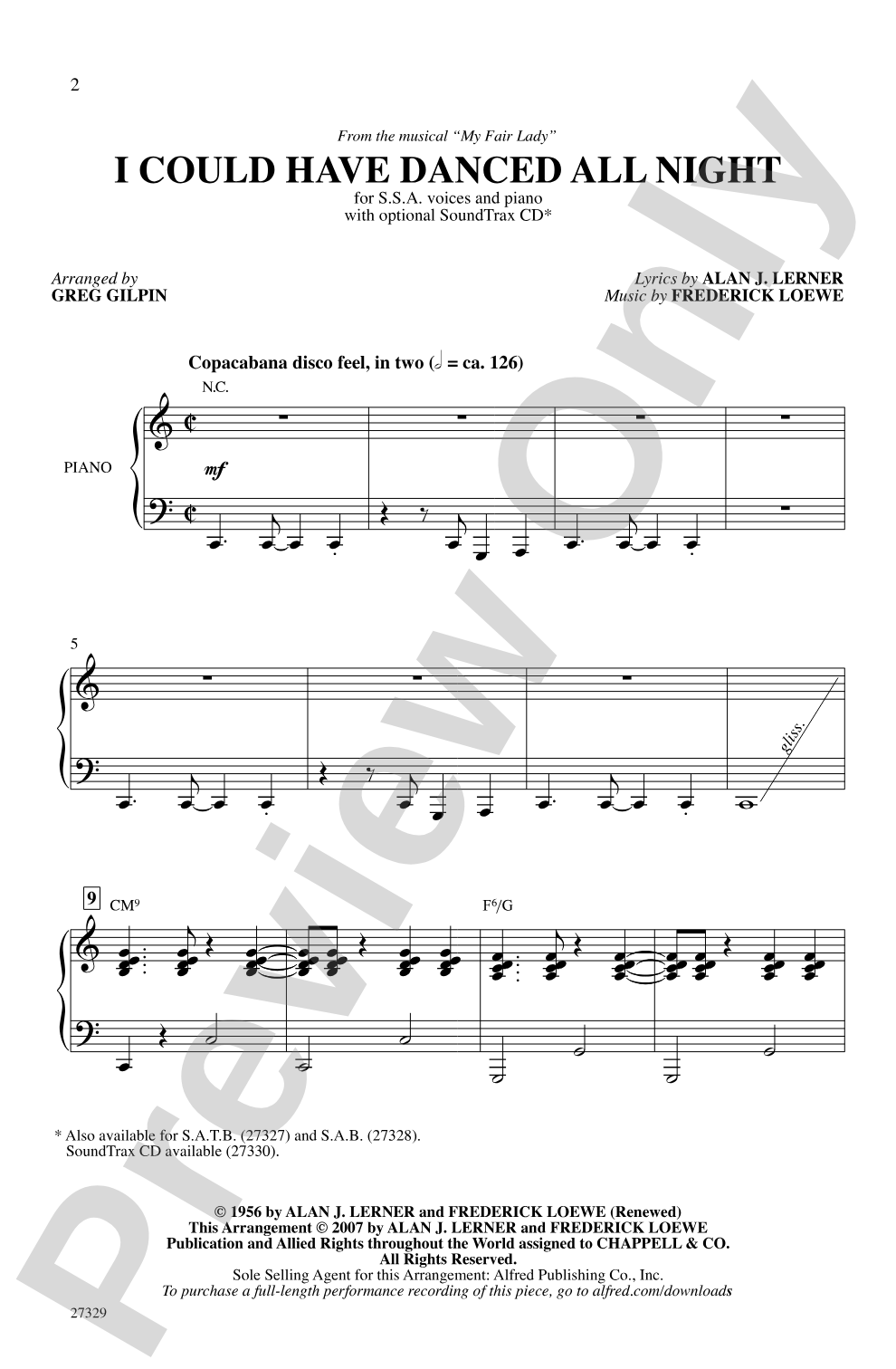
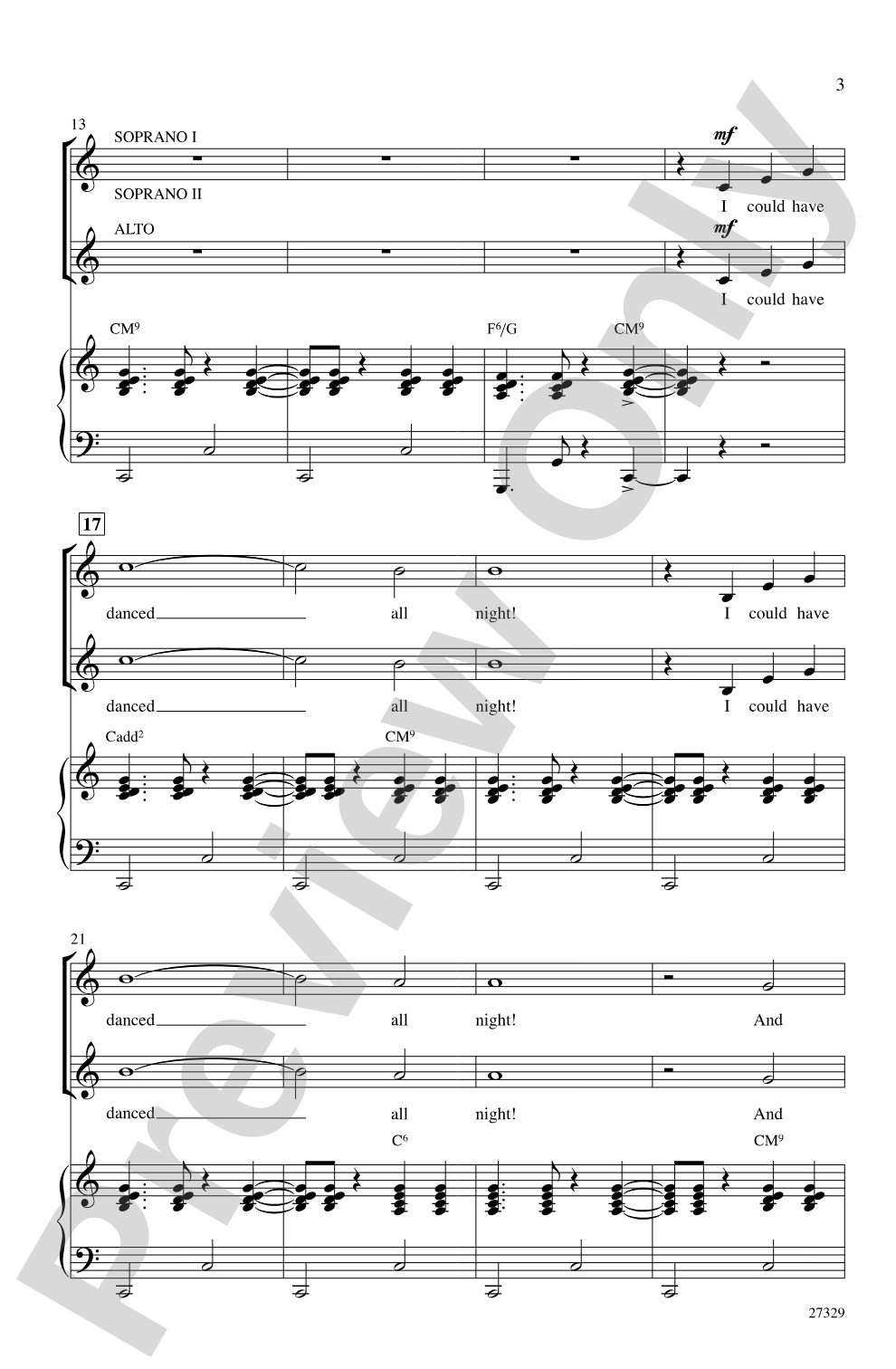
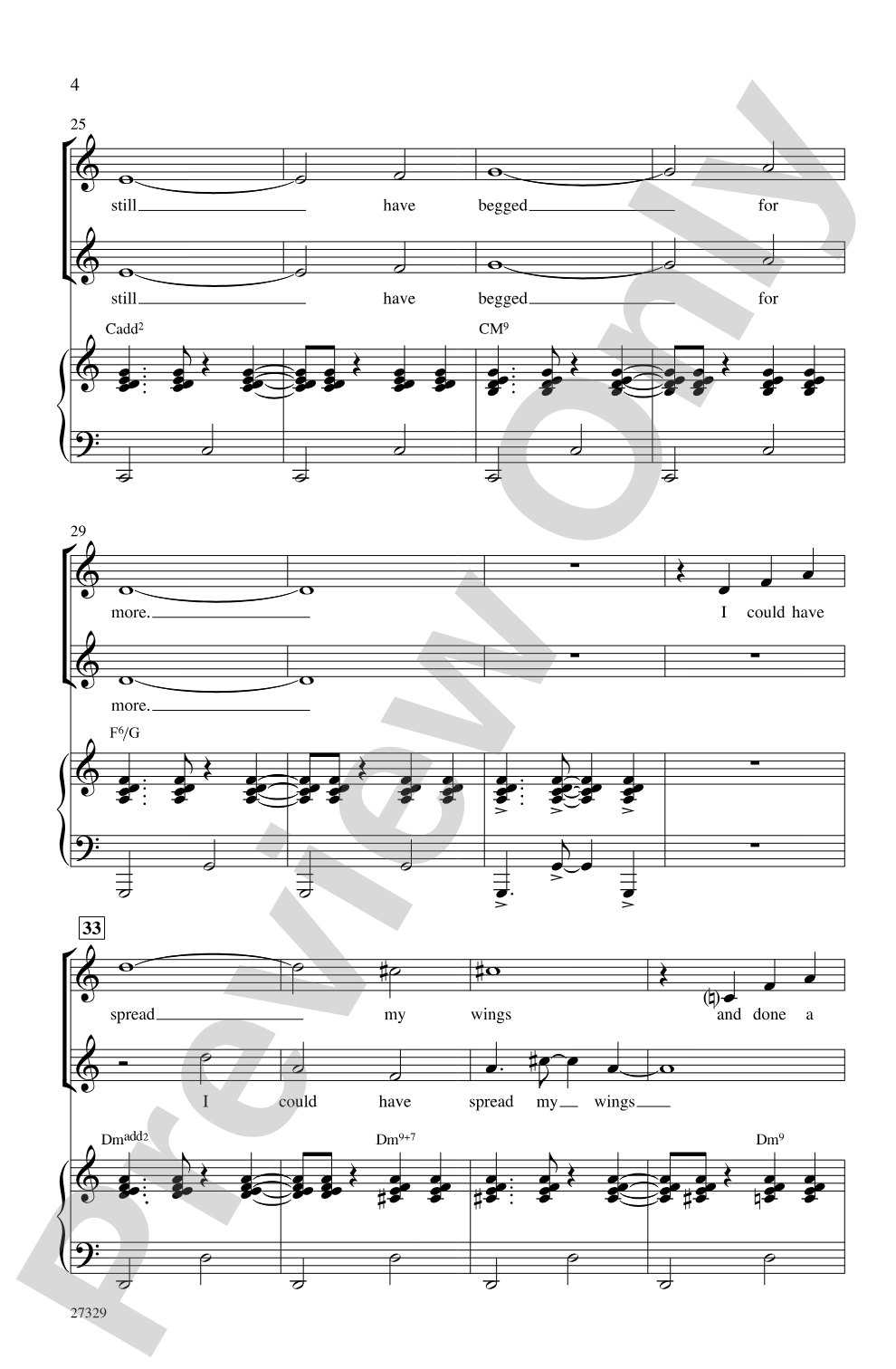
The key word in this title is "danced." And what says "dance" more than "disco?" It's a retro/disco version of the Lerner and Lowe standard from the musical My Fair Lady arranged in an unexpected style by Greg Gilpin. Get out your platform shoes, leisure suits, and sing and dance it all night.


The key word in this title is "danced." And what says "dance" more than "disco?" It's a retro/disco version of the Lerner and Lowe standard from the musical My Fair Lady arranged in an unexpected style by Greg Gilpin. Get out your platform shoes, leisure suits, and sing and dance it all night.
Discover MakeMusic Cloud: thousands of interactive titles your students can play along with today.
Sample Audio
1
Audio File
--:--
0:00
0:00
Sample Video
No sample videos found.
Additional Details
Series:
Alfred Pop Choral Series
Publisher:
Alfred Music
Page Count:
12
SKU:
00-PO-0007978
More about this title
About the Composer: Frederick Loewe
Frederick Loewe (1901-1988) shaped the sound of American musical theater through his sophisticated compositions and mastery of melody. Working alongside lyricist Alan Jay Lerner, he created some of the twentieth century's most enduring theatrical works, including Brigadoon, My Fair Lady, and Camelot. His gift for writing songs that feel both instantly singable and musically substantial made him invaluable to music education, where his standards remain repertoire staples across ensemble levels.
Loewe's influence extends beyond the stage into rehearsal rooms everywhere. Teachers return to his catalog because his melodies teach musicality, his harmonic language rewards careful listening, and his songs engage singers with material they genuinely want to perform. My Fair Lady, in particular, continues to introduce new generations of students to quality songwriting.
Why we love this
Greg Gilpin's disco reimagining strips away the romantic reverie of the original and replaces it with infectious rhythmic drive and retro energy. What emerges is a number that sustains engagement through dance rather than sentimentality, making it an ideal closer for a spring concert or a program that needs genuine humor and movement. The arrangement respects the melody while making it impossible to sit still.
What to expect
Stepping into a 1970s dance hall where a classic moment gets the full leisure-suit treatment. The arrangement bounces with infectious rhythm and playful spirit, transforming nostalgia into something joyful and ridiculous all at once. Singers feel the pull to move the moment they begin rehearsing.
Who it's for
SSA choirs seeking repertoire that delivers humor, movement, and genuine entertainment value. This arrangement works equally well for advanced middle school groups, high school choirs, and community ensembles that want a showstopper with substance beneath the fun.
How to get the most out of it
- Establish the rhythmic pocket early in rehearsal. Lock the groove with your rhythm section so singers can commit to the offbeat emphasis without second-guessing their timing.
- Lean into the disco idiom deliberately. Encourage singers to lighten their tone and avoid oversinging the melody; the style works best when it feels energetic rather than operatic.
- Layer the choreography gradually. Begin with simple body percussion or hand movements during early rehearsals, then build to fuller staging once the harmonic foundation is secure.
- Use the recorded accompaniment strategically. In early rehearsals, learn the parts without it; then introduce the track to help singers feel the full groove and dynamic texture.
How to use it
Place this as your concert finale to send the audience out energized and smiling. It pairs well with other upbeat contemporary pop arrangements and gives your choir a chance to show range and comedic timing. Spring pops concerts and end-of-year celebrations are natural homes for this piece.
Skills your students will build
- Maintaining steady rhythm in disco/contemporary styles with consistent subdivision
- Distinguishing between legit and contemporary vocal tone production
- Moving confidently on stage while singing complex harmonic parts
- Blending three parts while anchoring to a strong groove
- Interpreting stylistic markings and dynamic shifts unique to pop idioms