

I Can See Clearly Now: 2-Part Choral Octavo
Words and music by Johnny Nash / arr. Tim Hayden
Item: 00-PO-0007872
$2.65
Minimum order quantity: 20 copies
Pickup currently not available
Related Items
I Can See Clearly Now: SATB Choral Octavo |
$2.65
|
View | |
I Can See Clearly Now: 3-Part Mixed Choral Octavo |
$2.65
|
View | |
I Can See Clearly Now: Choral SoundPax Digital Download |
$35.00
|
View | |
I Can See Clearly Now: SATB Choral Octavo |
$2.65
|
View | |
I Can See Clearly Now: 3-Part Mixed Choral Octavo |
$2.65
|
View | |
I Can See Clearly Now: 2-Part Choral Octavo |
$2.65
|
View | |
I Can See Clearly Now: Choral Octavo SoundTrax CD |
$29.99
|
View |
Description
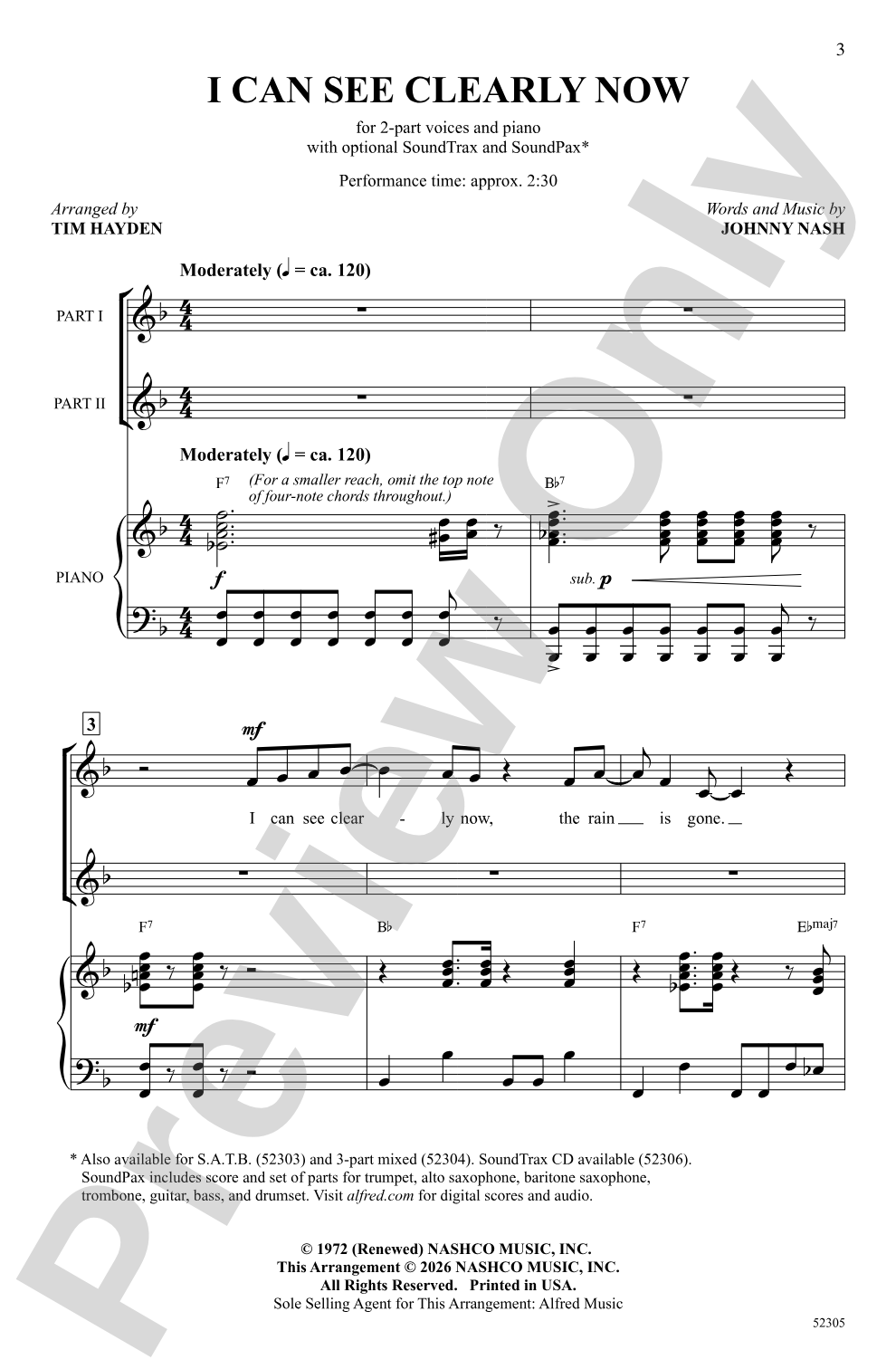
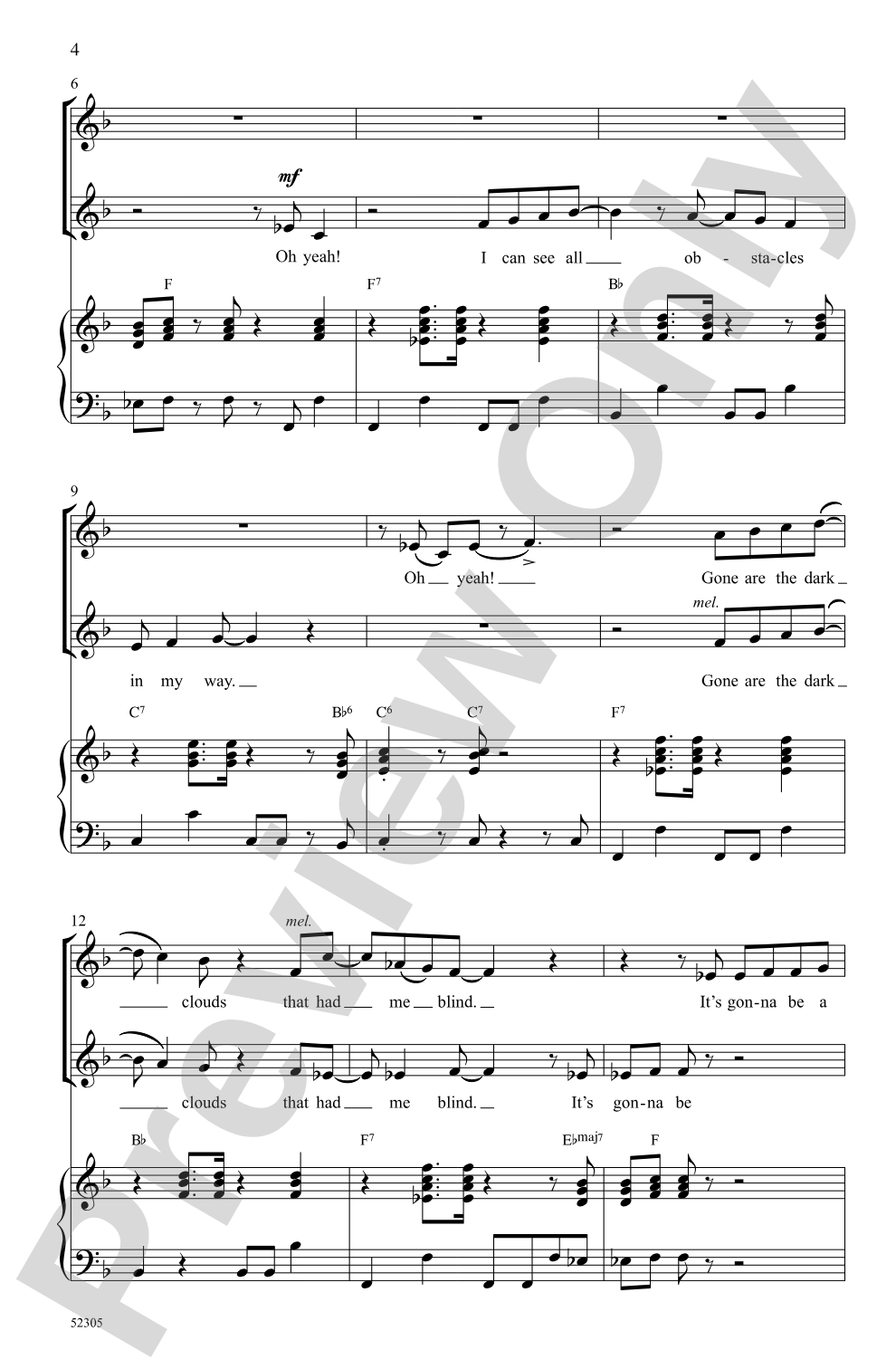
Welcome a "bright, sun-shiny day" with this fresh take on the chart-topping classic. This arrangement leaps to life with a funky groove that maintains its momentum from start to finish. Fun interplay between voices and some bluesy responses are a blast to sing and lead to a full-throttle celebration of "blue skies" ahead. This pop staple is a surefire way to deliver positivity on any program. Raise the roof with optional SoundPax parts for horns and rhythm section!


I Can See Clearly Now: 2-Part Choral Octavo isn't in MakeMusic Cloud just yet...but it could be. Let us know you'd like to see it, and you'll help shape what comes next. In the meantime, start a free trial and dive into thousands of interactive titles your students can play along with today.
Request This Title
Tell us you want it.
Start Your Free Trial
Explore everything that's ready to play right now.
Sample Audio
1
Audio File
--:--
0:00
0:00
Sample Video
Additional Details
Series:
Alfred Pop Choral Series
Publisher:
Alfred Music
Page Count:
12
SKU:
00-PO-0007872
More about this title
About the Composer: Johnny Nash
Johnny Nash emerged as a singer-songwriter and recording artist in the 1950s, blending pop, R&B, and reggae influences throughout his career. His 1972 hit "I Can See Clearly Now" became an enduring anthem of optimism and resilience, reaching number one on the Billboard Hot 100 and establishing Nash as a songwriter capable of crafting universally resonant melodies that transcend genre and generation.
Why we love this
Tim Hayden's arrangement captures the infectious energy of the original while making it genuinely fun to sing in two parts. The funky groove and bluesy call-and-response sections give young singers material that feels contemporary and engaging, not nostalgic or diluted. Programming this alongside other pop standards creates a concert that genuinely connects with audiences while building real musicianship.
What to expect
Bright, propulsive, and celebratory, this arrangement radiates the optimism embedded in its melody while the funky underpinning keeps energy high. The interplay between voices creates moments of playful tension before resolving into unison or full harmony, giving the piece shape and emotional arc beyond simple positivity.
Who it's for
This octavo works beautifully for middle school, high school, and adult choirs seeking accessible repertoire with genuine musical substance. It's ideal for singers who respond to contemporary pop styles and for directors building a program that bridges classical and popular traditions.
How to get the most out of it
- Lock the rhythmic pocket early in rehearsals. The funky groove only lands when the ensemble commits to the offbeats and syncopation; mark these heavily in the score and isolate them in sectionals before adding text.
- Shape the bluesy responses with personality and slight variation between repetitions. These moments invite playfulness, so encourage singers to find character without losing ensemble cohesion.
- Use the recorded accompaniment to establish the groove and tempo. Play it frequently during rehearsals so singers internalize the feel before running the piece unaccompanied.
- Balance the two parts carefully during the full-throated sections. The lower part should anchor the harmonic foundation while the upper voices ride the melody without overwhelming it.
How to use it
Pair this with other pop or contemporary secular pieces to create a concert section that feels cohesive and modern. It also works as a powerful closer or second-to-last selection, where its infectious groove and message of clarity can send audiences out uplifted. The optional horn and rhythm section parts allow flexible scaling from intimate concert to full-band arrangements depending on your forces.
Skills your students will build
- Singing syncopated rhythms and offbeat entries in a pop/funk context
- Blending two independent vocal lines while maintaining rhythmic integrity
- Responding to blues-based harmonic movement and call-and-response phrasing
- Using dynamic contrast and articulation to drive groove and momentum
- Sustaining ensemble precision through repetitive, rhythmically complex material