
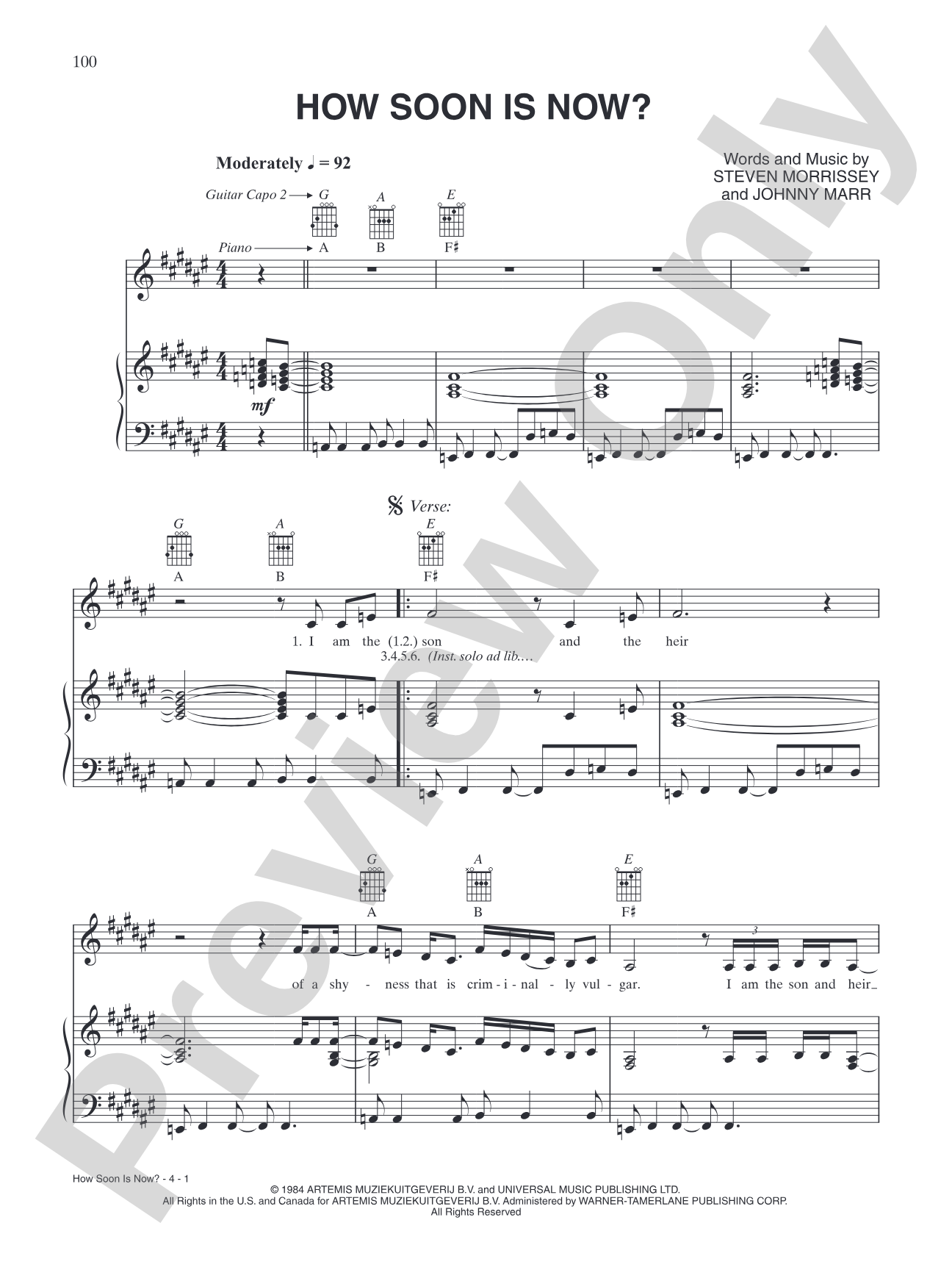

How Soon is Now?: Piano/Vocal/Chords
Ten Years of Popular Sheet Music Bestsellers
Item: 00-PS-0010923
$4.99
One moment…
Related Items
Always: Piano/Vocal/Chords |
$4.99
|
View | |
Woman in Love: Piano/Vocal/Chords |
$4.99
|
View | |
867-5309 Jenny: Piano/Vocal/Chords |
$4.99
|
View | |
Everytime You Go Away: Piano/Vocal/Chords |
$5.99
|
View | |
Bizarre Love Triangle: Piano/Vocal/Chords |
$5.99
|
View | |
Sweet Child O' Mine: Piano/Vocal/Chords |
$5.99
|
View | |
Love Has Finally Come at Last: Piano/Vocal/Chords |
$4.99
|
View | |
If You Think You're Lonely Now: Piano/Vocal/Chords |
$4.99
|
View |
Description
This songbook contains more than 40 of the biggest hits of the '80s. Each song is sure to spark a memory or create a new one for pianists or vocalists of all ages. For practice, performance, or pleasure, play and sing your way through your favorite decade in pop music history! Titles: Against All Odds (Phil Collins) * Always (Atlantic Starr) * Another Brick in the Wall Part 2 (Pink Floyd) * Beat It (Michael Jackson) * Billie Jean (Michael Jackson) * Bizarre Love Triangle (New Order) * Boys of Summer (Don Henley) * Careless Whisper (Wham!) * Celebration (Kool & the Gang) * Crazy for You (Madonna) * Don't Stop Believin' (Journey) * End of the Innocence (Don Henley and Bruce Hornsby) * Endless Love (Diana Ross and Lionel Richie) * Everytime You Go Away (Paul Young) * Eye of the Tiger (Survivor) * Faithfully (Journey) * The Greatest Love of All (Whitney Houston) * How Soon Is Now? (The Smiths) * I Believe in You and Me (Whitney Houston) * (I've Had) The Time of My Life (Bill Medley and Jennifer Warnes) * If You Think You're Lonely Now (Bobby Womack) * Islands in the Stream (Dolly Parton with Kenny Rogers) * It Might Be You (Stephen Bishop) * Jenny (867-5309) (Tommy Tutone) * Jump (Van Halen) * Like a Prayer (Madonna) * Love Has Finally Come at Last (Bobby Womack and Patti LaBelle) * Open Arms (Journey) * Out Here on My Own (Fame) * Piano in the Dark (Brenda Russell) * Rapper's Delight (Sugarhill Gang) * Right Here Waiting (Richard Marx) * The Spirit of Radio (Rush) * Sweet Child O' Mine (Guns n' Roses) * Take My Breath Away (Berlin) * That's What Friends Are For (Dionne Warwick and Friends) * Time After Time (Cyndi Lauper) * Tom Sawyer (Rush) * Touch of Grey (Grateful Dead) * Up Where We Belong (Joe Cocker and Jennifer Warnes) * Way It Is (Bruce Hornsby) * Who's Crying Now (Journey) * Wind Beneath My Wings (Bette Midler) * Woman in Love (Barbra Streisand).


How Soon is Now?: Piano/Vocal/Chords isn't in MakeMusic Cloud just yet...but it could be. Let us know you'd like to see it, and you'll help shape what comes next. In the meantime, start a free trial and dive into thousands of interactive titles your students can play along with today.
Request This Title
Tell us you want it.
Start Your Free Trial
Explore everything that's ready to play right now.
Sample Audio
No sample audio found.
Sample Video
No sample videos found.
Additional Details
Series:
Decade by Decade
Publisher:
Alfred Music
Page Count:
240
SKU:
00-PS-0010923
More about this title
About the Composer: Steven Morrissey
Steven Morrissey fronted The Smiths, one of the most influential alternative rock bands of the 1980s. His distinctive baritone and sharply witty, often melancholic lyrics defined a generation of alternative pop, establishing him as one of rock's most recognizable vocalists and lyricists.
As a solo artist and bandleader, Morrissey has maintained a prolific career spanning decades, consistently crafting memorable melodies and provocative wordplay. His work remains a staple in music curricula exploring post-punk and alternative pop traditions.
Why we love this
This collection captures the melodic DNA of the 1980s with songs that demand to be sung and played. The folio spans genuine diversity within the decade—synth-pop, new wave, soul, rock ballads, and dance music—so you're not locked into programming a single aesthetic. Teachers will appreciate that nearly every title here connects to student memory or family playlists, creating real investment in learning.
What to expect
Opening this folio is like walking into a record store frozen in the 1980s—the songs are instantly familiar yet fresh enough to rediscover. The energy shifts constantly: one moment you're locked into the propulsive rhythm of "Jump," the next you're navigating the intimate vulnerability of a Whitney Houston power ballad or the moody minor-key introspection of The Smiths.
Who it's for
Pianists and singers preparing recital material, audition repertoire, or band/musical theater rehearsals will find substantial value in this collection. It works equally well for solo pianists developing pop and rock fluency, vocalists building contemporary song interpretation skills, and music teachers seeking accessible, recognizable material for student motivation and ensemble warm-ups.
How to get the most out of it
- Balance the vocal line against the accompaniment by treating the piano part as conversational rather than subordinate; let the lyrics breathe on top of the harmonic foundation without burying the words.
- Attend to the synth textures implied in the original recordings: many of these songs evolved from synthesizer-driven arrangements, so experiment with tone color and consider which passages might benefit from lighter, brighter touch versus fuller sostenuto.
- Lock the tempo early, especially in uptempo disco and pop-funk numbers where groove drives the song; use a metronome during initial learning to avoid the common trap of dragging on ballads or rushing on dance tracks.
- Study the original recordings alongside the sheet music to understand phrasing choices and emotional intent; what reads as straightforward on the page often contained subtle syncopation or vocal inflection in the recording that elevates performance.
How to use it
Slot these songs into a '80s tribute concert or decades-themed recital series to anchor student performances in repertoire with real cultural resonance. Individual titles work well as audition selections, jazz ensemble opener-closers, or filler material in mixed vocal/instrumental programs where you need songs that audiences recognize without explanation.
Skills your students will build
- Reading and interpreting chord symbols over melodic lines
- Negotiating synth-driven harmonic language on acoustic piano
- Sustaining vocal phrasing across longer melodic phrases and key changes
- Balancing melodic prominence with supportive accompaniment texture
- Understanding period-specific production choices reflected in notation