
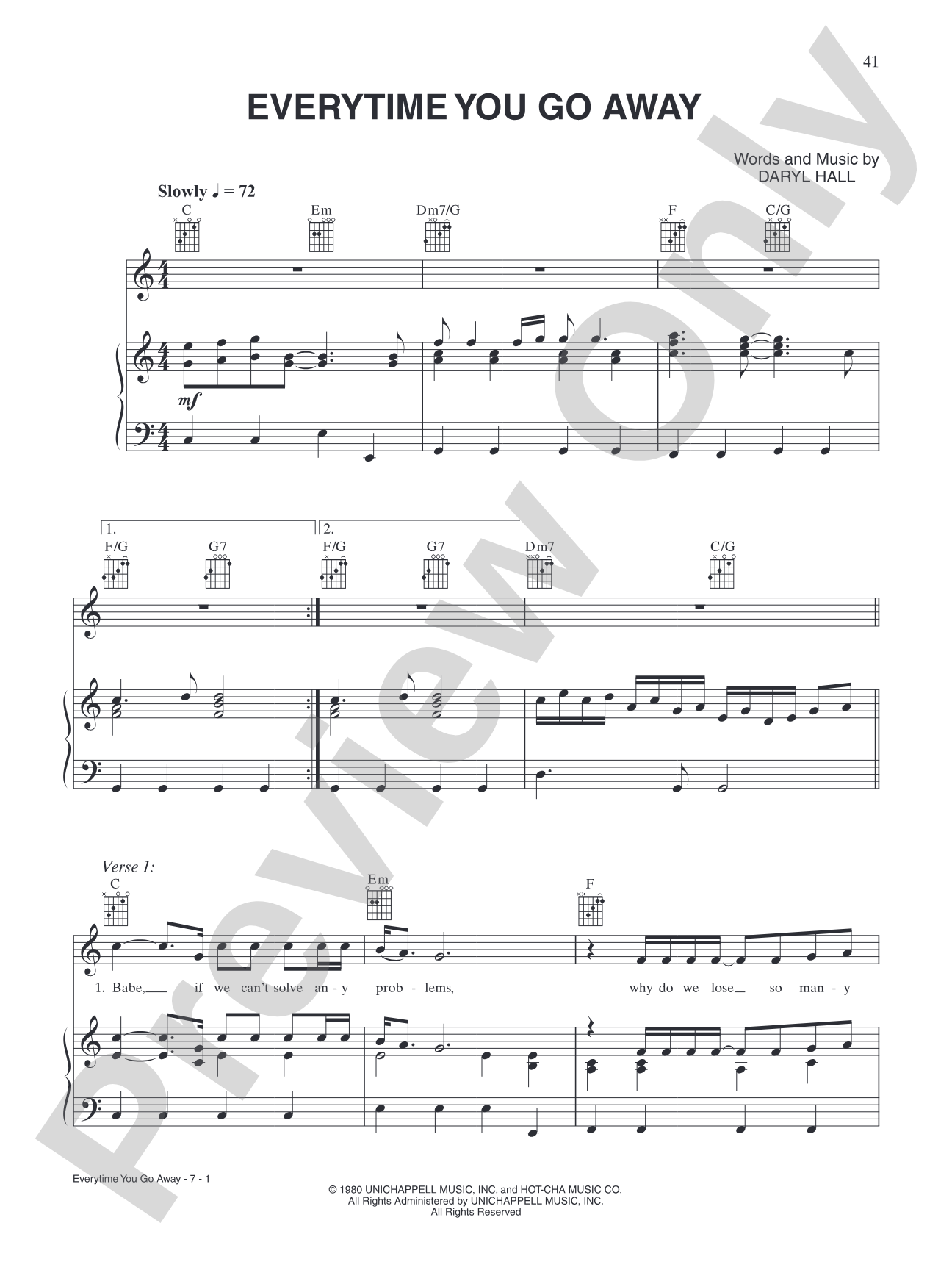
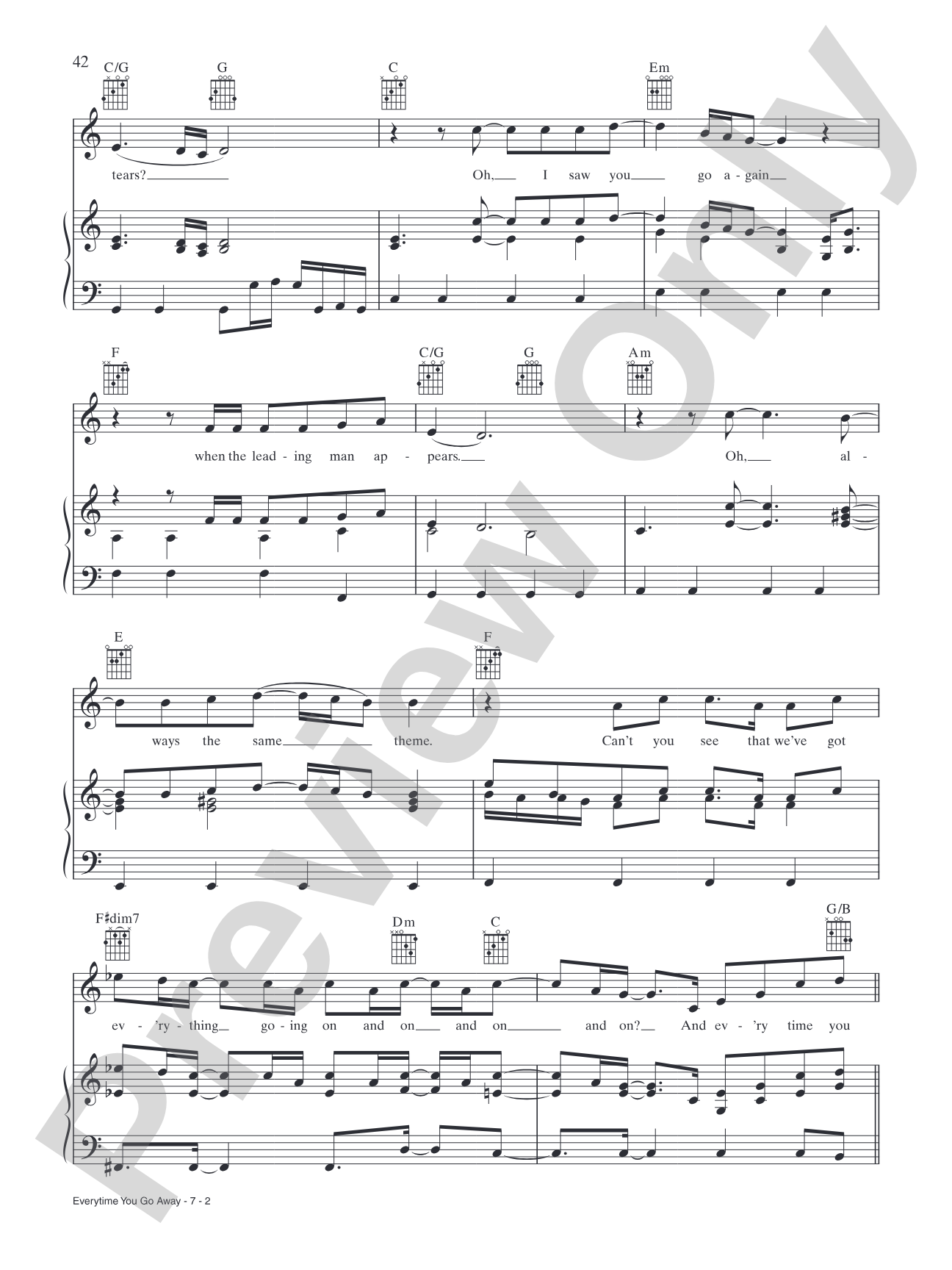

Everytime You Go Away: Piano/Vocal/Chords
Ten Years of Popular Sheet Music Bestsellers
Item: 00-PS-0010834
$5.99
One moment…
Related Items
Always: Piano/Vocal/Chords |
$4.99
|
View | |
Woman in Love: Piano/Vocal/Chords |
$4.99
|
View | |
867-5309 Jenny: Piano/Vocal/Chords |
$4.99
|
View | |
Bizarre Love Triangle: Piano/Vocal/Chords |
$5.99
|
View | |
Sweet Child O' Mine: Piano/Vocal/Chords |
$5.99
|
View | |
How Soon is Now?: Piano/Vocal/Chords |
$4.99
|
View | |
Love Has Finally Come at Last: Piano/Vocal/Chords |
$4.99
|
View | |
If You Think You're Lonely Now: Piano/Vocal/Chords |
$4.99
|
View |
Description
This songbook contains more than 40 of the biggest hits of the '80s. Each song is sure to spark a memory or create a new one for pianists or vocalists of all ages. For practice, performance, or pleasure, play and sing your way through your favorite decade in pop music history! Titles: Against All Odds (Phil Collins) * Always (Atlantic Starr) * Another Brick in the Wall Part 2 (Pink Floyd) * Beat It (Michael Jackson) * Billie Jean (Michael Jackson) * Bizarre Love Triangle (New Order) * Boys of Summer (Don Henley) * Careless Whisper (Wham!) * Celebration (Kool & the Gang) * Crazy for You (Madonna) * Don't Stop Believin' (Journey) * End of the Innocence (Don Henley and Bruce Hornsby) * Endless Love (Diana Ross and Lionel Richie) * Everytime You Go Away (Paul Young) * Eye of the Tiger (Survivor) * Faithfully (Journey) * The Greatest Love of All (Whitney Houston) * How Soon Is Now? (The Smiths) * I Believe in You and Me (Whitney Houston) * (I've Had) The Time of My Life (Bill Medley and Jennifer Warnes) * If You Think You're Lonely Now (Bobby Womack) * Islands in the Stream (Dolly Parton with Kenny Rogers) * It Might Be You (Stephen Bishop) * Jenny (867-5309) (Tommy Tutone) * Jump (Van Halen) * Like a Prayer (Madonna) * Love Has Finally Come at Last (Bobby Womack and Patti LaBelle) * Open Arms (Journey) * Out Here on My Own (Fame) * Piano in the Dark (Brenda Russell) * Rapper's Delight (Sugarhill Gang) * Right Here Waiting (Richard Marx) * The Spirit of Radio (Rush) * Sweet Child O' Mine (Guns n' Roses) * Take My Breath Away (Berlin) * That's What Friends Are For (Dionne Warwick and Friends) * Time After Time (Cyndi Lauper) * Tom Sawyer (Rush) * Touch of Grey (Grateful Dead) * Up Where We Belong (Joe Cocker and Jennifer Warnes) * Way It Is (Bruce Hornsby) * Who's Crying Now (Journey) * Wind Beneath My Wings (Bette Midler) * Woman in Love (Barbra Streisand).


Discover MakeMusic Cloud: thousands of interactive titles your students can play along with today.
Sample Audio
No sample audio found.
Sample Video
No sample videos found.
Additional Details
Series:
Decade by Decade
Publisher:
Alfred Music
Page Count:
240
SKU:
00-PS-0010834
More about this title
About the Composer: Daryl Hall
Daryl Hall, best known as the voice and primary songwriter of Hall & Oates, shaped the sound of soul, funk, and pop music across five decades. His influence extends far beyond his chart dominance; his understanding of vocal melody, harmonic sophistication, and what makes a song resonate across generations has made him a vital figure in music education contexts. Hall's career demonstrates how strong songwriting craft endures well beyond its era of release.
Why we love this
This collection cuts through the nostalgia trap and delivers genuine arranging choices. Each song is scaled smartly for piano and voice—the voicings breathe, the melody sits where singers can own it, and the chord symbols give pianists real agency to comp and interpret. It's a working songbook, not a museum piece.
What to expect
Stepping into a fully stocked jukebox of unforgettable melodies. The writing honors what made these songs matter—infectious hooks, emotional directness, singular moments of radio brilliance—while giving you room to make the arrangements your own at the keyboard.
Who it's for
Pianists and singers preparing repertoire for recitals, jam sessions, or casual performance. This works equally well for students building sight-reading fluency with recognizable material and for experienced musicians seeking a trusted source of pop standards arranged with harmonic clarity.
How to get the most out of it
- Study the chord symbols before jumping to the piano part. Many of these arrangements assume harmonic literacy and invite improvisation around the written voicings.
- Balance melody and accompaniment intentionally. These songs were written for full production; decide what your arrangement emphasizes and resist trying to recreate all 80s studio density on two staves.
- Lean into the lyrical character of each song. Material this familiar lives or dies on emotional ownership, not technical flash. The simplicity of piano/vocal/chords format rewards interpretive choices.
- Layer dynamics across multiple plays. Rehearse a song bare bones first, then gradually add touches of rubato, pedal color, and vocal inflection on subsequent run-throughs.
How to use it
Slot individual songs into recital programs as palate cleansers between classical or contemporary work. The breadth of the collection means you can build a thematic program around a single artist (Journey, Madonna, Whitney Houston) or program songs that share emotional territory across several decades-era tracks. Solo pianists and vocalist-pianist partnerships both find rich material here.
Skills your students will build
- Reading and interpreting chord symbols in pop/rock idiom
- Negotiating melody-driven arrangements with varied harmonic density
- Balancing vocal phrasing with instrumental accompaniment
- Building interpretive choices within a familiar repertoire context
- Recognizing and playing characteristic rhythmic and harmonic signatures of 1980s pop production