

How Lovely Are the Messengers: SSA Choral Octavo
Words and music by Felix Mendelssohn / arr. Russell Robinson
Item: 00-PO-0001329
$1.80
Minimum order quantity: 20 copies
Pickup currently not available
Description
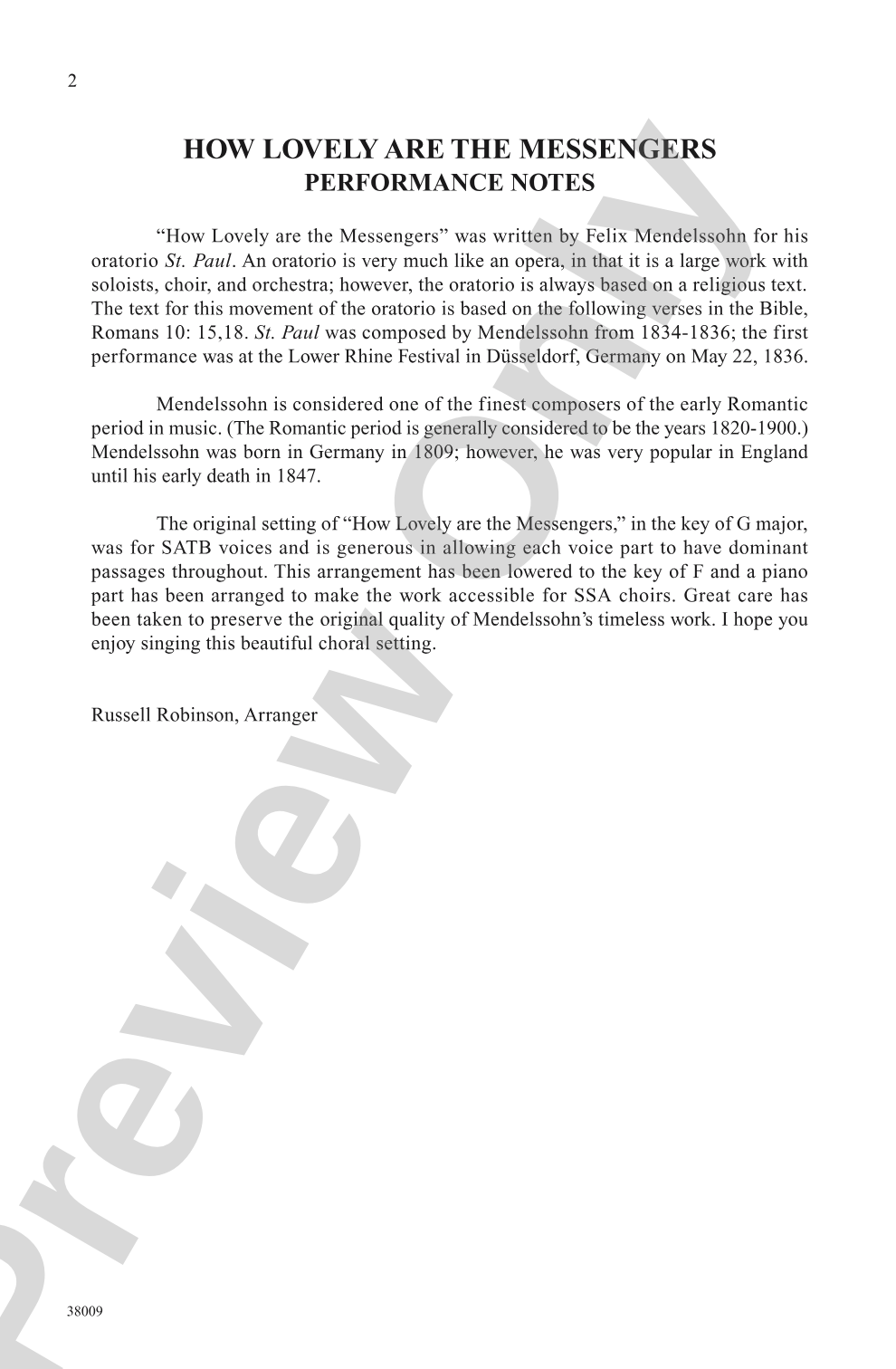
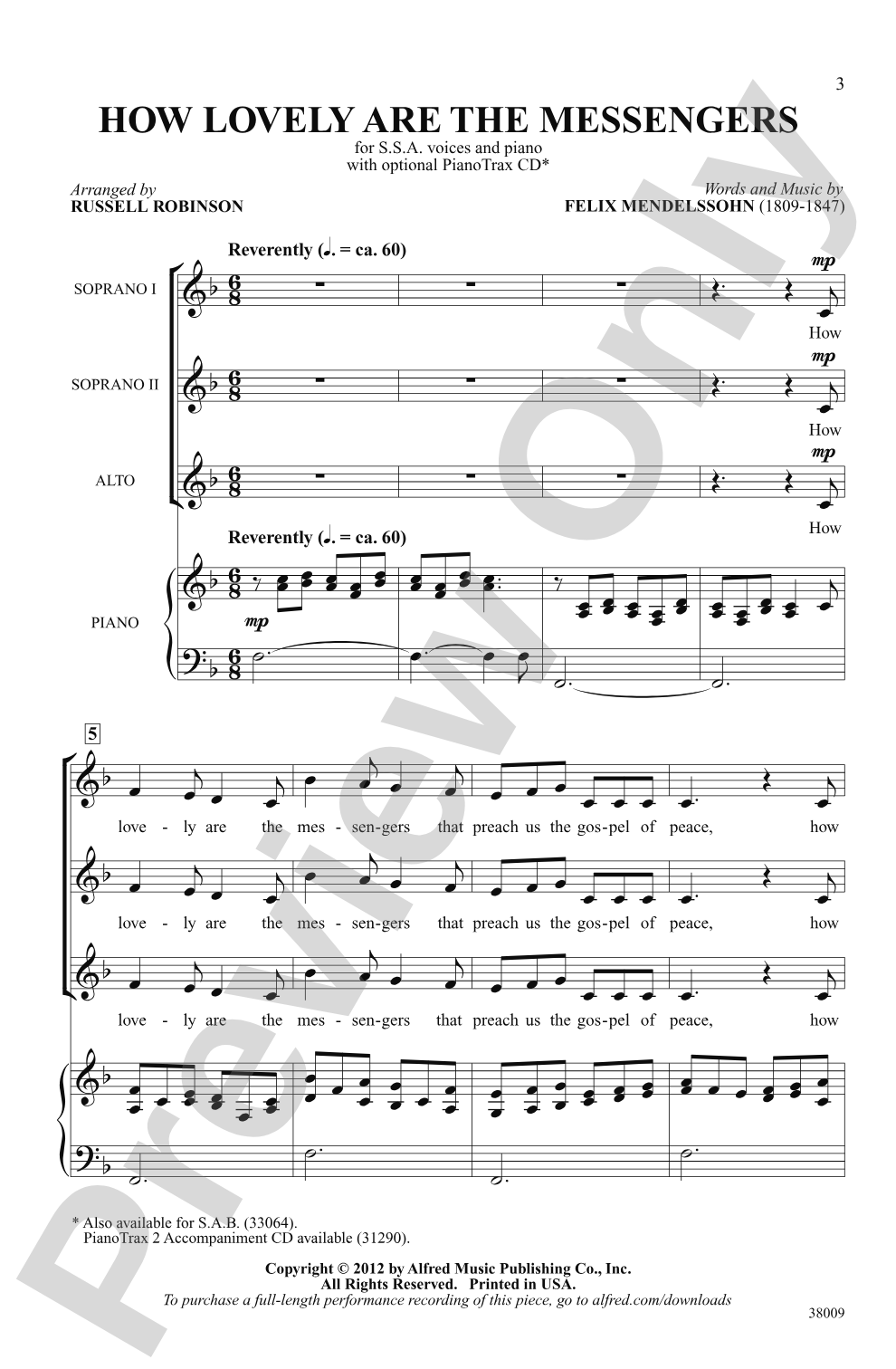
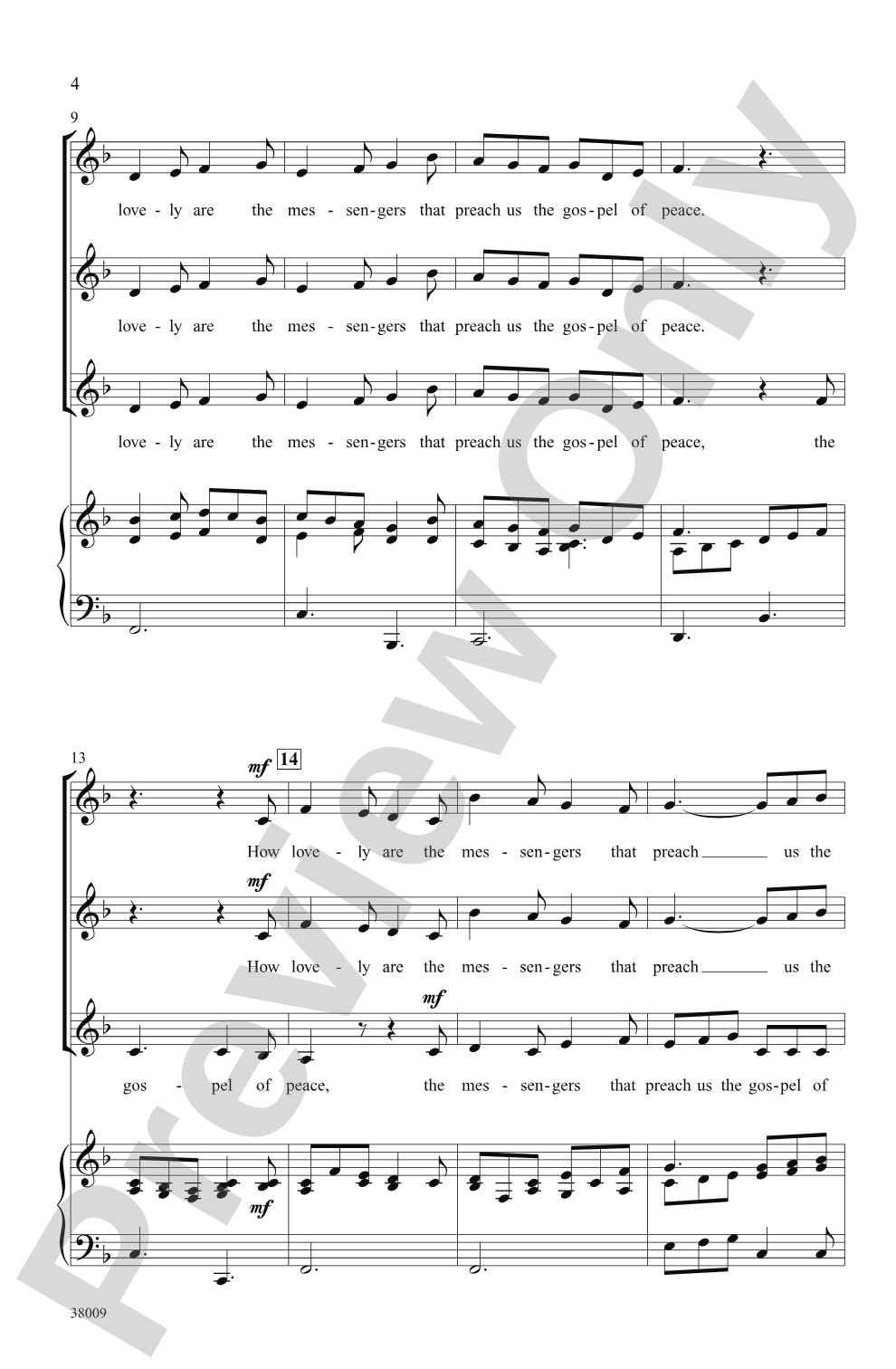
This re-voicing of Mendelssohn's Romantic oratorio chorus allows both SSA and SAB choirs to enjoy a cherished choral standard. The re-configured vocal statements are firmly rooted in the original and achieve an authentic sound.


How Lovely Are the Messengers: SSA Choral Octavo isn't in MakeMusic Cloud just yet...but it could be. Let us know you'd like to see it, and you'll help shape what comes next. In the meantime, start a free trial and dive into thousands of interactive titles your students can play along with today.
Request This Title
Tell us you want it.
Start Your Free Trial
Explore everything that's ready to play right now.
Sample Audio
1
Audio File
--:--
0:00
0:00
Sample Video
No sample videos found.
Additional Details
Series:
Alfred Choral Designs
Publisher:
Alfred Music
Page Count:
12
SKU:
00-PO-0001329
More about this title
About the Composer: Felix Mendelssohn
Felix Mendelssohn (1809-1847) stands among the most performed composers of the Romantic era, with a gift for writing choral music that feels both intimate and grand. His oratorios and vocal works are cornerstones of the choral repertoire, valued equally by music educators and professional ensembles for their melodic beauty and structural clarity. Mendelssohn's influence on 19th-century choral writing was profound; his emphasis on expressive harmonic language and accessible vocal writing shaped generations of composers and continues to define what we expect from a great choral work.
As a conductor and educator himself, Mendelssohn understood the voice deeply and wrote with genuine care for vocal comfort and ensemble balance. His music rewards singers with soaring melodies and rich harmonic environments while remaining performable by high school and community choirs. This combination of sophistication and accessibility is one reason his choral works remain central to music education and concert programming worldwide.
Why we love this
Russell L. Robinson's re-voicing respects the harmonic and melodic integrity of Mendelssohn's original while making the chorus genuinely singable for SSA ensembles without compromising its grandeur. The authentic sound comes from thoughtful distribution of the original material rather than simplification; singers will feel they are performing a complete work, not an adaptation. For directors programming Mendelssohn and needing flexibility in voicing options, this octavo solves a real repertoire need while maintaining the emotional weight of the source material.
What to expect
The piece radiates warmth and spiritual depth, with stepwise motion and rich harmonic movement that feels both familiar and gently forward-looking. There's an unhurried quality to the phrasing; Mendelssohn allows the text to breathe and the voices to interweave without urgency. Singers will experience the satisfaction of singing genuine four-part writing arranged for their specific voicing, creating a full harmonic palette rather than a reduced version.
Who it's for
This octavo works beautifully for SSA choirs of intermediate to advanced ability who want to perform a substantial Romantic choral work without waiting for a larger mixed ensemble arrangement. It's equally valuable for directors who rotate voicing options throughout the year or who teach in schools where SSA is the primary ensemble configuration. High school and community choirs will find the vocal range and part independence accessible while the musical substance remains fully realized.
How to get the most out of it
- Balance the soprano sections carefully in measures where divisi occurs; the original's harmonic depth depends on both lines singing with equal commitment and presence.
- Shape the opening phrases with a sense of reverence but not slowness; allow the lyrical quality to emerge naturally from the text rather than over-dramatizing.
- Use the alto line as your harmonic anchor; in Mendelssohn's writing, altos often carry the root of chords, making their intonation and clarity essential to ensemble blend.
- Pay attention to vowel uniformity across all three sections, especially on sustained notes where any drift will expose divisi breaks.
How to use it
This works exceptionally well in a concert that explores Romantic sacred choral music, paired with other 19th-century settings of liturgical or devotional texts. It can also stand alone as a centerpiece piece for a holiday or spring concert, offering audiences a moment of reflection that feels both substantial and singerly rewarding. Consider programming it in a context where the original oratorio might not fit; it gives audiences a window into Mendelssohn's choral voice at a manageable scale.
Skills your students will build
- Singing divisi soprano parts while maintaining blend and balance
- Navigating harmonic progressions typical of Romantic choral writing
- Sustaining lyrical legit singing through longer phrases
- Understanding voice independence within a harmonic texture
- Performing Mendelssohn's characteristic melodic contours with expression and style