

How Lovely Are the Messengers: SAB Choral Octavo
By Felix Mendelssohn / arr. Russell Robinson
Item: 00-PO-0000862
$2.05
Minimum order quantity: 20 copies
Pickup currently not available
Description
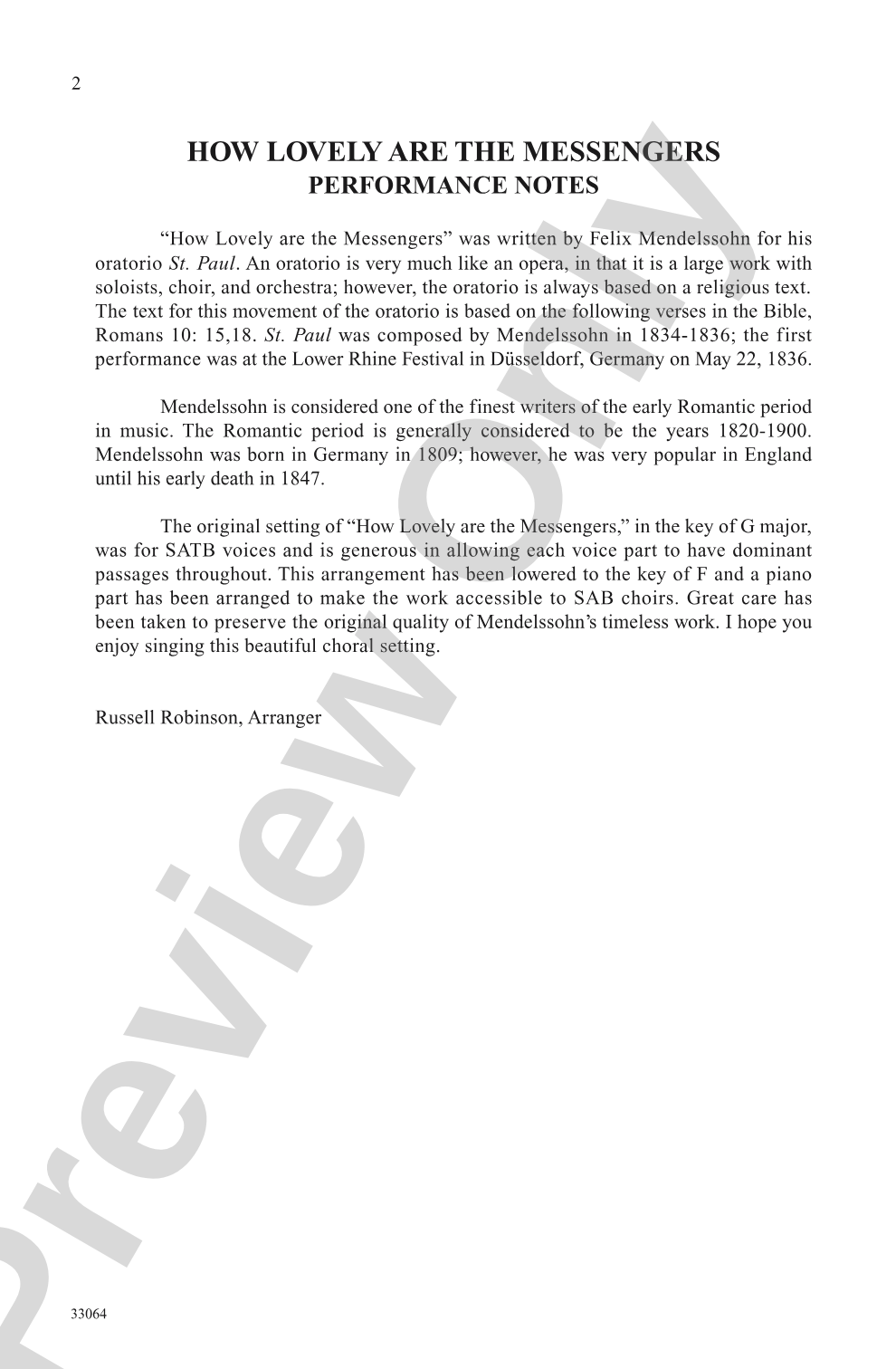
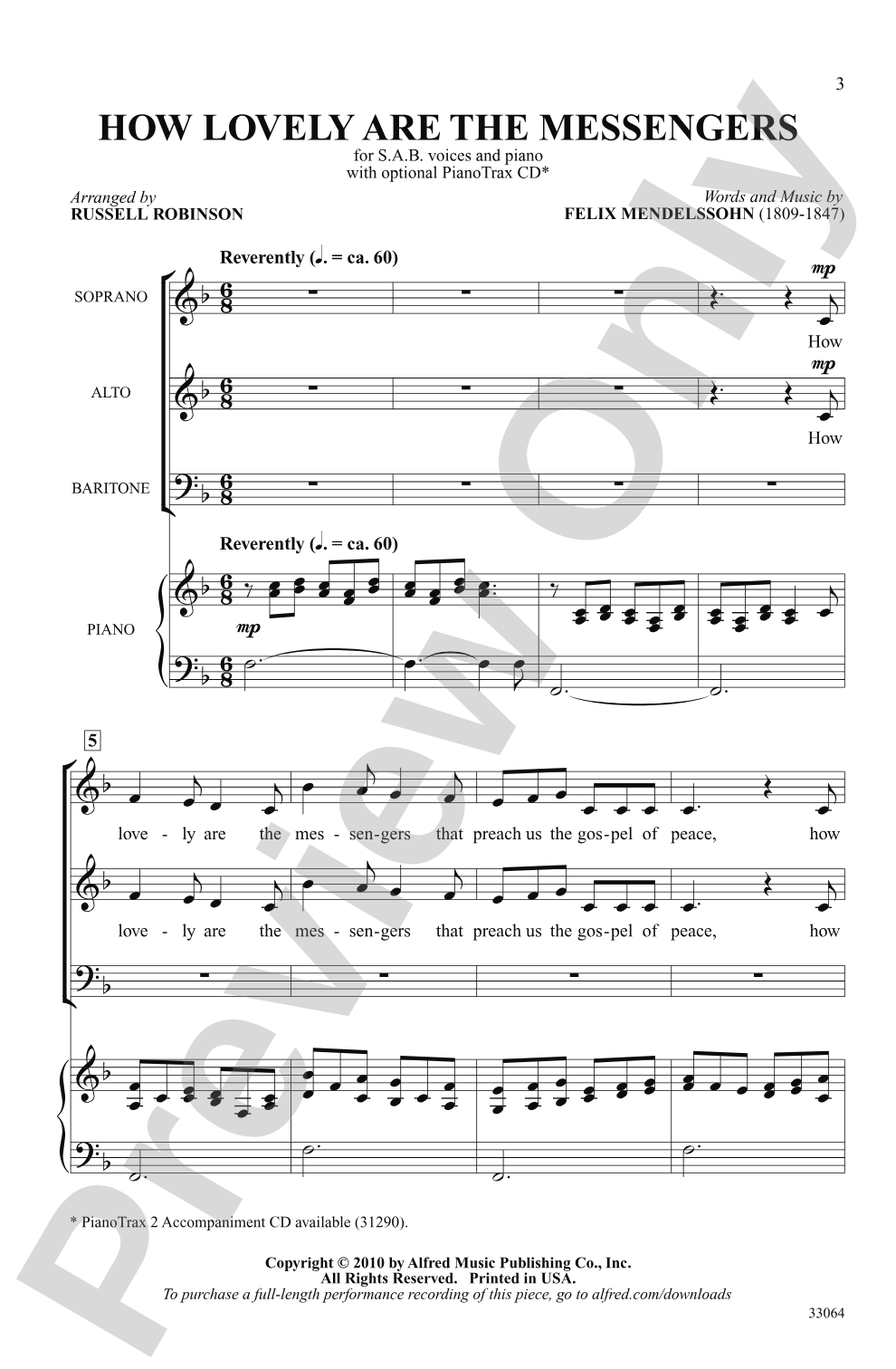
Another polished Robinson edition of a fine Mendelssohn masterwork. Designed to take your SAB choir to the next level. Accompaniment included on PianoTrax 2 CD (00-31290).


How Lovely Are the Messengers: SAB Choral Octavo isn't in MakeMusic Cloud just yet...but it could be. Let us know you'd like to see it, and you'll help shape what comes next. In the meantime, start a free trial and dive into thousands of interactive titles your students can play along with today.
Request This Title
Tell us you want it.
Start Your Free Trial
Explore everything that's ready to play right now.
Sample Audio
1
Audio File
--:--
0:00
0:00
Sample Video
No sample videos found.
Additional Details
Series:
Alfred Archive Edition: Alfred Choral Designs
Publisher:
Alfred Music
Page Count:
12
SKU:
00-PO-0000862
More about this title
About the Composer: Felix Mendelssohn
Felix Mendelssohn (1809-1847) composed with a clarity and directness that made his work immediately accessible to performers and audiences alike. His sacred choral writing combines lyrical melody with structural sophistication, and his influence on the nineteenth-century choral tradition was profound. Mendelssohn's approach to text setting and harmonic language established him as a master of the form, and his works remain cornerstones of the choral repertoire.
As both composer and conductor, Mendelssohn understood the practical needs of singers and ensembles. His sacred music reflects deep musicality without unnecessary technical barriers, making his compositions ideal for advancing choirs that want to engage with genuine masterworks rather than simplified arrangements.
Why we love this
Robinson's arrangement preserves the elegance of Mendelssohn's original writing while making it genuinely accessible to SAB voicings. The harmonic sophistication remains intact; what changes is the vocal range and part distribution, allowing singers to connect with a substantial masterwork without compromise. This is the kind of arrangement that expands a choir's repertoire upward rather than talking down to them.
What to expect
The music radiates the quiet confidence of great nineteenth-century choral writing. Mendelssohn's melodies unfold with natural grace, and the harmonic language feels both warm and emotionally direct. Singing this work carries the satisfaction of engaging with a masterwork that doesn't diminish itself for accessibility.
Who it's for
This octavo serves choirs with solid sight-reading skills and the vocal maturity to handle three-part mixed voicing with confidence. It's designed for groups ready to perform genuine choral literature and seek meaningful sacred repertoire beyond beginner-level arrangements. Directors building SAB programs that demand musical substance will find this piece essential.
How to get the most out of it
- Shape the phrases in the opening section with careful dynamic control; resist the urge to push too hard too early. The text 'How lovely are the messengers' needs space to breathe and draw listeners in.
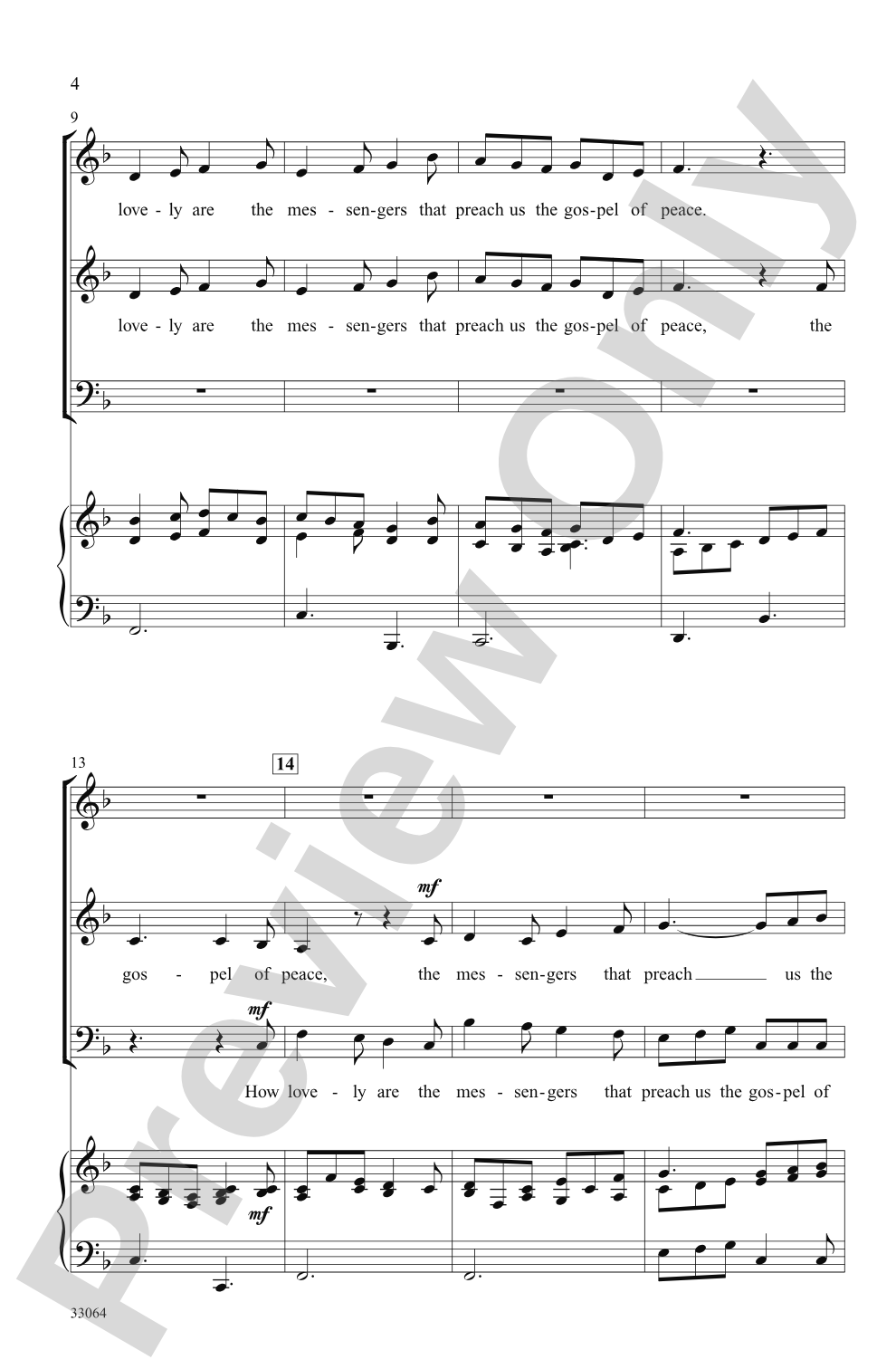
- Balance the soprano and alto lines against the baritone voices. The arrangement distributes the melodic material across all three parts, so no voice should consistently dominate.
- Bring out the harmonic shifts that support the text, particularly where Mendelssohn's music emphasizes theological meaning. These moments of harmonic color reward careful listening.
- Use the PianoTrax accompaniment to lock in ensemble blend and intonation. The recorded piano provides a steady harmonic foundation for rehearsal and performance.
How to use it
Program this as a centerpiece in a concert devoted to sacred choral literature, pairing it with other Mendelssohn motets or works from the same era. Its twelve pages and straightforward performance requirements also make it valuable for mid-season programming when you need a substantial piece that doesn't demand weeks of rehearsal. The reverent character suits memorial services, Easter programming, or concerts emphasizing text-driven choral music.
Skills your students will build
- Legit phrasing and line continuity in three-part writing
- Harmonic awareness through text-expressive chord progression
- Balance and blend in mixed-voice arrangements
- Sight-reading of moderate complexity with shifting voice relationships
- Interpretation of nineteenth-century choral style and articulation