How Does Your Garden Grow? Cover Image

How Does Your Garden Grow?: SATB Choral Octavo

$2.95 USD
Sale price  $2.95 USD Regular price 
Skip to product information
How Does Your Garden Grow? Cover Image

How Does Your Garden Grow?: SATB Choral Octavo

From Four New England Pieces

By Dave Brubeck

Item: 00-HPC7049

makemusic Cloud badge
$2.95
Shipped

One moment…

Description

Don't just read it, hear it, play along with it, and watch your students grow with it. In MakeMusic Cloud, How Does Your Garden Grow?: SATB Choral Octavo comes alive with professional accompaniment, adjustable tempo, and built-in practice tools that turn solo practice into real progress.

Sample Pages

Sample Audio
No sample audio found.
Sample Video
Additional Details
Series: Lawson-Gould: The Dave Brubeck Series
Publisher: Alfred Music
Page Count: 16
UPC: 029156685893
SKU: 00-HPC7049

More about this title

About the Composer: Dave Brubeck
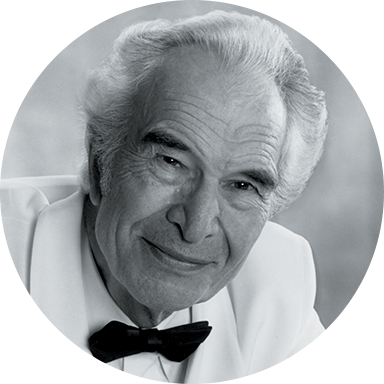
Dave Brubeck

Dave Brubeck built a career that bridged jazz innovation and classical composition, bringing the language of improvisation into fully notated works across multiple genres. Beyond his legendary status in jazz (immortalized by "Take Five" and the groundbreaking album "Time Out"), he composed choral pieces, orchestral works, chamber music, ballet suites, and large-scale vocal works including the widely performed mass "To Hope!" His studies with Darius Milhaud at Mills College after World War II shaped his approach to blending jazz vernacular with classical forms, a philosophy that infuses his entire compositional output.

Brubeck's influence extended beyond the concert hall and recording studio. He was a pioneering force in breaking racial barriers in mid-20th-century American music and performance. His honors reflect the breadth of his impact: a Grammy Lifetime Achievement Award for jazz, induction into the American Classical Music Hall of Fame in 2003, the Presidential Medal of the Arts from President Clinton, and a lifetime achievement award from the London Symphony Orchestra. Works like the oratorios "The Voice of the Holy Spirit" and "Beloved Son" have been recorded by major ensembles including the London Symphony Orchestra, cementing his place in both jazz and classical music histories.

Why we love this

Brubeck brings a jazz sensibility to choral writing without demanding that singers navigate complicated chord changes or unusual harmony; the piece feels modern and rhythmically interesting while remaining accessible. The pairing of a secular subject with sophisticated harmonic language gives singers something genuinely musical to perform, not just pleasant filler. Programming a Brubeck choral work signals to your choir and audience that contemporary classical composition and jazz-inflected writing belong on the same stage.

What to expect

The piece carries a conversational, almost conversational warmth, with Brubeck's harmonic language creating moments of pleasant surprise without jarring dissonance. The garden-themed text pairs with music that feels both reflective and gently sophisticated, inviting singers into a musical world that feels refreshingly modern yet rooted in strong compositional craft.

Who it's for

This octavo works well for choirs with some harmonic experience and ensemble maturity, particularly those interested in contemporary classical and jazz-influenced repertoire. Directors building programming that includes post-1950s choral literature will find this piece both musically substantial and audience-friendly.

How to get the most out of it

  • Pay attention to rhythmic precision in the accompaniment; Brubeck's jazz roots mean the harmonic rhythm often drives the piece forward, and loose ensemble playing will flatten the effect.
  • Balance the voice parts carefully so that melodic lines in inner voices don't disappear. Brubeck frequently distributes thematic material across all four parts rather than concentrating it in soprano.
  • Approach the diction and text setting as you would a song rather than as hymn-like block harmony. Let the word stress and natural speech rhythm guide your phrasing.

How to use it

Include this alongside other mid-to-late 20th-century choral works to build a concert set that spans classical and jazz-influenced traditions. It also pairs well with other Brubeck choral settings if you're building a composer showcase, or use it as a lighter moment in a program that includes heavier contemporary works.

Skills your students will build

  • Reading and performing jazz-influenced harmonic language in choral texture
  • Balancing inner-voice melodic material in SATB voicing
  • Understanding rhythmic nuance in post-1950s composition
  • Ensemble precision with syncopated and non-traditional harmonic rhythm

You May Also Like
