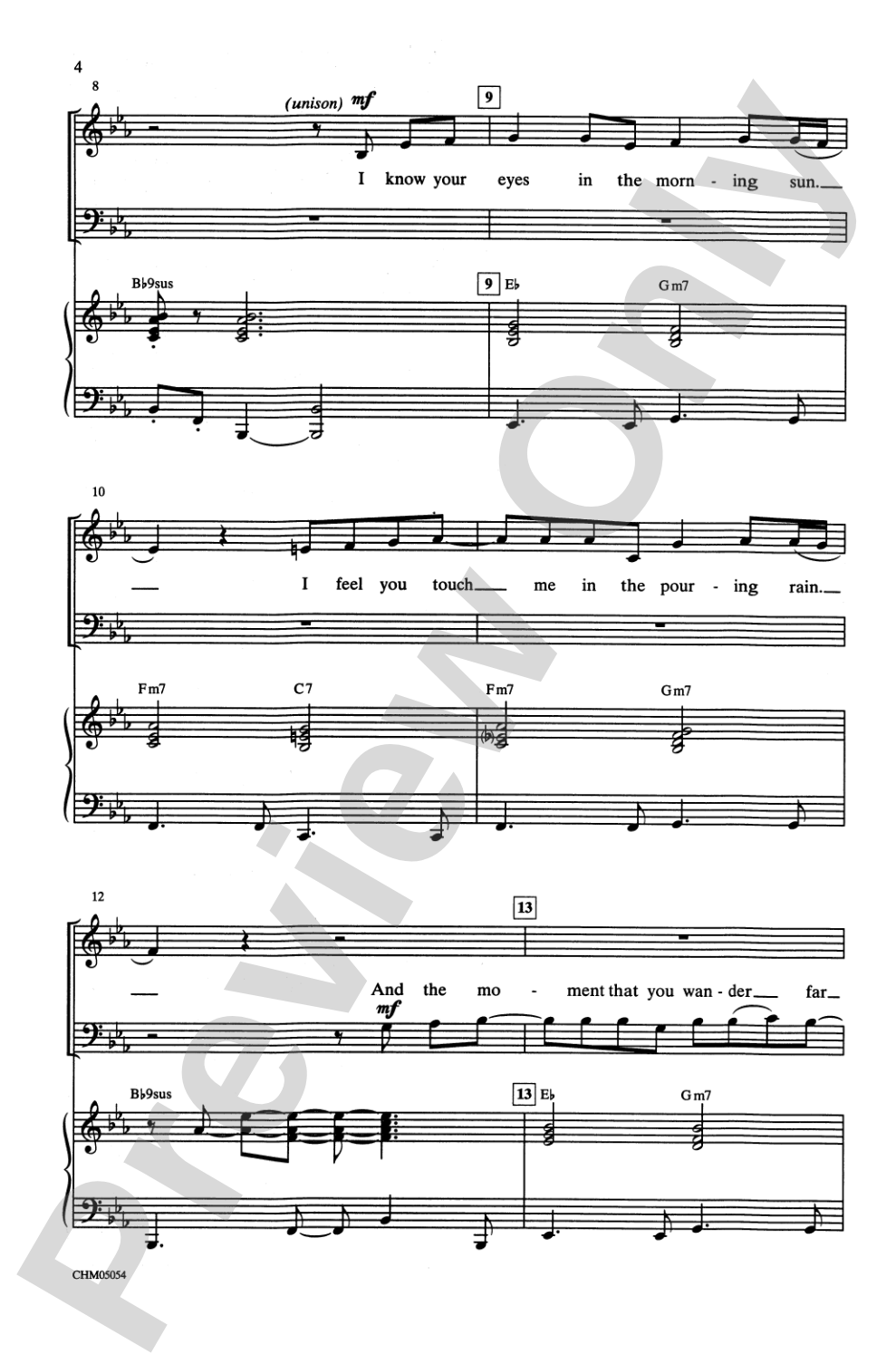
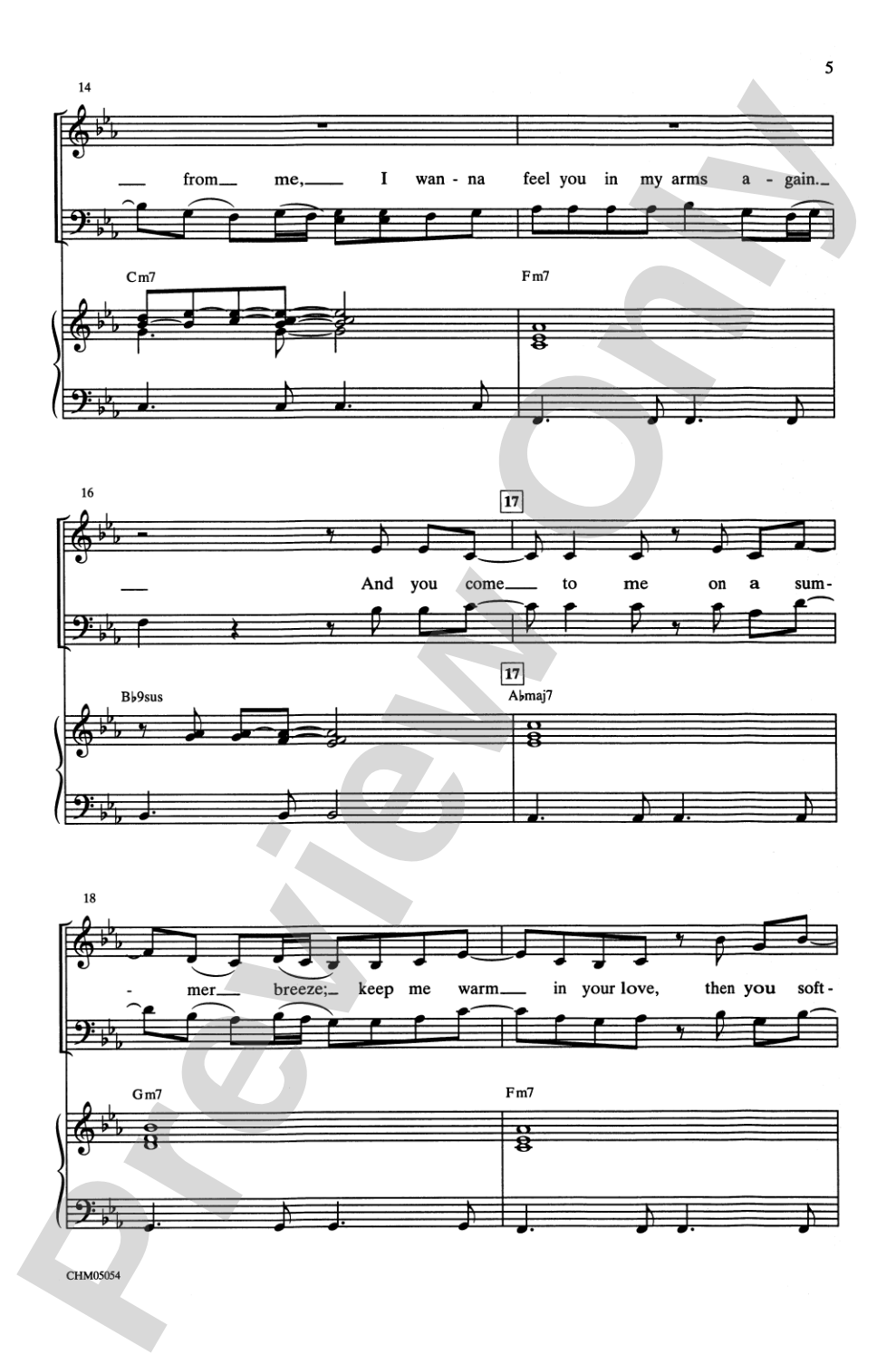
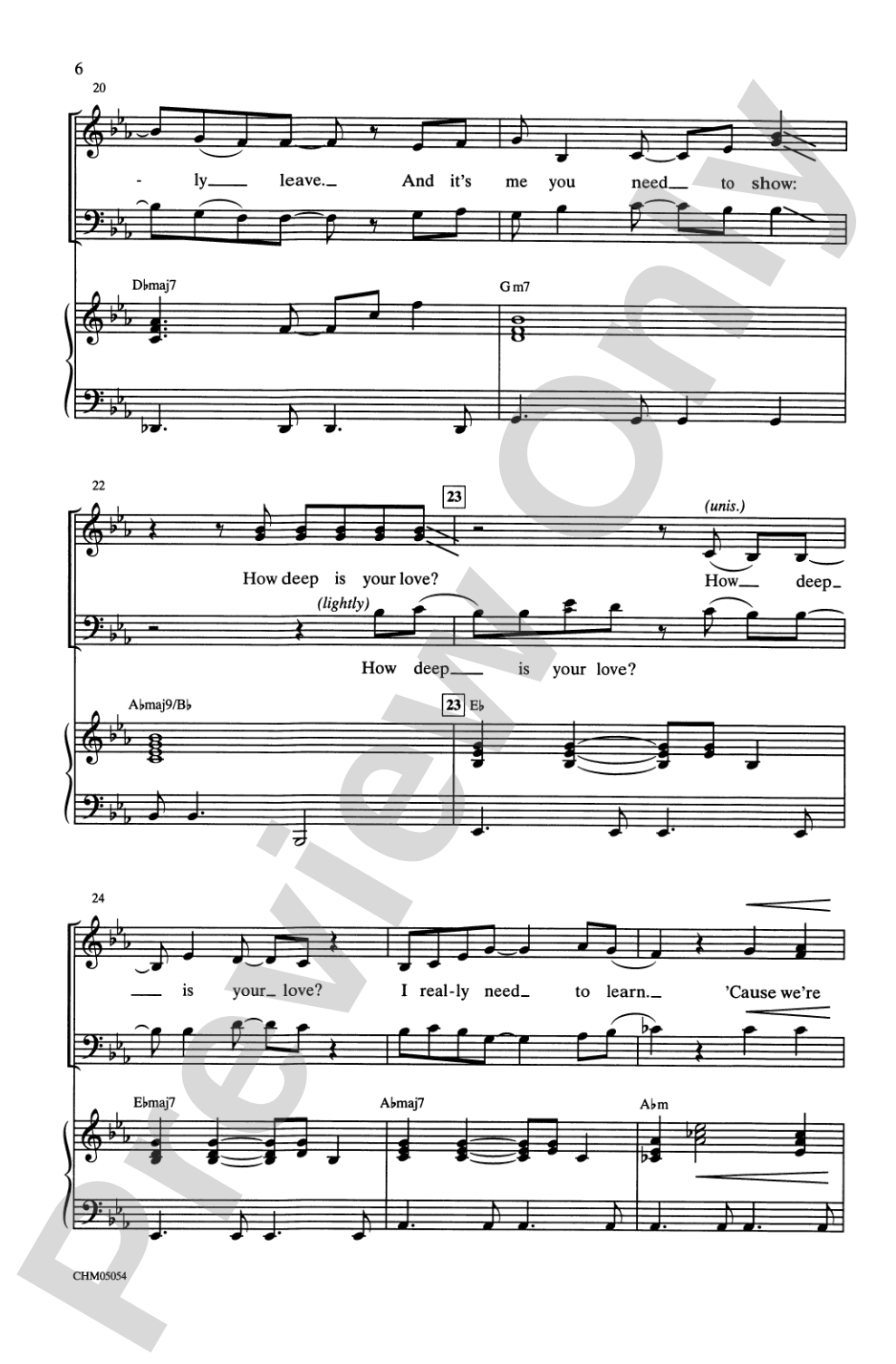
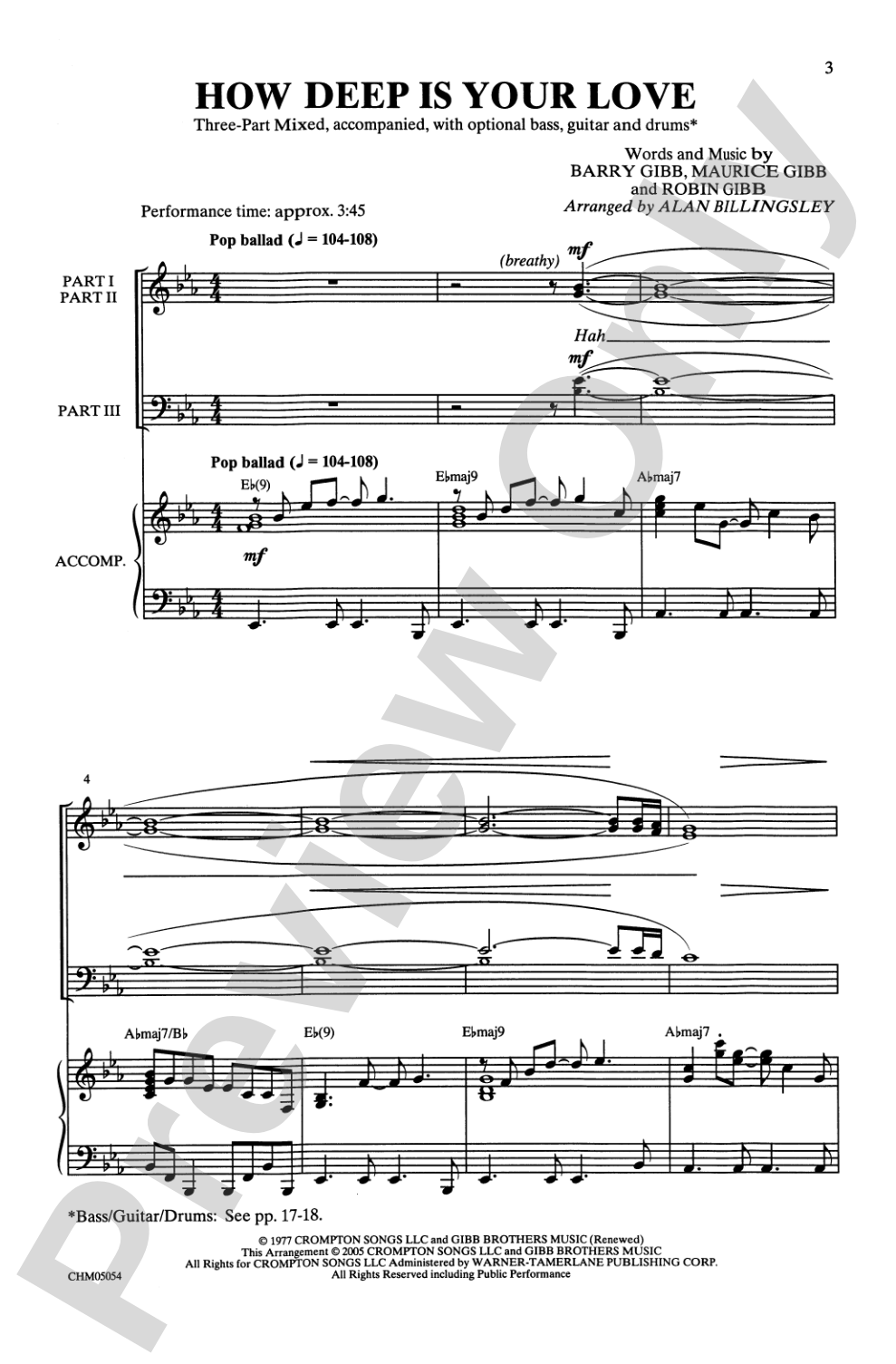
How Deep Is Your Love Sheet Music Preview

How Deep Is Your Love: 3-Part Mixed Choral Octavo

Words and music by Barry Gibb, Maurice Gibb, and Robin Gibb / arr. Alan Billingsley

Level: Moderate

Item: 00-PO-0004852

Digital Download
$3.50

Minimum order quantity: 20 copies

One moment…

Description
This 1977 hit by the BeeGees was the first single released from the incredibly successful Saturday Night Fever soundtrack album. It was on the pop charts for over thirty weeks peaking at #1 while it achieved multi-platinum status. The luscious pop ballad style is effectively captured in this choral setting by Alan Billingsley.

How Deep Is Your Love: 3-Part Mixed Choral Octavo isn't in MakeMusic Cloud just yet...but it could be. Let us know you'd like to see it, and you'll help shape what comes next. In the meantime, start a free trial and dive into thousands of interactive titles your students can play along with today.

Sample Audio
No sample audio found.
Sample Video
Additional Details
Series: Alfred Archive Edition: Alfred Pop Choral Series
Publisher: Alfred Music
Page Count: 20
SKU: 00-PO-0004852

More about this title

About the Composer: Barry Gibb

Barry Gibb is a British-Australian singer, songwriter, and producer who co-founded the Bee Gees with his brothers Maurice and Robin. The trio became one of the most commercially successful acts in popular music, with a career spanning decades and encompassing multiple musical styles from pop to disco to ballad. Gibb's gift for melody and his collaborative songwriting partnerships shaped the sound of 1970s popular music and continue to influence artists across genres.

Why we love this

Alan Billingsley's arrangement captures the emotional warmth of this iconic ballad while keeping the voicing accessible for intermediate choirs. The piece sits in a range that works naturally for SAB voices, and the straightforward harmonic language lets singers focus on phrasing and the genuine sentiment that made this song a radio staple. Directors appreciate that it's recognizable enough to engage audiences while offering real musical substance rather than novelty appeal.

What to expect

The piece radiates warmth and vulnerability, maintaining the tender quality of the original ballad without oversimplifying the harmonic language. Singers experience the pleasure of blending into lush three-part textures while still keeping a clear melodic anchor, creating a sound that feels both rich and intimate.

Who it's for

This arrangement works well for intermediate mixed choirs seeking accessible repertoire with genuine popular appeal. It's ideal for directors programming a concert that blends classical and contemporary works, or for singers who respond to material that connects with their own musical tastes and cultural references.

How to get the most out of it

  • Balance the texture so that melodic material stands out clearly; the arrangement's lush harmonies can easily obscure the tune if the soprano line doesn't project.
  • Shape phrases with attention to the original melody's phrasing; treating long lines as continuous phrases rather than breaking them into smaller chunks honors the ballad's emotional arc.
  • Work the recorded accompaniment into rehearsals early, as it establishes the precise tempo and rhythmic pocket that make the groove feel authentic.
  • Encourage singers to listen to the Bee Gees' recording to internalize the song's character; familiarity with the original helps singers understand where dynamic and emotional peaks naturally occur.

How to use it

Program this as an emotional centerpiece in a pop or contemporary concert, where its ballad character can give audiences a moment of reflection between uptempo selections. It also pairs well in programs that explore how popular songs from a single era defined a generation, or as an accessible entry point for choirs building confidence with secular modern repertoire.

Skills your students will build

  • Sustaining long phrases without loss of support or pitch
  • Blending three-part harmonies while maintaining melodic clarity
  • Interpreting popular music style and phrasing in an arranged choral context
  • Working with recorded accompaniments to lock rhythm and tempo

You May Also Like