
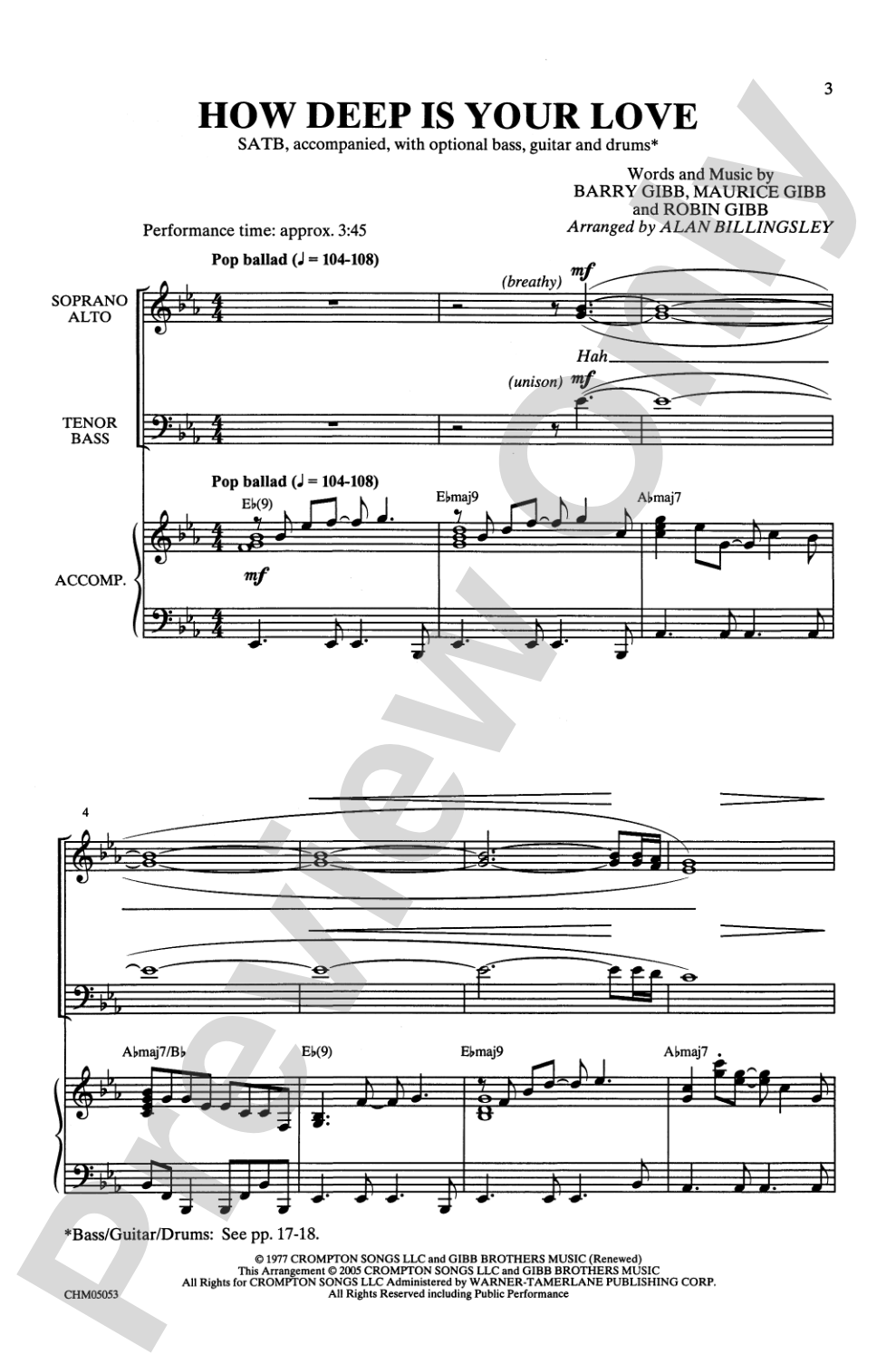
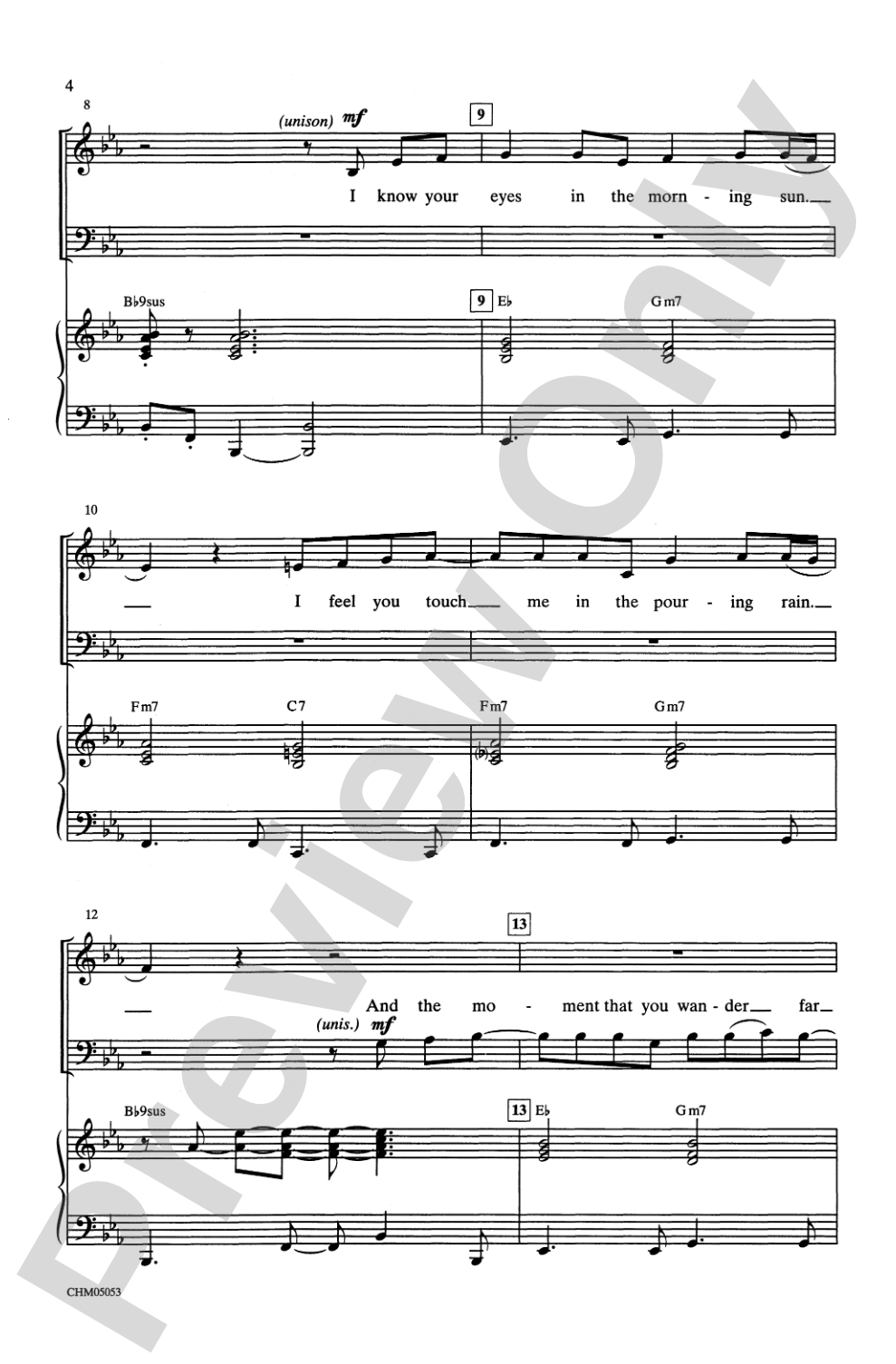
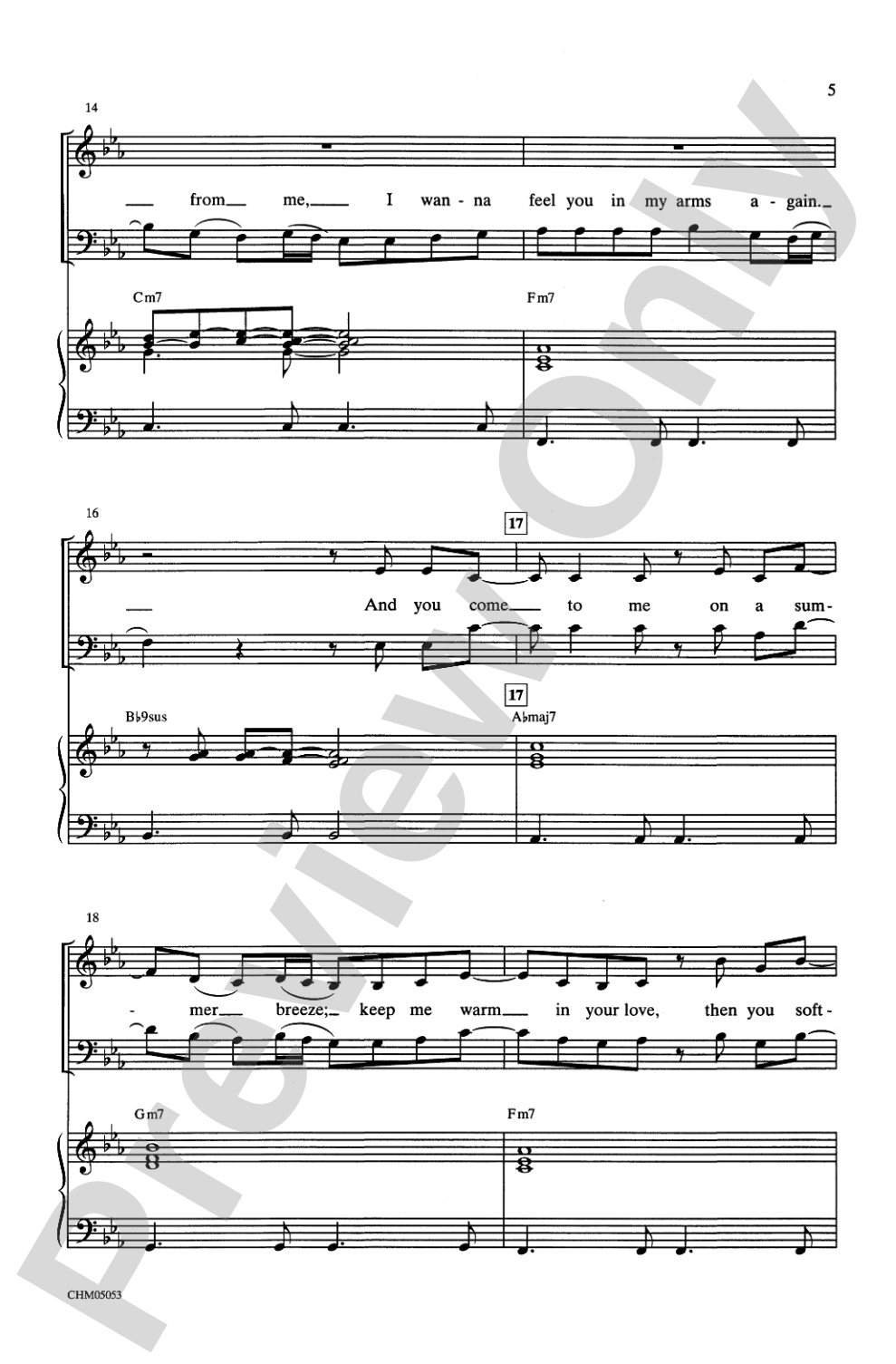
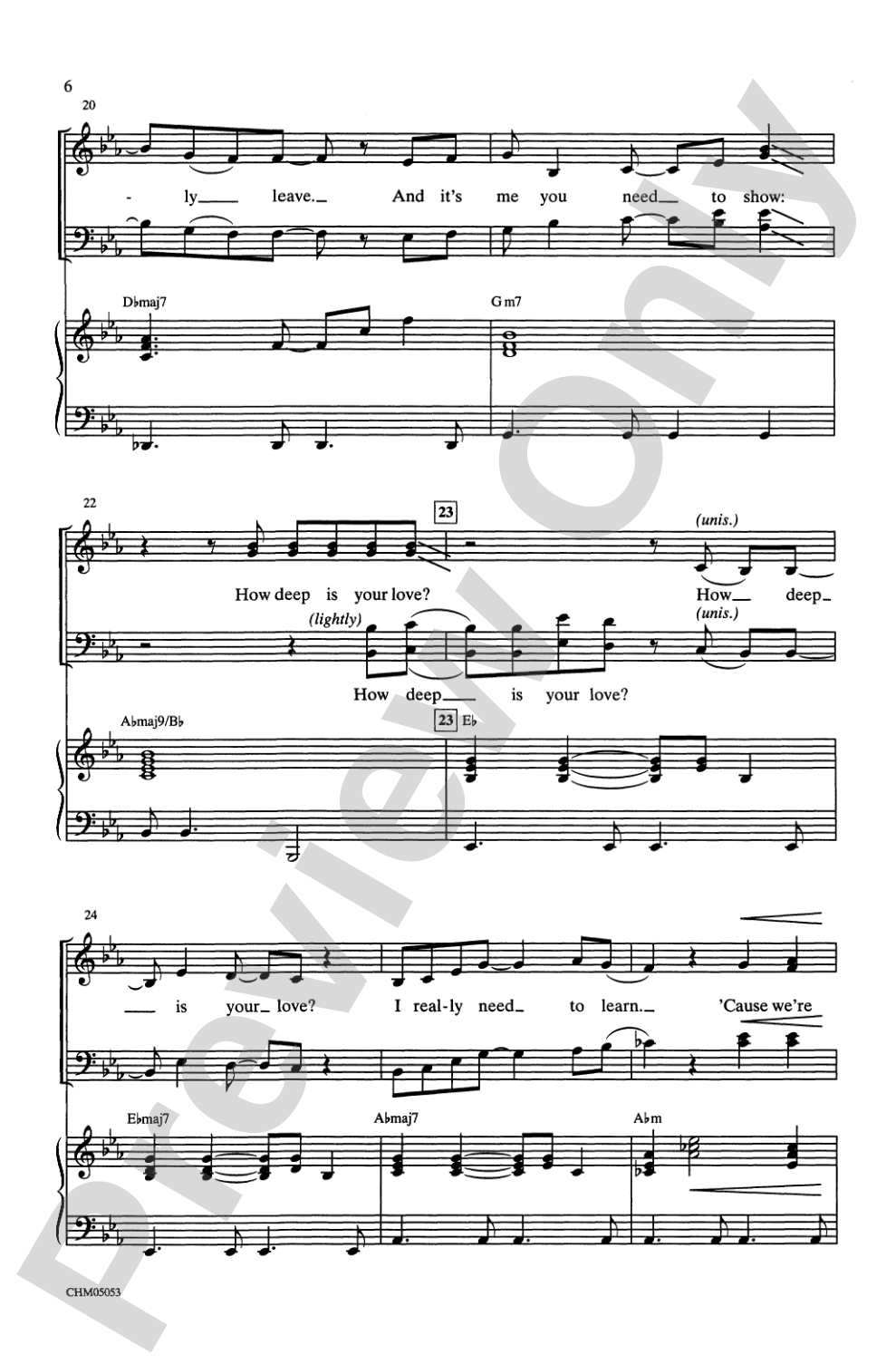

How Deep Is Your Love: SATB Choral Octavo
Words and music by Barry Gibb, Maurice Gibb, and Robin Gibb / arr. Alan Billingsley
Level: Moderate
Item: 00-PO-0002579
$3.50
Minimum order quantity: 20 copies
One moment…
Related Items
How Deep Is Your Love: 3-Part Mixed Choral Octavo |
$3.50
|
View |
Description
This 1977 hit by the BeeGees was the first single released from the incredibly successful Saturday Night Fever soundtrack album. It was on the pop charts for over thirty weeks peaking at #1 while it achieved multi-platinum status. The luscious pop ballad style is effectively captured in this choral setting by Alan Billingsley.


How Deep Is Your Love: SATB Choral Octavo isn't in MakeMusic Cloud just yet...but it could be. Let us know you'd like to see it, and you'll help shape what comes next. In the meantime, start a free trial and dive into thousands of interactive titles your students can play along with today.
Request This Title
Tell us you want it.
Start Your Free Trial
Explore everything that's ready to play right now.
Sample Audio
1
Audio File
--:--
0:00
0:00
Sample Video
No sample videos found.
Additional Details
Series:
Alfred Archive Edition: Pop Choral Series
Publisher:
Alfred Music
Page Count:
20
SKU:
00-PO-0002579
More about this title
About the Composer: Barry Gibb
Barry Gibb co-founded the Bee Gees with his brothers Maurice and Robin, shaping the sound of 1970s pop and disco music. His songwriting contributions to the Saturday Night Fever soundtrack helped define an era and demonstrated his gift for crafting memorable melodies that transcend genre boundaries.
Beyond his work as a performer, Gibb's compositions have proven remarkably durable in educational settings. His ability to write singable, accessible material with emotional depth makes his songs natural candidates for choral arrangement, allowing singers of all levels to connect with music that feels contemporary and engaging.
Why we love this
Billingsley's arrangement captures the warmth and sophistication of this iconic ballad while keeping it genuinely performable for intermediate choirs. The harmonic richness honors the original's lush production without overwhelming singers who are still building blend and balance skills. Programming a song this recognizable creates immediate audience engagement and reminds your singers why they love making music.
What to expect
The ballad unfolds with a gentle warmth and careful restraint, letting the original song's emotional sincerity shine through without overwrought arranging. Harmonically lush moments balance with cleaner textures, creating a sense of intimacy that builds gradually toward the full ensemble sound.
Who it's for
Intermediate choirs looking to expand their contemporary pop repertoire with repertoire that sounds sophisticated yet achieves strong results in preparation time. This arrangement works well for singers with developing blend skills and a comfortable range within SATB writing, whether in a school choir, community ensemble, or church setting.
How to get the most out of it
- Shape the phrases through gentle dynamic swells rather than abrupt changes. The song thrives on sustained legit singing, so think of each section as a continuous arc even when the text breaks.
- Balance the parts carefully during the homophonic passages. Bass and tenor lines often carry important harmonic movement, so make sure lower voices aren't buried beneath soprano melody.
- Let the recorded accompaniment establish the groove without rushing. The rhythm section's pocket is essential to this song's character, so rehearse with the track early and often.
- Attend to diction without sacrificing the sustained vocal line. Consonants should land cleanly, but the vowels carry the emotional weight of this arrangement.
How to use it
Pair this with other pop standards from the same era to create a themed concert segment, or use it as a change-of-pace moment in a mixed repertoire program where it provides textural relief between more energetic selections. The ballad's moderate length and broad appeal make it especially effective for spring concerts or dedication programs where emotional connection matters.
Skills your students will build
- Blending sustained vowels across voice parts
- Balancing harmonic movement between soprano melody and supporting voices
- Maintaining phrase direction through sustained legit singing
- Interpreting contemporary pop style in choral context
- Ensemble timing and ensemble listening with recorded accompaniment