

How Can I Keep from Singing?: SATB Choral Octavo
American Folk Hymn / arr. Andy Beck
Item: 00-PO-0000488
$2.05
Minimum order quantity: 20 copies
Pickup currently not available
Related Items
How Can I Keep from Singing?: SAB Choral Octavo |
$2.05
|
View | |
How Can I Keep from Singing?: SSA Choral Octavo |
$2.05
|
View | |
How Can I Keep from Singing?: SATB Choral Octavo |
$2.40
|
View | |
How Can I Keep from Singing?: SAB Choral Octavo |
$2.05
|
View | |
How Can I Keep from Singing?: SSA Choral Octavo |
$2.05
|
View |
Description
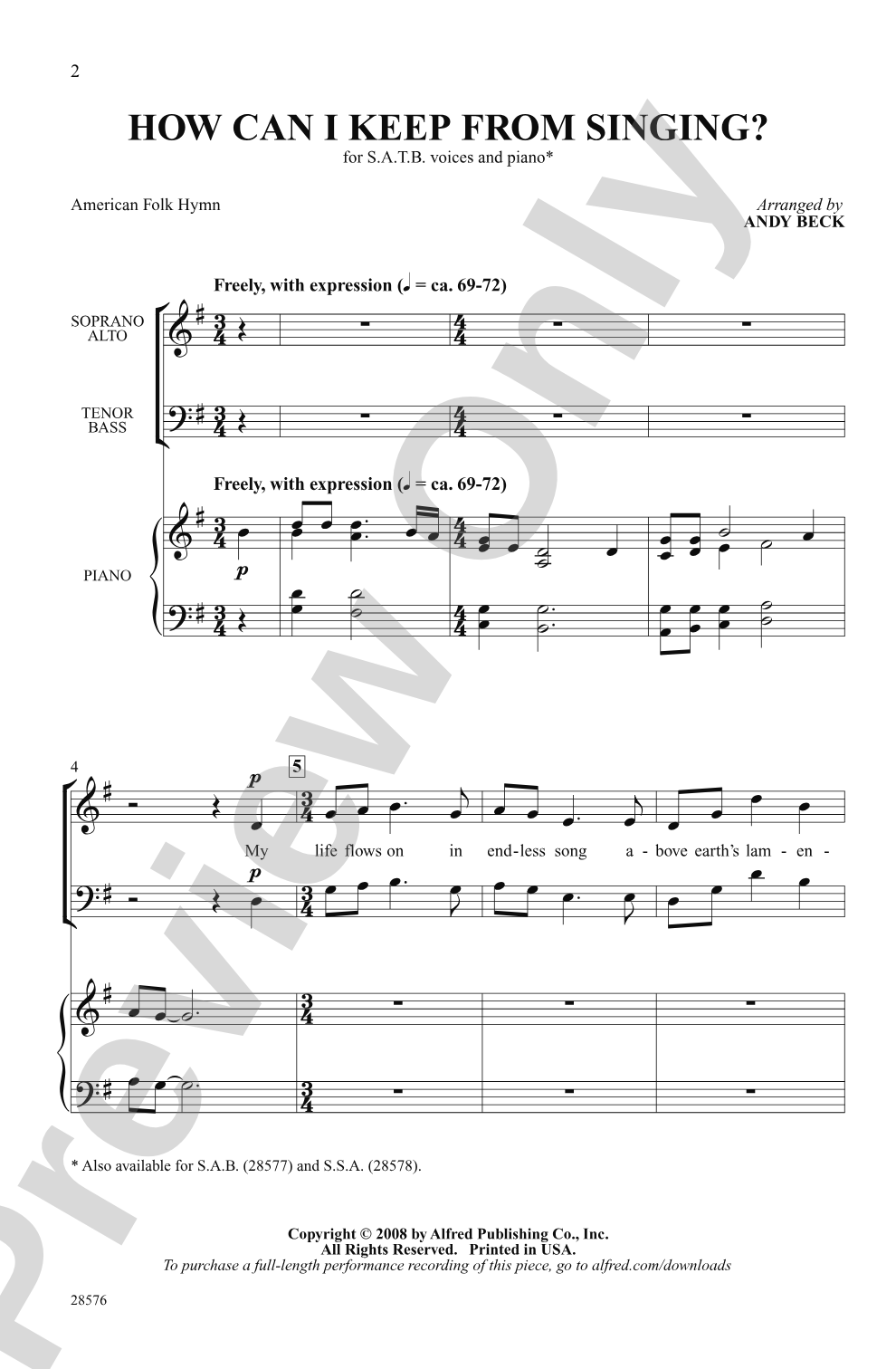
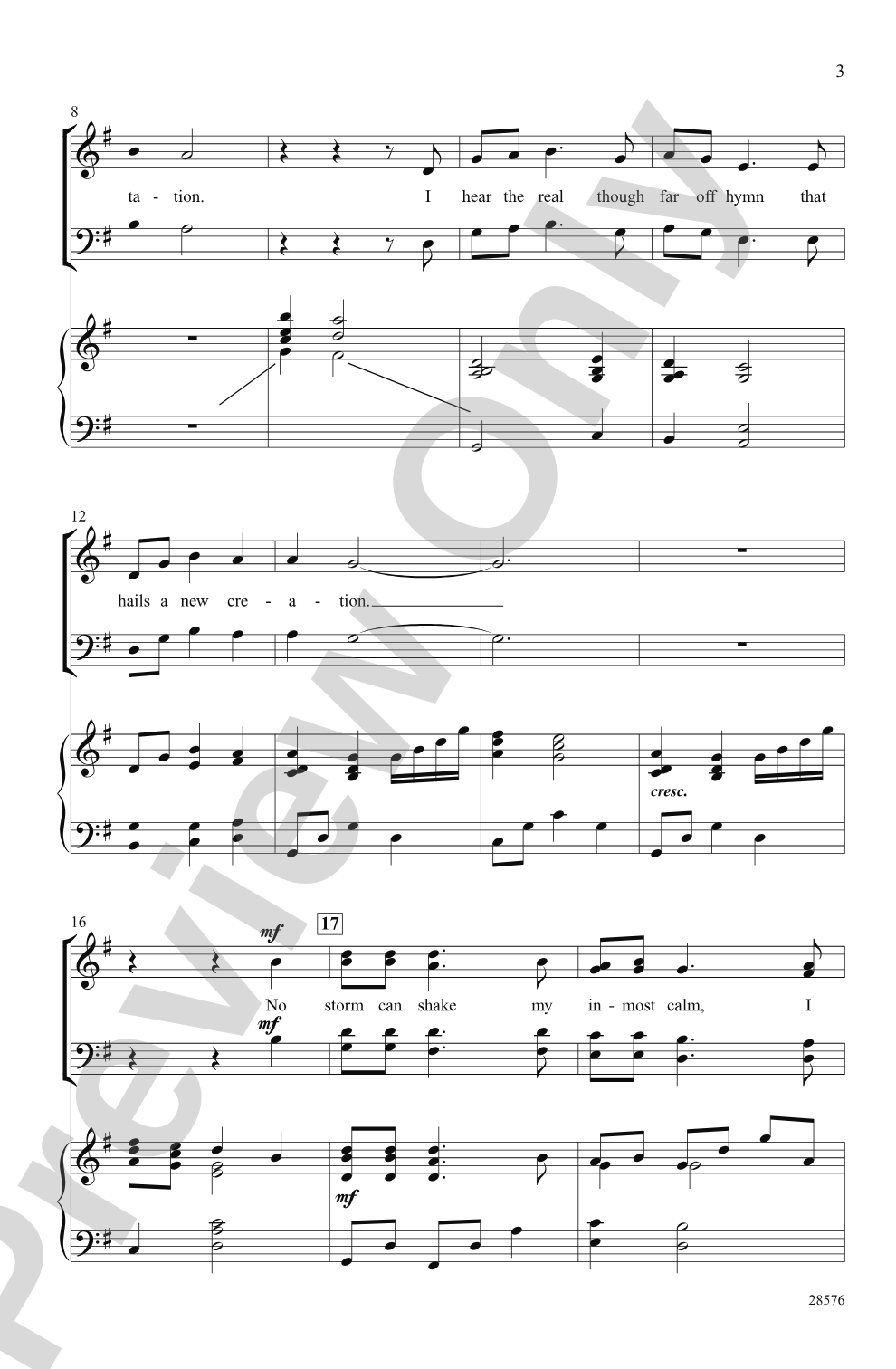
A cherished melody and poignant text are skillfully set for contemporary choirs. Deliberate simplicity promotes freedom of the voice and understanding of the text. Highly effective, but easy to prepare.


How Can I Keep from Singing?: SATB Choral Octavo isn't in MakeMusic Cloud just yet...but it could be. Let us know you'd like to see it, and you'll help shape what comes next. In the meantime, start a free trial and dive into thousands of interactive titles your students can play along with today.
Request This Title
Tell us you want it.
Start Your Free Trial
Explore everything that's ready to play right now.
Sample Audio
1
Audio File
--:--
0:00
0:00
Sample Video
No sample videos found.
Additional Details
Series:
Alfred Choral Designs
Publisher:
Alfred Music
Page Count:
8
SKU:
00-PO-0000488
More about this title
About the Arranger: Andy Beck

Andy Beck directs choral publications at Alfred Music and has written or arranged more than 450 choral works, vocal resources, and children's musicals now in circulation. His educational materials, including Sing at First Sight, Foundations in Choral Sight Singing, and Vocalize! 45 Vocal Warm-Ups That Teach Technique, have shaped how singers develop fundamental skills across the country. His arrangements are performed by choirs worldwide, a testament visible in countless YouTube performances from school and community groups.
Beyond the page, Beck works as a guest conductor, adjudicator, and clinician for music educators and students throughout the United States and internationally. He has served as commissioned composer and conductor for honor choirs of all ages, including all-state groups across the Southeast. A trained tenor with degrees from Ithaca College and Northwest Missouri State University, Beck sings with the North Carolina Master Chorale Chamber Choir, directs musical theatre, and has been an Alfred Music recording artist since 1992. His work consistently reflects deep commitment to music literacy, choral artistry, and arts education.
Why we love this
Beck's arrangement honors both the folk melody's inherent beauty and the text's spiritual weight without overcomplicating the music. The deliberate simplicity allows singers to focus on emotional authenticity rather than technical hurdles, making this especially valuable for choirs preparing work quickly or building confidence in younger ensembles. Its proven festival appeal and accessibility make it a reliable choice for programming.
What to expect
There is something quietly resilient in this music. The folk melody carries an understated strength, and Beck's harmonies support without overwhelming. Singing it feels like claiming something true about yourself, not performing bravado.
Who it's for
This octavo works for any SATB choir, from high school groups preparing their first concert to community choirs seeking repertoire with substance and accessibility. It is especially suited to choirs with limited rehearsal time or singers who benefit from straightforward notation and clear textual meaning.
How to get the most out of it
- Allow space for the text to resonate. The arrangement's straightforward texture means every word carries weight; resist the urge to rush or fill silence with excessive dynamics.
- Balance the melody across voice parts rather than isolating it in one section. Beck's design distributes the tune deliberately, so each voice line contributes equally to the overall line.
- Find the emotional core of the text first, then let the music serve it. This piece works best when singers understand why these words matter before they worry about blend.
- Keep vowel sounds pure and consistent across the ensemble. The simplicity of the harmonic framework makes any intonation or vowel drift immediately noticeable.
How to use it
This piece stands well on its own as a programming anchor or pairs beautifully with other folk-based sacred works in a thematic concert. Its accessibility and emotional honesty make it especially effective in mixed-repertoire programs where it can balance more complex arrangements or provide a moment of stillness and reflection.
Skills your students will build
- singing with text clarity and emotional intention
- maintaining independence in SATB voicing without doubling support
- achieving unified vowel formation across the ensemble
- blending sustained harmonies in simple progressions