

Hold On: SAB Choral Octavo
Traditional Spiritual / arr. Victor C. Johnson
Item: 00-PO-0006696
$2.05
Minimum order quantity: 20 copies
Pickup currently not available
Description
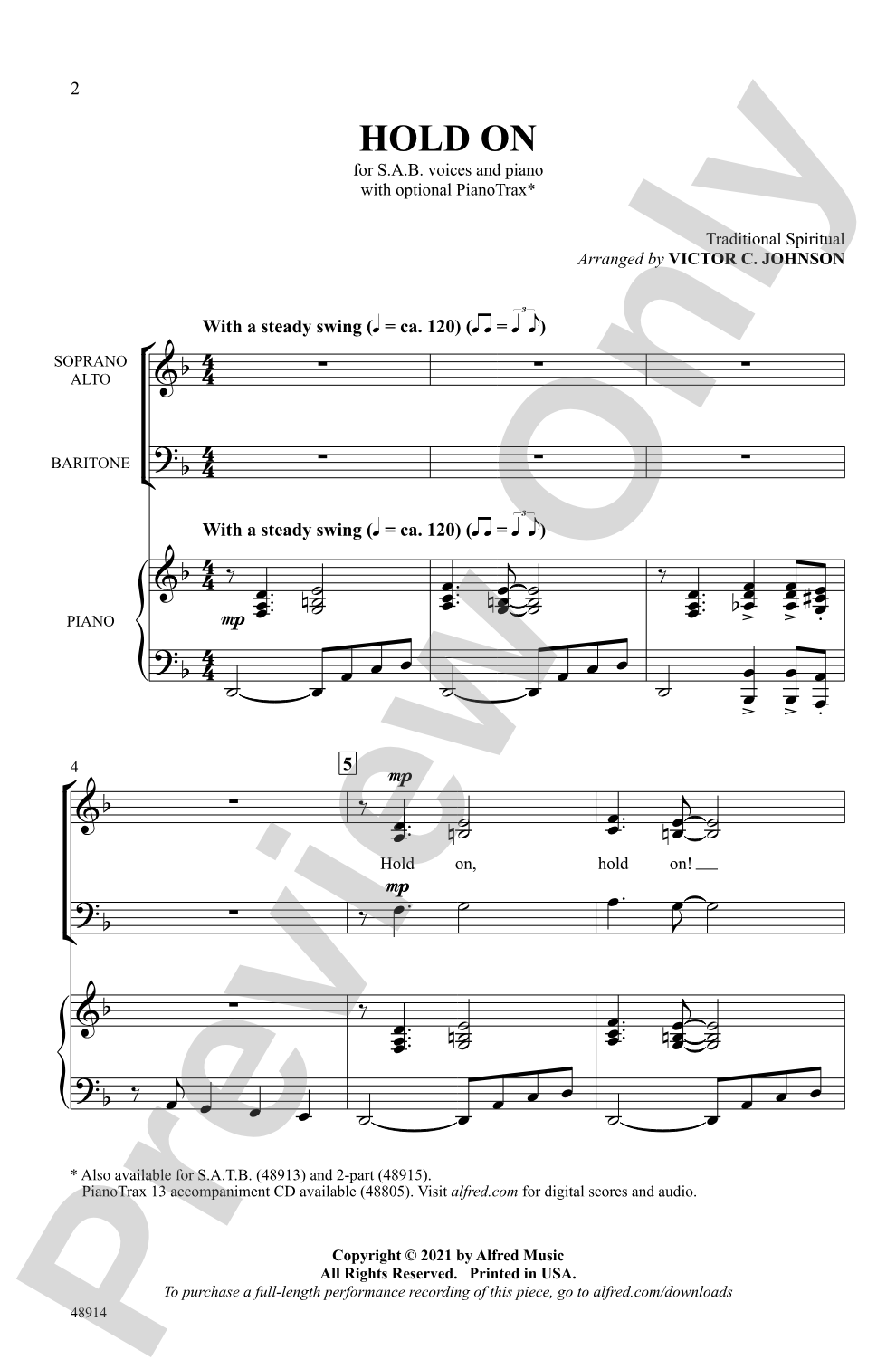
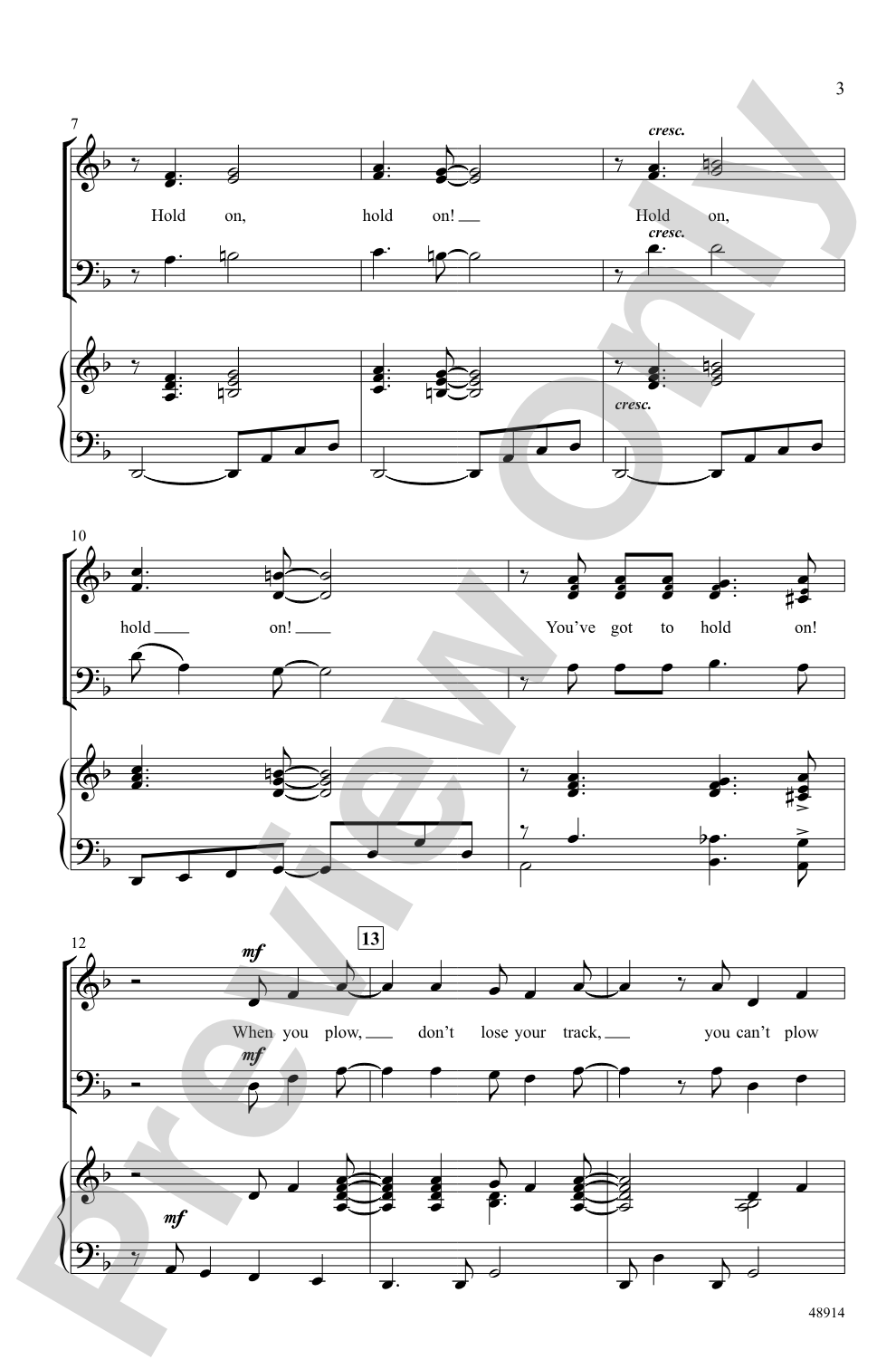
Also known as "Keep Your Hand on the Plow," here's a traditional spiritual that is appropriate for concert or contest, stage or sanctuary. Singers will easily grasp the bluesy harmonies that often flip between major and minor, and lock into the steady swing tempo. Consistent rhythmic anticipations create singable syncopation and add energy. A supportive piano accompaniment lays beautifully in the hands as well as providing a reliable groove. You simply cannot go wrong with a setting like this as prepared by top-tier choral conductor and arranger, Victor C. Johnson.


Discover MakeMusic Cloud: thousands of interactive titles your students can play along with today.
Sample Audio
1
Audio File
--:--
0:00
0:00
Sample Video
Additional Details
Series:
Alfred Choral Designs
Publisher:
Alfred Music
Page Count:
12
SKU:
00-PO-0006696
More about this title
About the Arranger: Victor C. Johnson

Victor C. Johnson brings decades of hands-on choral experience to every arrangement he creates. Based in Dallas, he has directed choirs at all levels, from children's ensembles to high school singers, and currently serves as School Choral Editor for Sing!, the educational publishing division of Choristers Guild. His work spans over 500 published compositions and arrangements across choral, vocal, and keyboard repertoire.
Beyond the page, Johnson remains deeply connected to the choral community through leadership roles with the Dallas Symphony Children's Chorus and active membership in the American Choral Directors Association, Texas Choral Directors Association, and National Association for Music Education. His arrangements reflect what he has learned in the rehearsal room: how singers actually move through music, where voices sit most comfortably, and what makes a piece both challenging and joyful to perform.
Why we love this
Johnson's arrangement honors the spiritual's roots while making it genuinely singable for mixed three-part choirs. The rhythmic anticipations feel organic rather than fussy, and the major-to-minor shifts capture blues inflection without requiring advanced vocal technique. The piano writing is equally thoughtful: it grooves without overwhelming, sits well in the hands, and gives singers something real to lock onto.
What to expect
This arrangement swings with quiet confidence. The major-minor interplay creates a plaintive, searching quality that mirrors the spiritual's message, while the steady rhythmic drive and bluesy harmonies keep the energy moving forward. Singers feel the roots of the piece even as they settle comfortably into their parts.
Who it's for
SAB choirs looking for repertoire that works in both concert and festival settings without sacrificing musicality. Directors seeking a spiritual arrangement that respects the genre's character while remaining accessible to singers with mixed experience levels will find this particularly useful.
How to get the most out of it
- Shape the bluesy harmony changes with slight dynamic lift at each shift between major and minor, letting singers feel the color change without forcing it.
- Keep the swing tempo steady by having the ensemble internalize the groove from the piano accompaniment; a light bounce in the body helps more than a pushed tempo.
- The rhythmic anticipations land most naturally when singers think of them as conversational pushes rather than technical syncopation; rehearse by speaking the text with the rhythm first.
- Balance the three parts carefully in sections where harmony is stacked; SAB voicing can easily weight toward the altos if the sopranos and baritones don't anchor their lines.
How to use it
Pair this with other spirituals or African American choral literature to build a thematic set, or place it mid-concert as a shift in mood and energy. Its accessibility makes it strong for festival appearances, and its authenticity ensures it works equally well in sacred settings.
Skills your students will build
- Navigating chromatic harmony shifts between major and minor tonalities
- Performing syncopated rhythms that sit naturally in the voice
- Singing swing feels and maintaining groove-based tempos
- Interpreting blues inflection and spiritual style with appropriate vocal color
- Balancing three-part mixed voicing across different tessituras