

Hodie Fanfare: SSAA Choral Octavo
Music by Sally K. Albrecht
Item: 00-PO-0006921
$2.05
Minimum order quantity: 20 copies
Pickup currently not available
Description
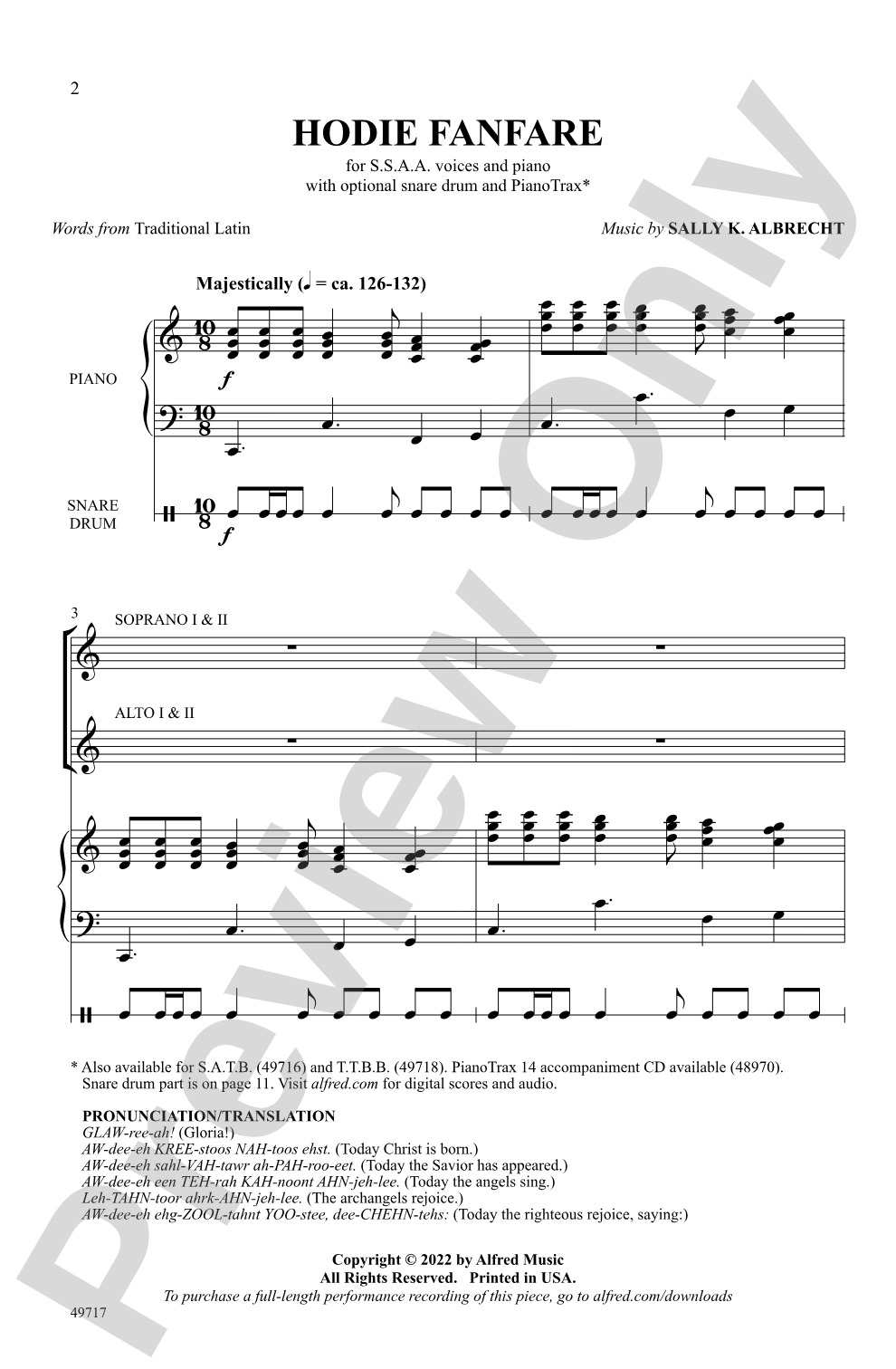
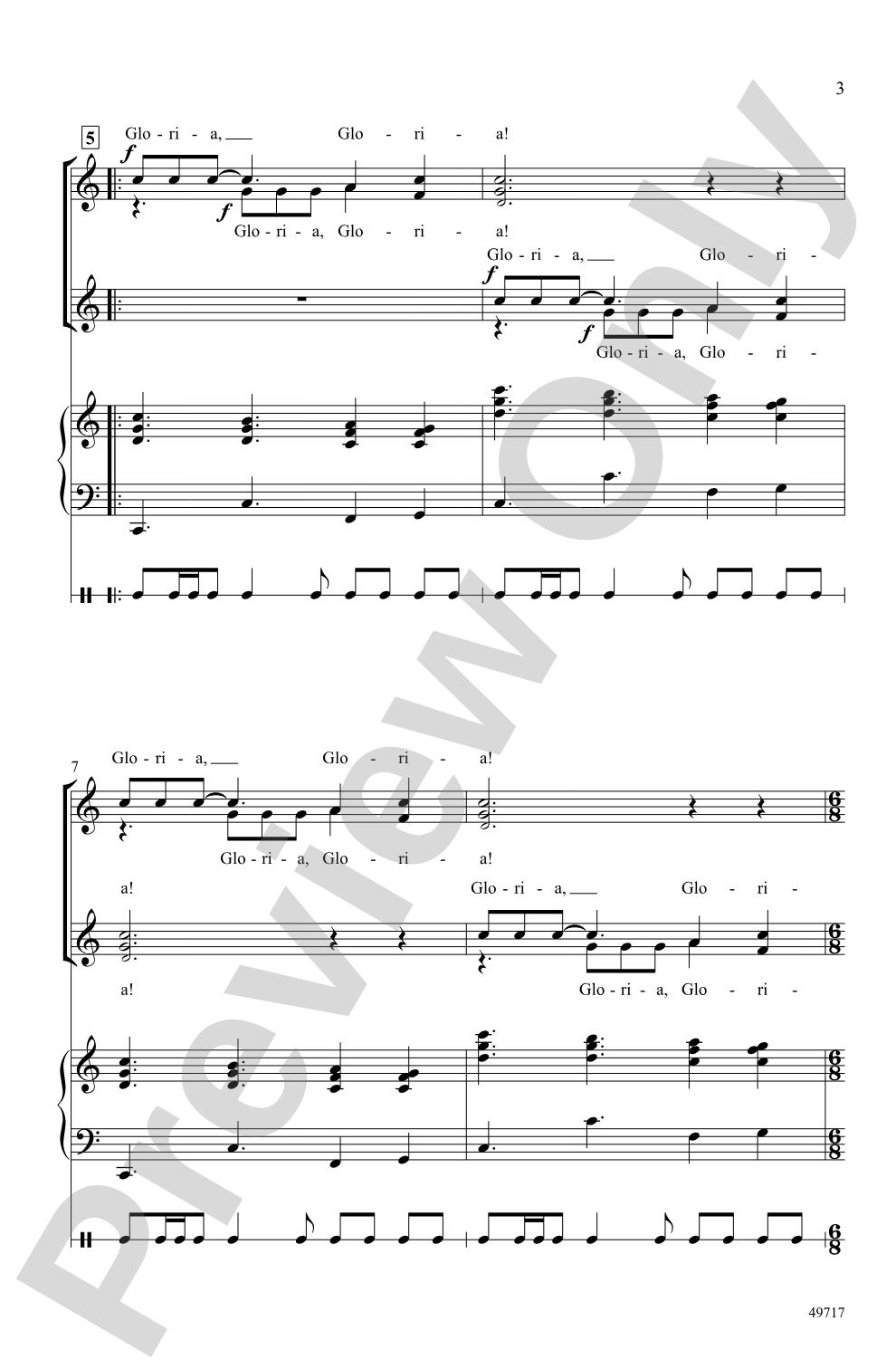
Changing meters of 10/8 and 6/8 are sure to grab your attention in this contemporary Christmas choral. Rhythmic four-part voices sing mostly in Latin (with occasional "joy to the world" interjections) and with various choral textures. Staggered "Glorias" kick it off with exuberance and joyfully return before the final flourish. It's an inspired surprise when the addition of a descant cleverly combines themes we've heard before. Invite a snare drum player to join (part included) to reinforce the triumphant tone.


Hodie Fanfare: SSAA Choral Octavo isn't in MakeMusic Cloud just yet...but it could be. Let us know you'd like to see it, and you'll help shape what comes next. In the meantime, start a free trial and dive into thousands of interactive titles your students can play along with today.
Request This Title
Tell us you want it.
Start Your Free Trial
Explore everything that's ready to play right now.
Sample Audio
1
Audio File
--:--
0:00
0:00
Sample Video
1 / 2
Additional Details
Series:
Alfred Choral Designs
Publisher:
Alfred Music
Page Count:
12
SKU:
00-PO-0006921
More about this title
About the Composer: Sally K. Albrecht

Sally K. Albrecht has shaped American choral music for more than three decades as a composer, conductor, and educator. A recipient of the ASCAP Special Music Award annually since 1987, she has published over 600 choral works alongside 75 larger musicals and songbooks. Her conducting has been featured at major venues including Lincoln Center, Carnegie Hall, and The Kennedy Center, where she has led honor choirs and festival ensembles across the country.
Albrecht served as Director of School Choral, Vocal, and Elementary Publications at Alfred Music and has taught in the music departments at Oakland University, Jersey City State College, and Meredith College. She holds a B.A. from Rollins College (1976), an M.A. in Drama from the University of Miami (1977), and an M.M. in Accompanying from the University of Miami (1979). In 2021, she received the Distinguished Alumna Award from both institutions. She is based in Wake Forest, North Carolina, where she lives with her husband, composer and arranger Jay Althouse.
Why we love this
The unpredictable meter shifts between 10/8 and 6/8 create genuine rhythmic vitality without sacrificing singability. Albrecht layers Latin text with strategically placed English phrases to fresh effect, and the cleverly constructed descant arrival rewards rehearsal preparation with a moment that feels genuinely earned rather than tacked on.
What to expect
The staggered opening feels almost celebratory in its architectural clarity, with voices entering like bells announcing the season. As the piece develops, the shifting meters create a modern, slightly off-balance energy that keeps the ear engaged, and the descant arrival brings a sense of revelation and joy that feels well-earned.
Who it's for
This piece suits advanced high school and college choral programs comfortable with rhythmic complexity and looking for a contemporary Christmas offering with real character. Directors seeking to move beyond conventional holiday arrangements will find rewarding material for singers who can sustain independent lines and respond to meter changes with precision.
How to get the most out of it
- Lock the meter shifts in sections before attempting full performance. Mark where the pulse naturally leans in each meter to help singers feel the difference rather than simply counting.
- Balance the Latin text with clear vowel formation; the Latin syllables have distinct rhythmic importance in this piece, so pronunciation clarity becomes a musical asset.
- Coordinate closely with your snare drum player on the staggered "Gloria" sections at the opening. The percussion part amplifies the exuberance only if entries align precisely with the choral attack.
- Reserve full dynamic intensity for the final flourish and the descant return. Building gradually through the earlier sections lets the ending feel like a natural culmination rather than sudden.
How to use it
Program this as a concert opener to energize an audience immediately, or anchor a contemporary Christmas set that contrasts with more traditional carols. The piece's distinctive character makes it memorable as a pre-intermission closer that shifts the mood entirely.
Skills your students will build
- Reading and executing changing meters (10/8 and 6/8)
- Maintaining independent voice lines in rhythmically complex textures
- Latin diction and pronunciation
- Blending with instrumental percussion in precise ensemble contexts
- Layering contrasting melodic material (original melody and descant)