

Hine Ma Tov: 3-Part (any combination) Choral Octavo
Arr. Sally K. Albrecht
Item: 00-PO-0004324
$2.25
Minimum order quantity: 20 copies
Pickup currently not available
Description
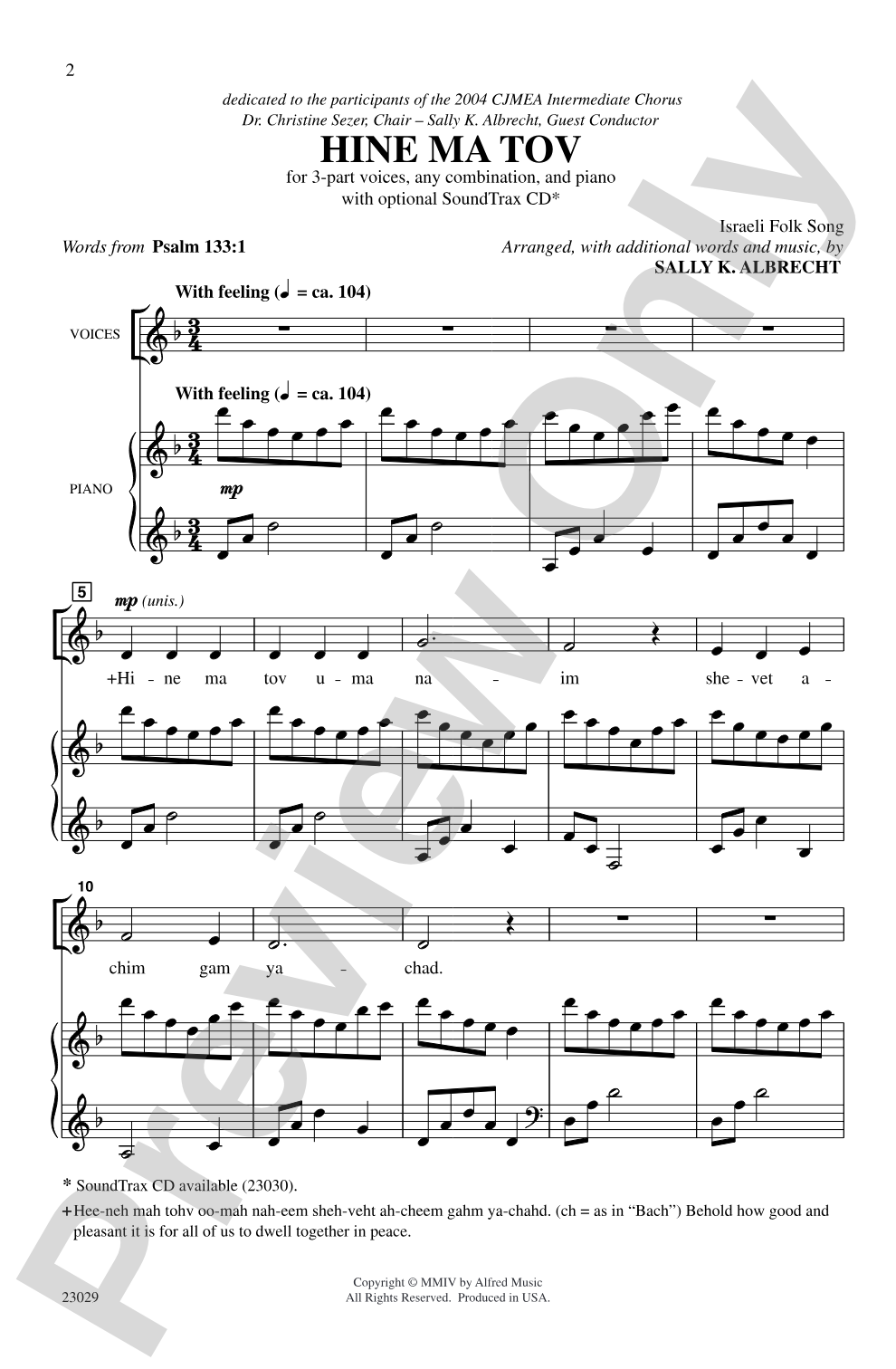
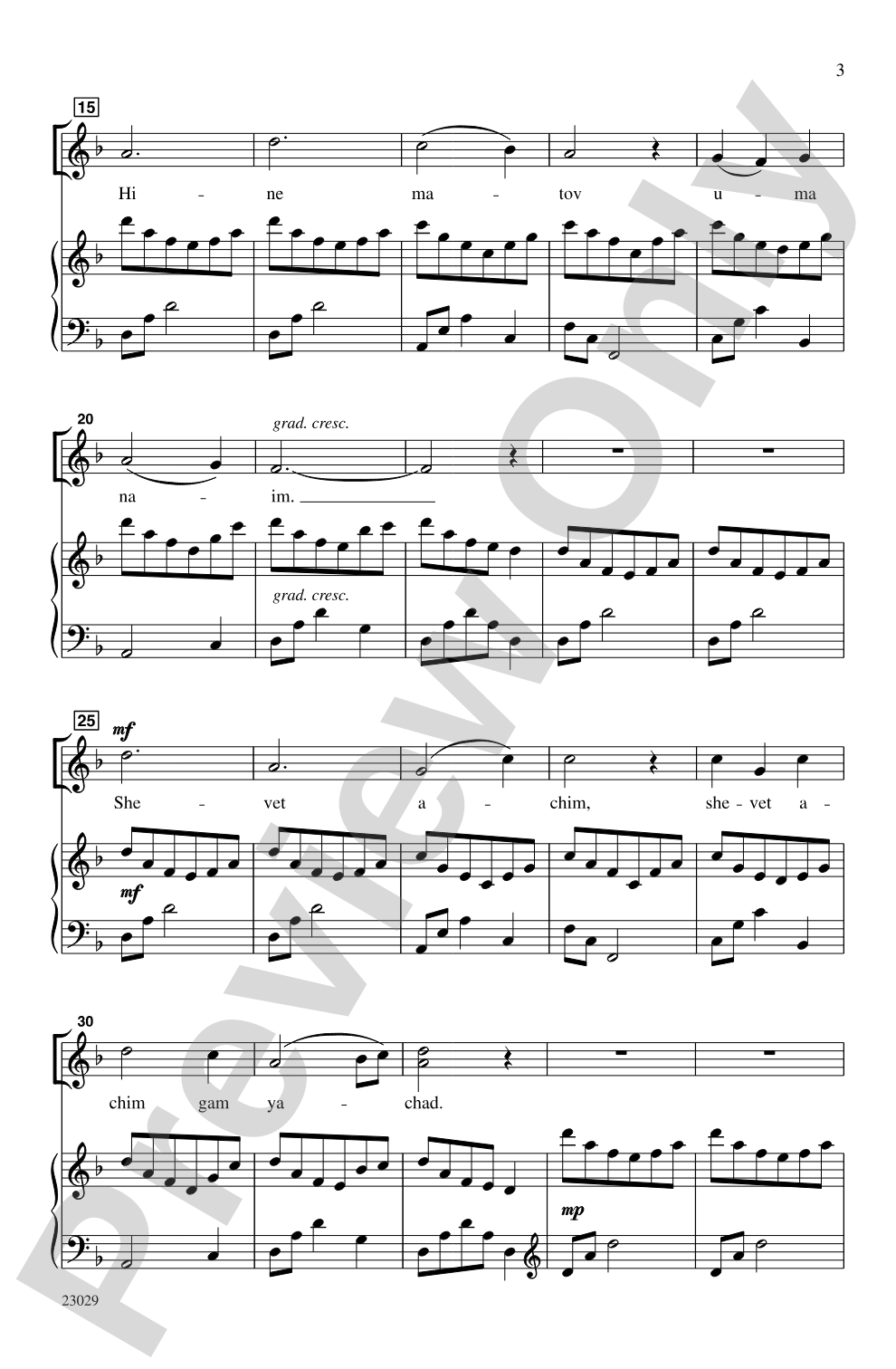
Finally, something different for Hanukkah or any time of year. A traditional Israeli folk text is sung as a lyrical melody which floats over the graceful piano accompaniment. This quiet unison theme swells into a dramatic canon and fades again as the brief Hebrew text is translated into English in its final, delicate phrase. Any combination of three voice parts and an optional SoundTrax CD allow for ensemble flexibility. An artistic, effective setting.


Hine Ma Tov: 3-Part (any combination) Choral Octavo isn't in MakeMusic Cloud just yet...but it could be. Let us know you'd like to see it, and you'll help shape what comes next. In the meantime, start a free trial and dive into thousands of interactive titles your students can play along with today.
Request This Title
Tell us you want it.
Start Your Free Trial
Explore everything that's ready to play right now.
Sample Audio
1
Audio File
--:--
0:00
0:00
Sample Video
No sample videos found.
Additional Details
Series:
Alfred Archive Edition: Alfred Choral Designs
Publisher:
Alfred Music
Page Count:
8
SKU:
00-PO-0004324
More about this title
About the Arranger: Sally K. Albrecht

Sally K. Albrecht has shaped choral music education for over three decades, serving as Director of School Choral, Vocal, and Elementary Publications at major educational publishers including Alfred Music. A prolific composer and arranger with more than 600 choral works and 75 songbooks in print, she has earned annual ASCAP Special Music Awards since 1987 and conducted honor choirs at prestigious venues including Lincoln Center, Carnegie Hall, and The Kennedy Center.
Albrecht holds degrees from Rollins College (B.A. in Music and Theater, 1976), the University of Miami (M.A. in Drama, 1977, and M.M. in Accompanying, 1979), and has taught at Oakland University, Jersey City State College, and Meredith College. She is particularly recognized for her innovative work integrating choral movement into ensemble performance. A Cleveland native, she currently resides in Wake Forest, North Carolina, with her husband, composer and arranger Jay Althouse, and serves on the Board of Trustees at Rollins College.
Why we love this
Albrecht's setting respects the meditative quality of the Hebrew text while creating real musical architecture. The progression from unison melody to dramatic canon and back to intimate English translation gives your ensemble a compelling arc to shape, and the flexible three-part voicing means you can cast it authentically with whoever walks into rehearsal.
What to expect
A moment of calm reverence that blooms briefly into passionate unison before settling into hushed tenderness. The Hebrew text floats above understated piano writing, creating space for the meaning to emerge organically. When the English translation enters, it feels like an intimate sharing rather than a translation, inviting listeners into the circle.
Who it's for
Choirs seeking repertoire that honors Jewish tradition with artistic sophistication, whether programming a Hanukkah concert or simply needing sacred material that feels fresh and unforced. The flexible three-part voicing works for advanced middle school through adult ensembles with mixed voice availability.
How to get the most out of it
- Allow the opening unison phrase to breathe; the beauty lives in simplicity before the canon builds momentum.
- Shape the canon section with clear part independence while maintaining the underlying legato of the piano accompaniment.
- Treat the final English phrase as a return to intimacy, pulling back dynamics and vibrato to mirror the delicate texture of the opening.
- If using the recorded accompaniment, rehearse without it first so singers own the lyrical phrasing before locking to the track.
How to use it
Ideal as a centerpiece for a winter or holiday concert program, where its quiet intensity and cultural specificity offer welcome contrast to more secular seasonal fare. It also pairs beautifully with other sacred or heritage repertoire, and its eight-page length makes it accessible for programs balancing solo features with ensemble work.
Skills your students will build
- Singing in Hebrew with authentic pronunciation and phrasing
- Maintaining independent lines within canon structure
- Balancing dynamic contrast (unison to canon to intimate close)
- Coordinating vocal entry and release across three flexible parts