Highland/Etling Violin Quartet Series: Book 1 Cover Image

Highland/Etling Violin Quartet Series: Book 1: Violin Score

$10.00 USD
Sale price  $10.00 USD Regular price 
Skip to product information
Highland/Etling Violin Quartet Series: Book 1 Cover Image

Highland/Etling Violin Quartet Series: Book 1: Violin Score

Arr. Edmund J. Siennicki

Item: 00-12548S

$10.00
Shipped

One moment…

Description

Highland/Etling Violin Quartet Series: Book 1: Violin Score isn't in MakeMusic Cloud just yet...but it could be. Let us know you'd like to see it, and you'll help shape what comes next. In the meantime, start a free trial and dive into thousands of interactive titles your students can play along with today.

Sample Pages

Sample Audio
No sample audio found.
Sample Video
Additional Details
Series: Highland/Etling Violin Quartet Series
Publisher: Alfred Music
Page Count: 64
UPC: 038081100906
SKU: 00-12548S

More about this title

About the Arranger: Edmund J. Siennicki
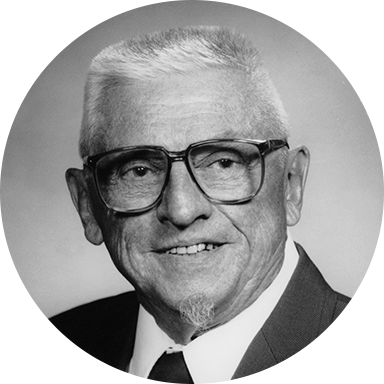
Edmund J. Siennicki

Edmund J. Siennicki's path to composition began in an unforgettable moment: at age 12, he met the legendary pianist Ignacy Jan Paderewski, a conversation that shaped his artistic direction for life. Born in Cleveland in 1920, Siennicki pursued formal training at Kent State University, where he earned his Bachelor's degree and composed Fight on for KSU, a piece still performed at university football games. He continued his studies at Teachers College, Columbia University, working in composition with Herbert Elwell, electronic music with Sergio Barroso, and consulting with Vincent Persichetti.

Siennicki's career unfolded across multiple roles: as a performing musician on bassoon and piano, as an educator in Cleveland junior high schools and at both Michigan and Kent State universities, and as a prolific composer with roughly 200 published works. His compositions have earned prizes in National School Orchestra contests and recognition from ASCAP, and he served twice as composer in residence at the MacDowell Colony. His arrangements and original works remain active in school and professional settings, and he continues composing and conducting clinics well into his later years.

Why we love this

Siennicki designed this series with a clear understanding of what student string quartets need: pieces that develop technical precision without sacrificing musicality, and arrangements substantial enough to engage audiences at festivals and competitions. The Highland/Etling partnership has produced a catalogue that balances pedagogical progression with rewarding performance material, giving young players genuine musical weight to sink their teeth into.

What to expect

Siennicki's arrangements strike a balance between classical elegance and accessibility; the writing honors the source material while remaining playable by four dedicated musicians without requiring professional-level virtuosity.

Who it's for

Intermediate-level student string quartets preparing for contests, festivals, or formal recitals. This score works best for players who have solid intonation skills and are ready to tackle ensemble coordination in a traditional chamber setting.

How to get the most out of it

  • Establish a steady tempo during the opening rehearsals and resist the urge to push ahead; the score's architecture only clicks into place when ensemble cohesion is rock solid.
  • Balance the first violin line with awareness of how often it carries the melody; young second violins and violas need clear cues about when they step forward to support harmonic interest.
  • Mark all bowings consistently across all four parts before the first full run-through to eliminate the confusion that arises when players interpret the same passage differently.

How to use it

Feature this as a complete four-movement or multi-piece suite at a string festival or youth orchestra concert, or select individual movements to build an evening of chamber music that spans multiple styles and periods. The substantial page count makes it ideal for a focused rehearsal project spanning several weeks.

Skills your students will build

  • Secure intonation in sustained harmonic contexts
  • Independence of four-part textures and voice leading
  • Ensemble balance and dynamic control across mixed registers
  • Part-writing clarity in both lyrical and rhythmically active passages
  • Stylistic interpretation of classical and traditional arrangements

You May Also Like