
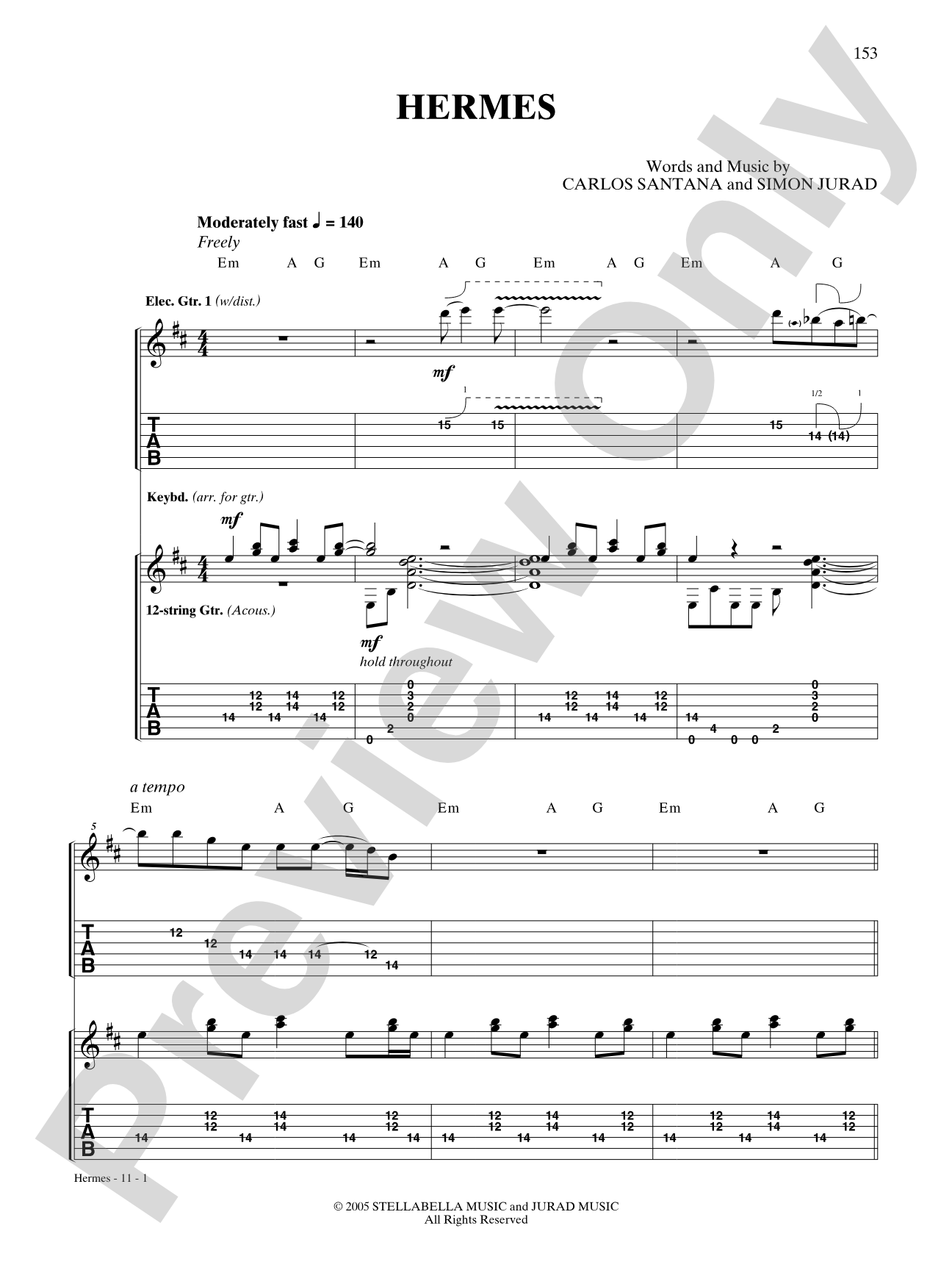
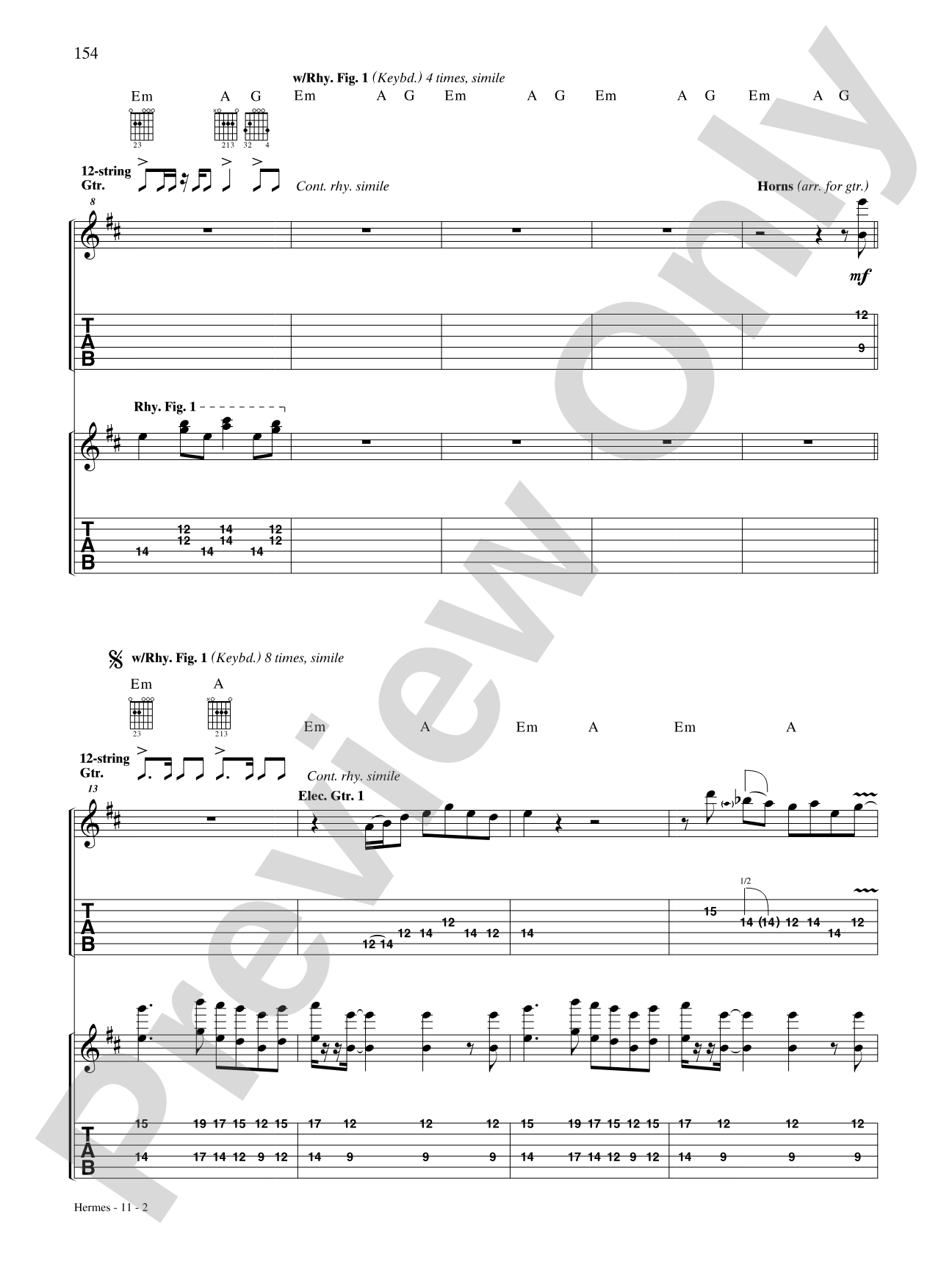
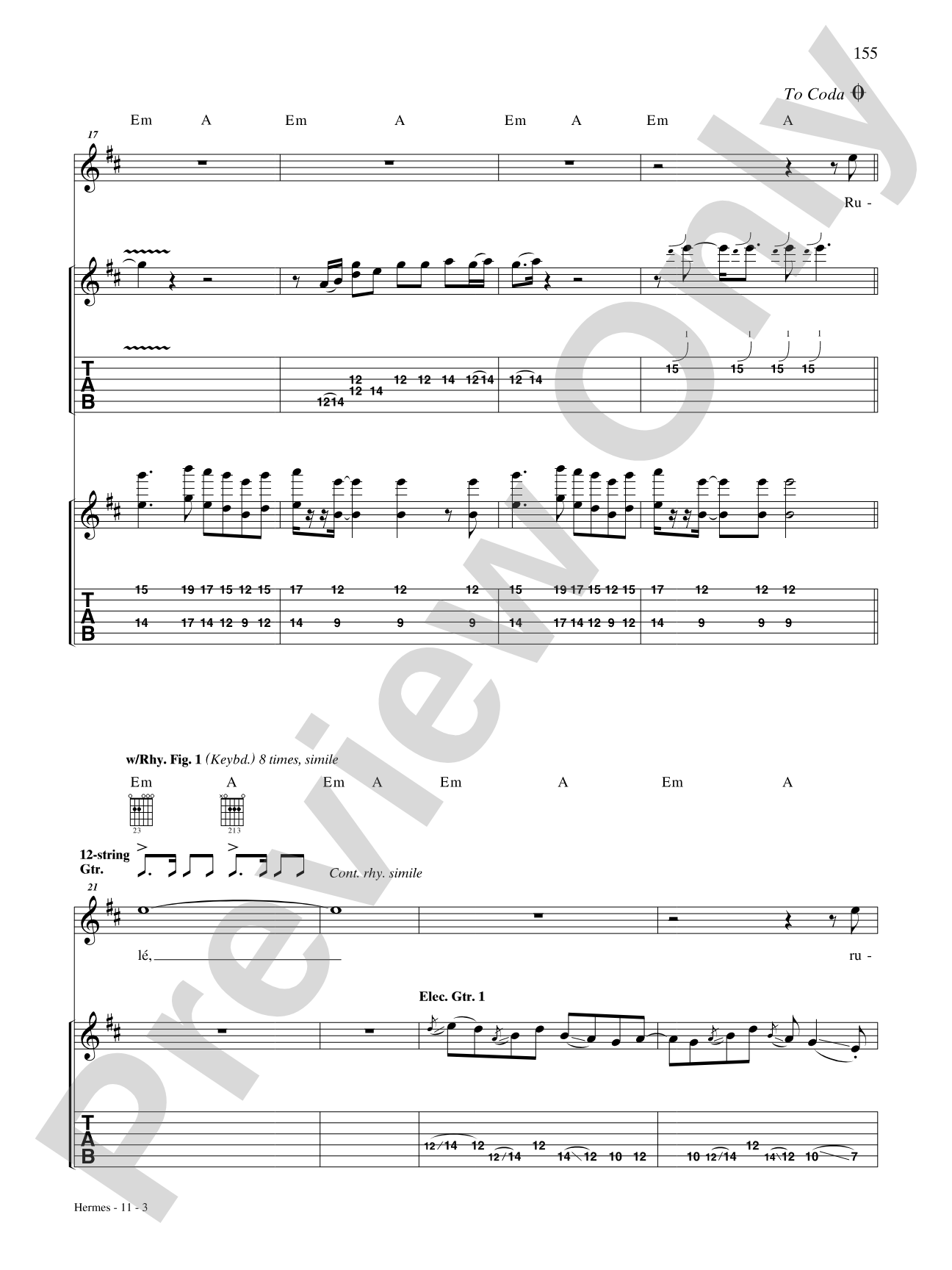

Hermes: Authentic Guitar TAB
Carlos Santana
Item: 00-PSG-000712
$9.99
One moment…
Related Items
Adouma: Authentic Guitar TAB |
$9.99
|
View | |
Aye, Aye, Aye: Authentic Guitar TAB |
$9.99
|
View | |
Chill Out (Things Gonna Change): Authentic Guitar TAB |
$5.99
|
View | |
I'm Feeling You: Authentic Guitar TAB |
$9.99
|
View | |
Novus: Authentic Guitar TAB |
$5.99
|
View | |
Put Your Lights On: Authentic Guitar TAB |
$9.99
|
View | |
Wishing It Was: Authentic Guitar TAB |
$9.99
|
View |
Description
This collector's edition covers great songs from the 3rd and 4th decades of Carlos Santana's amazing four-decade career (the '90s through 2006), covering the albums Milagro, Supernatural, Shaman, and All That I Am. All songs are faithfully transcribed in note-for-note guitar TAB. Titles: Adouma * Africa Bamba * Aye Aye Aye * Brown Skin Girl * The Calling * Chill Out * Con Santana * Corazón Espinado * El Farol * Foo Foo * El Fuego * The Game of Love * Hermes * I Don't Wanna Lose Your Love * I'm Feeling You * Just Feel Better * Life Is for Living * Love of My Life * Make Somebody Happy * Maria Maria * Migra * Novus * Put Your Lights On * Saja/Right On * Smooth * Somewhere in Heaven * Twisted * Victory Is Won * Wings of Grace * Wishing It Was * (Da Le) Yaleo * Your Touch.


Hermes: Authentic Guitar TAB isn't in MakeMusic Cloud just yet...but it could be. Let us know you'd like to see it, and you'll help shape what comes next. In the meantime, start a free trial and dive into thousands of interactive titles your students can play along with today.
Request This Title
Tell us you want it.
Start Your Free Trial
Explore everything that's ready to play right now.
Sample Audio
No sample audio found.
Sample Video
No sample videos found.
Additional Details
Publisher:
Alfred Music
Page Count:
360
SKU:
00-PSG-000712
More about this title
About the Artist: Santana
Carlos Santana built his career on the fusion of Latin rhythms, blues sensibility, and rock intensity, creating a signature sound that transcends genre boundaries. His work across four decades demonstrates sustained innovation and cultural impact, from his groundbreaking early albums through his Grammy-winning resurgence in the late 1990s, influencing generations of guitarists and bandleaders.
Why we love this
This collection captures the peak commercial and creative period of Santana's later career, when he was reimagining his sound with contemporary collaborators while staying rooted in his Latin-rock foundation. Every transcription is note-for-note, which means serious guitar students can study exactly how Santana voices chords, uses dynamics across the fretboard, and layers percussion elements into guitar arrangements. Programming material from Supernatural or Shaman gives your ensemble or studio students access to songs with genuine radio familiarity and sophisticated harmonic language.
What to expect
Groove-heavy and rhythmically sophisticated, with melodies that sit somewhere between blues vocabulary and Spanish-language phrasing. The music pulses with infectious percussion arrangements that make you want to move, yet the harmonic language is refined enough to reward close listening and repeated study.
Who it's for
Advanced and intermediate guitar students who want to master contemporary Latin-rock fusion and understand how Santana constructs solos over modern production. Guitar teachers building repertoire for ensemble work, recitals, or students exploring genres beyond classical or traditional rock. Musicians interested in studying how Latin percussion traditions integrate into rock arrangement and guitar voice leading.
How to get the most out of it
- Study the percussion and horn voicings in the original recordings before finalizing your interpretation; Santana's guitar parts are often woven into a dense rhythmic texture, and understanding that context shapes phrasing and dynamics.
- Pay attention to Santana's use of effects and space in the TAB notation; his signature tone relies on sustain, reverb, and deliberate silence as much as notes on the fretboard.
- Lock into the clave and tumbao patterns underlying each track; these foundational rhythms will inform your groove and help you understand why certain melodic figures land where they do.
- Balance the blues-based pentatonic language with the Latin harmonic movement; songs like Smooth require you to navigate between major seven chords and modal interchange while maintaining rock conviction.
How to use it
Feature these transcriptions in a Latin-fusion unit or contemporary music residency, where students can compare how different eras of Santana's writing reflect changing production styles and collaborative influences. Use individual songs as standalone recital or ensemble repertoire; tracks like Maria Maria or The Game of Love work equally well as guitar features or as foundation material for small group arrangements. Pair these with listening guides to show students how transcription accuracy helps you capture the nuances that separate iconic recordings from generic interpretations.
Skills your students will build
- Reading and executing complex Latin rhythmic figures in TAB notation
- Understanding clave patterns and their relationship to melodic phrasing
- Voicing major seventh and suspended chords in a Latin-rock context
- Translating studio effects and dynamics notation into performance choices
- Integrating blues pentatonic soloing with modal harmonic movement
- Recognizing and performing syncopated melodic lines over straightforward chord progressions