

Heleluyan: TB Choral Octavo
Traditional Muscogee (Creek) Song / arr. Douglas E. Wagner
Item: 00-PO-0007509
$2.20
Minimum order quantity: 20 copies
Pickup currently not available
Related Items
Heleluyan: String Orchestra Conductor Score & Parts |
$60.00
|
View | |
Heleluyan: 2-Part Choral Octavo |
$2.20
|
View | |
Heleluyan: PianoTrax Digital Audio Download |
$9.99
|
View | |
Heleluyan: String Orchestra Conductor Score & Parts |
$60.00
|
View | |
Heleluyan: HybridNOW String Orchestra Conductor Score & Parts |
$60.00
|
View | |
Heleluyan: String Orchestra Conductor Score |
$12.00
|
View | |
Heleluyan: TB Choral Octavo |
$2.20
|
View | |
Heleluyan: 2-Part Choral Octavo |
$2.20
|
View |
Description
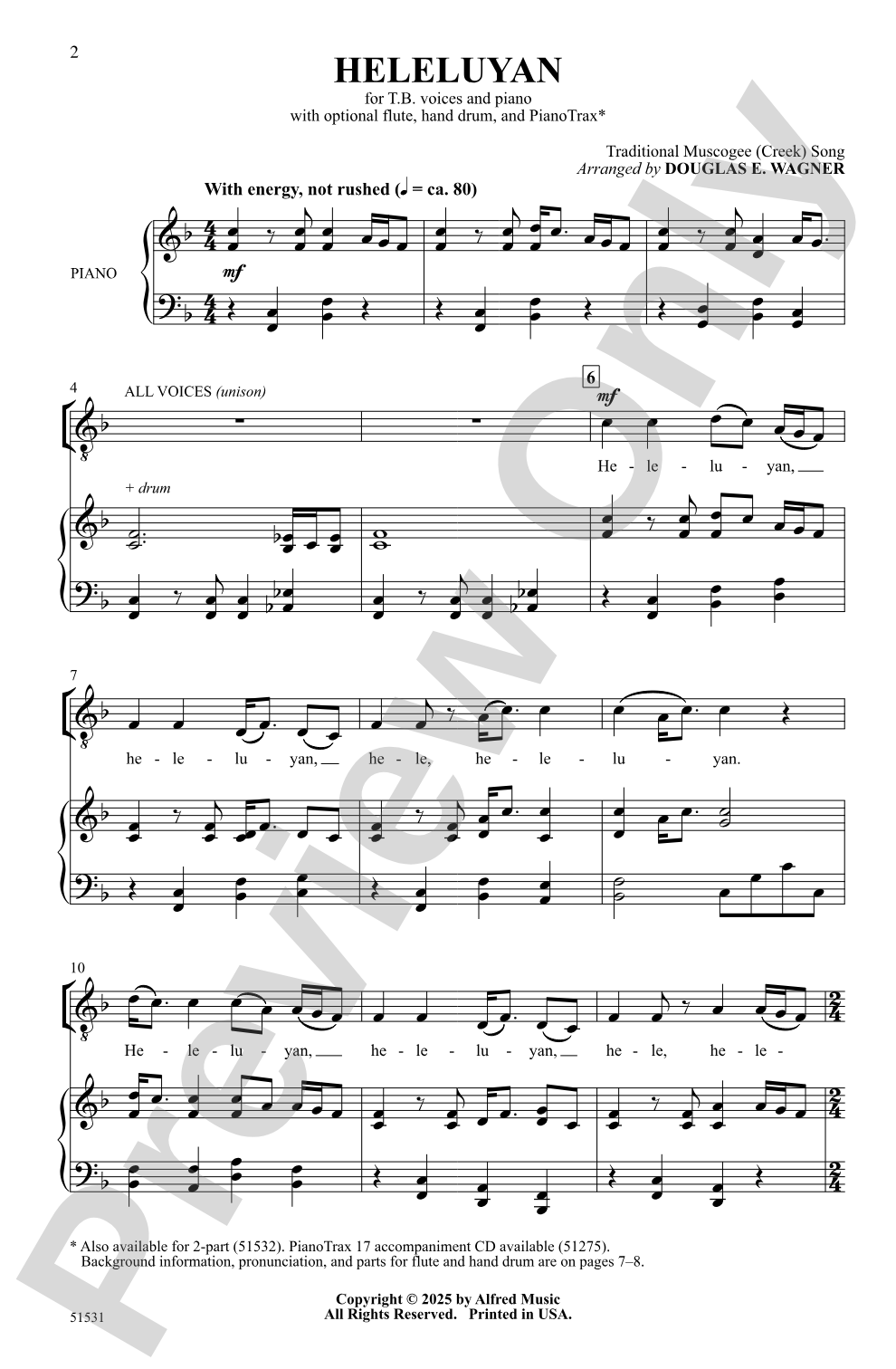
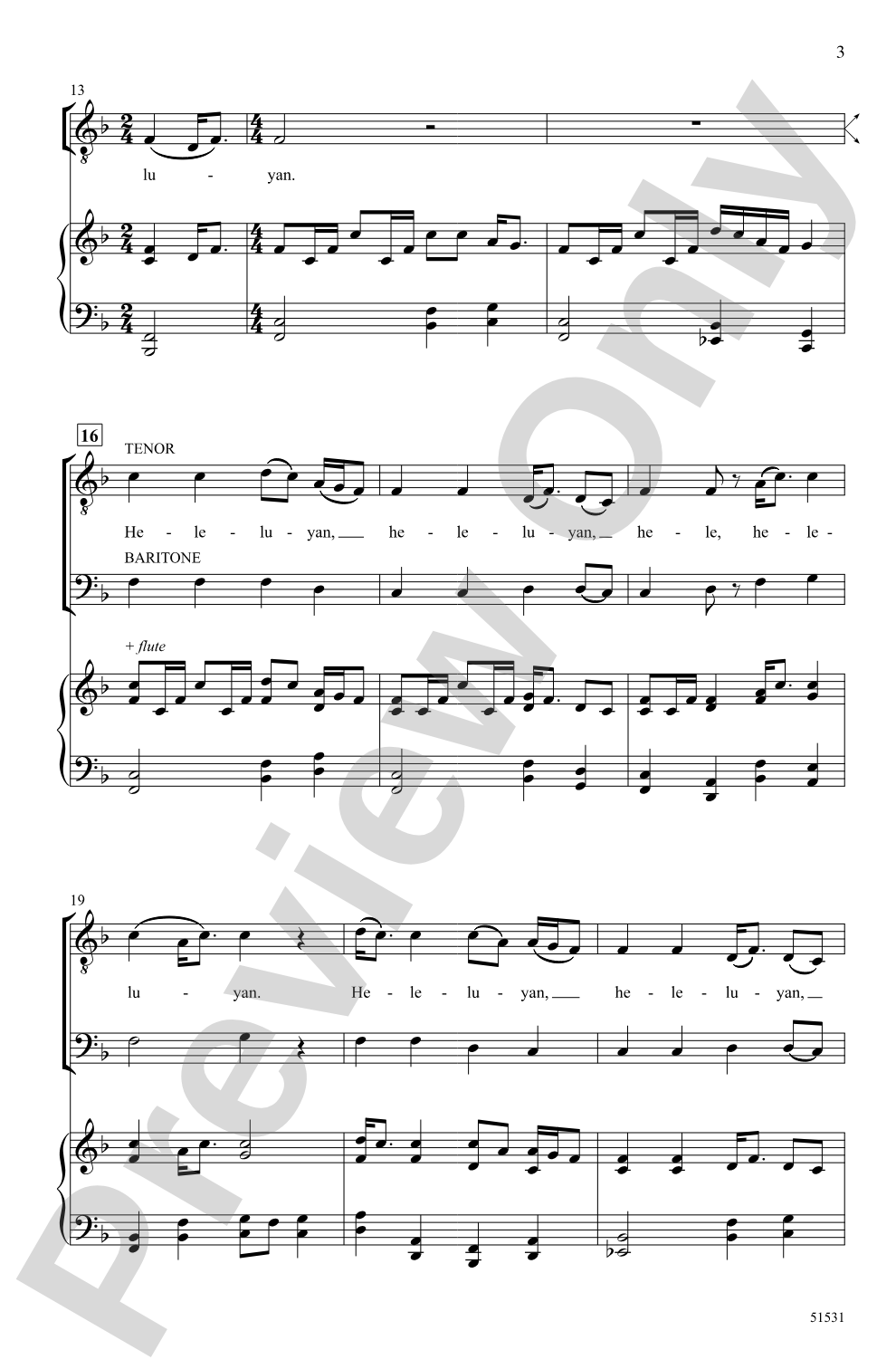
With only one Muscogee word of text, this unique arrangement of the traditional Creek song is easy to learn and assemble. Everyone sings a pair of 8-bar pentatonic melodies that later combine into a textured 2-part tapestry for treble or changed voices. Add the optional flute and hand drum instrumentation (parts included), characteristic of the music of indigenous Americans.


Heleluyan: TB Choral Octavo isn't in MakeMusic Cloud just yet...but it could be. Let us know you'd like to see it, and you'll help shape what comes next. In the meantime, start a free trial and dive into thousands of interactive titles your students can play along with today.
Request This Title
Tell us you want it.
Start Your Free Trial
Explore everything that's ready to play right now.
Sample Audio
1
Audio File
--:--
0:00
0:00
Sample Video
Additional Details
Series:
Alfred Choral Designs
Publisher:
Alfred Music
Page Count:
8
SKU:
00-PO-0007509
More about this title
About the Arranger: Douglas E. Wagner

Douglas E. Wagner was born in Chicago and earned both undergraduate and graduate degrees in music from Butler University. He spent three decades as a high school music director and administrator before dedicating himself fully to composition and arrangement.
Since 1973, Wagner has published over 3,500 compositions across choir, band, orchestra, handbells, organ, piano, and voice. His works have reached audiences in concert halls and broadcast media throughout the United States and internationally, with more than seventeen million copies of his music in circulation. He currently lives in Indianapolis with his wife, Sandy.
Why we love this
Wagner respects the source material while making it genuinely accessible. The pentatonic melodies are intuitive enough that singers grasp them quickly, yet the layering of two simultaneous 8-bar phrases creates real harmonic interest without requiring extensive rehearsal time. The optional instrumentation transforms a simple arrangement into something that honors indigenous American musical traditions.
What to expect
The piece unfolds with quiet momentum, building texture as the two pentatonic melodies find each other. There's something both intimate and communal about singing a single word across harmonizing voices, creating space for the music itself to carry meaning. Optional hand drum and flute reinforce that sense of traditional roots meeting a contemporary choral setting.
Who it's for
This arrangement works for middle school through high school choirs, particularly ensembles with changing voices or mixed treble sections. It's ideal for programs seeking concert repertoire that introduces students to indigenous American music with cultural respect and minimal linguistic barrier.
How to get the most out of it
- Teach each 8-bar melody as a discrete unit before combining them; the pentatonic framework means both voices can learn independently without harmonic confusion.
- If including flute and hand drum parts, bring those musicians into sectional rehearsals early so singers hear how the instrumental colors interact with their lines.
- Keep the text (one Muscogee word) clearly pronounced; it becomes a focal point when the parts interweave, and clarity makes the cultural authenticity resonate.
How to use it
Place this in a concert that explores world music or cultural traditions, pairing it with other folk arrangements or contemporary spirituals. It also serves as an engaging festival selection due to its concert appeal and the practical advantages of quick preparation. The short length and accessible harmony make it effective as an opener or a moment of contrast within a longer program.
Skills your students will build
- Reading and singing pentatonic melodies
- Part-singing in two-part texture without major/minor harmonic complexity
- Blending voices to create a unified sound across independent melodic lines
- Pronouncing Muscogee language accurately
- Understanding indigenous American musical traditions and cultural context