

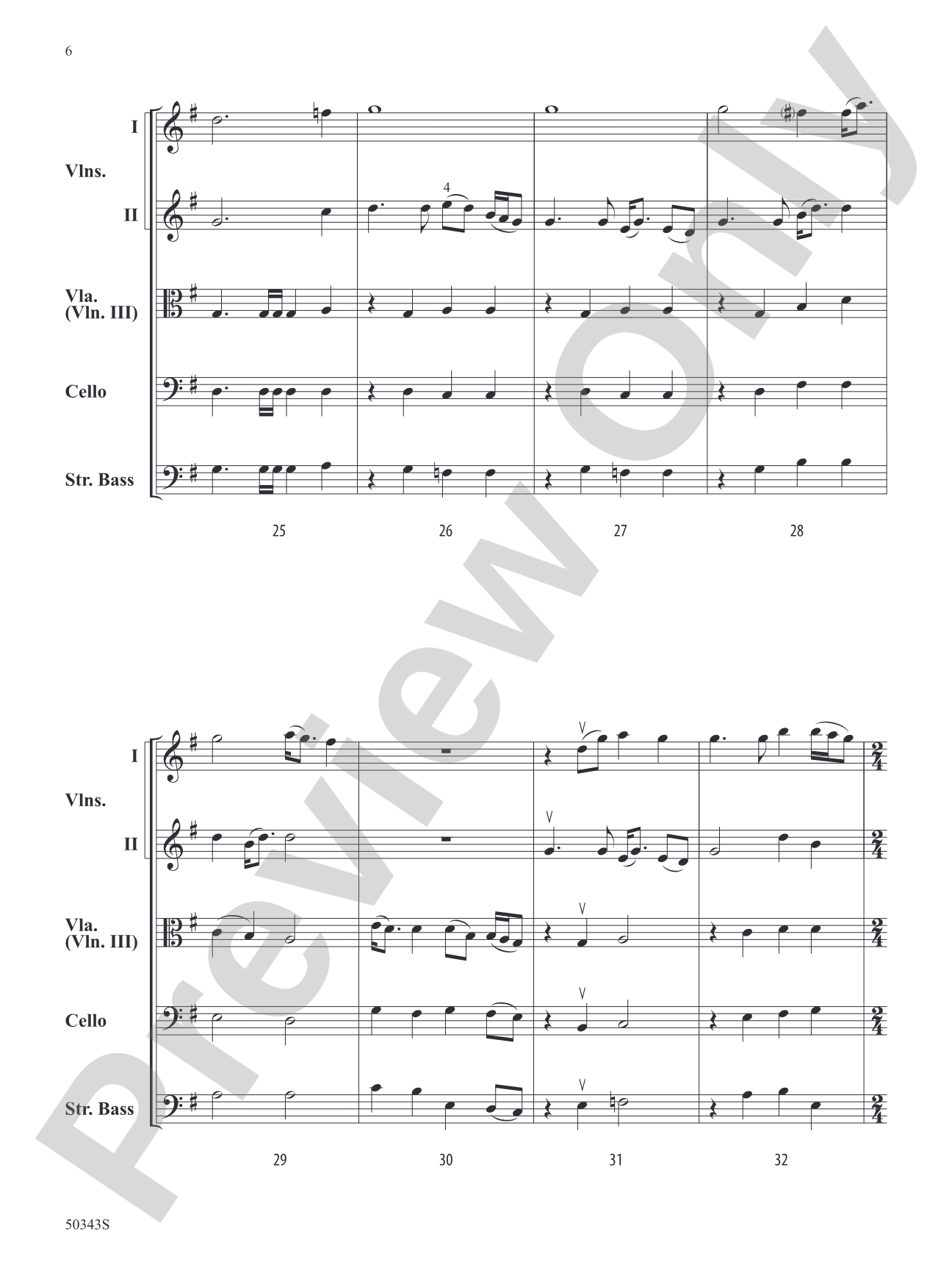
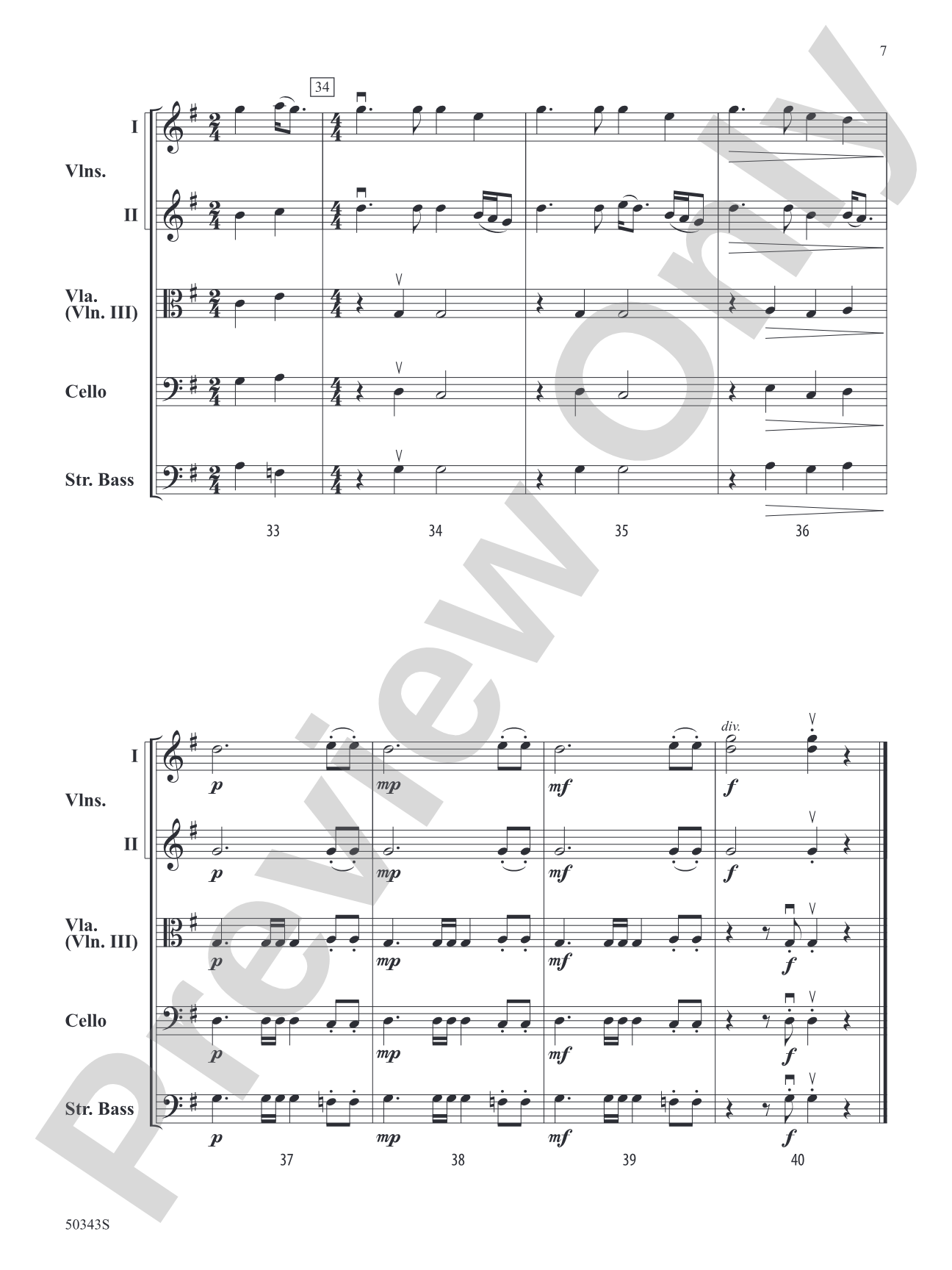

Heleluyan: String Orchestra Conductor Score & Parts
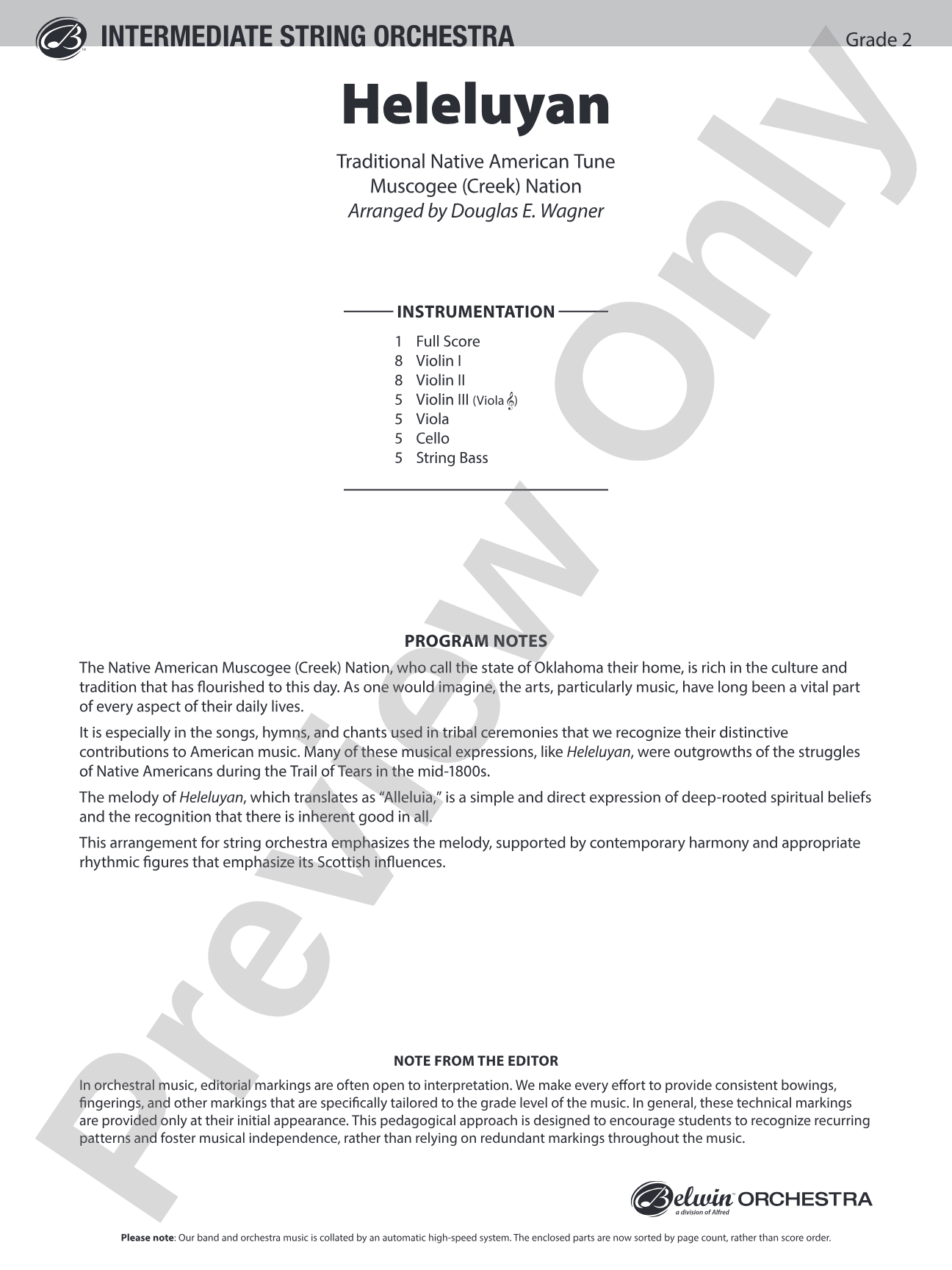
Traditional Native American Tune, Muscogee (Creek) Nation / arr. Douglas E. Wagner
Grade: 2
Item: 00-PK-0009528
$60.00
Pickup currently not available
Buy Extra Parts (Digital PDF Download)
| Product | Price | Quantity |
|---|---|---|
| Heleluyan: Score | $12.00 | |
| Heleluyan: 1st Violin | $3.00 | |
| Heleluyan: 2nd Violin | $3.00 | |
| Heleluyan: 3rd Violin (Viola [TC]) | $3.00 | |
| Heleluyan: Viola | $3.00 | |
| Heleluyan: Cello | $3.00 | |
| Heleluyan: String Bass | $3.00 |
Parts Added to Cart!
Related Items
Heleluyan: TB Choral Octavo |
$2.20
|
View | |
Heleluyan: 2-Part Choral Octavo |
$2.20
|
View | |
Heleluyan: PianoTrax Digital Audio Download |
$9.99
|
View | |
Heleluyan: String Orchestra Conductor Score & Parts |
$60.00
|
View | |
Heleluyan: HybridNOW String Orchestra Conductor Score & Parts |
$60.00
|
View | |
Heleluyan: String Orchestra Conductor Score |
$12.00
|
View | |
Heleluyan: TB Choral Octavo |
$2.20
|
View | |
Heleluyan: 2-Part Choral Octavo |
$2.20
|
View |
Description
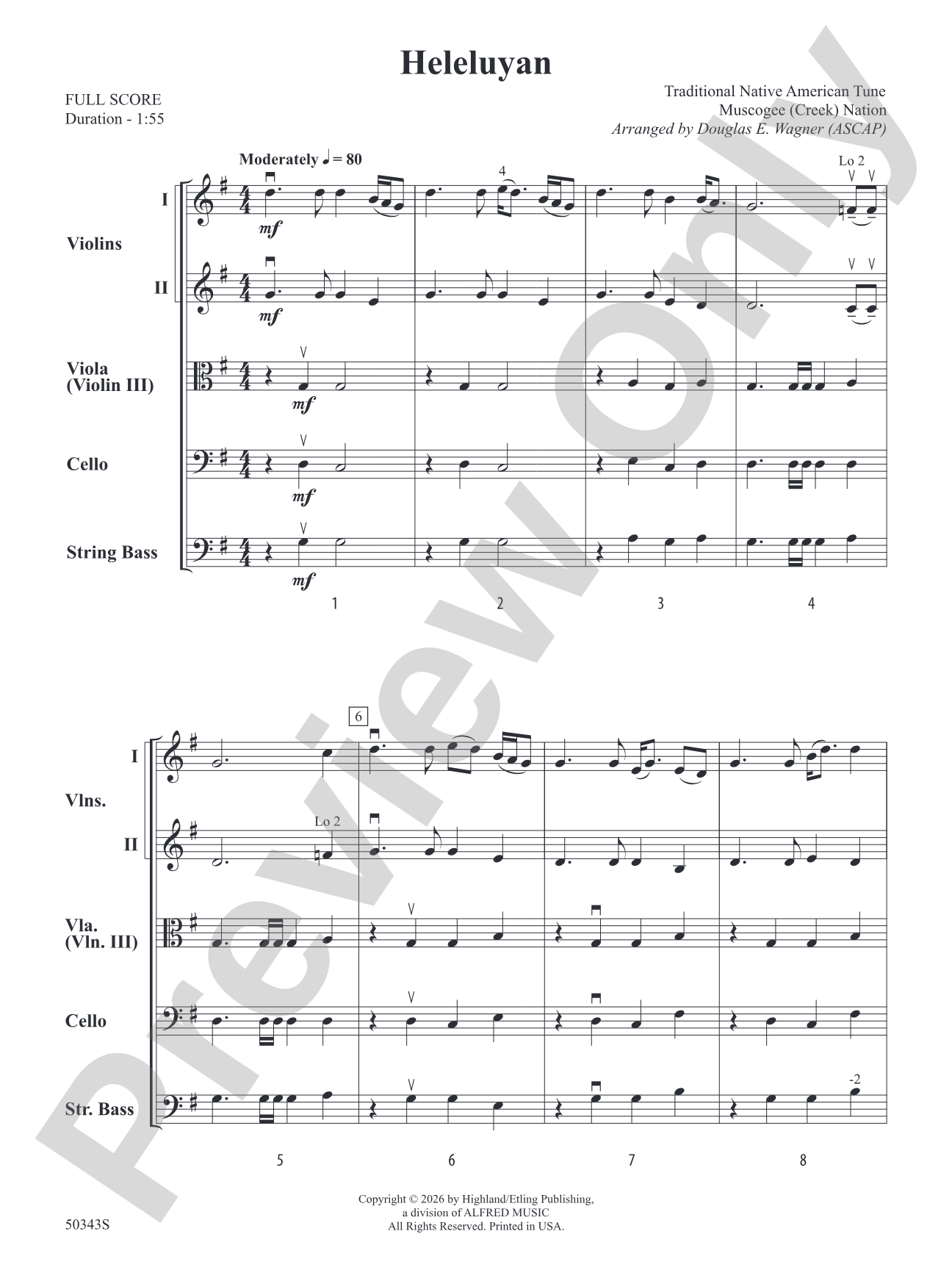
Heleluyan is a powerful Muscogee (Creek) Nation hymn, born from the strength found during the Trail of Tears. Translating to "Alleluia," its simple melody expresses deep spirituality and the inherent good in all. This arrangement, by Douglas E. Wagner, for string orchestra features contemporary harmony and rhythmic figures, highlighting its rich cultural and Scottish influences.


Heleluyan: String Orchestra Conductor Score & Parts isn't in MakeMusic Cloud just yet...but it could be. Let us know you'd like to see it, and you'll help shape what comes next. In the meantime, start a free trial and dive into thousands of interactive titles your students can play along with today.
Request This Title
Tell us you want it.
Start Your Free Trial
Explore everything that's ready to play right now.
Sample Audio
1
Audio File
--:--
0:00
0:00
Sample Video
Additional Details
Series:
Belwin Intermediate String Orchestra
Publisher:
Alfred Music
SKU:
00-PK-0009528
More about this title
About the Arranger: Douglas E. Wagner

Douglas E. Wagner brings three decades of high school music teaching and administrative experience to his prolific composing and arranging career. Based in Indianapolis, Indiana, Wagner holds degrees from Butler University and has established himself as one of the most widely performed American composers of our time, with over 3,500 published works spanning choral, band, orchestral, handbell, organ, piano, and vocal genres.
Why we love this
Wagner's arrangement honors the spiritual depth of this Muscogee hymn while making it entirely accessible to Grade 2 orchestras. The contemporary harmonic language and rhythmic interest transform a simple melody into something compelling for both players and audiences, and programming a work rooted in Native American cultural heritage brings necessary representation to your concert calendar.
What to expect
The piece resonates with quiet dignity and spiritual depth, its simple melody grounded in rich harmonic support that acknowledges both Scottish and contemporary musical traditions. Playing it summons a sense of resilience and affirmation, the kind of music that reminds students why they play.
Who it's for
String orchestras at the Grade 2 level looking for repertoire that combines accessibility with cultural significance and musical substance. Directors programming diverse, meaningful literature will find this arrangement both educationally sound and concert-ready.
How to get the most out of it
- Allow the melody to breathe at phrase endings; this hymn carries weight that shouldn't be rushed even at moderate tempos.
- Balance the string sections carefully so that supporting harmonies never overshadow the central line, maintaining the spiritual clarity of the tune.
- Attend to dynamic contrast throughout; the arrangement's contemporary elements gain impact when you shape each section with intention rather than playing evenly.
- Invest rehearsal time in the rhythmic figures that distinguish this from a straightforward hymn setting; precision here elevates the entire performance.
How to use it
Pair this with other culturally significant works to create a thematic concert section, or feature it as a centerpiece that demonstrates your orchestra's musicality and versatility across genres. Its moderate length and Grade 2 accessibility make it ideal for festivals, community concerts, or educational performances where cultural representation matters.
Skills your students will build
- Sustaining long melodic lines with appropriate phrasing and breath control
- Reading and executing contemporary harmonic language within a tonal framework
- Balancing melody and accompaniment across string sections
- Responding to dynamic and expressive marking within a hymn-based structure