
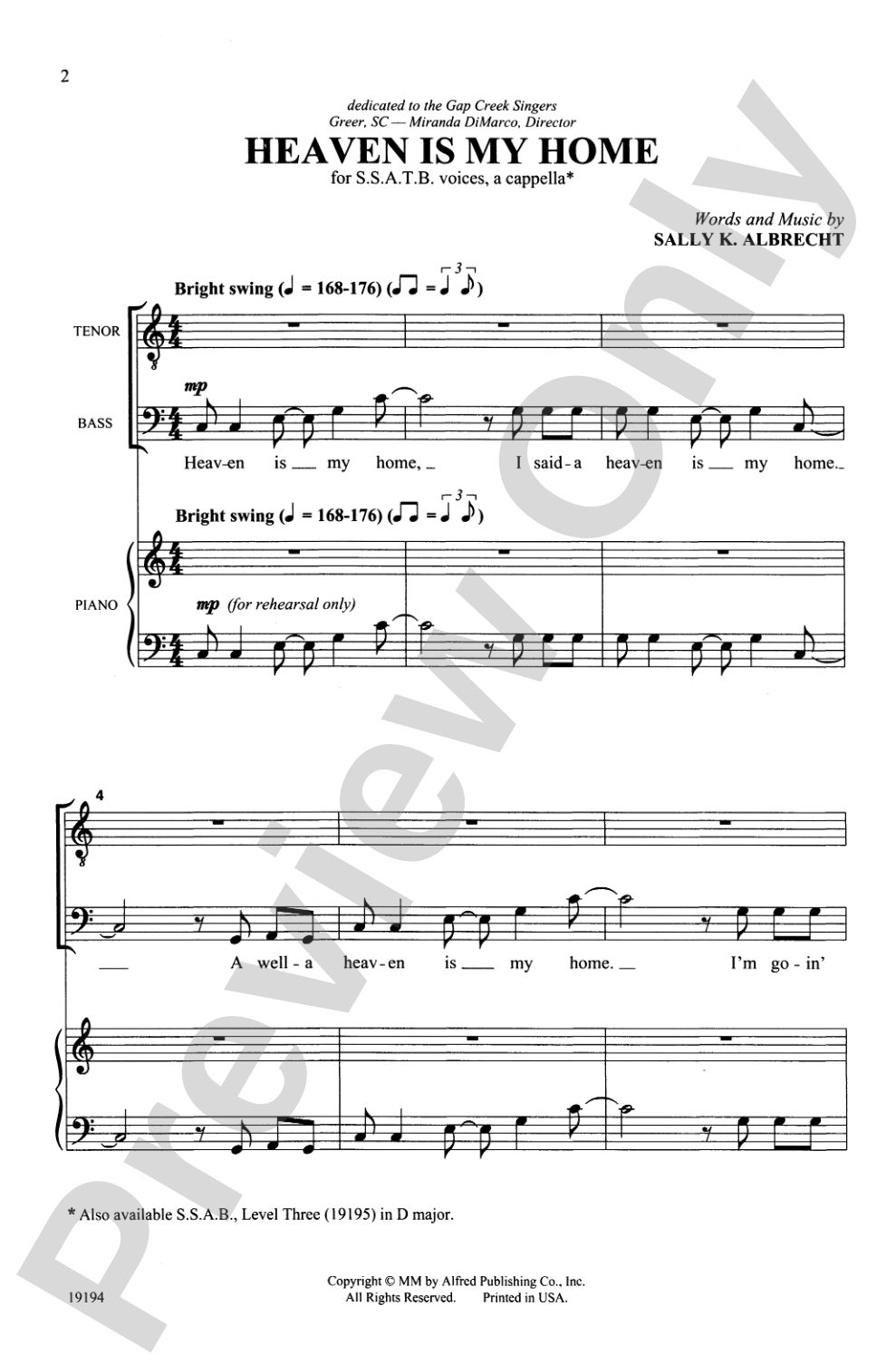
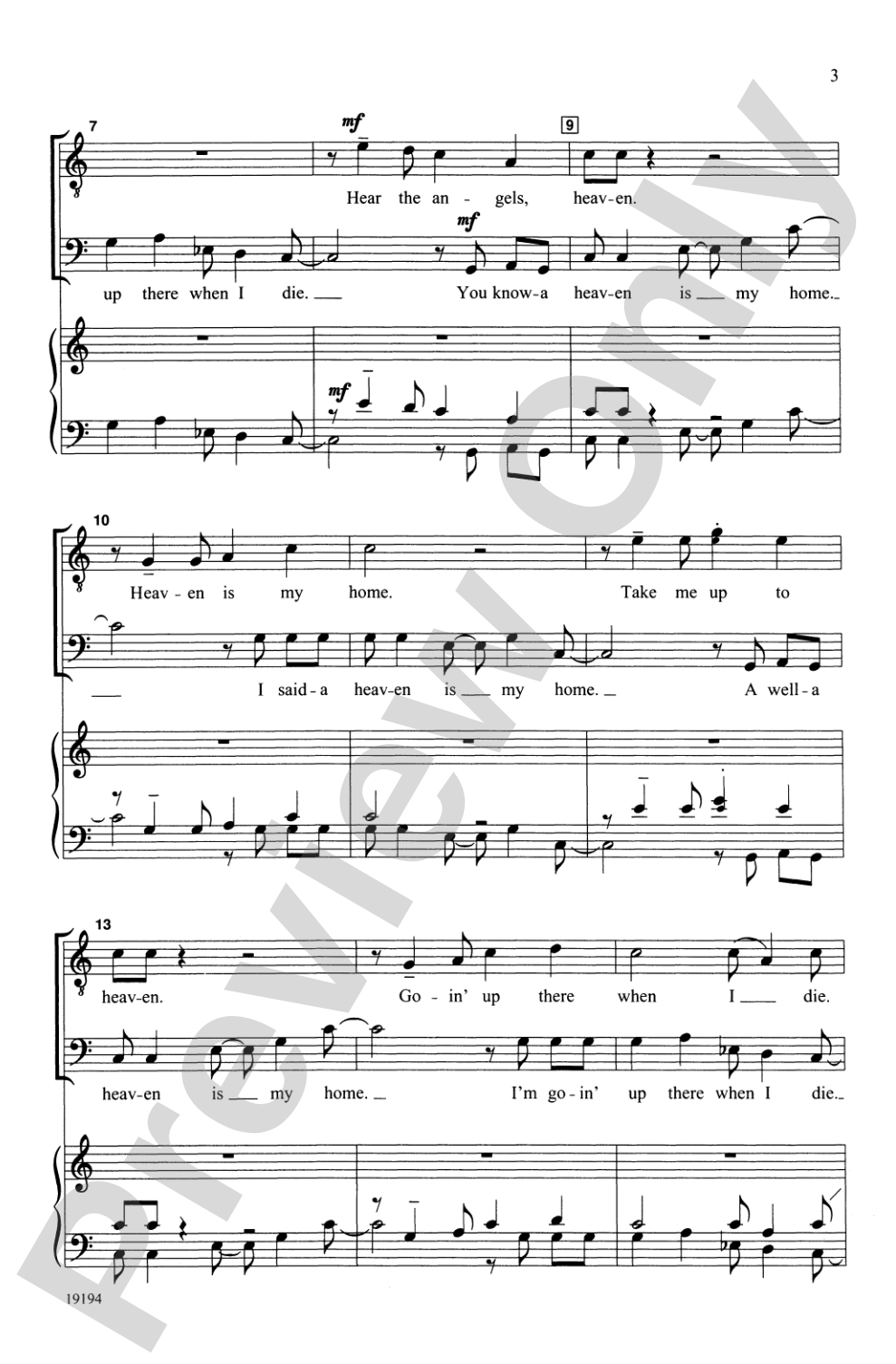

Heaven Is My Home: SSATB, a cappella Choral Octavo
Music by Sally K. Albrecht
Item: 00-PO-0004135
$2.25
Minimum order quantity: 20 copies
Pickup currently not available
Related Items
Heaven Is My Home: SSATB, a cappella Choral Octavo |
$2.25
|
View |
Description
Sally Albrecht has created this swinging, original spiritual in editions for SATB and SSAB for mixed groups of all ages. The basses open with the rhythmic melody and the other voices join in turn. Includes a medium-range solo for one female and one male. Independent vocal writing makes it exciting for singers and audiences alike. It's sure to impress the judges at contests and adjudications. Consider it for festivals, too.


Heaven Is My Home: SSATB, a cappella Choral Octavo isn't in MakeMusic Cloud just yet...but it could be. Let us know you'd like to see it, and you'll help shape what comes next. In the meantime, start a free trial and dive into thousands of interactive titles your students can play along with today.
Request This Title
Tell us you want it.
Start Your Free Trial
Explore everything that's ready to play right now.
Sample Audio
1
Audio File
--:--
0:00
0:00
Sample Video
No sample videos found.
Additional Details
Series:
Alfred Archive Edition: Alfred Choral Designs
Publisher:
Alfred Music
Page Count:
12
SKU:
00-PO-0004135
More about this title
About the Composer: Sally K. Albrecht
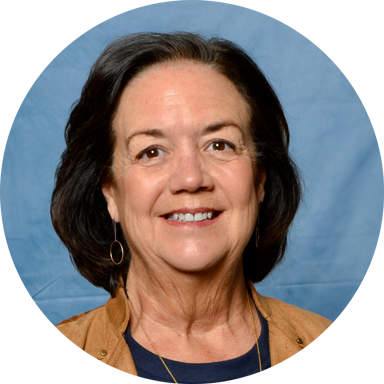
Sally K. Albrecht has shaped American choral music for over four decades as a composer, conductor, and clinician with particular expertise in choral movement. Since 1987, she has been an annual recipient of the ASCAP Special Music Award, and her catalog now includes more than 600 choral publications alongside 75 larger works for stage and classroom. Her conducting has taken her to honor choir events at major venues including Lincoln Center, Carnegie Hall, and The Kennedy Center, and she spent over 30 years leading choral and vocal publications programs at two of the country's largest educational music publishers, including a long tenure at Alfred Music.
Albrecht holds degrees from Rollins College (B.A. in Music and Theater, 1976), the University of Miami (M.A. in Drama, 1977; M.M. in Accompanying, 1979), and has taught at Oakland University, Jersey City State College, and Meredith College. In 2021, she received the Distinguished Alumna Award from both the University of Miami Frost School of Music and Rollins College, where she serves on the Board of Trustees. She is married to composer and arranger Jay Althouse and lives in Wake Forest, North Carolina.
Why we love this
Albrecht's writing here captures the rhythmic vitality of spiritual traditions while giving every voice a genuine musical moment to shine. The staggered entry of voices creates natural momentum and keeps listeners engaged from the first note, and the inclusion of both a soprano and bass solo ensures your ensemble showcases multiple singers without awkward spotlight moments.
What to expect
The opening carries a conversational ease, with basses laying down the groove before the other voices join the conversation one by one. Once all the voices are in, the piece swings with the natural buoyancy of a spiritual, full of call-and-response energy and the kind of melodic warmth that makes audiences listen rather than just hear.
Who it's for
This piece works for any SATB choir looking for a concert or festival selection with genuine rhythmic swagger and accessible writing that still challenges singers musically. Mixed choirs of all ages and experience levels will find something to grab onto here, whether they're competing at a contest or preparing a worship service.
How to get the most out of it
- Let the bass section establish the rhythmic foundation confidently before bringing in the other voices. Their opening carries the character of the entire piece.
- Mark the transitions between sections clearly in rehearsal so singers understand how their entries build the texture, rather than feeling like they're piling on top of each other.
- Balance the solos carefully during rehearsals so they sit forward enough to be heard but remain integrated with the ensemble sound, not isolated.
- Bring out the independence in each voice part during warm-ups by having sections sing their lines separately and then layer them in, so singers feel the architecture beneath the swinging rhythm.
How to use it
Program this where you need something that bridges sacred repertoire and spiritual tradition without sounding like every other spiritual arrangement. The contest-ready craftsmanship makes it ideal for festivals and adjudications, but the accessibility and joy at its core means it works equally well in worship settings or pops concerts where you want to showcase your choir's rhythmic precision and independence.
Skills your students will build
- Entering at different times while maintaining rhythmic cohesion with the ensemble
- Balancing independent voice parts in a cappella texture
- Performing with rhythmic precision in a swinging style
- Sustaining lines while other voices carry the melodic motion
- Shaping solo singing within a choral context