

He Ain't Heavy, He's My Brother: SAB Choral Octavo
Arr. Jay Althouse
Item: 00-PO-0002070
$2.25
Minimum order quantity: 20 copies
Pickup currently not available
Related Items
He Ain't Heavy, He's My Brother: SATB Choral Octavo |
$2.25
|
View | |
He Ain't Heavy, He's My Brother: TBB Choral Octavo |
$2.25
|
View | |
He Ain't Heavy, He's My Brother: Choral SoundPax |
$20.00
|
View | |
He Ain't Heavy, He's My Brother: SATB Choral Octavo |
$2.25
|
View | |
He Ain't Heavy, He's My Brother: SAB Choral Octavo |
$2.25
|
View | |
He Ain't Heavy, He's My Brother: TBB Choral Octavo |
$2.25
|
View | |
He Ain't Heavy, He's My Brother: Choral Octavo SoundTrax CD |
$27.99
|
View |
Description
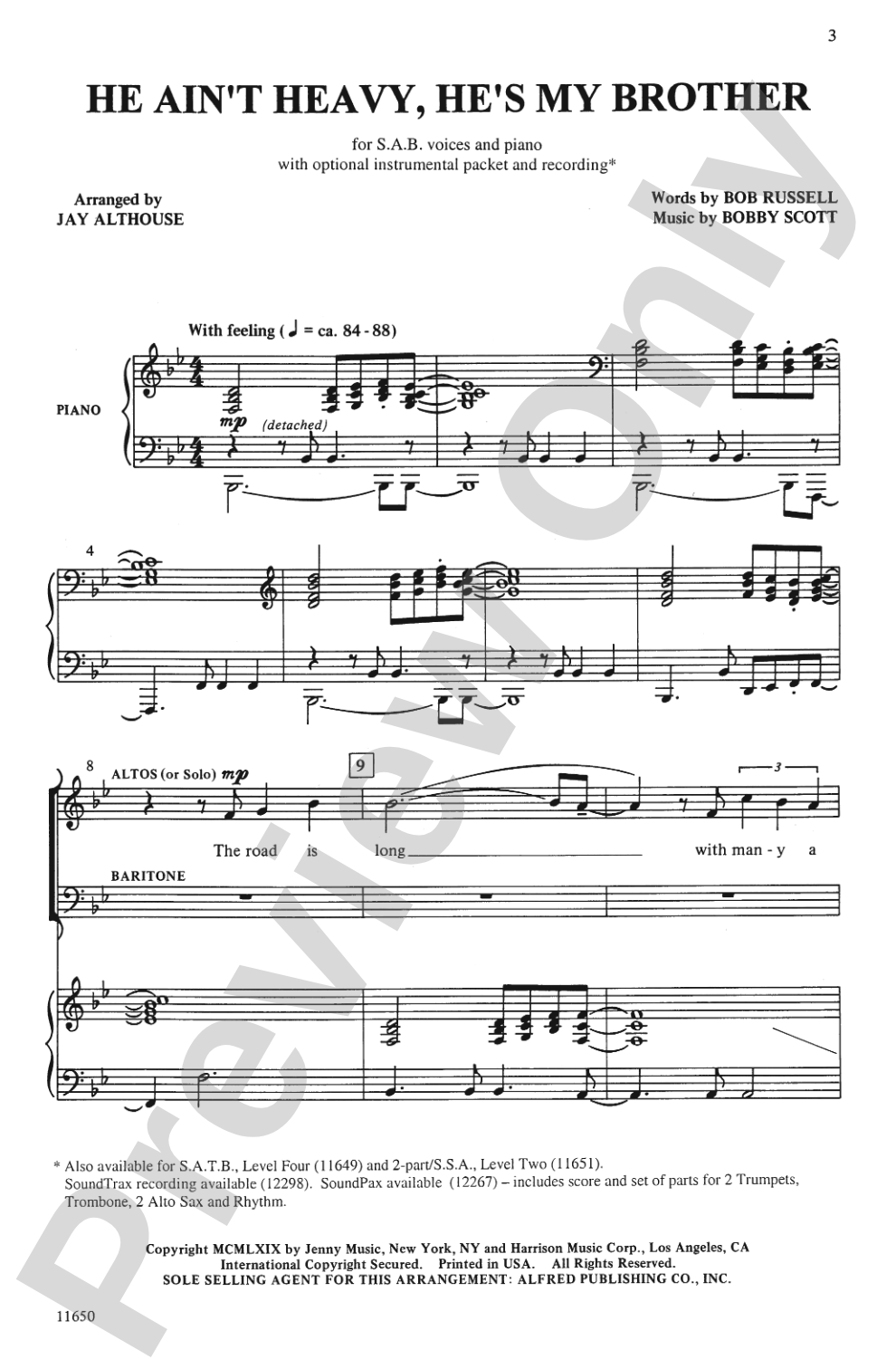
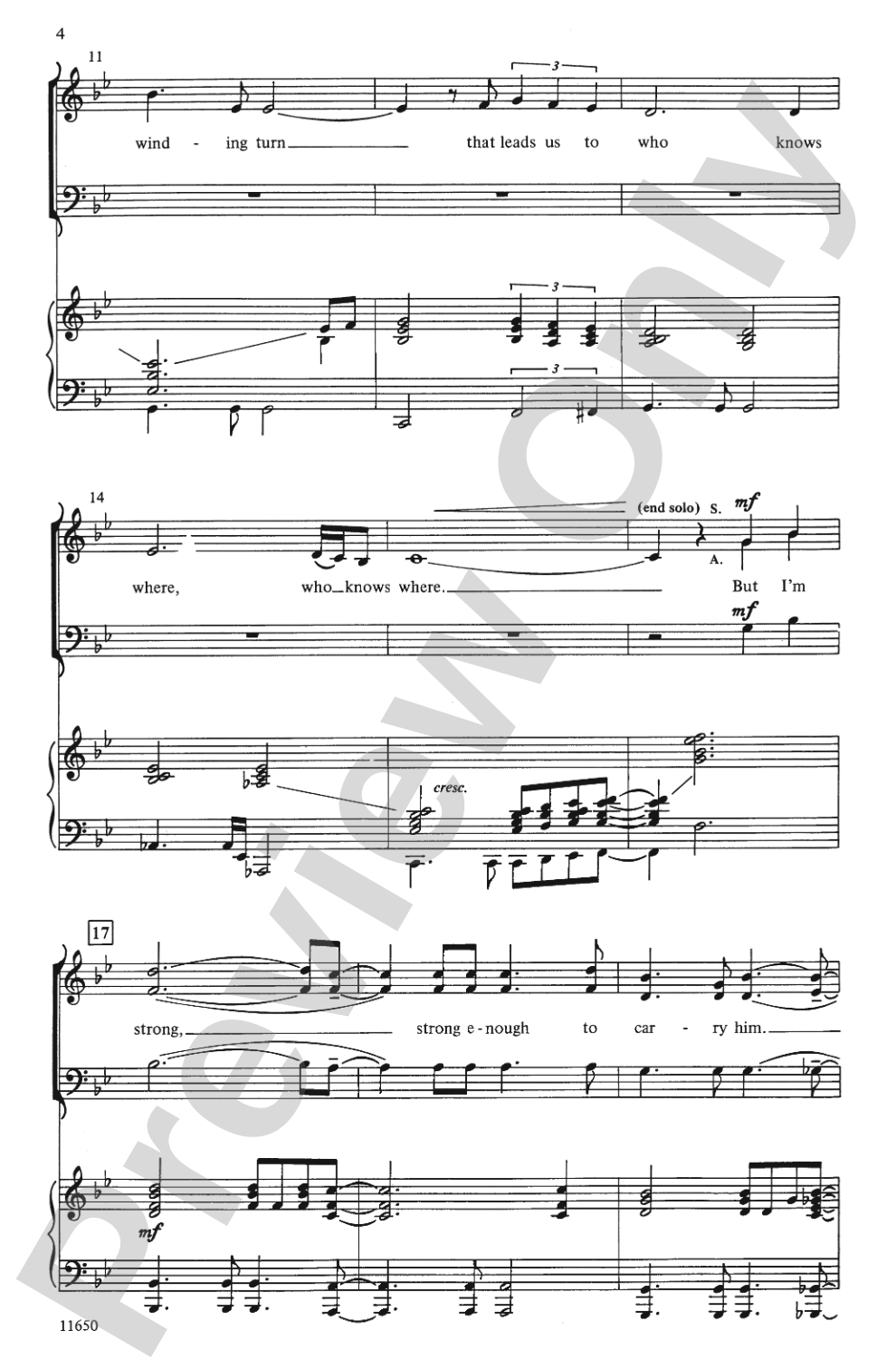
An exceptional song of brotherhood skillfully arranged by Jay Althouse. Opens with an optional alto solo and builds with strong choral writing, closing with a soft, final statement of the title. Use it as an inspirational piece the year 'round, including graduation. If you liked "Let There Be Peace On Earth," you'll love HE AIN'T HEAVY, HE IS MY BROTHER.


He Ain't Heavy, He's My Brother: SAB Choral Octavo isn't in MakeMusic Cloud just yet...but it could be. Let us know you'd like to see it, and you'll help shape what comes next. In the meantime, start a free trial and dive into thousands of interactive titles your students can play along with today.
Request This Title
Tell us you want it.
Start Your Free Trial
Explore everything that's ready to play right now.
Sample Audio
No sample audio found.
Sample Video
No sample videos found.
Additional Details
Series:
Alfred Archive Edition: Alfred Church Choral Series
Publisher:
Alfred Music
Page Count:
12
SKU:
00-PO-0002070
More about this title
About the Arranger: Jay Althouse

Jay Althouse earned his B.S. in Music Education and M.Ed. in Music from Indiana University of Pennsylvania, where he later received the Distinguished Alumni award. Early in his career, he spent eight years managing rights and licenses for a major educational music publisher and served on the Executive Board of the Music Publishers Association of America.
Althouse has established himself as a prolific composer with more than 800 choral works in circulation across all ability levels. His compositions are performed regularly throughout the English-speaking world, and he is a writer member of ASCAP with multiple Special Award recognitions. Beyond composing, he has co-authored children's musicals with Sally K. Albrecht, compiled influential vocal collections, and written foundational classroom resources including The Complete Choral Warm-up Book and Accent on Composers. He currently serves on the National Advisory Board of the Folk Art Society of America and resides in North Carolina.
Why we love this
Althouse brings refined choral craft to material his audiences already know and love. The arc from intimate alto solo through building ensemble texture to a hushed resolution gives directors real shape to conduct and singers real emotional work to do, making this far more than a straightforward pop arrangement.
What to expect
The piece balances optimism with genuine tenderness. Althouse's writing honors the song's message of unconditional care while building momentum that feels earned rather than forced, leaving singers and listeners with a quiet sense of affirmation.
Who it's for
This arrangement serves choirs ranging from high school through community and church ensembles. The SAB voicing makes it accessible without patronizing, and the familiar tune combined with strong harmonic writing appeals to singers seeking meaningful repertoire that resonates with audiences.
How to get the most out of it
- Shape the opening alto solo to stand clearly without overpowering; she sets the emotional tone for everything that follows, so encourage her to sing with vulnerability rather than volume.
- Let the dynamic build happen gradually through the middle section rather than jumping to full sound all at once. Each phrase should add something new without losing the song's essential warmth.
- Balance the final statement of the title carefully. Althouse writes it soft by design, so resist the urge to swell; instead, focus on clarity and directness in the reduced texture.
How to use it
Program this as a closing number for spring concerts, graduations, or any concert built around themes of community and connection. Its warm familiarity pairs well alongside both traditional spiritual arrangements and contemporary choral work, giving your program emotional bookends without requiring a full medley.
Skills your students will build
- Balancing solo and ensemble textures
- Dynamic control across a extended phrase arc
- Voice leading in three-part harmony
- Pacing a musical narrative from intimate to triumphant to reflective