
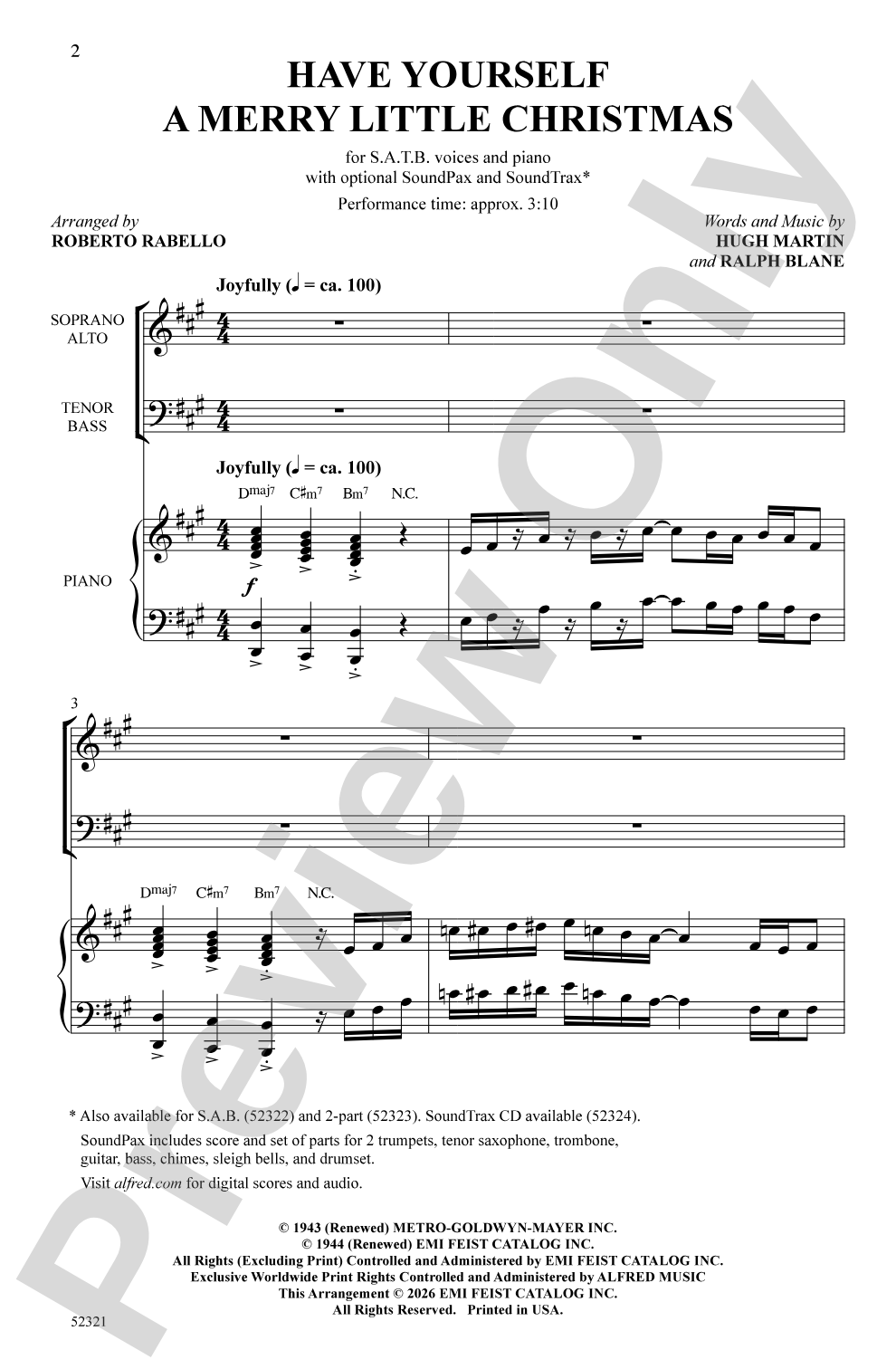

Have Yourself a Merry Little Christmas: SATB Choral Octavo
Words and music by Hugh Martin and Ralph Blane / arr. Roberto Rabello
Item: 00-PO-0007953
$2.65
Minimum order quantity: 20 copies
Pickup currently not available
Related Items
Have Yourself a Merry Little Christmas: SAB Choral Octavo |
$2.65
|
View | |
Have Yourself a Merry Little Christmas: 2-Part Choral Octavo |
$2.65
|
View | |
Have Yourself a Merry Little Christmas: Choral SoundPax Digital Download |
$40.00
|
View | |
Have Yourself a Merry Little Christmas: SATB Choral Octavo |
$2.65
|
View | |
Have Yourself a Merry Little Christmas: SAB Choral Octavo |
$2.65
|
View | |
Have Yourself a Merry Little Christmas: 2-Part Choral Octavo |
$2.65
|
View |
Description
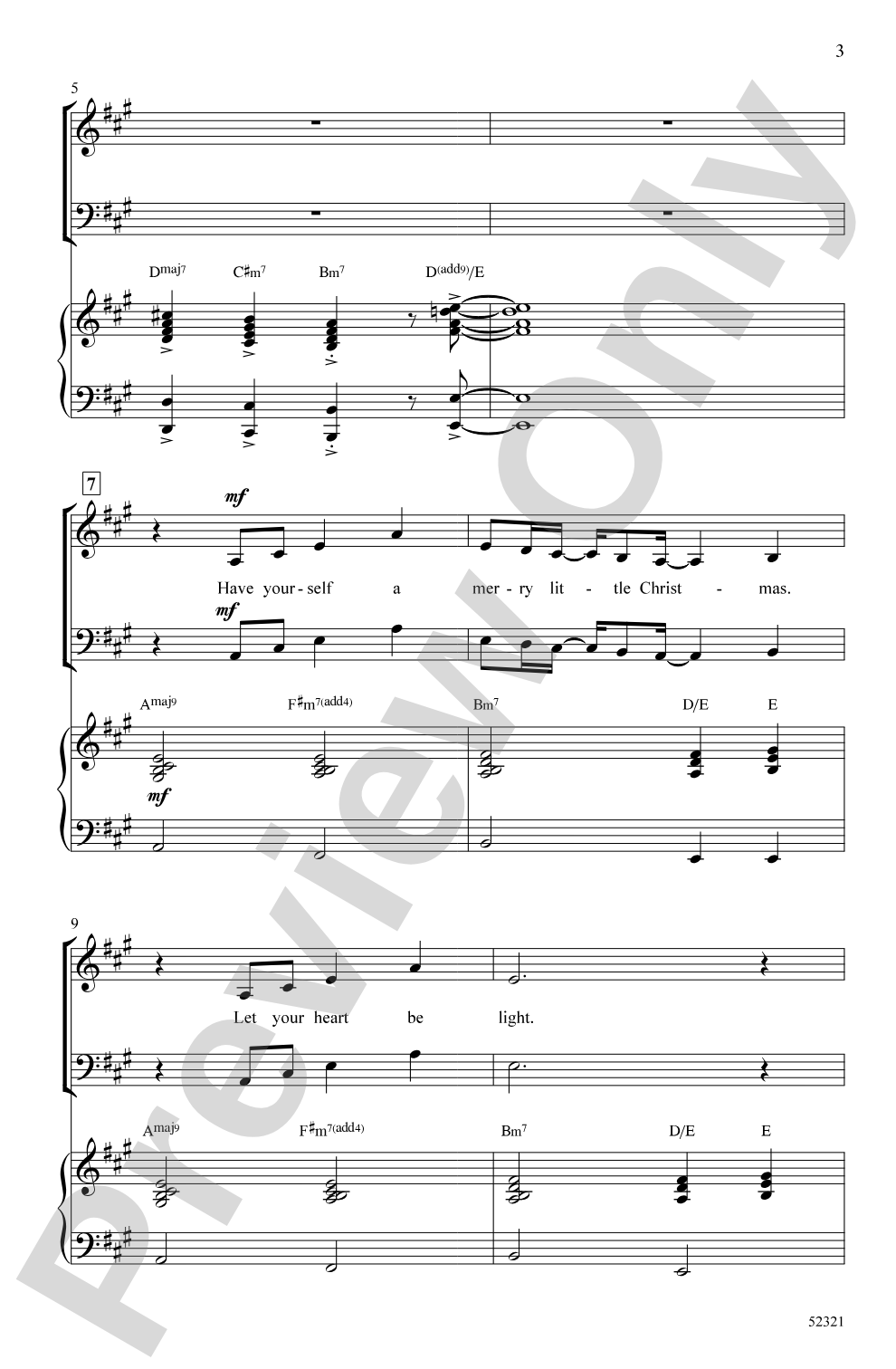
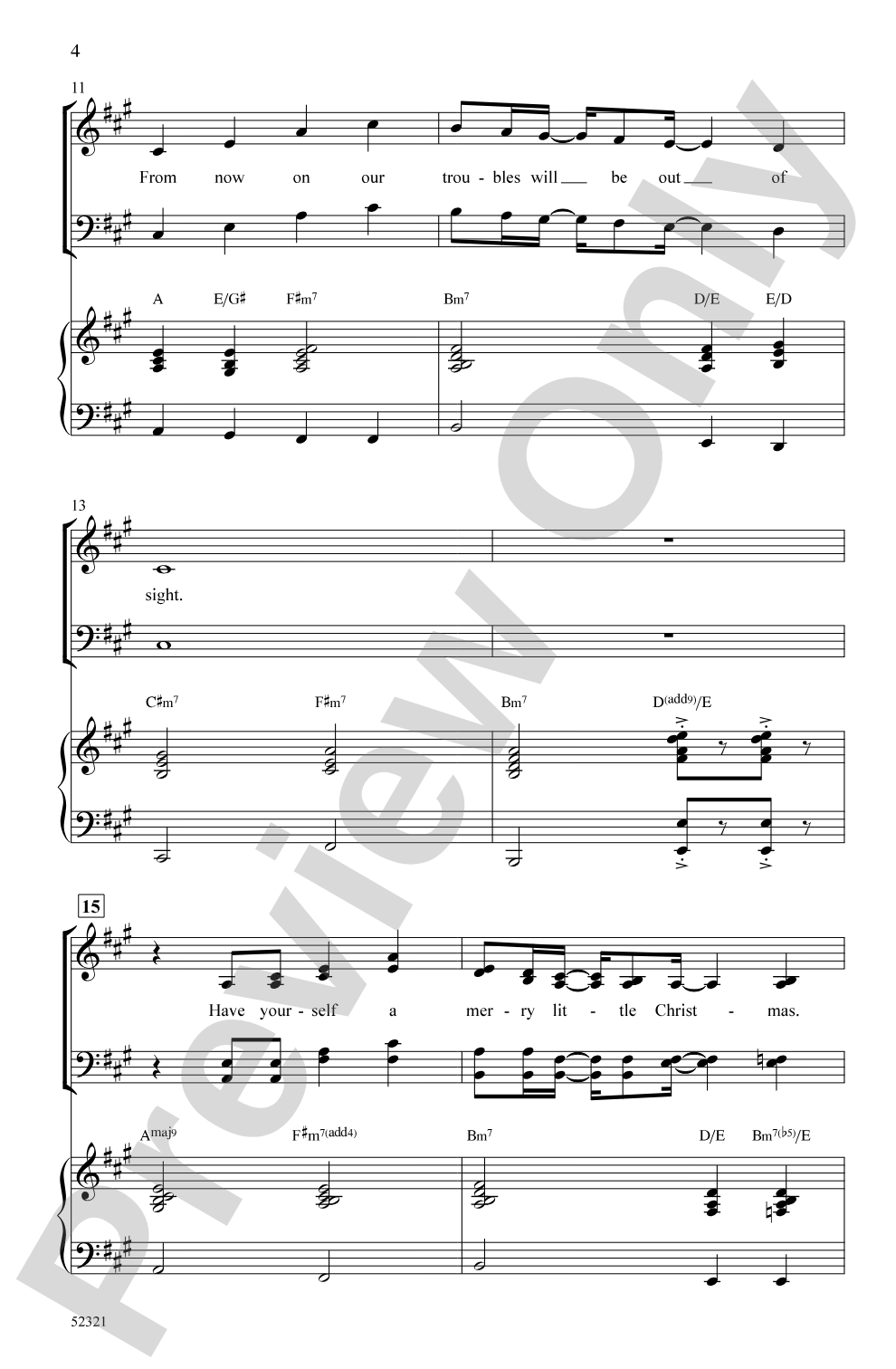
An outside-the-box stocking stuffer your audience will love! Shifting away from the traditional ballad style, this arrangement of the holiday standard features a bright, up-tempo groove that will instantly energize your Christmas program. Choirs will enjoy syncopated vocal lines and tight harmonies that build to a festive finale, including ad-lib holiday greetings. It's a memorable opener or closer, especially when performed with the pizzazzy SoundTrax or the brass and rhythm SoundPax.


Have Yourself a Merry Little Christmas: SATB Choral Octavo isn't in MakeMusic Cloud just yet...but it could be. Let us know you'd like to see it, and you'll help shape what comes next. In the meantime, start a free trial and dive into thousands of interactive titles your students can play along with today.
Request This Title
Tell us you want it.
Start Your Free Trial
Explore everything that's ready to play right now.
Sample Audio
1
Audio File
--:--
0:00
0:00
Sample Video
Additional Details
Series:
Alfred Pop Choral Series
Publisher:
Alfred Music
Page Count:
12
SKU:
00-PO-0007953
More about this title
About the Composer: Hugh Martin
Hugh Martin composed and co-wrote some of the most enduring American popular songs of the mid-20th century, with a gift for melodies that lodge themselves in the listener's ear. His work in film and theater established him as a master of the accessible, singable tune, and "Have Yourself a Merry Little Christmas" remains his most performed composition in choral settings worldwide.
Why we love this
Roberto Rabello's treatment rescues this beloved ballad from predictability by charging it with energy and modern rhythmic sophistication. The syncopation and tight harmonies feel fresh without abandoning the song's essential warmth, making it genuinely exciting to both perform and hear. It's the kind of arrangement that reminds singers why this standard has survived seventy years of holiday programming.
What to expect
Bright and propulsive, with the kind of groove that catches listeners off guard if they know only the ballad version. The harmonies are rich enough to sound sophisticated, but the tempo and rhythmic drive keep everything grounded in celebration rather than nostalgia. By the final ad-lib section, the room feels genuinely joyful.
Who it's for
Choirs with singers who can lock into syncopated rhythms and balance precision with personality. This works equally well for high school ensembles, community choruses, and college groups looking for a contemporary take on holiday programming that avoids the overly sentimental.
How to get the most out of it
- Lock the rhythmic precision early in rehearsals. The syncopation only lands when the ensemble trusts the pulse absolutely, so spend time on subdivision and internal counting before worrying about expression.
- Lean into the ad-lib holiday greetings as a moment of genuine interaction with the audience. These feel forced when performed as rote choreography; encourage singers to make eye contact and enjoy the conversational quality of the moment.
- Record a dress rehearsal with the SoundTrax accompaniment and listen back as a section. Hearing yourselves against the arrangement often reveals balance issues that feel fine in the moment but read differently in the room.
- Shape the build to the finale deliberately. Rather than simply getting louder, think about how the harmonies stack and where the soprano needs to cut through. The festiveness depends on clarity as much as volume.
How to use it
Open a holiday concert with this to signal that you're offering something unexpected. Alternatively, place it toward the end of a mixed-repertoire Christmas program to send audiences out energized. The uptempo character also makes it an effective palate cleanser if you're pairing it with more introspective holiday selections.
Skills your students will build
- Reading and executing syncopated rhythmic figures in a choral context
- Balancing rhythm section independence with ensemble cohesion
- Performing with precision while maintaining a relaxed, groove-oriented feel
- Blending tight harmonies across four parts with multiple moving lines