
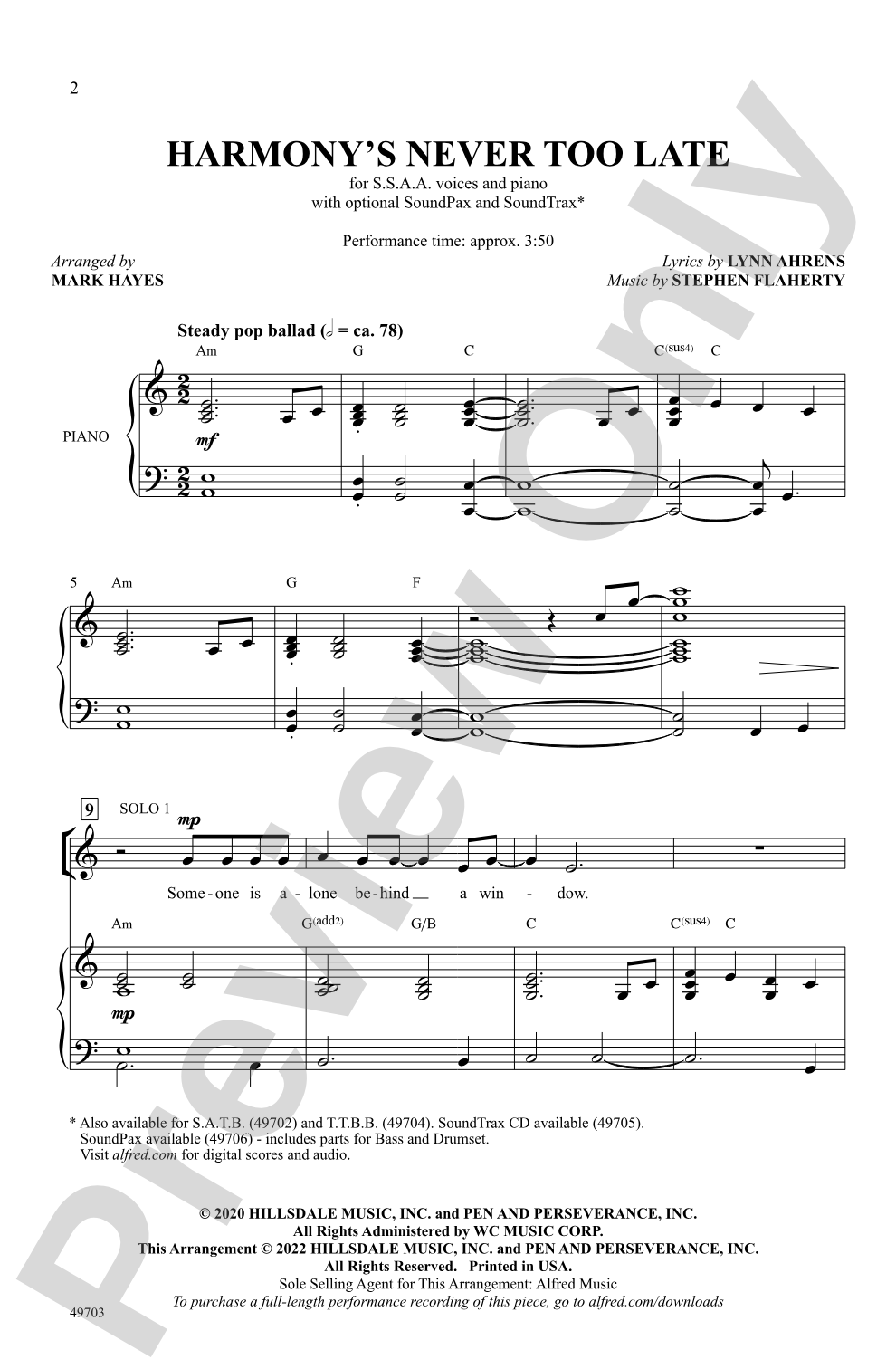
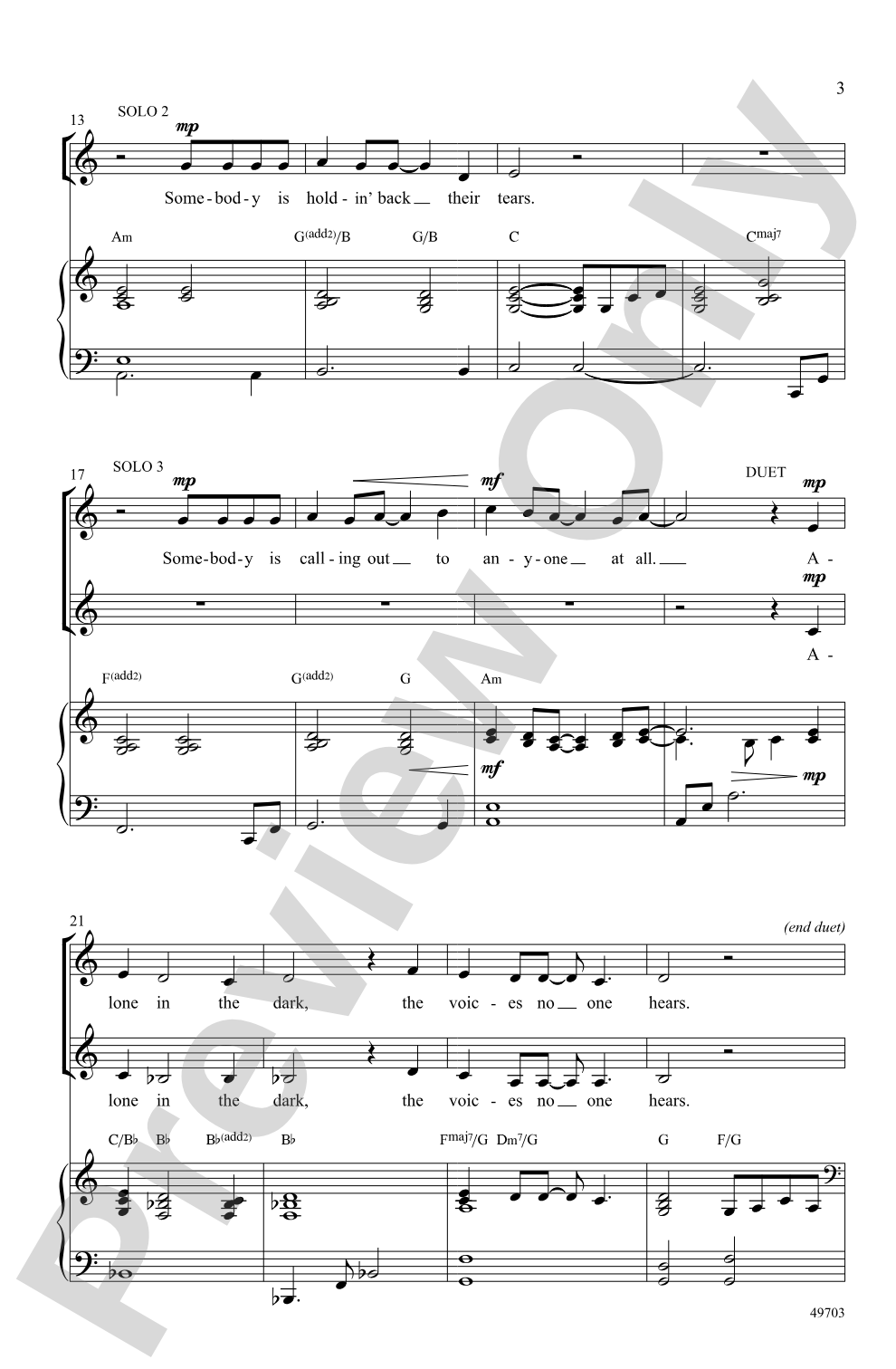
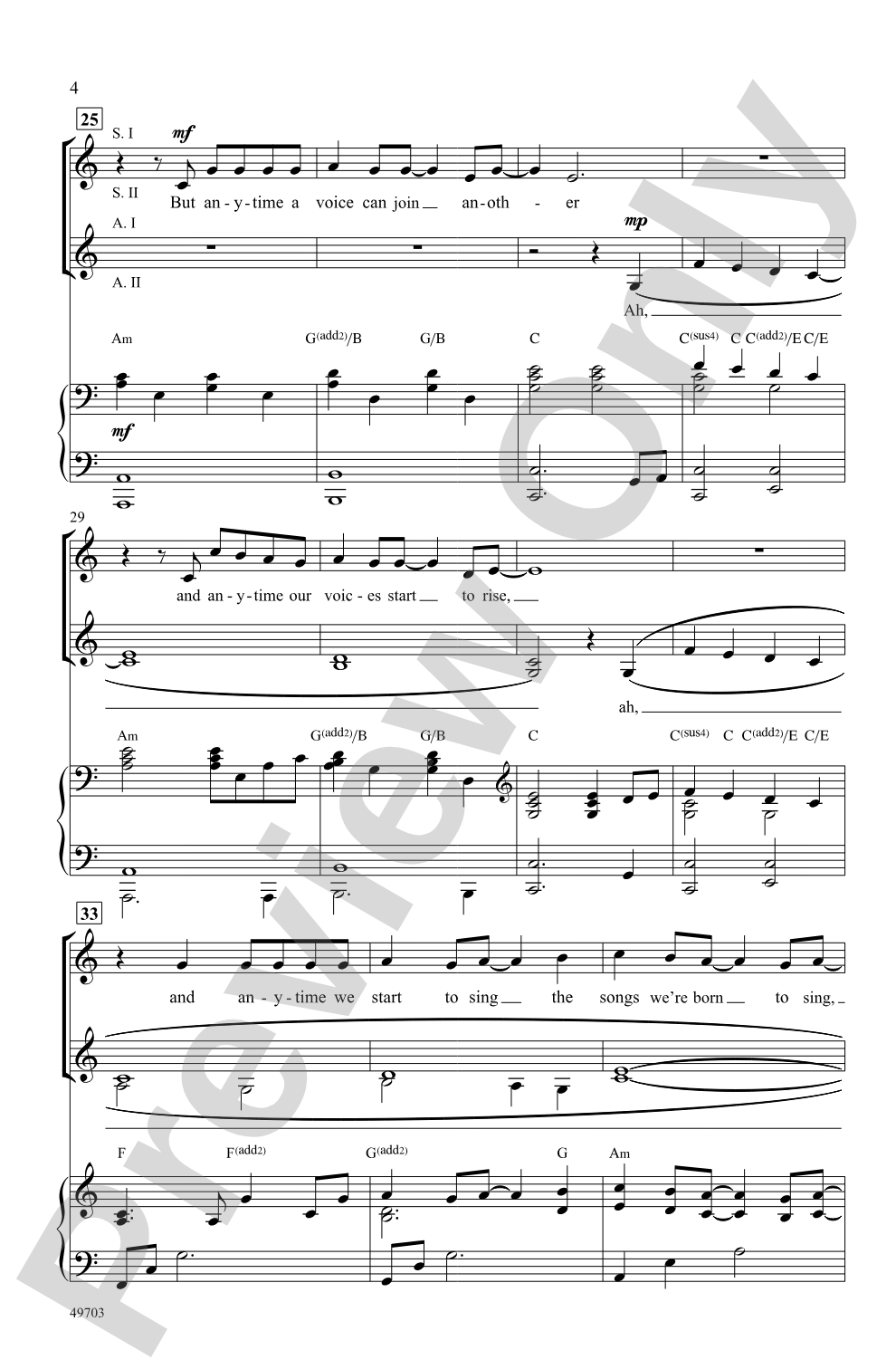

Harmony's Never Too Late: SSAA Choral Octavo
Lyrics by Lynn Ahrens, music by Stephen Flaherty / arr. Mark Hayes
Item: 00-PO-0006913
$2.25
Minimum order quantity: 20 copies
One moment…
Related Items
Harmony's Never Too Late: SATB Choral Octavo |
$2.25
|
View | |
Harmony's Never Too Late: TTBB Choral Octavo |
$2.25
|
View | |
Harmony's Never Too Late: Choral SoundPax |
$15.00
|
View | |
Harmony's Never Too Late: SATB Choral Octavo |
$2.25
|
View | |
Harmony's Never Too Late: SSAA Choral Octavo |
$2.25
|
View | |
Harmony's Never Too Late: TTBB Choral Octavo |
$2.25
|
View | |
Harmony's Never Too Late: Choral Octavo SoundTrax CD |
$29.99
|
View | |
Harmony's Never Too Late: Choral SoundPax |
$15.00
|
View |
Description
This powerful choral anthem was written by Broadway songwriters Lynn Ahrens and Stephen Flaherty in honor of the 40th anniversary of The Gay Men's Chorus of Washington, DC. Lynn's text uses harmony as a metaphor to represent acceptance, and Stephen's inspirational music is a canvas of hope and strength. Robust piano, bass, and drum parts provide a sturdy pop accompaniment for three full voicings designed to accommodate any four-part group.


Harmony's Never Too Late: SSAA Choral Octavo isn't in MakeMusic Cloud just yet...but it could be. Let us know you'd like to see it, and you'll help shape what comes next. In the meantime, start a free trial and dive into thousands of interactive titles your students can play along with today.
Request This Title
Tell us you want it.
Start Your Free Trial
Explore everything that's ready to play right now.
Sample Audio
1
Audio File
--:--
0:00
0:00
Sample Video
1 / 2
Additional Details
Series:
Alfred Pop Choral Series
Publisher:
Alfred Music
Page Count:
16
SKU:
00-PO-0006913
More about this title
About the Composer: Stephen Flaherty
Stephen Flaherty is a Tony Award-winning composer whose theatrical music spans Broadway musicals, animated films, and concert works. His gift for creating accessible, emotionally direct melodies has made him a fixture in musical theater since the 1990s, and his compositions are performed regularly in schools, theaters, and concert halls worldwide.
Beyond commercial success, Flaherty has demonstrated a sustained commitment to music that speaks to social themes and community values. His collaboration with lyricist Lynn Ahrens has produced some of contemporary musical theater's most performed works, and his willingness to create music for specific communities and causes reflects a composer deeply engaged with the cultural moment.
Why we love this
Flaherty and Ahrens crafted something genuinely rare here: a contemporary pop anthem with real musical substance that also serves as a community anthem. The three full voicings within the SSAA range mean you can sing this with any combination of available singers, whether you're at full strength or facing absences on any given rehearsal night. The pop accompaniment feels current without demanding Broadway-level production values, and the metaphor of harmony functioning as acceptance gives your singers something meaningful to sing about.
What to expect
Warm, hopeful, and conversational. The pop style keeps the sound grounded in the present moment rather than historical or formal, and the ensemble writing encourages singers to blend into something larger than themselves. There's strength here, but not bombast; this is music that feels like it's being sung with you, not at you.
Who it's for
Any four-part choir program looking for contemporary, accessible repertoire with genuine emotional weight. High schools, community choirs, college choirs, and adult ensembles will all find this manageable and singable, and the flexible voicing means you're not held hostage by absences or roster composition.
How to get the most out of it
- Balance the three voicings so no single line disappears into the texture; in rehearsal, isolate each voicing and confirm it's audible when blended with the others.
- Let the piano, bass, and drum parts drive the tempo naturally rather than conducting metrically; this music lives in a pop idiom and responds better to groove than to strict beat-keeping.
- Shape the piece around the emotional arc of Ahrens' text rather than musical phrase lengths alone; where the harmony shifts to support a new message, allow your singers a fraction more breath and space.
- Record a rehearsal run-through and listen from the audience perspective; piano-heavy accompaniment can mask balance issues that feel fine from the conductor's vantage point.
How to use it
Pair this with other contemporary works to build a concert that speaks to current voices and issues, or position it as an act-closing statement about community and belonging. The 16-page length makes it substantial enough to anchor a program without overwhelming rehearsal schedules, and its pop orchestration sets it apart from more traditional choral selections in a way that audiences respond to immediately.
Skills your students will build
- Singing with consistent intonation in three-part SSAA voicings
- Responding to pop rhythms and groove rather than conducting patterns
- Balancing individual voice parts within an ensemble texture
- Interpreting text and emotional intent in contemporary secular music