
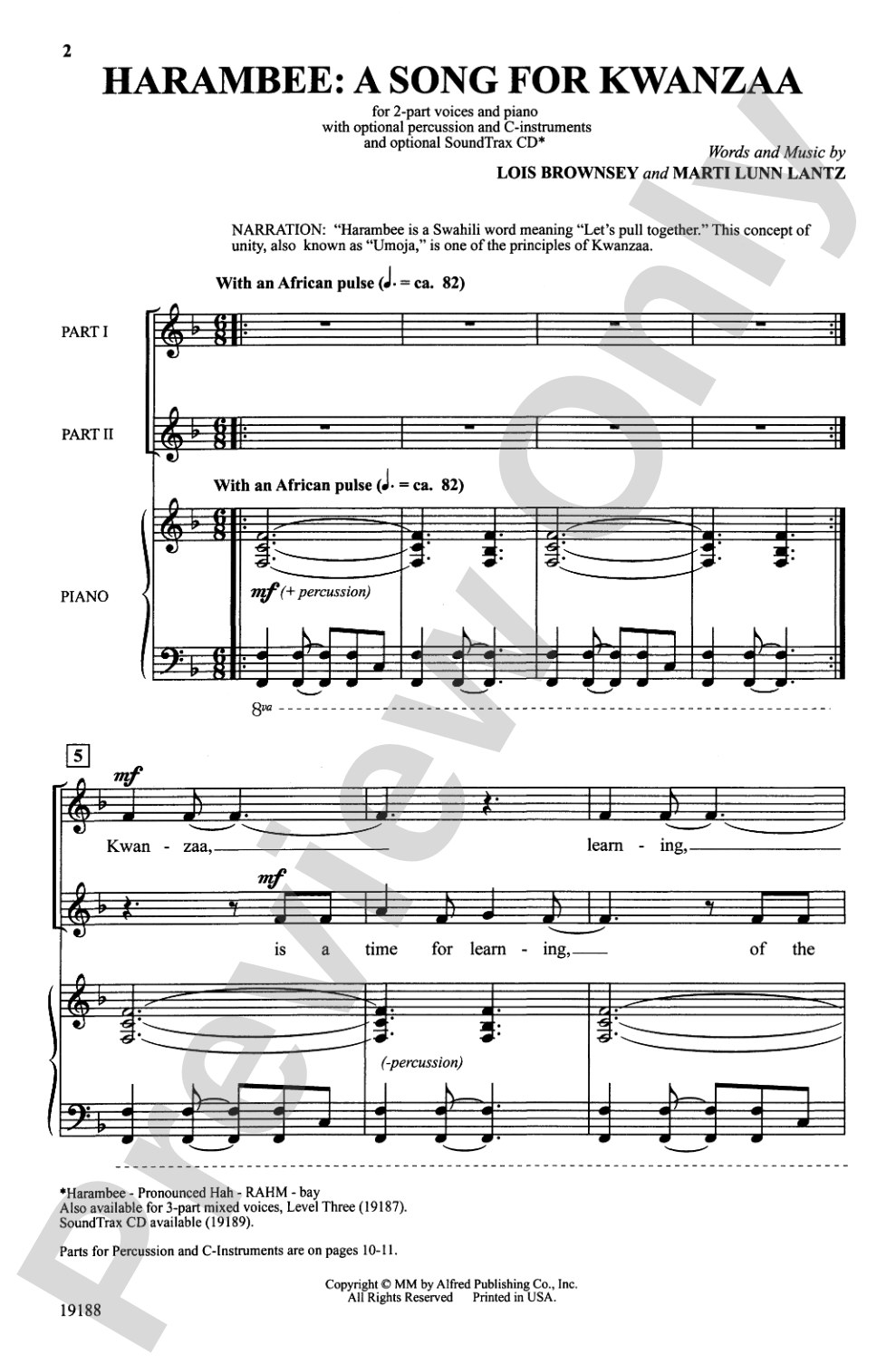
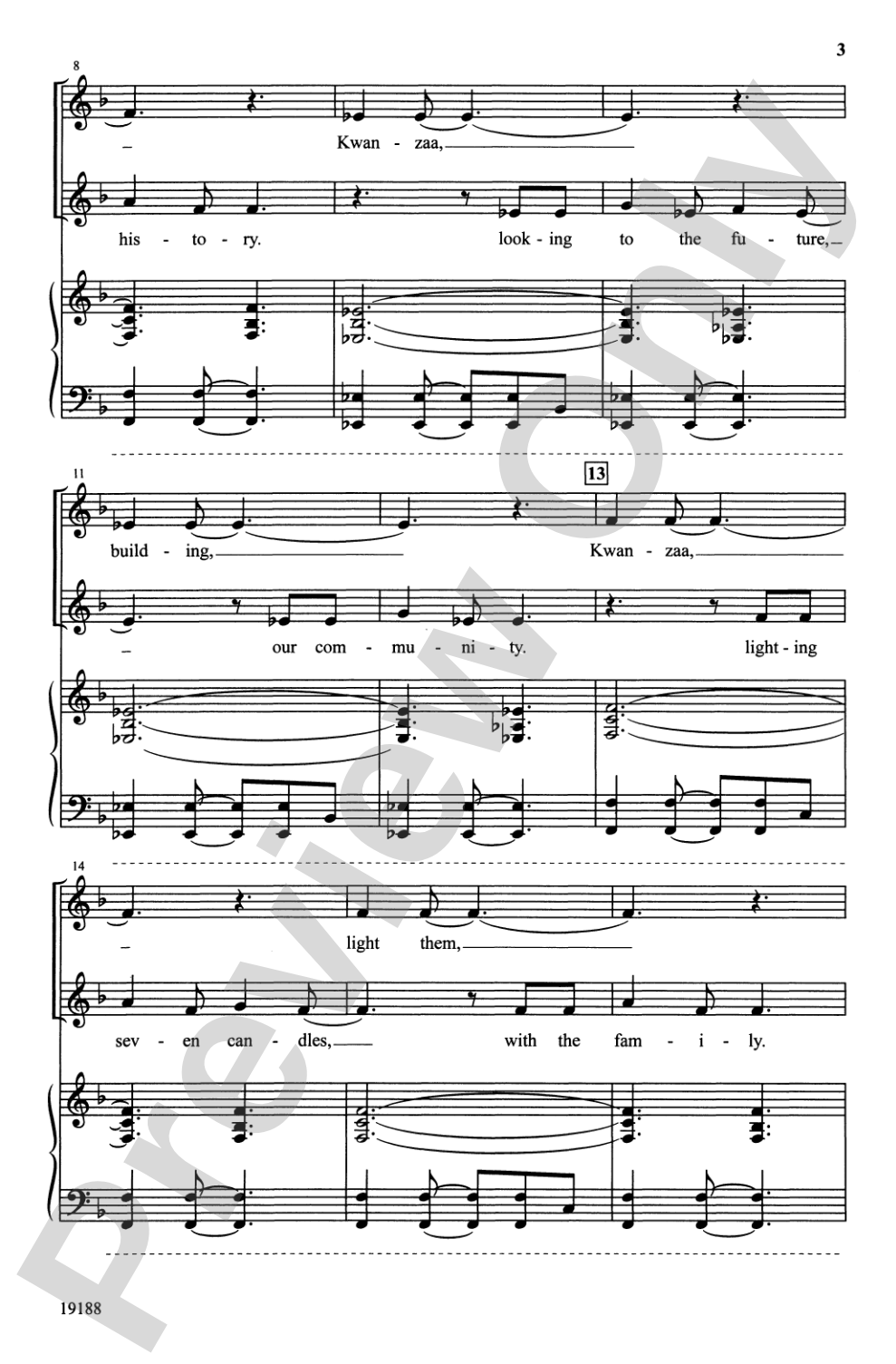
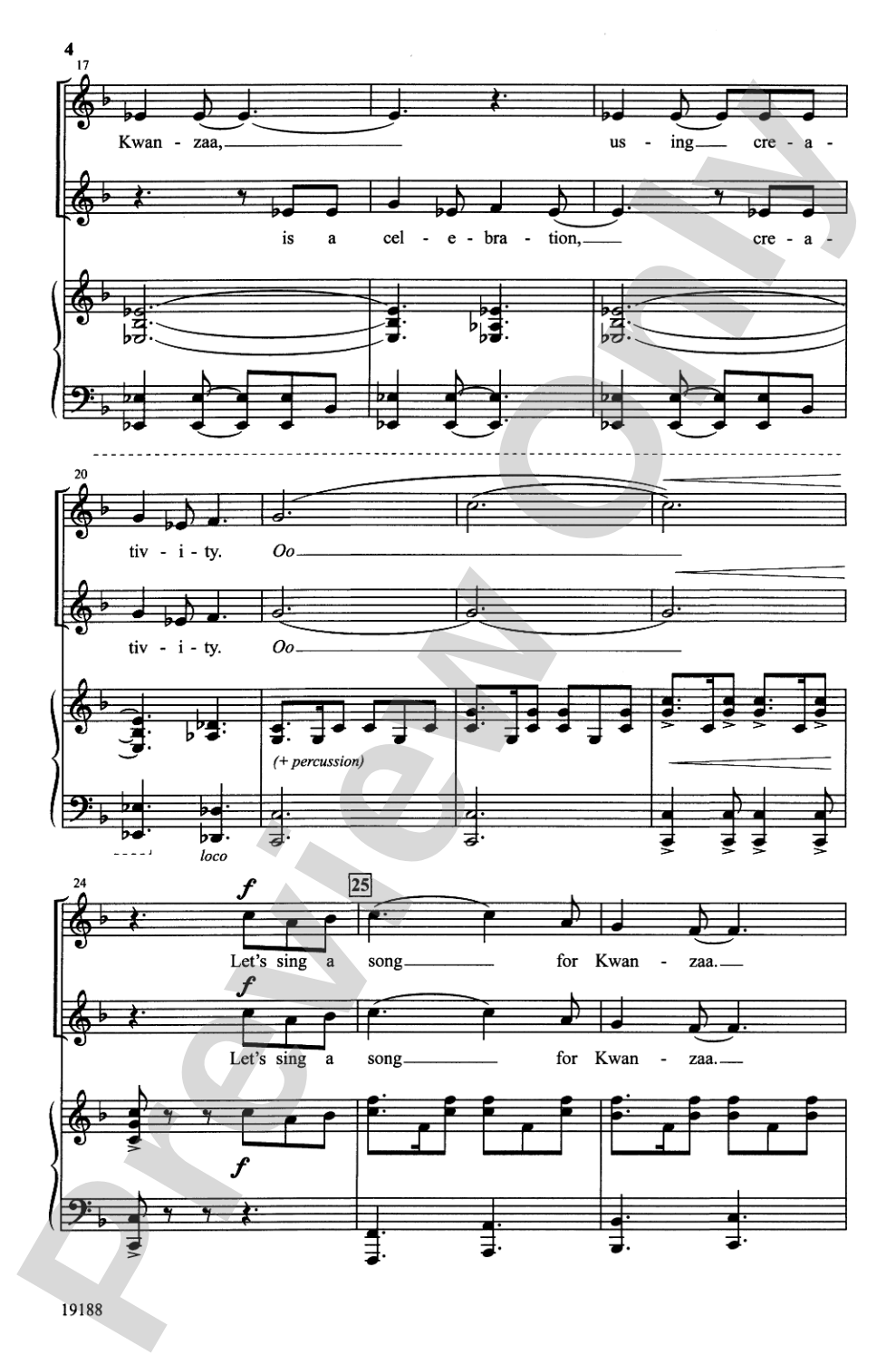

Harambee: A Song for Kwanzaa: 2-Part Choral Octavo
Music by Lois Brownsey and Marti Lunn Lantz
Item: 00-PO-0004133
$2.25
Minimum order quantity: 20 copies
Pickup currently not available
Description
"Harambee" means "let's pull together" in Swahili, a concept fostered in "Umoja," one of the principles of Kwanzaa. This new choral work with a rhythmic African pulse focuses on elements of this fast-growing December holiday. Your students will learn as they sing the rolling melodies, written especially for young and developing groups. Add rhythm instruments (parts for percussion and C-instruments are included in the publication) or use the outstanding SoundTrax CD.


Harambee: A Song for Kwanzaa: 2-Part Choral Octavo isn't in MakeMusic Cloud just yet...but it could be. Let us know you'd like to see it, and you'll help shape what comes next. In the meantime, start a free trial and dive into thousands of interactive titles your students can play along with today.
Request This Title
Tell us you want it.
Start Your Free Trial
Explore everything that's ready to play right now.
Sample Audio
1
Audio File
--:--
0:00
0:00
Sample Video
No sample videos found.
Additional Details
Series:
Alfred Archive Edition: Alfred Choral Designs
Publisher:
Alfred Music
Page Count:
12
SKU:
00-PO-0004133
Instrumentation:
Opt. Percussion and C-Instruments
More about this title
About the Composer: Lois Brownsey

Lois Brownsey studied music at Temple University in her native Philadelphia and trained at the Guitar Workshop, where she developed skills across multiple genres and instruments. Her performance career spanned rock, pop, and blues ensembles across the United States and internationally, and she has lent her voice and musicianship to commercial jingles for major clients including AT&T and GMC Truck Dealers. Since the late 1990s, she has focused on composition and collaboration, co-owning Red Rock Recording Studios in Pennsylvania's Pocono Mountains with her husband, recording engineer Kent Heckman.
With longtime writing partner Marti Lunn Lantz, Brownsey has built a catalog of choral works and song collections centered on multicultural themes and seasonal celebrations. Their published pieces for Alfred include "Winter's Frost," "Japanese Snow Song," and "The Colors of Winter," alongside collections such as Celebrations around the World and The Wonders of the Earth. She has also collaborated with composer Sally K. Albrecht on holiday works. Beyond music, Brownsey remains active in the arts and political communities of Pennsylvania and serves as a Celebrant.
Why we love this
The rhythmic African foundation and rolling melodic lines make this accessible without feeling simplified, giving young singers genuine musicality to sink their teeth into. Brownsey and Lantz write with a clear understanding of developing voices, layering cultural authenticity with practical voicing that lets all singers feel successful. The optional percussion and C-instrument parts transform the piece from a standalone choral work into an ensemble experience that engages players across your program.
What to expect
Harambee pulses with energy rooted in African rhythm and melody, inviting singers into a celebration of unity and collective strength. The rolling lines feel joyful and forward-moving without demanding technical virtuosity, creating space for students to listen to each other while contributing meaningfully to the whole.
Who it's for
This piece belongs in choirs of young and developing singers who are ready for culturally substantive music but still building confidence in reading and blend. Whether you're introducing Kwanzaa to your school community or deepening students' connection to the holiday's principles, this work gives them a voice in celebrating a meaningful December observance.
How to get the most out of it
- Establish the steady pulse early in rehearsal by having your singers speak or chant the "Harambee" text rhythmically before adding melody, anchoring the African rhythmic foundation that defines the piece.
- If using the optional percussion and C-instrument parts, begin rehearsals with voices and rhythm section together so all ensemble members lock into the same groove rather than learning in isolation.
- Shape the rolling melodies with attention to phrasing rather than note-to-note singing; mark breath points that support the lyrical line and let students hear how the melody breathes across phrases.
- Layer in the SoundTrax accompaniment once your singers have internalized their parts and the rhythmic foundation, using it to build independence and confidence in your rehearsals and as preparation before live performance.
How to use it
Program this as a cornerstone of a winter or holiday concert that honors cultural diversity, pairing it alongside other secular seasonal works or as the centerpiece of a Kwanzaa-focused segment. The 12-page octavo is accessible enough to learn within a typical rehearsal calendar, making it a strong choice for mid-year programming when you want to introduce new cultural content without overextending preparation time.
Skills your students will build
- Sustaining a rhythmic pulse across a multi-part texture
- Singing rolling melodic lines with clear phrase direction
- Blending voice parts in a 2-part arrangement
- Interpreting music from African and multicultural traditions
- Coordinating vocals with optional percussion and melody instruments