
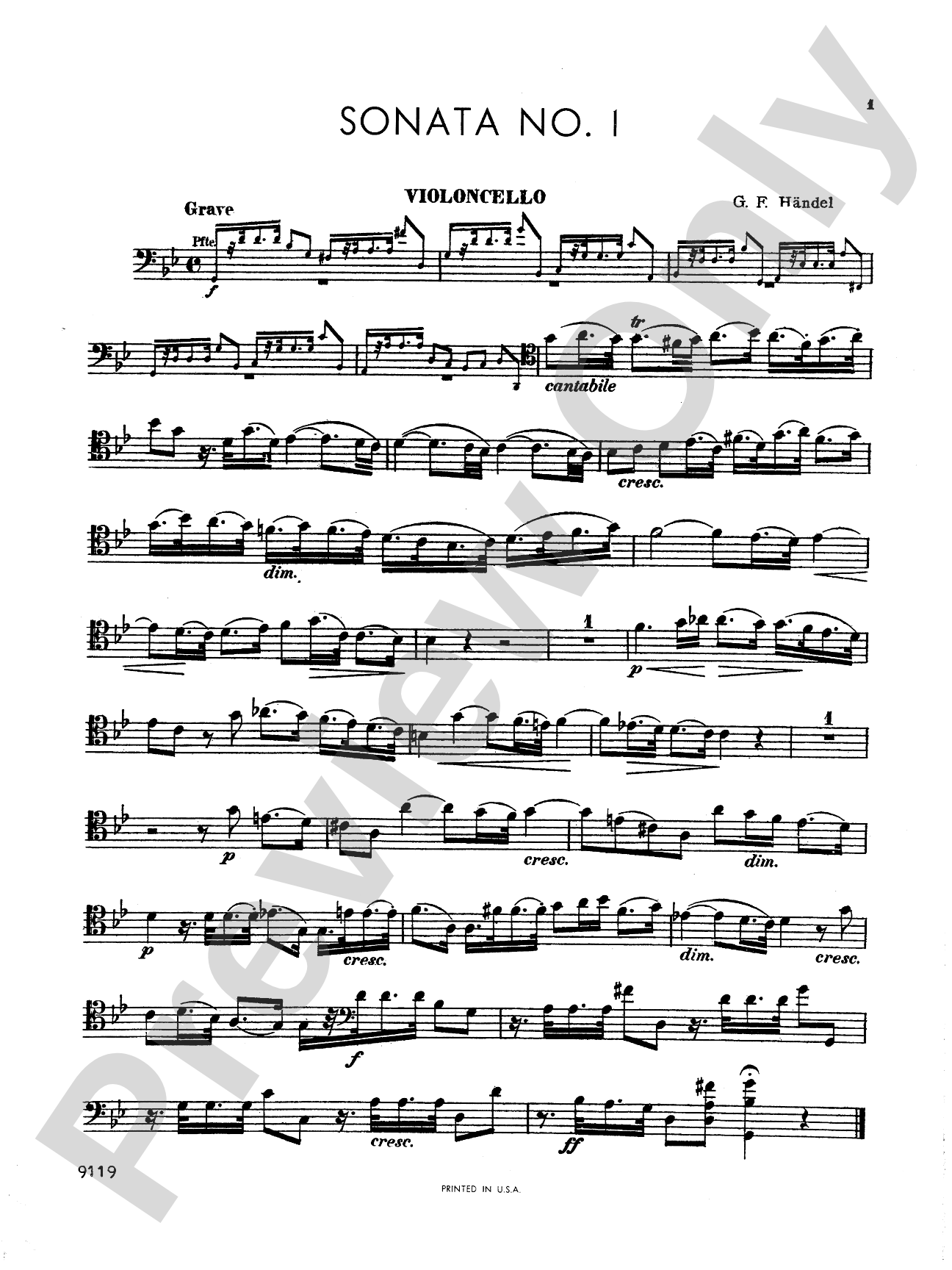
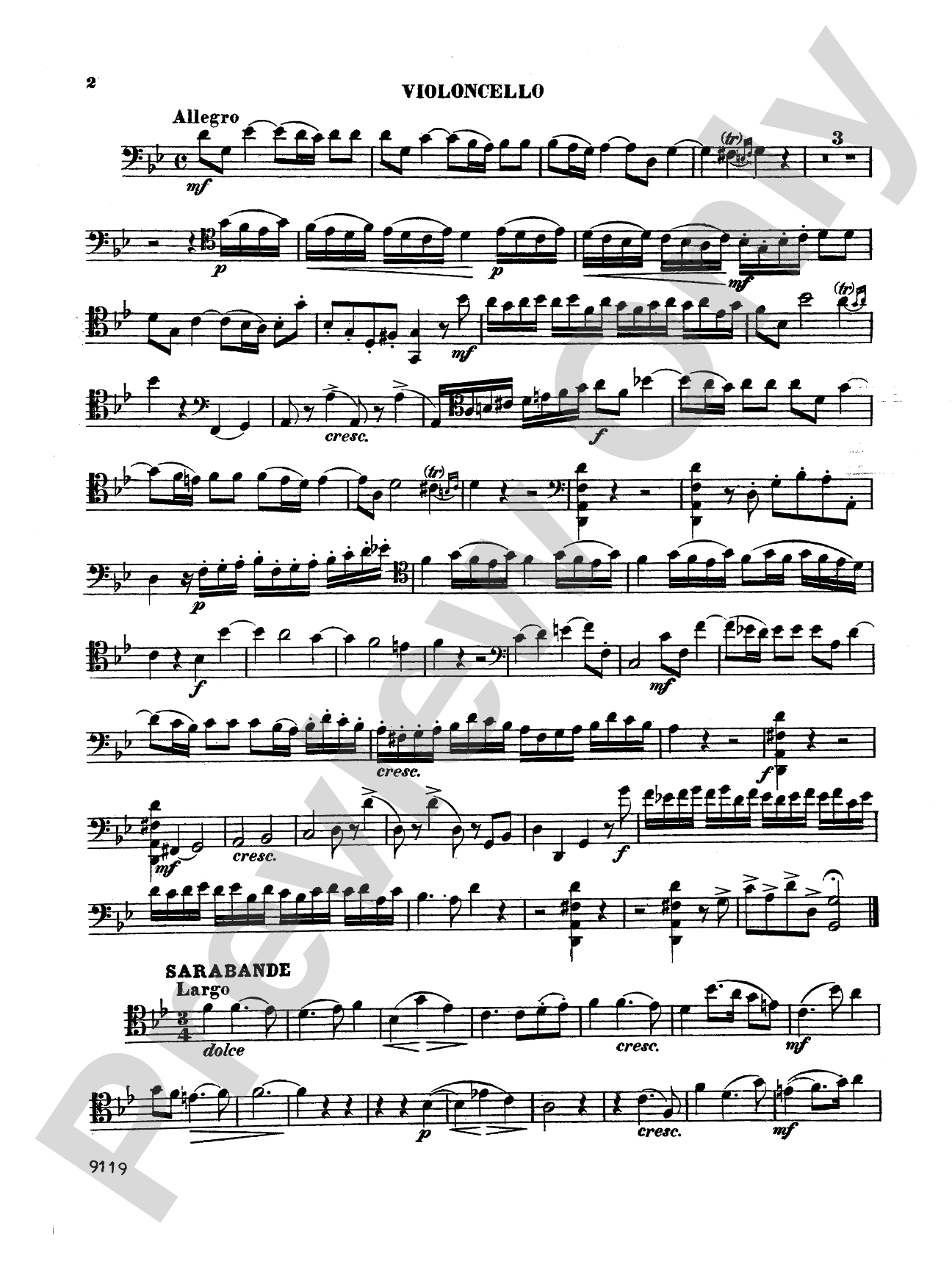
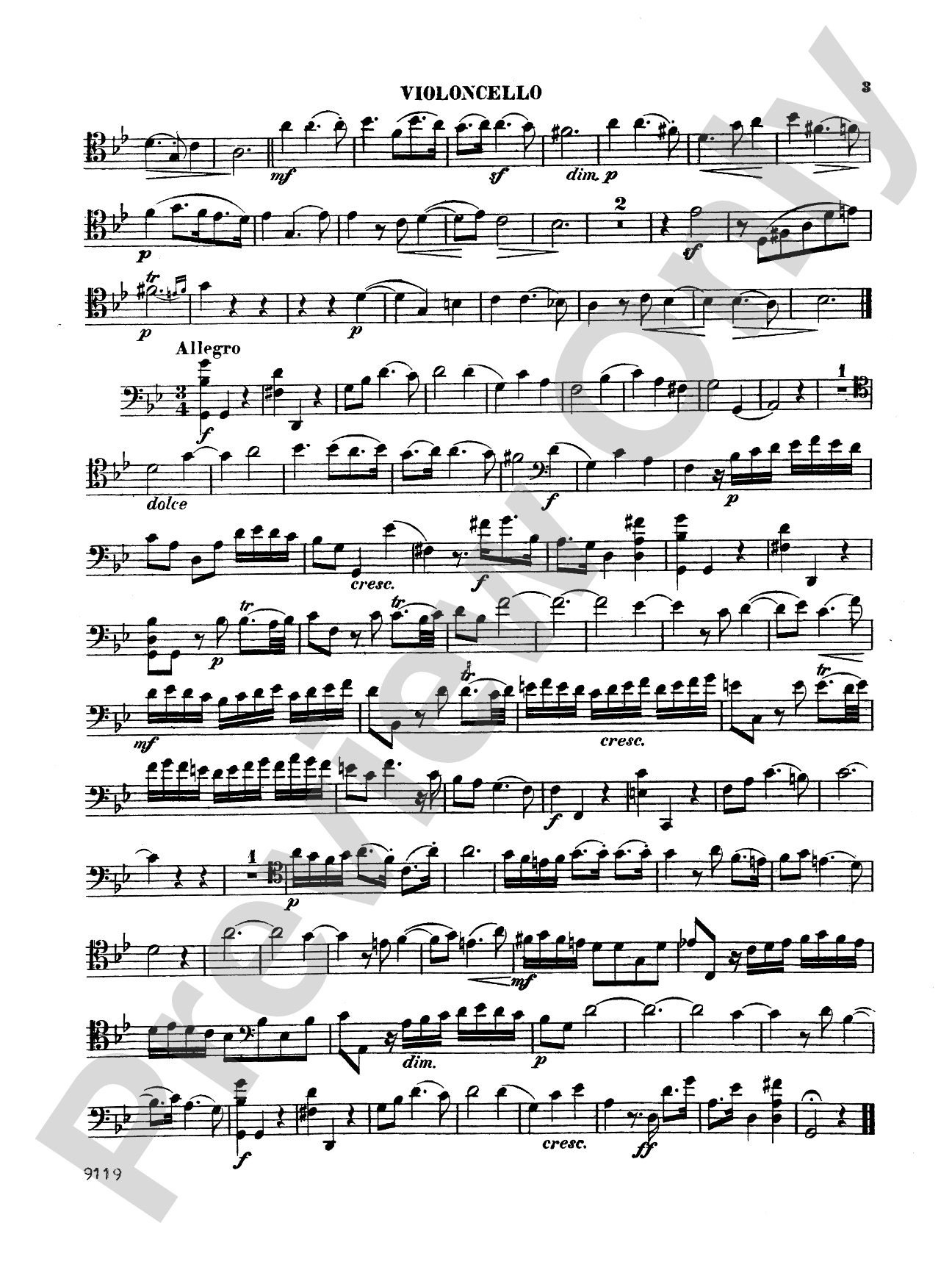


Handel: Sonata No. 1 in G Minor: Cello Book
By George Frideric Handel
Item: 00-PK-0003691

$8.99
Pickup currently not available
Buy Extra Parts (Digital PDF Download)
| Product | Price | Quantity |
|---|---|---|
| Handel: Sonata No. 1 in G Minor | $3.99 | |
| Handel: Sonata No. 1 in G Minor | $3.99 |
Parts Added to Cart!
Related Items
Sonata No. 1 in G Minor: Cello Book |
$8.95
|
View |
Description
(after the Oboe Concerto)


Don't just read it, hear it, play along with it, and watch your students grow with it. In MakeMusic Cloud, Handel: Sonata No. 1 in G Minor: Cello Book comes alive with professional accompaniment, adjustable tempo, and built-in practice tools that turn solo practice into real progress.
Open in the Player
Jump straight in and assign it today.
Start Your Free Trial
Open this title and explore the full library in minutes.
Sample Audio
No sample audio found.
Sample Video
No sample videos found.
Additional Details
Series:
Kalmus Edition
Publisher:
Alfred Music
Page Count:
16
SKU:
00-PK-0003691
More about this title
About the Composer: George Frideric Handel
George Frideric Handel (1685-1759) was a German-born composer who spent most of his career in England, where he became one of the most celebrated musicians of the 18th century. His output spanned opera, oratorio, concertos, and chamber music, and his dramatic gift for melody and harmonic sophistication made him a dominant figure in Baroque music. Handel's instrumental works, including his concerti grossi and solo sonatas, remain central to the repertoire and continue to shape how musicians understand Baroque style and rhetoric.
Handel composed his sonatas for various instruments, including oboe, flute, and cello, often in multiple movements that showcase both technical facility and expressive depth. These works reveal his mastery of counterpoint, his gift for memorable themes, and his understanding of idiomatic instrumental writing. For cellists and their pianists, these sonatas offer an essential window into how a great Baroque master approached the dialogue between soloist and accompanist.
Why we love this
This sonata sits squarely in the contest and festival repertoire for good reason: it demands musicianship across multiple dimensions at once. The writing is grateful for the cello but never condescending; movements build logically, and the relationship between cello and piano evolves in ways that reward careful partnership work. Cellists preparing this for adjudication find themselves thinking about phrasing, articulation, and harmonic awareness in ways that transfer immediately to other repertoire.
What to expect
Handel's writing balances eloquence with structural clarity. The cello's voice emerges naturally from the harmonic foundation the piano provides, creating space for genuine expressive freedom within Baroque conventions. Movements that charge forward with rhythmic drive alternate with sections of almost austere beauty, inviting cellists to find warmth and character in economical means.
Who it's for
Advanced high school cellists and college-level players preparing for competitions, festivals, or formal recitals will find this Kalmus edition accessible and reliable. The 16-page score offers substantial musical content without overwhelming performance demands, making it ideal for students ready to engage with genuine Baroque masterworks. Cellists seeking contest repertoire that builds serious musicianship will return to this sonata repeatedly.
How to get the most out of it
- Shape each movement's opening statement with clarity and direction; Baroque phrasing relies on understanding where the harmony is going, not just where the notes are.
- Listen for the piano's interior voices and harmonic movement, especially in faster passages where the cello line sits above a busier accompaniment. This mutual awareness prevents rushing.
- Approach ornaments (trills, turns, grace notes) with rhythmic precision and stylistic consistency. Consider period practice conventions, but prioritize serving the phrase shape.
- Balance technical passagework with the slower movements' lyrical demands; Baroque sonatas thrive on contrast between virtuosity and song.
How to use it
Program this as a centerpiece in a recital devoted to Baroque chamber music, pairing it with sonatas by contemporaries like Boccherini or Quantz to show stylistic breadth. It also serves well in a contest or festival setting where it demonstrates both technical security and interpretive maturity. Consider placing it midway through a mixed-era program where its formal elegance and emotional directness offer a refreshing contrast to later Romantic or contemporary work.
Skills your students will build
- Baroque phrasing and architectural hearing within multi-movement forms
- Dialogue and balance between soloist and accompanist
- Period-appropriate ornament execution and stylistic consistency
- Harmonic awareness and voice-leading sensitivity
- Sustained singing tone across varying textures and tempos