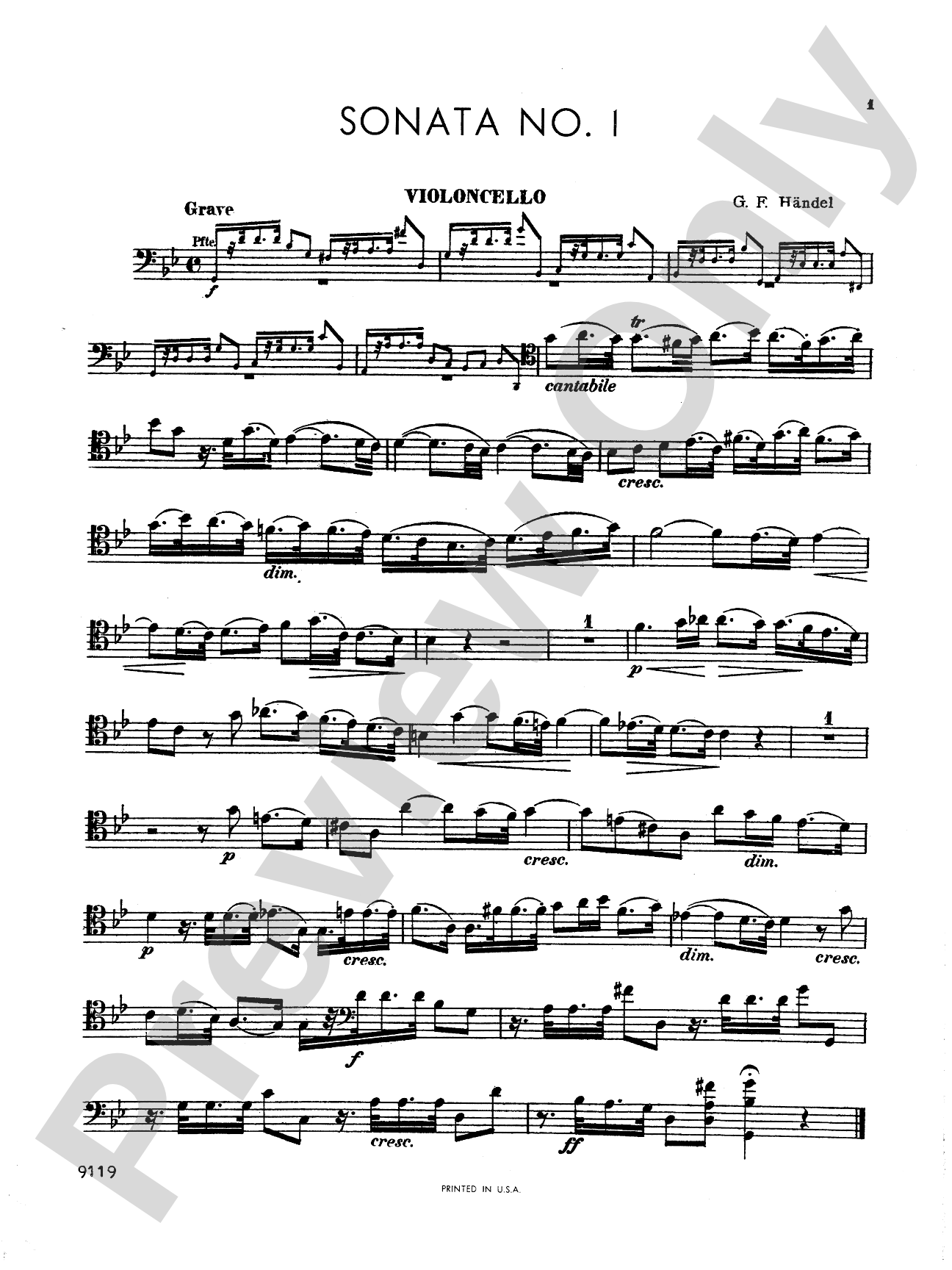
George Frideric Handel (1685-1759) was a German-born composer who spent most of his career in England, where he became one of the most celebrated musicians of the 18th century. His output spanned opera, oratorio, concertos, and chamber music, and his dramatic gift for melody and harmonic sophistication made him a dominant figure in Baroque music. Handel's instrumental works, including his concerti grossi and solo sonatas, remain central to the repertoire and continue to shape how musicians understand Baroque style and rhetoric.
Handel composed his sonatas for various instruments, including oboe, flute, and cello, often in multiple movements that showcase both technical facility and expressive depth. These works reveal his mastery of counterpoint, his gift for memorable themes, and his understanding of idiomatic instrumental writing. For cellists and their pianists, these sonatas offer an essential window into how a great Baroque master approached the dialogue between soloist and accompanist.