
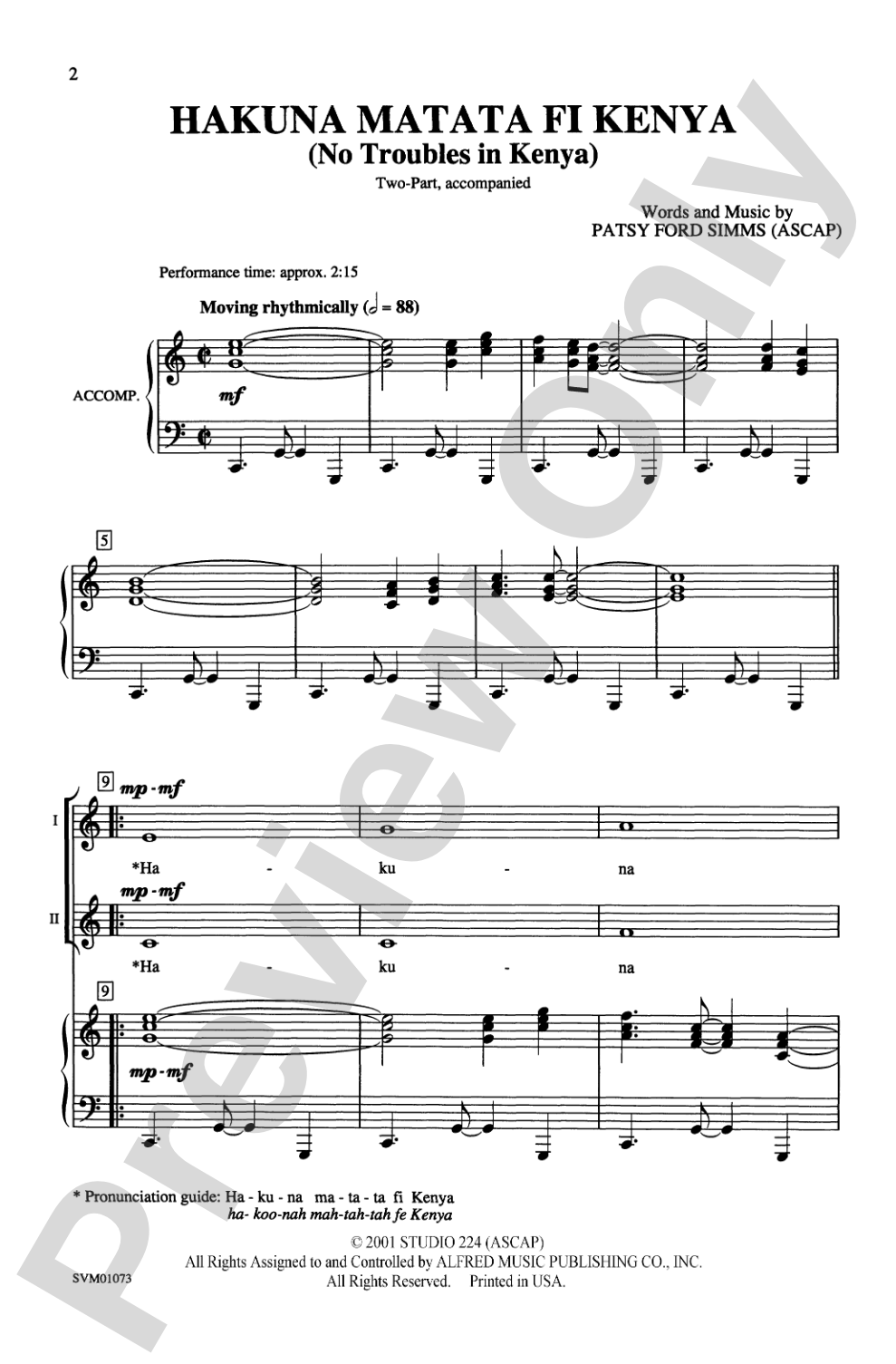
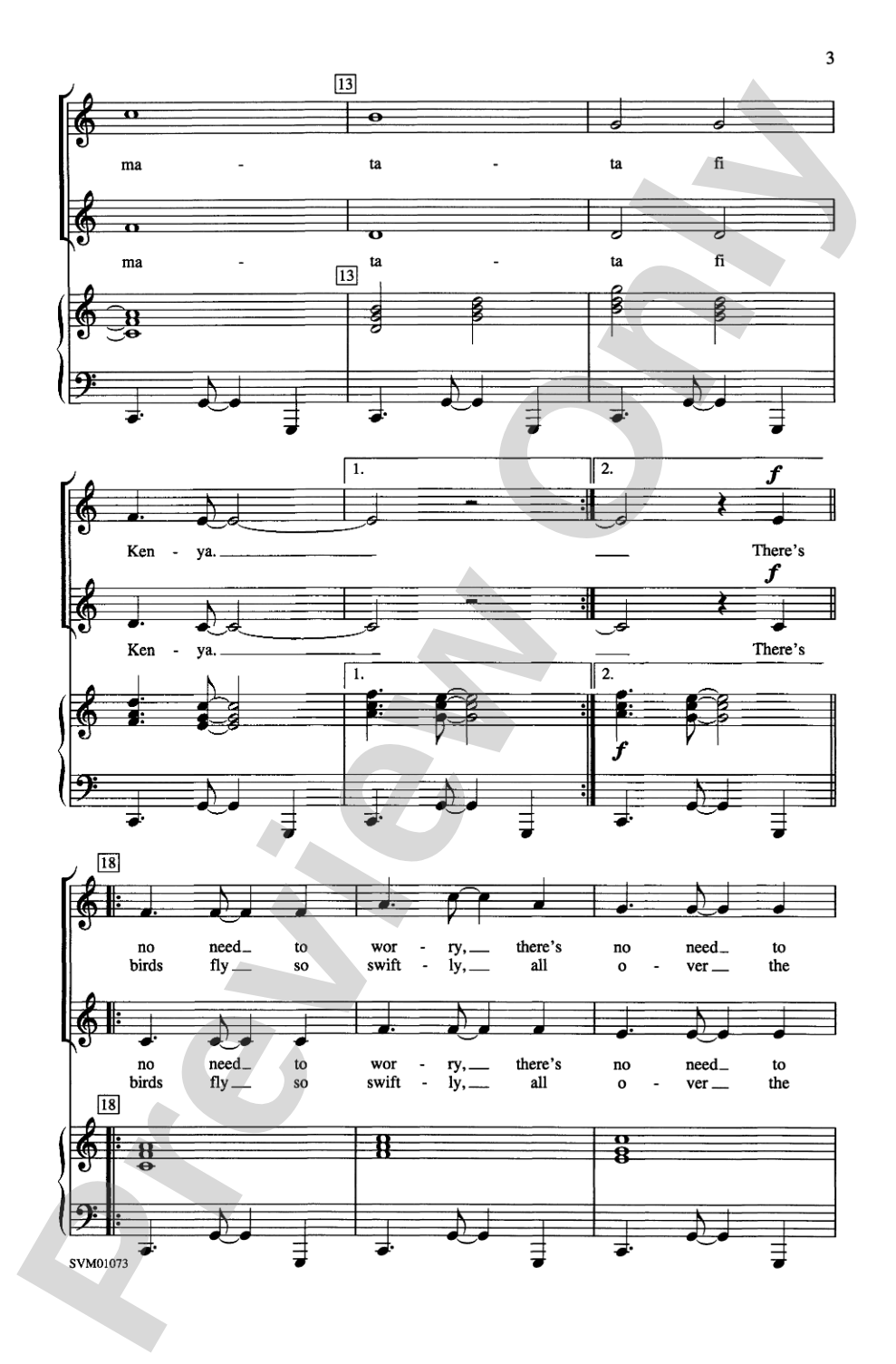

Hakuna Matata Fi Kenya (No Troubles in Kenya): 2-Part Choral Octavo
(No Troubles in Kenya)
Words and music by Patsy Ford Simms
Level: Moderate
Item: 00-PO-0005347
$2.25
Minimum order quantity: 20 copies
Pickup currently not available
Description
Patsy Ford Simms brings us another exquisite original African style work that carries a wonderful message, a memorable melody and lots of African percussion. This is a must have!


Hakuna Matata Fi Kenya (No Troubles in Kenya): 2-Part Choral Octavo isn't in MakeMusic Cloud just yet...but it could be. Let us know you'd like to see it, and you'll help shape what comes next. In the meantime, start a free trial and dive into thousands of interactive titles your students can play along with today.
Request This Title
Tell us you want it.
Start Your Free Trial
Explore everything that's ready to play right now.
Sample Audio
No sample audio found.
Sample Video
No sample videos found.
Additional Details
Series:
Alfred Archive Edition: Studio PR Catalog
Publisher:
Alfred Music
Page Count:
8
SKU:
00-PO-0005347
More about this title
About the Composer: Patsy Ford Simms
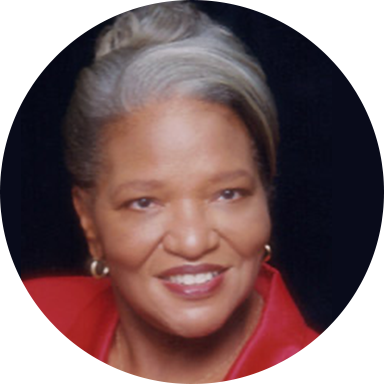
Patsy Ford Simms began composing and arranging in response to a real gap in the choral repertoire: the scarcity of quality octavos written specifically for junior high and middle school singers. Over three decades of classroom teaching in grades K-12, plus time spent at the Youth Performing Arts School, shaped her understanding of what young singers need and what moves them. She holds a Bachelor of Science in Music Education from Knoxville College, a Master of Education from the University of Louisville, and a doctorate in Music Education from Columbia Pacific University.
Since her first publication in 1981, Simms has written more than 300 songs for educational and church markets, working with leading publishers including Shawnee Press. Her work as a clinician and presenter has taken her to Italy and Africa, and she has received multiple ASCAP Special Music Awards. Two of her compositions were selected for MENC World's Largest Concerts, and she has created commissioned works and short musicals centered on African American history. She brings both musicianship and deep pedagogical insight to every piece she writes.
Why we love this
Simms writes with the young singers' voice in the foreground, not as an afterthought. The combination of a singable melody, accessible harmonies, and the integrated percussion elements (which students can play themselves) creates genuine engagement without sacrificing musical substance. The African style and positive message give your singers something meaningful to inhabit beyond just hitting the notes.
What to expect
Joyful and purposeful. The African rhythmic and harmonic language creates an inviting, energetic landscape, while the message of freedom from worry gives the piece a lightness that performers and audiences both feel. It's celebratory without being frivolous.
Who it's for
Middle and junior high school choirs looking for an original work that feels fresh and culturally aware. This level is ideal for singers with some experience who are ready for two-part writing that has real melodic and harmonic interest without overwhelming difficulty.
How to get the most out of it
- Assign the percussion parts to singers who aren't in either voice part, or alternate roles between rehearsals so everyone participates in the rhythmic conversation.
- Work the African rhythmic elements separately before layering them with the vocal parts; these patterns are the heartbeat of the piece.
- Bring out the melody in the top voice without forcing; let it float naturally over the harmonic support of the second part.
- Use the recorded accompaniment in rehearsal to maintain ensemble security, then remove it for performances to let the students own the sound.
How to use it
Program this as a standalone feature or as part of a concert celebrating global music and cultures. The accessible difficulty and feel-good character make it work equally well as a concert opener that sets an upbeat tone or as a spot in a thematic program exploring world music and social-emotional themes.
Skills your students will build
- Reading two-part vocal writing with independent melodic lines
- Understanding African musical styles and rhythmic patterns
- Blending voices within a second harmony part
- Integrating percussion and rhythmic ostinatos with vocal ensemble
- Singing with clear diction in a contemporary secular style