

Hail to Thee (from Die Zauberflote): SAB Choral Octavo
From Die Zauberflote
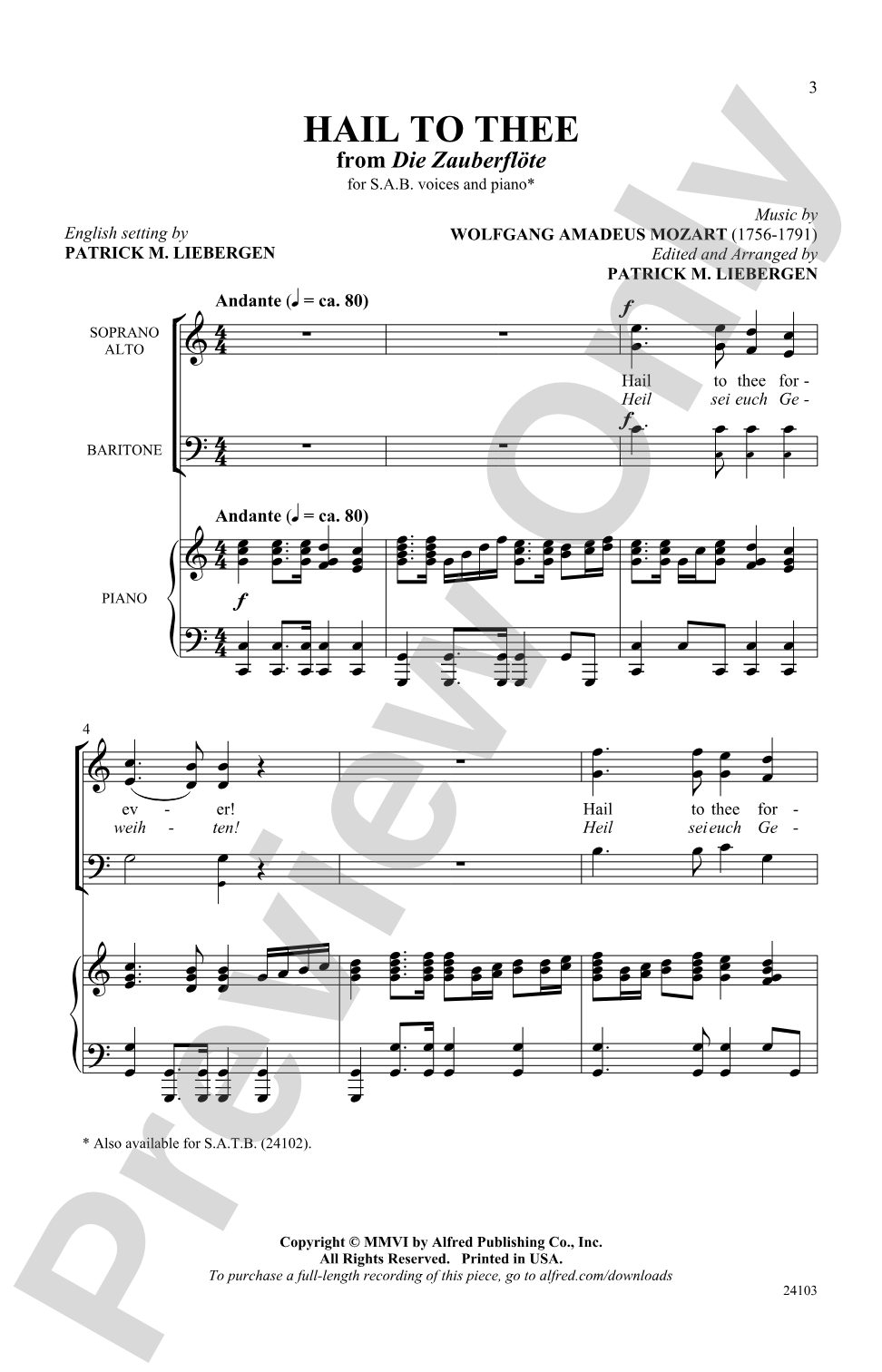
By Wolfgang Amadeus Mozart / ed. and arr. Patrick M. Liebergen
Item: 00-PO-0000120
$1.65
Minimum order quantity: 20 copies
Pickup currently not available
Description
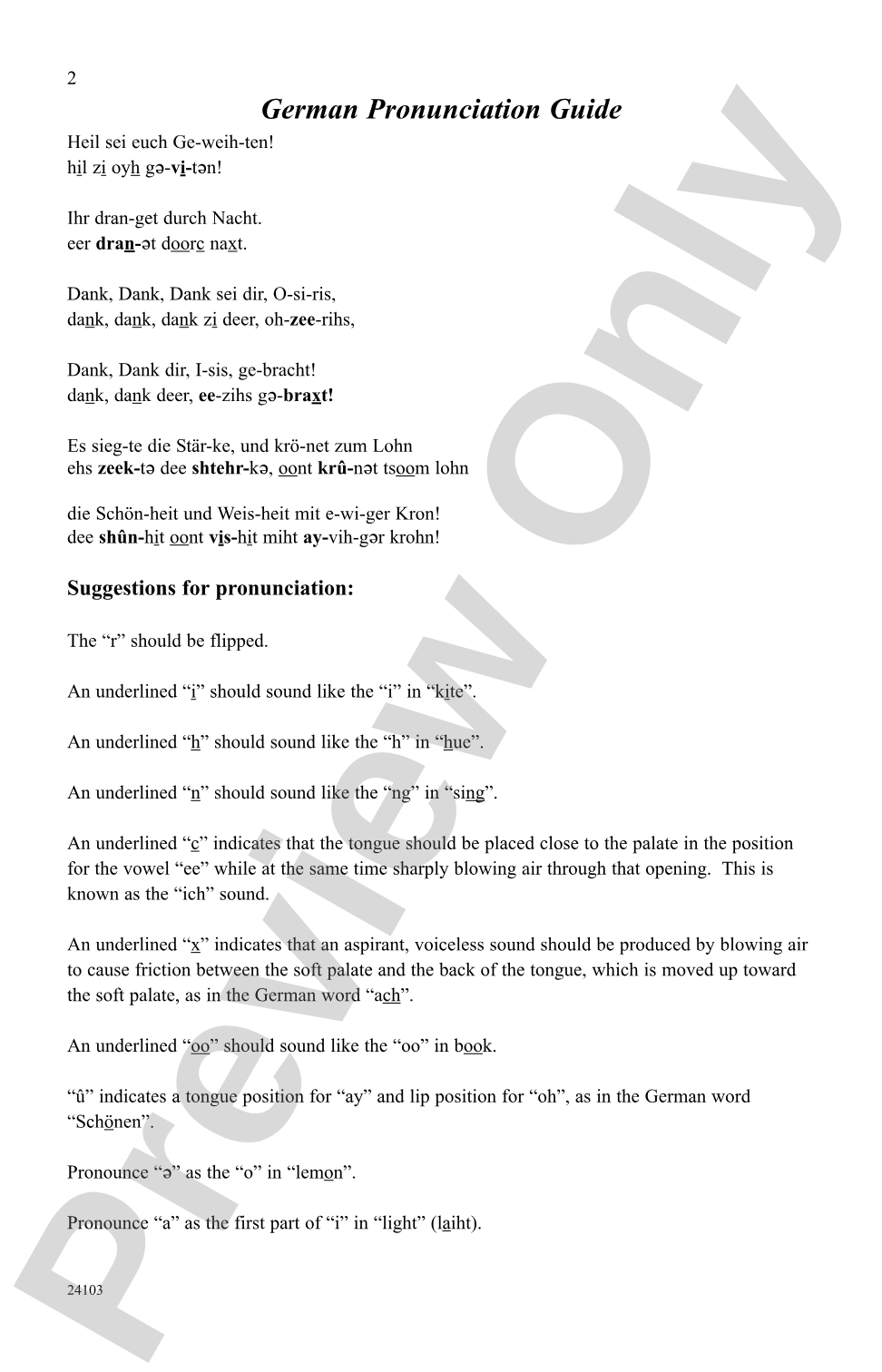
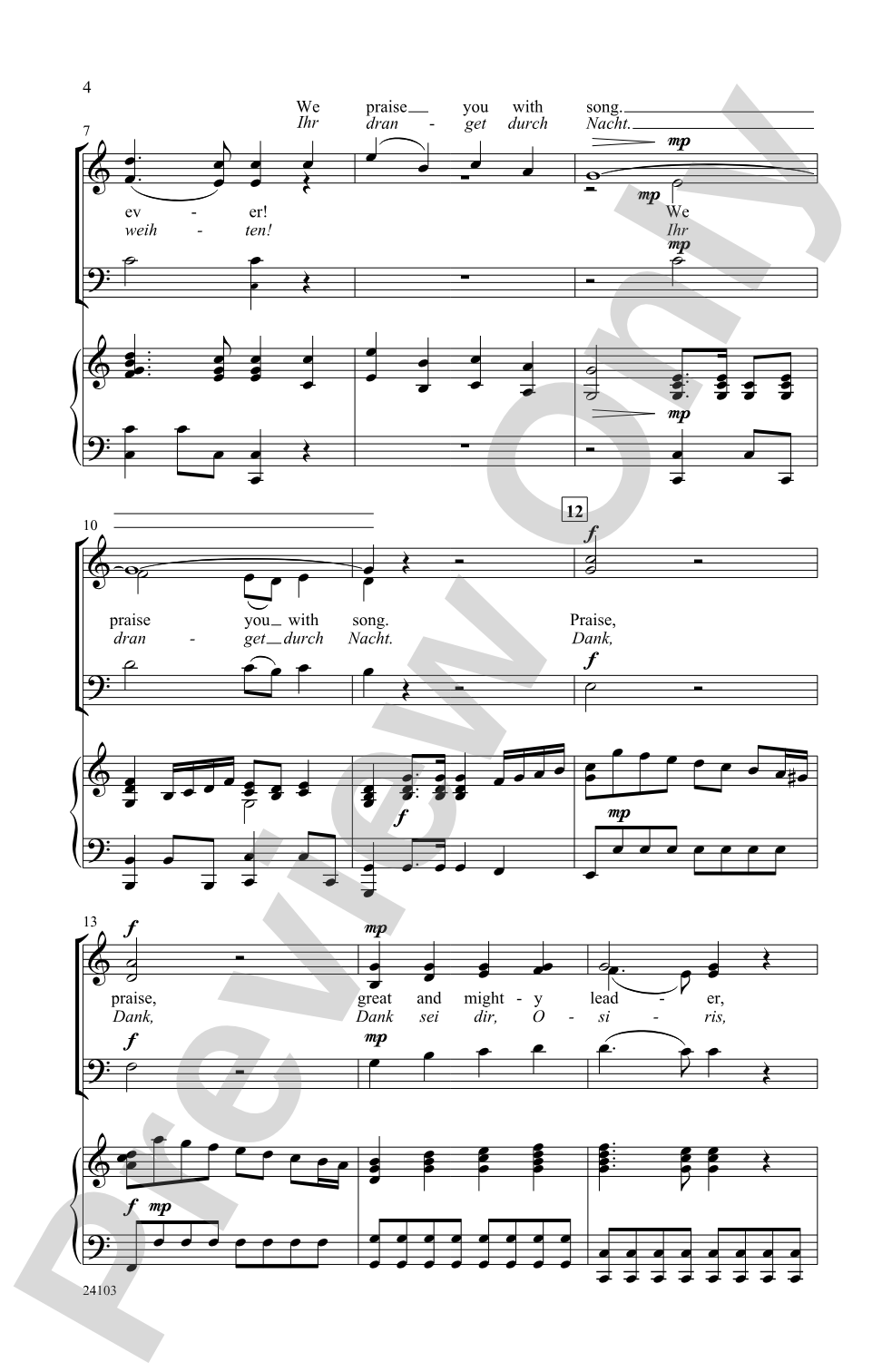
Mozart lovers take heed - here is a modern edition of the joyful finale from The Magic Flute that presents many great teaching opportunities. Whether sung in English or German, this scholarly adaptation incorporates an expert piano accompaniment which supports the voices in both the grand andante opening and the vibrant allegro conclusion.


Hail to Thee (from Die Zauberflote): SAB Choral Octavo isn't in MakeMusic Cloud just yet...but it could be. Let us know you'd like to see it, and you'll help shape what comes next. In the meantime, start a free trial and dive into thousands of interactive titles your students can play along with today.
Request This Title
Tell us you want it.
Start Your Free Trial
Explore everything that's ready to play right now.
Sample Audio
1
Audio File
--:--
0:00
0:00
Sample Video
No sample videos found.
Additional Details
Series:
Alfred Choral Designs
Publisher:
Alfred Music
Page Count:
12
SKU:
00-PO-0000120
More about this title
About the Composer: Wolfgang Amadeus Mozart
Wolfgang Amadeus Mozart (1756-1791) composed across every major genre of his time and remains one of the most performed composers in concert halls and opera houses worldwide. His gift for melody, harmonic sophistication, and structural clarity made him a master of both intimate chamber works and grand theatrical pieces. For choral directors, Mozart's music offers pedagogical richness: his vocal writing sits naturally in the voice, his accompaniments teach students to listen for instrumental color, and his formal structures reward careful analysis.
Why we love this
Patrick M. Liebergen's adaptation captures the infectious joy of Mozart's finale while making it genuinely singable for mixed voices at a moderate level. The arrangement preserves the emotional arc of the original by contrasting the grand opening andante with the propulsive allegro, giving your choir a chance to explore textural and dynamic range within a single piece. Programming this alongside other Classical works or as a concert closer rewards audiences with music they recognize and singers with the satisfaction of performing a genuine masterwork.
What to expect
The piece opens with ceremonial grandeur and a sense of arrival, inviting singers into a sustained, almost hymnic moment before the energy accelerates into a sparkling, celebratory allegro. There's an inherent theatrical quality to the music, even without staging, that lifts singers beyond everyday rehearsal energy and reminds them why they love performing together.
Who it's for
This octavo works well for high school and community choirs seeking accessible yet substantive repertoire, as well as advanced middle school ensembles ready for Classical style. The SAB voicing makes it inclusive for mixed groups without requiring a large soprano section, while the pedagogical depth appeals to directors who want their singers engaging with genuine Mozart rather than simplified substitutes.
How to get the most out of it
- Shape the andante opening with careful attention to phrase length and dynamic gradient; the piano accompaniment will support sustained singing, so focus on legit legato rather than short articulation.
- Establish a clear tempo for the allegro section and lock the rhythm with your accompanist during rehearsal; Mozart's syncopations and quick harmonic changes need rhythmic precision to land effectively.
- Balance the three-part texture so that no single voice part gets lost; in SAB writing, the alto line often carries important harmonic information that frames the soprano and bass.
How to use it
This works beautifully as a concert closer, especially in a program that includes other Classical or Romantic works where it can serve as a tonal anchor. It also pairs naturally with other Mozart selections, lighter operatic numbers, or even classical secular anthems as part of a themed concert on joy and celebration.
Skills your students will build
- Singing in Classical style with proper phrasing and legato technique
- Balancing three-part texture in SAB voicing
- Navigating the harmonic language of the Classical period
- Responding to tempo changes and sustaining contrasting moods within one piece
- Listening to and integrating with a complex piano accompaniment