

Hail to Thee (from Die Zauberflote): SATB Choral Octavo
From Die Zauberflote
By Wolfgang Amadeus Mozart / ed. and arr. Patrick M. Liebergen
Item: 00-PO-0000119
$1.65
Minimum order quantity: 20 copies
Pickup currently not available
Description
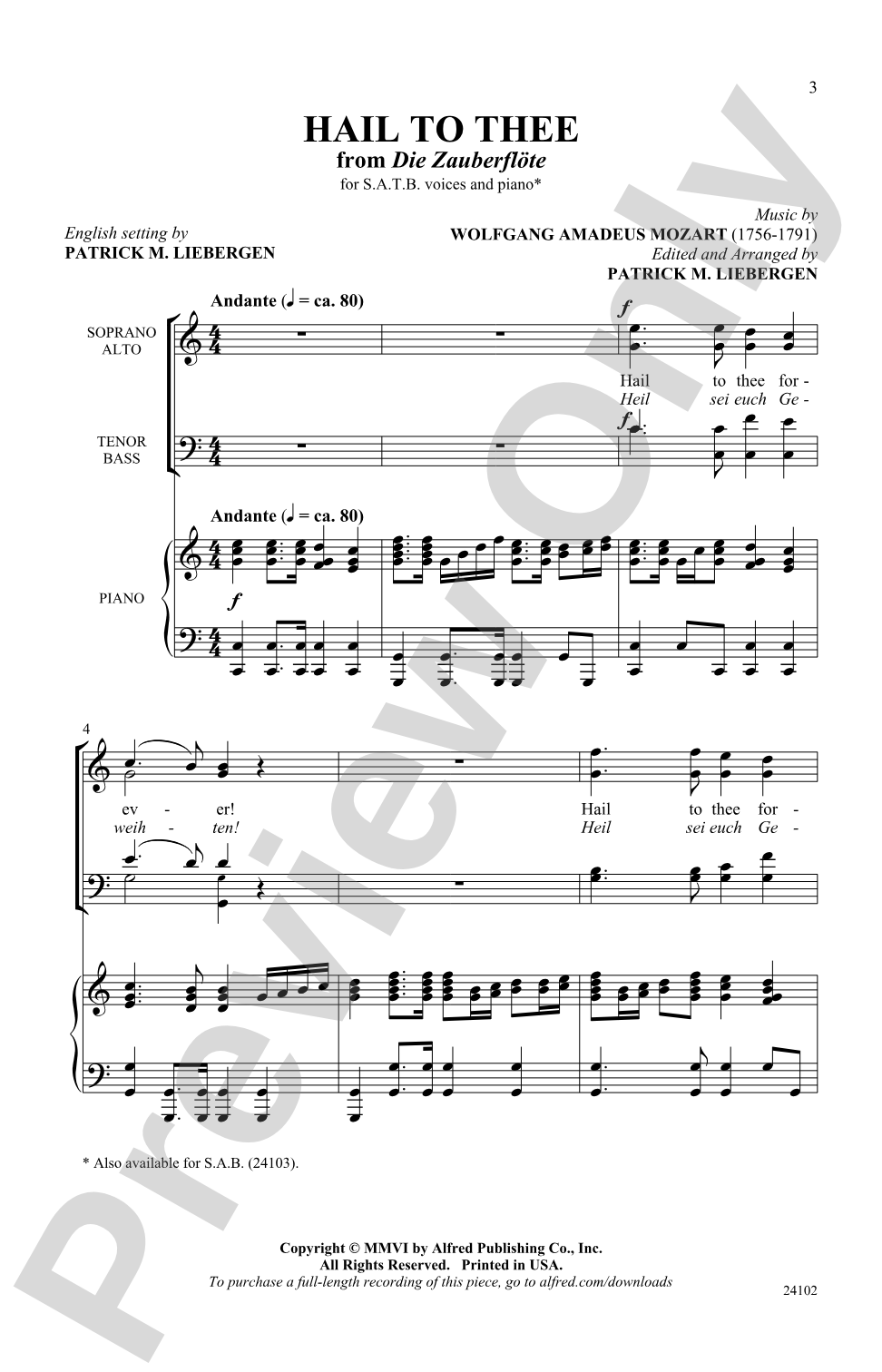
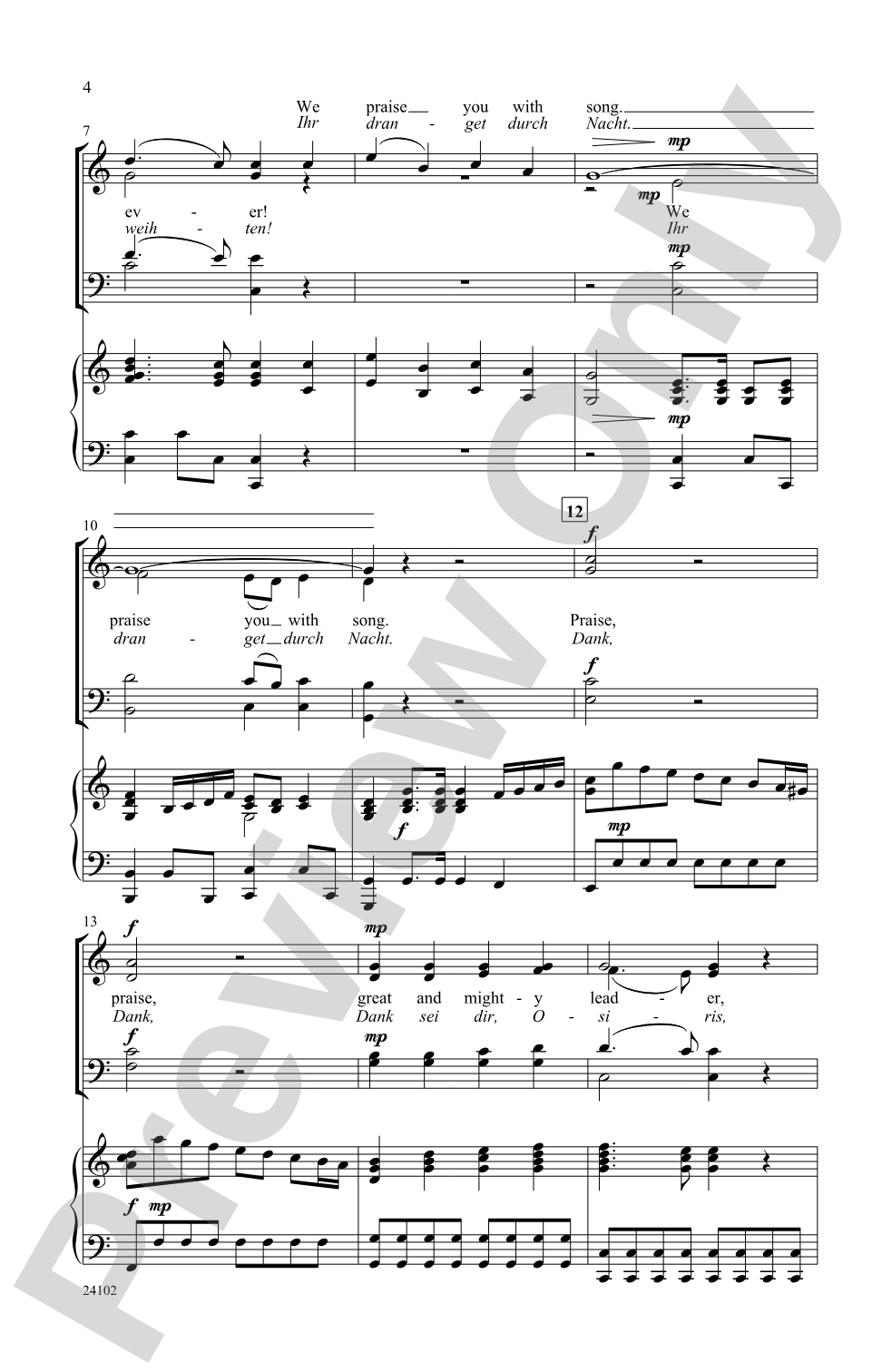
Mozart lovers take heed - here is a modern edition of the joyful finale from The Magic Flute that presents many great teaching opportunities. Whether sung in English or German, this scholarly adaptation incorporates an expert piano accompaniment which supports the voices in both the grand andante opening and the vibrant allegro conclusion.


Hail to Thee (from Die Zauberflote): SATB Choral Octavo isn't in MakeMusic Cloud just yet...but it could be. Let us know you'd like to see it, and you'll help shape what comes next. In the meantime, start a free trial and dive into thousands of interactive titles your students can play along with today.
Request This Title
Tell us you want it.
Start Your Free Trial
Explore everything that's ready to play right now.
Sample Audio
1
Audio File
--:--
0:00
0:00
Sample Video
No sample videos found.
Additional Details
Series:
Alfred Choral Designs
Publisher:
Alfred Music
Page Count:
12
SKU:
00-PO-0000119
More about this title
About the Composer: Wolfgang Amadeus Mozart
Wolfgang Amadeus Mozart (1756-1791) composed The Magic Flute in his final year, creating one of opera's most enduring masterworks. Born in Salzburg, Mozart worked across every major genre of his time and became the defining voice of the Classical period through his ability to blend sophisticated harmony with immediate emotional appeal and memorable melody.
For choral directors, Mozart represents an essential educational anchor. His vocal writing balances technical clarity with genuine musicality, and his structural command means every phrase serves a purpose. Teaching Mozart teaches students how musical ideas develop and why certain harmonic choices create specific emotional effects.
Why we love this
This finale sits at the intersection of approachability and artistic substance. The andante-allegro arc gives singers room to demonstrate interpretive control before the rhythmic precision required in the faster section, and Liebergen's piano writing supports both the celebratory character and the vocal balance. Programming a Mozart work this well-crafted signals to your singers and audience that you value musical literacy alongside musicianship.
What to expect
The opening andante carries the ceremonial weight of a processional, with sustained lines that open into moments of warmth and harmony. The allegro bursts forward with rhythmic vitality and textural energy, delivering the brightness and exuberance that made The Magic Flute beloved across centuries.
Who it's for
SATB choirs at the intermediate level and above will find this piece manageable in range and notation while remaining genuinely rewarding. Directors seeking to build choral literacy through exposure to canonical vocal writing will appreciate both the scholarly approach and the musical substance.
How to get the most out of it
- Distinguish the two tempos through clear textural shifts. The andante needs space and breath; the allegro should feel inevitable and propulsive rather than rushed.
- Balance the voice parts against the piano accompaniment rather than underneath it. Mozart's writing expects singers to carry the melodic and harmonic weight.
- Use the double bar line between sections as a genuine reset moment. Allow the ensemble to breathe and refocus before the tempo change, so the allegro feels like a fresh beginning rather than a continuation.
- Shape phrases across the bar line, not within it. Avoid letting the notated meter dictate where your singers breathe or stress.
How to use it
This works well on a concert focused on Classical or operatic repertoire, particularly when paired with instrumental works or lighter secular pieces that allow the formality of Mozart to stand out. It also makes a strong opening number for a concert, establishing artistic intent from the first measures.
Skills your students will build
- Reading Classical-era vocal part-writing and phrase structure
- Coordinating SATB balance in supported harmonic passages
- Executing clear tempo changes and maintaining rhythmic integrity in allegro sections
- Responding to piano accompaniment as a partner rather than a doubling instrument