
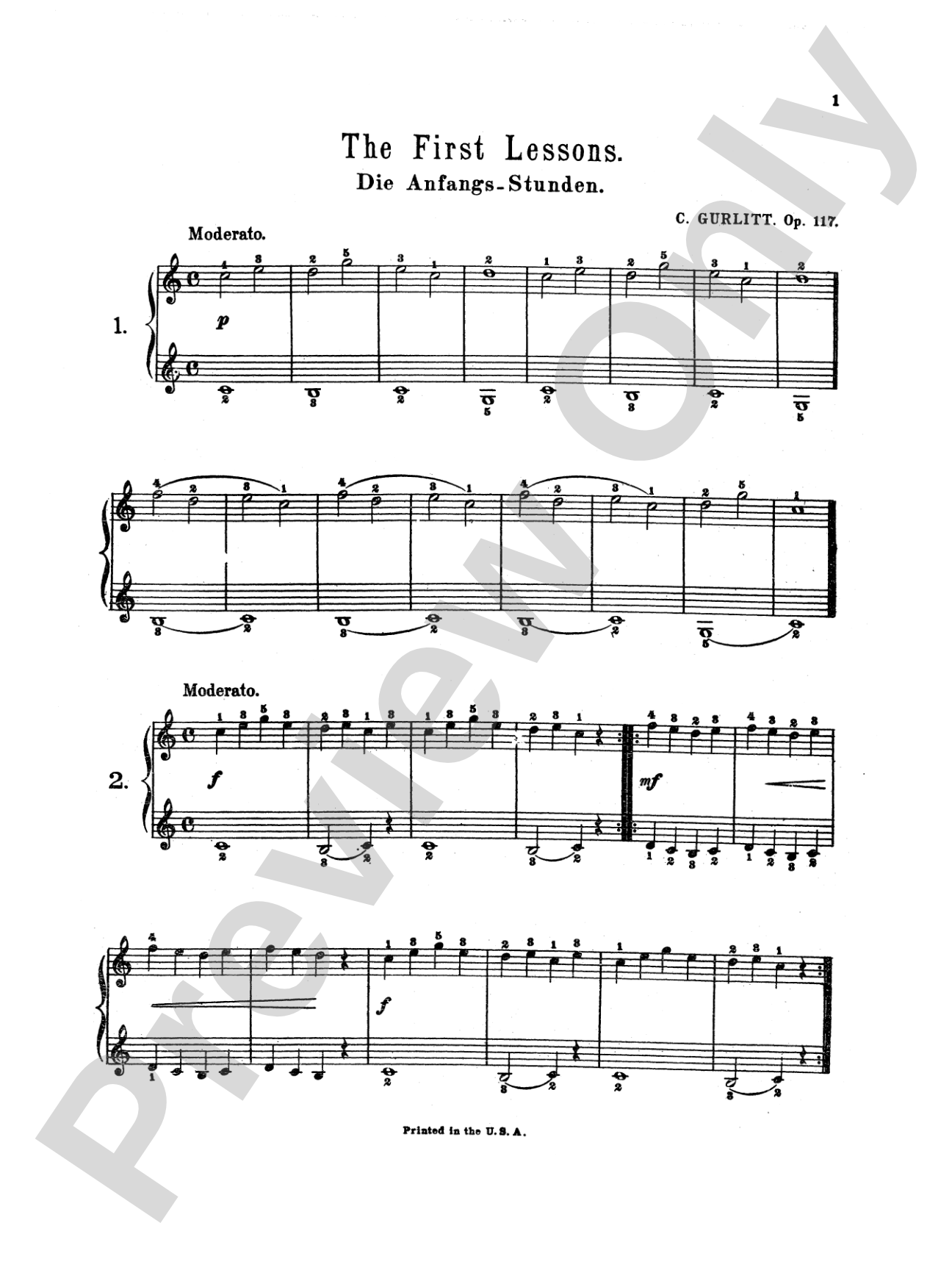

Gurlitt: First Lessons, Op. 117: Piano Book
By Cornelius Gurlitt
Item: 00-PK-0003126

$9.99
Pickup currently not available
Buy Extra Parts (Digital PDF Download)
Parts Added to Cart!
Related Items
First Lessons, Opus 117: Piano Book |
$9.95
|
View |
Description
Expertly arranged Piano Lessons by Cornelius Gurlitt from the Kalmus Edition series. This is from the Romantic era.


Don't just read it, hear it, play along with it, and watch your students grow with it. In MakeMusic Cloud, Gurlitt: First Lessons, Op. 117: Piano Book comes alive with professional accompaniment, adjustable tempo, and built-in practice tools that turn solo practice into real progress.
Open in the Player
Jump straight in and assign it today.
Start Your Free Trial
Open this title and explore the full library in minutes.
Sample Audio
No sample audio found.
Sample Video
No sample videos found.
Additional Details
Series:
Kalmus Edition
Publisher:
Alfred Music
Page Count:
28
SKU:
00-PK-0003126
More about this title
About the Composer: Cornelius Gurlitt
Cornelius Gurlitt (1820, 1901) was a German composer and pedagogue whose gift lay in writing music that grew with the student. He understood what young pianists needed at each stage of development: clear textures, memorable melodies, and just enough harmonic color to keep things interesting without overwhelming technical demands.
Gurlitt's pedagogical works span decades and remain staples in studios worldwide because they balance musicality with accessibility. He composed in the Romantic idiom but never sacrificed clarity for effect, making his pieces vehicles for genuine musical expression rather than mere finger exercises.
Why we love this
These pieces strike an uncommon balance: they sound like real music, not exercises, yet stay within reach of early elementary students. Gurlitt writes with period sensitivity and harmonic interest that keeps both player and listener engaged, making these lessons feel like repertoire rather than steps toward it.
What to expect
Intimate and unhurried. These pieces invite the pianist to discover their own voice within a framework of clear, songlike material. There's genuine Romantic warmth here without sentimentality, music that speaks directly.
Who it's for
Young pianists working through early elementary repertoire who are ready for pieces with genuine musical substance. Teachers seeking literature that builds independence, phrasing awareness, and harmonic understanding without demanding advanced technique.
How to get the most out of it
- Pay attention to Gurlitt's phrase markings and articulation. These pieces teach musical phrasing as much as technique, so honor the slurs and staccatos even in simple passages.
- Approach the melodic lines with vocal quality. Gurlitt often gives the melody to one hand while the other provides gentle accompaniment; imagine singing the top voice and supporting it thoughtfully.
- Maintain a steady tempo without rushing through easier sections. The rhythmic clarity in these lessons teaches pulse awareness that becomes foundational for more complex repertoire later.
- Let the harmonic changes breathe. Gurlitt's chord progressions are deliberate and often introduce new harmonic colors; give students time to hear and absorb them.
How to use it
Pair these works with other early Romantic piano literature in a student recital to show the range of accessible, musical writing from that era. They also work beautifully in mixed-age studio performances, where early elementary students can demonstrate genuine artistry alongside more advanced peers.
Skills your students will build
- Legit phrasing with attention to slur and articulation markings
- Two-hand independence with melody in one hand and accompaniment in the other
- Basic harmonic recognition and voice leading
- Pedal awareness and use (where indicated)
- Sustaining musical line across simple structural forms