
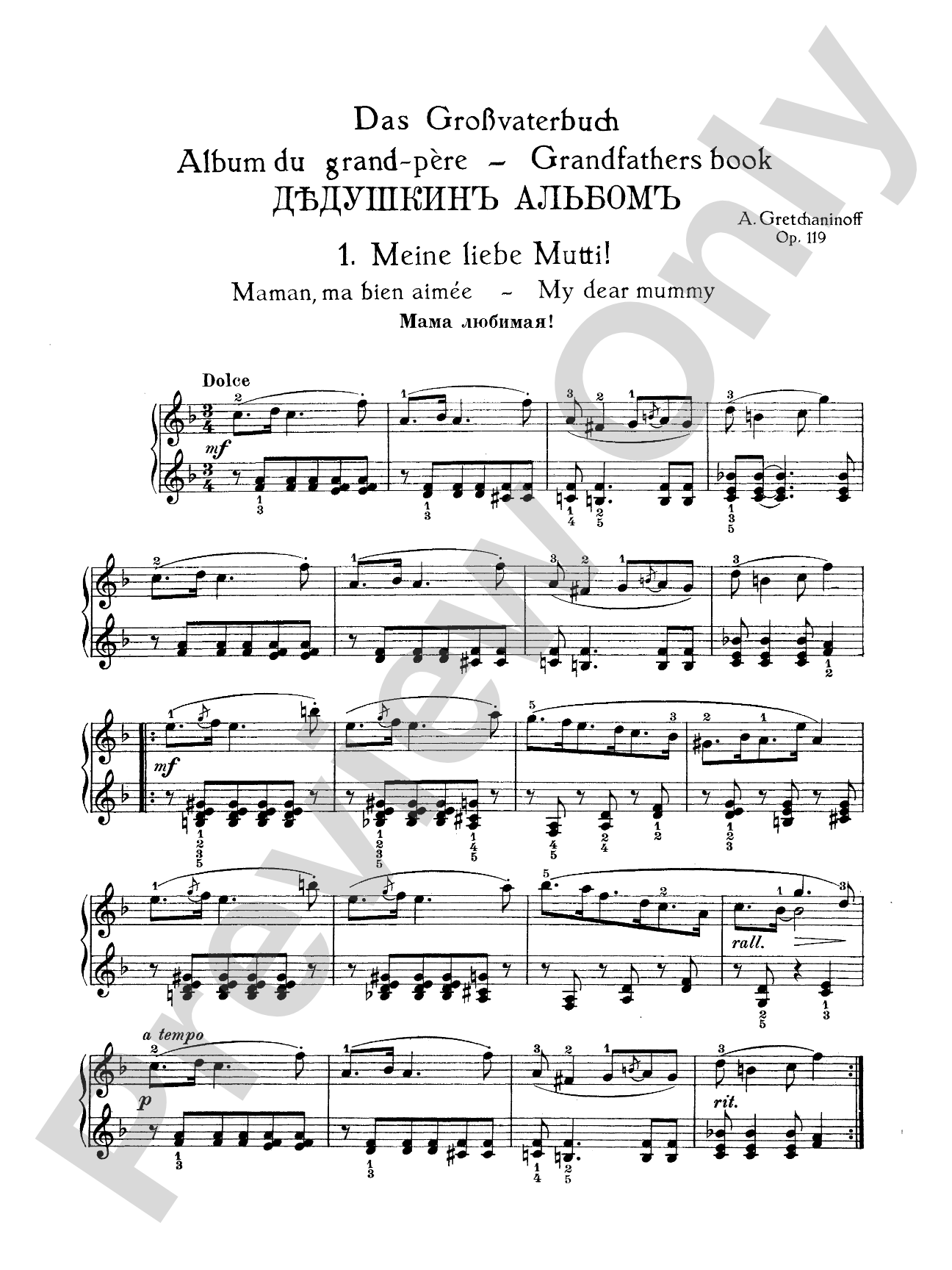

Gretchaninoff: Grandfather's Book, Op. 119: Piano Book
By Alexander Gretchaninoff
Item: 00-PK-0003128

$7.99
Pickup currently not available
Buy Extra Parts (Digital PDF Download)
Parts Added to Cart!
Related Items
Grandfather's Book, Opus 119: Piano Book |
$7.95
|
View |
Description
A collection of piano solos composed by Alexander Gretchaninoff.


Don't just read it, hear it, play along with it, and watch your students grow with it. In MakeMusic Cloud, Gretchaninoff: Grandfather's Book, Op. 119: Piano Book comes alive with professional accompaniment, adjustable tempo, and built-in practice tools that turn solo practice into real progress.
Open in the Player
Jump straight in and assign it today.
Start Your Free Trial
Open this title and explore the full library in minutes.
Sample Audio
No sample audio found.
Sample Video
No sample videos found.
Additional Details
Series:
Kalmus Edition
Publisher:
Alfred Music
Page Count:
16
SKU:
00-PK-0003128
More about this title
About the Composer: Alexander Gretchaninoff
Alexander Gretchaninoff (1864, 1956) was a Russian composer whose gift for melody and harmonic clarity made him a fixture in music education for over a century. Though often overshadowed by his more famous contemporaries, Gretchaninoff wrote with remarkable accessibility; his music taught students musicality without sacrificing substance. He composed extensively for young pianists and children's voices, understanding intuitively what materials actually worked in the practice room and on stage.
Gretchaninoff's prolific output includes operas, choral works, and chamber music, but his reputation in American schools rests largely on his piano collections. These pieces combine Russian melodic sensibility with a conservative harmonic language that feels both romantic and restrained. His work crossed the Atlantic throughout the 20th century and remains a trusted resource for teachers seeking music that sounds purposeful without excessive technical demands.
Why we love this
Gretchaninoff's solos sit in a sweet spot between early intermediate and late intermediate, substantial enough to feel like real music-making, but written with genuine care for where students actually are technically. The collection avoids the sentimental clichés that plague some period pieces; instead, these pieces offer clean compositional voices and melodies that reward thoughtful phrasing. Kalmus's presentation makes the collection especially valuable for teachers building a curated repertoire without breaking the budget.
What to expect
These pieces evoke a kind of thoughtful intimacy, not grand or virtuosic, but genuinely expressive and melodically generous. The harmonic language feels slightly old-fashioned in the best way, offering students the experience of playing music that sounds mature and intentional without veering into aggressive modernism or saccharine romanticism.
Who it's for
Intermediate pianists (approximately Level 5, 6) who have solid rhythm reading and are developing interpretive sensitivity. Teachers seeking repertoire that builds musicianship without steep technical hurdles will find this collection especially useful for building student confidence and performance experience.
How to get the most out of it
- Attend to the harmonic coloring beneath the melodic line. Gretchaninoff's accompaniment patterns often contain surprising chromatic shifts and voice-leading details that deepen the musical effect when brought out.
- Treat tempo as a conversation between phrases rather than a metronomic constant. These miniatures benefit from subtle rubato that follows the natural breathing of the melody.
- Balance the relationship between hands carefully. The melody may sit in the treble, but supporting voices in the middle register often carry harmonic weight that sustains the overall texture.
- Listen through repeated practice sessions for what each piece is trying to communicate emotionally. Gretchaninoff's titles and character markings point toward specific moods; let those guide your phrasing and dynamic choices.
How to use it
Program these pieces in solo recitals to provide variety and substance without requiring showpiece technical display. They work particularly well in student composer showcases or mixed programs that pair 20th-century teaching literature with Romantic-era favorites. Consider featuring several pieces from this collection in a single recital to showcase how Gretchaninoff's voice evolved across different character studies.
Skills your students will build
- Harmonic analysis and awareness of voice-leading in chromatic passages
- Rubato and agogic phrasing at intermediate levels
- Pedal technique for sustaining and blending colors
- Interpretive independence and reading subtle performance markings in Russian musical tradition
- Musical storytelling and character development within miniature forms