
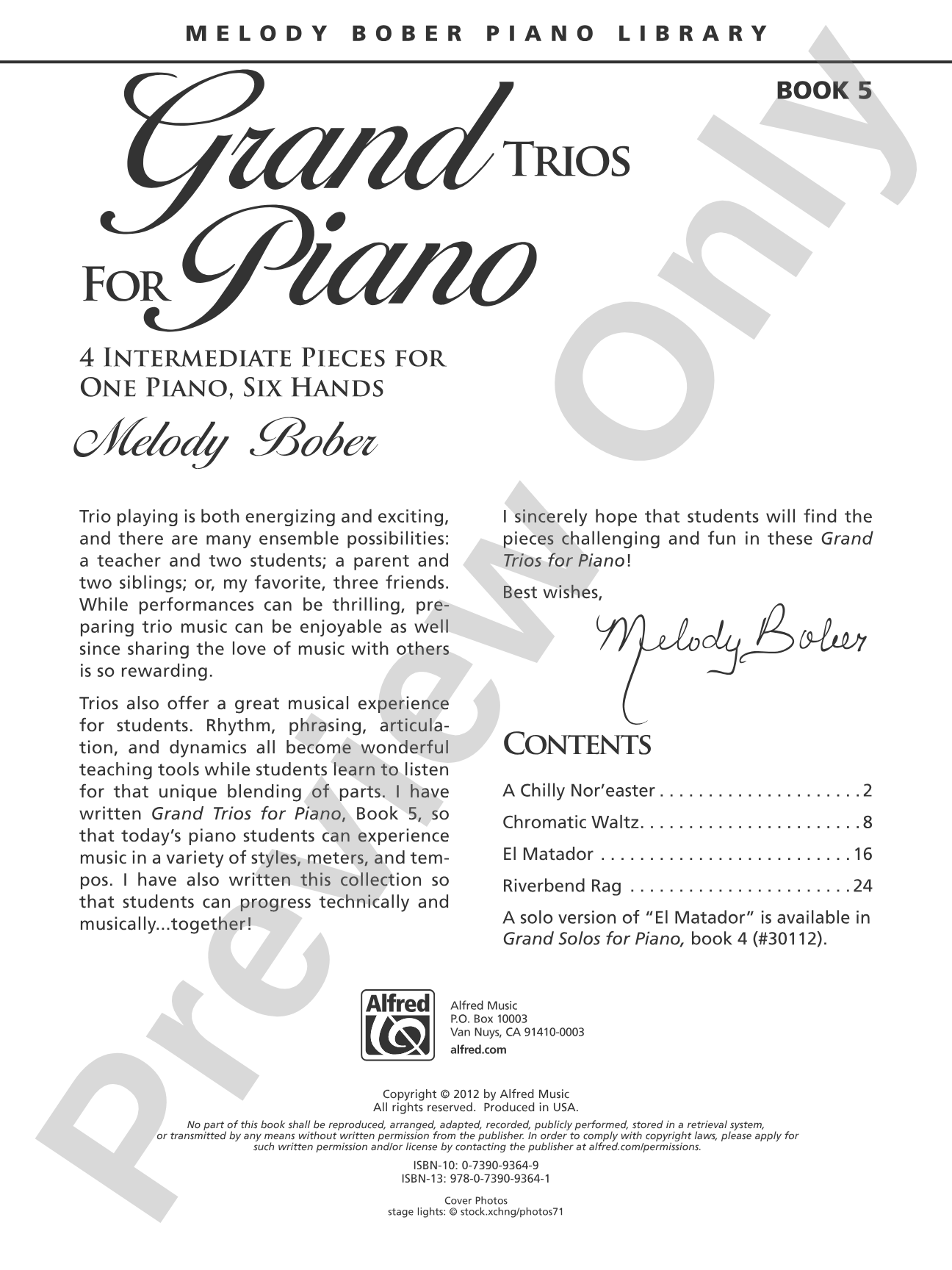

Grand Trios for Piano, Book 5: 4 Intermediate Pieces for One Piano, Six Hands: Piano
4 Intermediate Pieces for One Piano, Six Hands
By Melody Bober
Level: Intermediate
Item: 00-PB-0000560
$7.99
Pickup currently not available
Related Items
Grand Trios for Piano, Book 5: Piano Trio (1 Piano, 6 Hands) Book |
$7.99
|
View |
Description
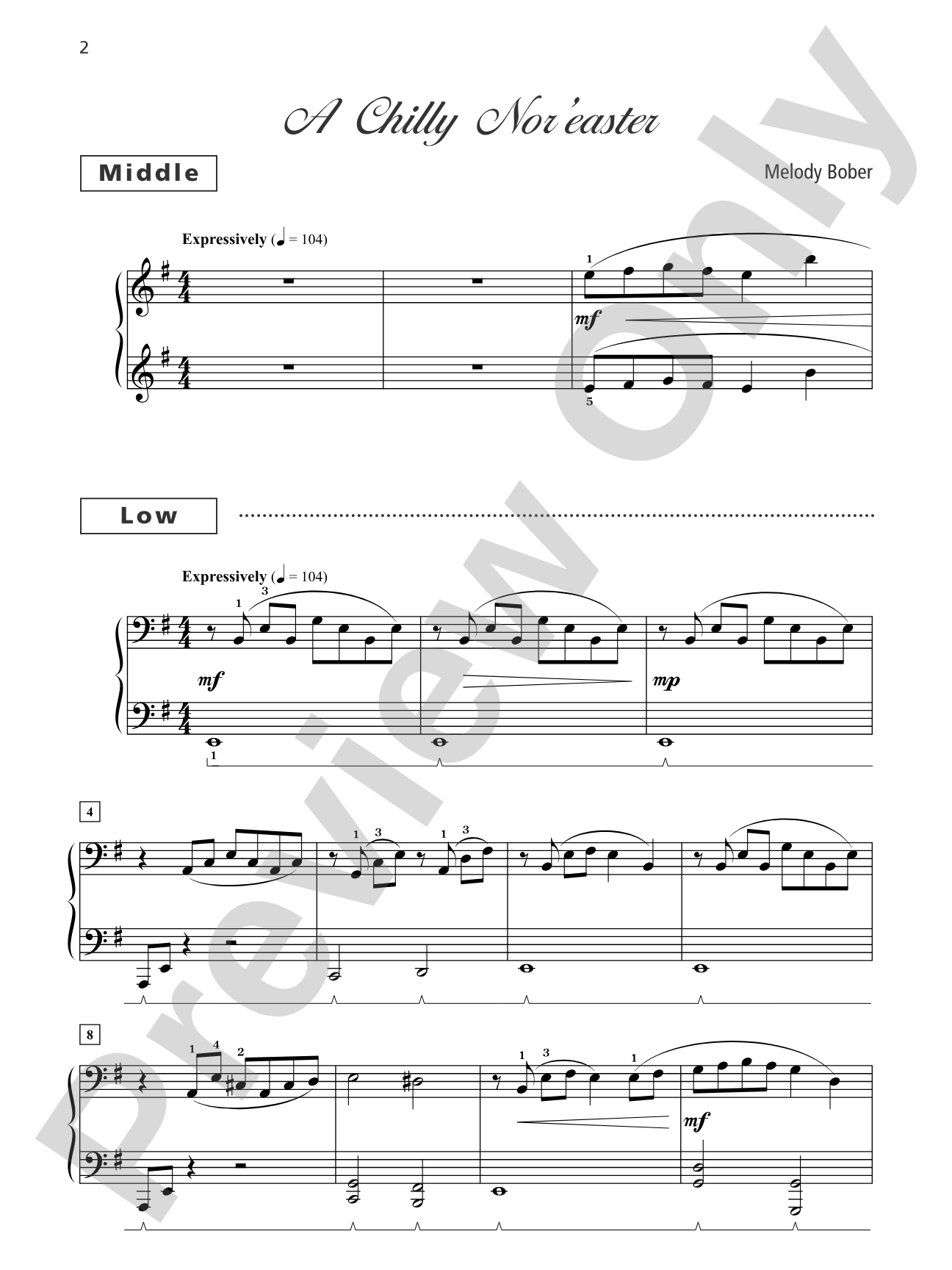
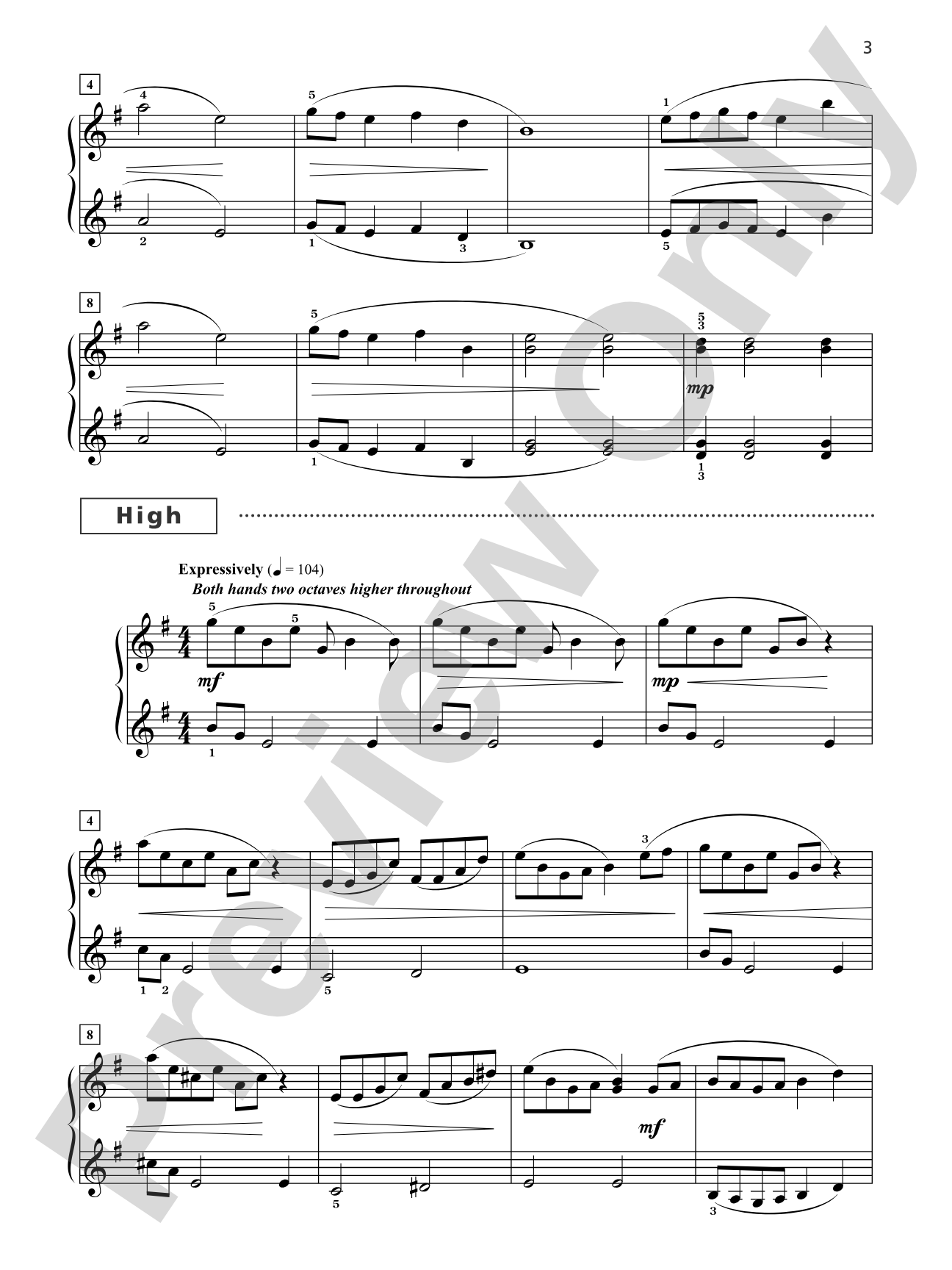
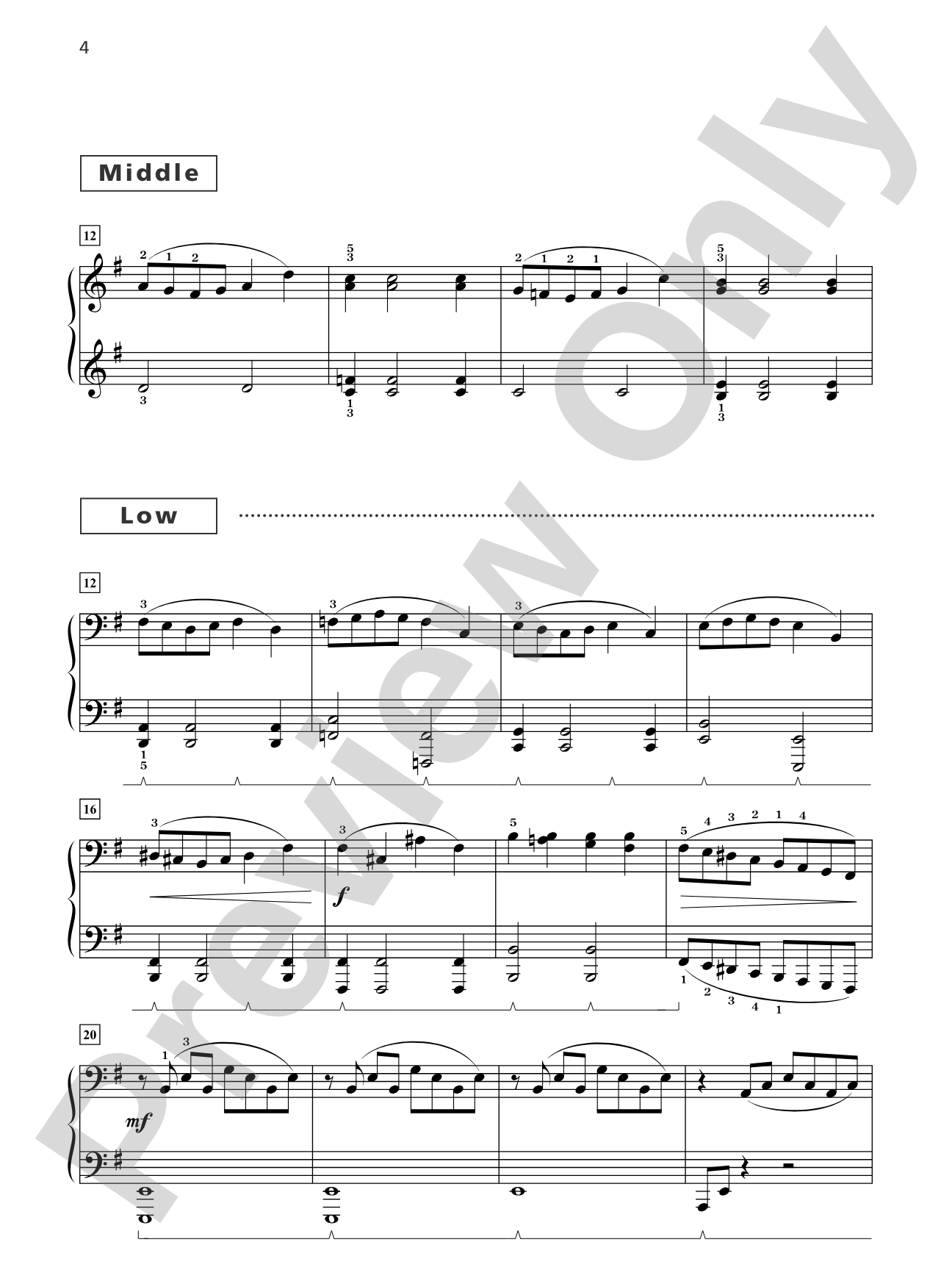
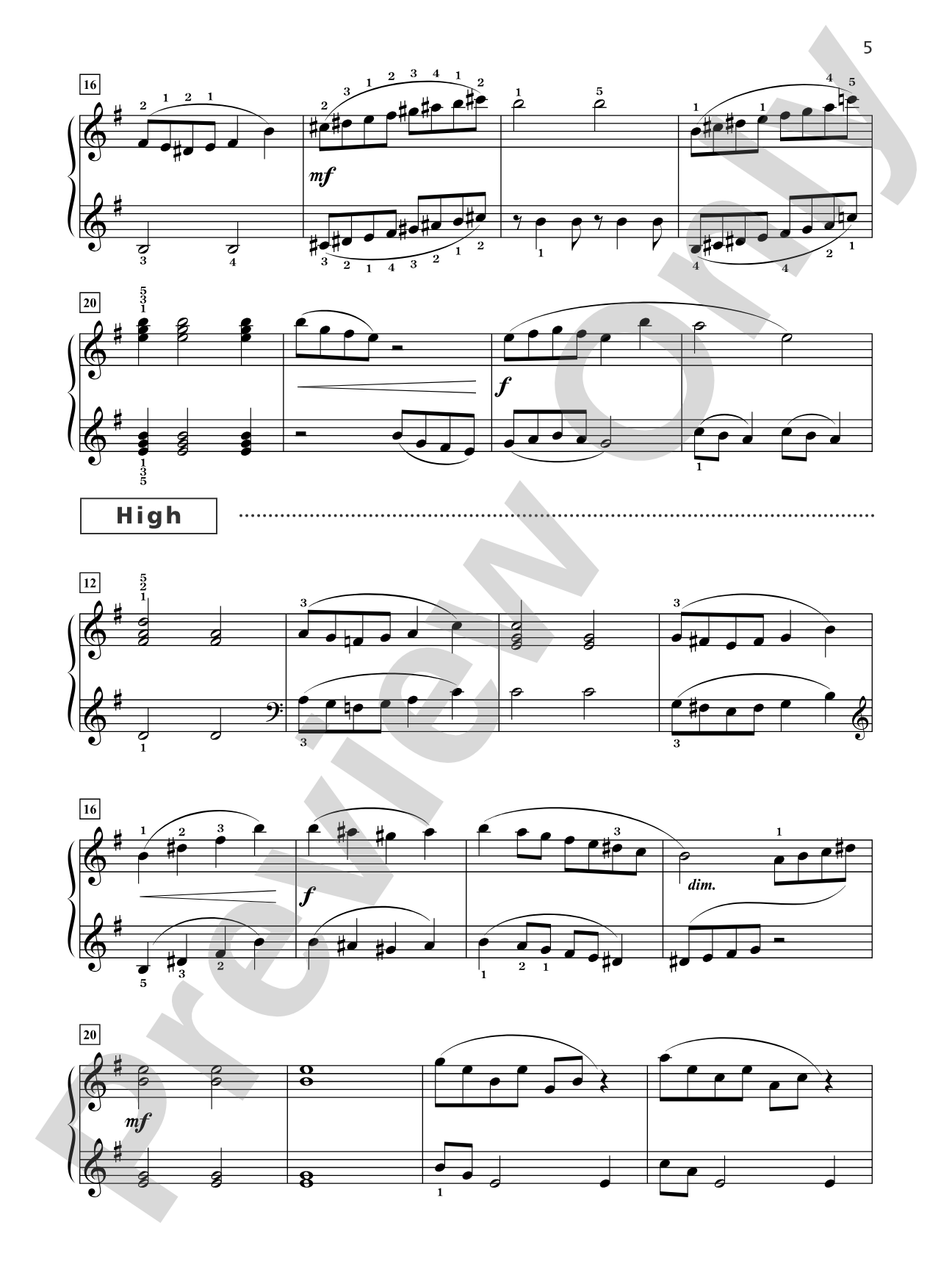
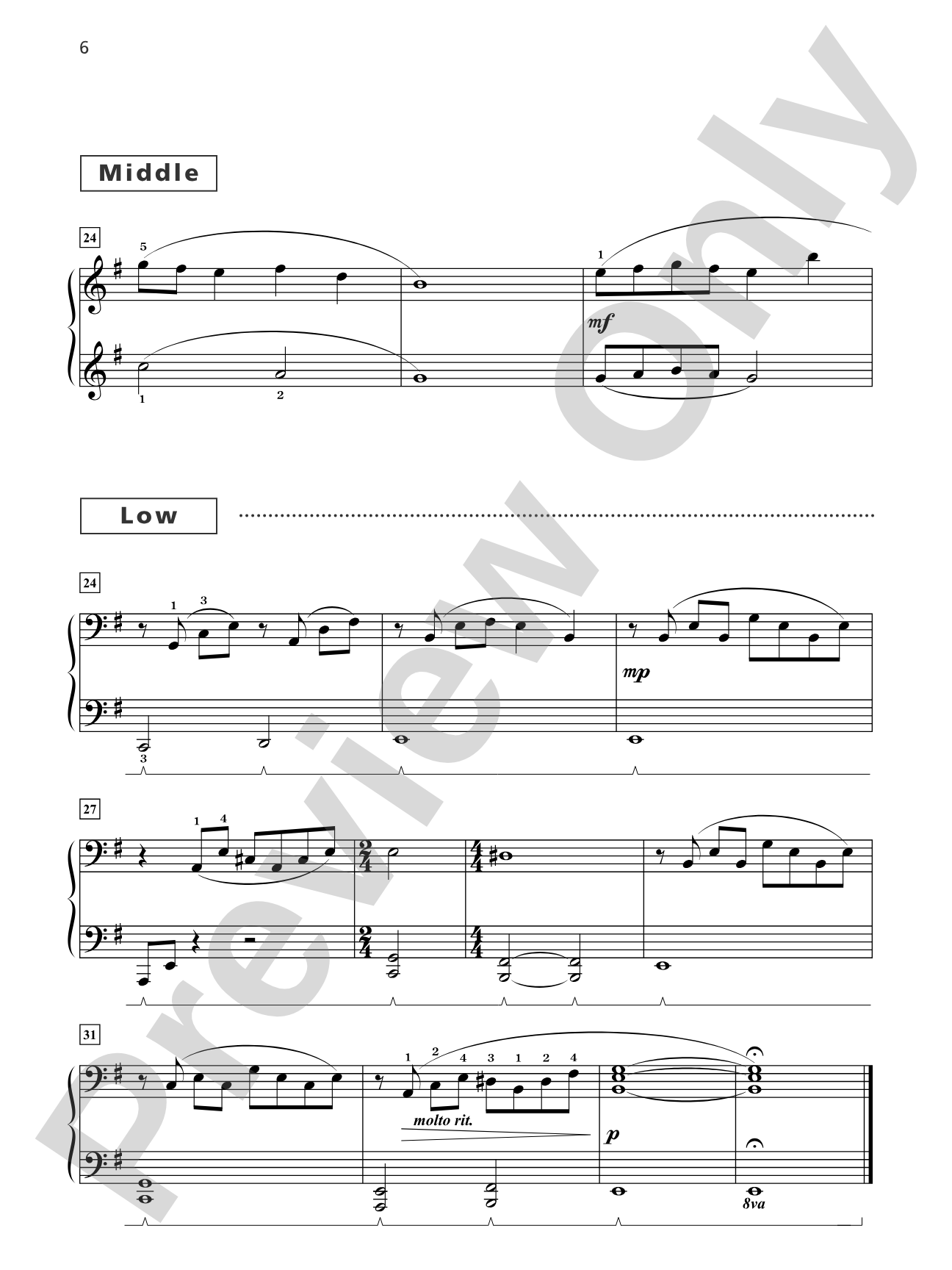
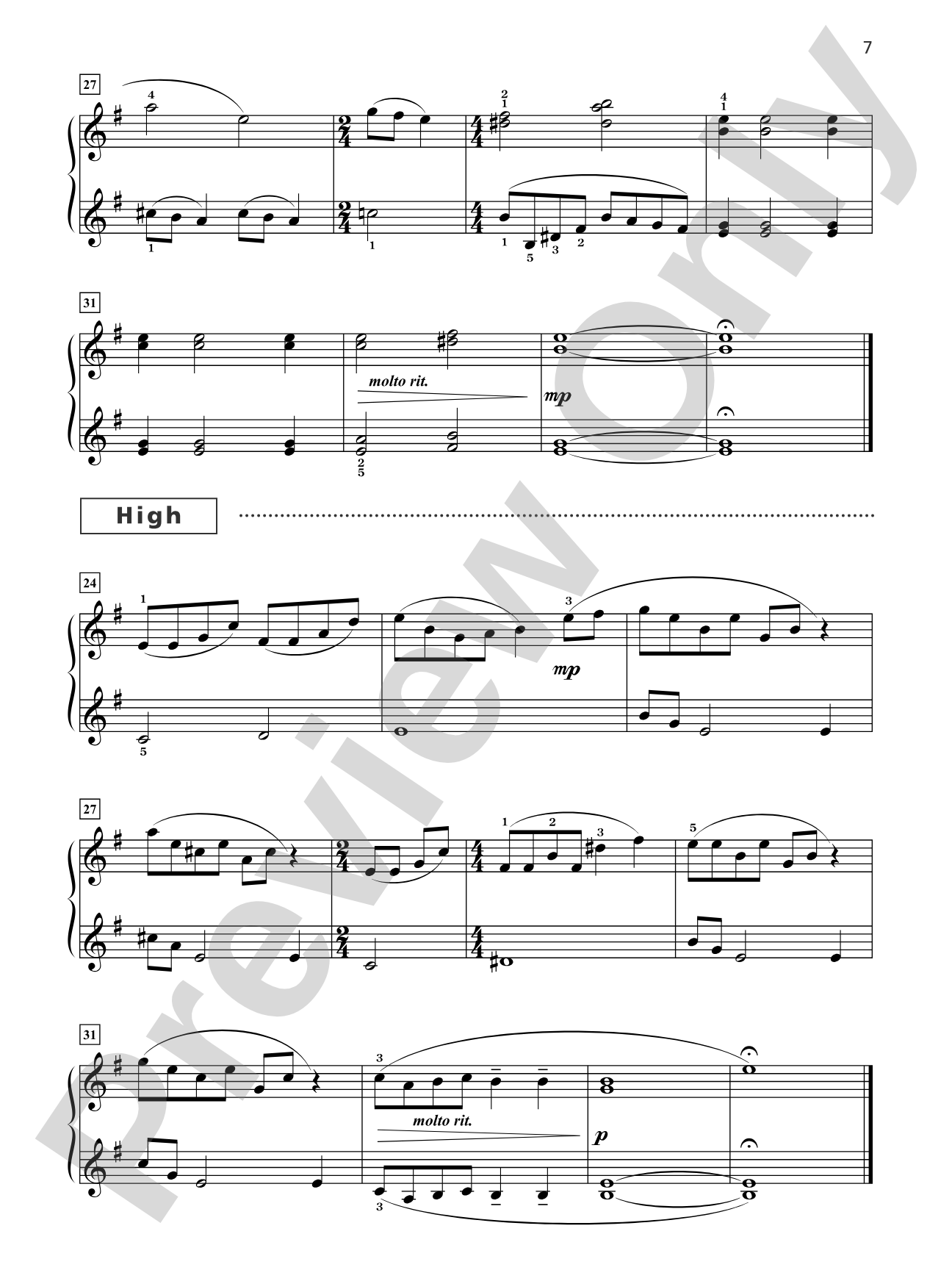
The joy of ensemble playing with six hands at the piano is captured in this series of trios by educational music author Melody Bober. Written for pianists at the intermediate level, the pieces in this collection require reading notes above and below the grand staff, playing eighth-note scales in parallel motion, and playing in compound meter. Other challenges include eighth-note syncopations and occasional blocked octaves. Titles: A Chilly Nor'easter * Chromatic Waltz * El Matador * Riverbend Rag. A Federation Festivals 2024-2028 selection.


Grand Trios for Piano, Book 5: 4 Intermediate Pieces for One Piano, Six Hands: Piano isn't in MakeMusic Cloud just yet...but it could be. Let us know you'd like to see it, and you'll help shape what comes next. In the meantime, start a free trial and dive into thousands of interactive titles your students can play along with today.
Request This Title
Tell us you want it.
Start Your Free Trial
Explore everything that's ready to play right now.
Sample Audio
No sample audio found.
Sample Video
No sample videos found.
Additional Details
Series:
Grand Trios for Piano
Publisher:
Alfred Music
Page Count:
32
SKU:
00-PB-0000560
More about this title
About the Composer: Melody Bober

Melody Bober composes piano music grounded in genuine classroom experience. She holds a bachelor's degree in music education from the University of Illinois at Champaign-Urbana and a Master of Arts in piano performance from Minnesota State University, Moorhead. Her teachers included Joel Shapiro and Andrew Froelich (piano), Mary Hoffman (music education), and Tony Caramia (jazz), influences that shaped her approach to writing music that builds student understanding alongside technical skill.
Bober brings two decades of public school teaching, university-level instruction, and private studio work to her compositions. She serves as an active church pianist and has worked as a church music director. Her reputation as both a clinician and composer has made her a sought-after presenter at piano teacher conventions and workshops throughout North America. She lives in Minnesota with her husband Jeff.
Why we love this
These trios unlock genuine collaborative joy at the keyboard. Bober writes with real understanding of what intermediate pianists can handle together: the pieces demand coordination and attention without becoming so complex that ensemble playing falls apart. The stylistic variety (from the ragtime energy of Riverbend Rag to the elegance of Chromatic Waltz) keeps students engaged across the whole book.
What to expect
A chilly nor'easter howls with rhythmic energy; a chromatic waltz glides through elegant harmonic movement; el matador dances with bold character; and riverbend rag bubbles with ragtime charm. These pieces showcase different musical moods and styles, each one bright and approachable without sacrificing musical substance.
Who it's for
Intermediate pianists ready to explore ensemble playing and willing to share the bench with two other players. This collection works well for students who have solid note-reading skills and can manage eighth-note passage work but haven't yet tackled advanced solo repertoire. Trio groups in private studios or school piano programs will find these pieces engaging and manageable.
How to get the most out of it
- Map out who plays which hand before the first rehearsal. Assign parts by skill level or preference, then rehearse each hand position separately so players understand their role before combining.
- Establish a clear visual cue for entries, especially in pieces like El Matador where rhythmic precision matters. A slight nod or foot tap keeps all three pianists anchored to the same pulse.
- Work the compound meter passages slowly at first. Once the three of you lock into the grouping, the pieces will swing naturally; rushing these sections breaks the ensemble sound.
- Balance the texture by adjusting dynamics slightly. The primo part (typically the melody) can project a bit more, but all three voices need to blend rather than compete.
How to use it
Feature these trios in studio recitals or ensemble showcases where collaborative piano work deserves its own moment. They also pair nicely with solo repertoire from the same level, giving students who prepare one solo a chance to shine in an ensemble context as well. Consider programming a trio for festivals or competitions where ensemble categories exist.
Skills your students will build
- Reading notes beyond the grand staff (ledger lines above and below)
- Playing eighth-note scales in parallel motion across multiple hands
- Reading and performing compound meter
- Managing eighth-note syncopations in ensemble context
- Coordinating three players at one keyboard
- Balancing texture and blend in a collaborative setting
- Playing occasional blocked octaves with clarity